Power System Automation Prices: What Drives Project Costs?
Power system automation prices cannot be judged reliably from the cost of controllers and software alone. The larger commercial question is what it takes to make the system operate safely with existing electrical equipment, communications networks, control rooms, and site procedures. A low equipment quotation can become an expensive project once integration, testing, outages, and support are added.
The most useful comparison is therefore the total cost of a defined operating outcome: which assets will be monitored and controlled, what level of availability is required, how the system will connect to existing infrastructure, and who is responsible for proving that it works. Without a common scope, two bids described as “power system automation” may cover substantially different work.
What is included in the project price?
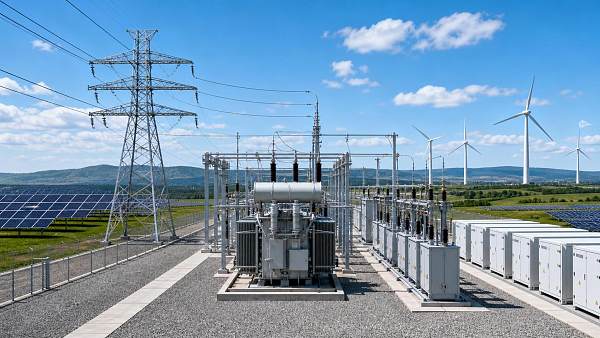
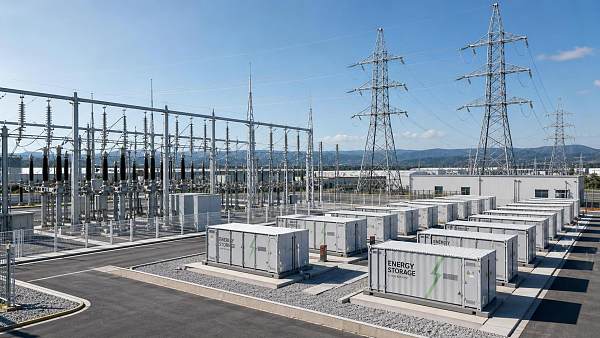
Automation can range from remote monitoring of a few electrical panels to coordinated control across a substation, generation site, storage plant, or industrial power network. The price depends less on the project label than on the functions and interfaces included.
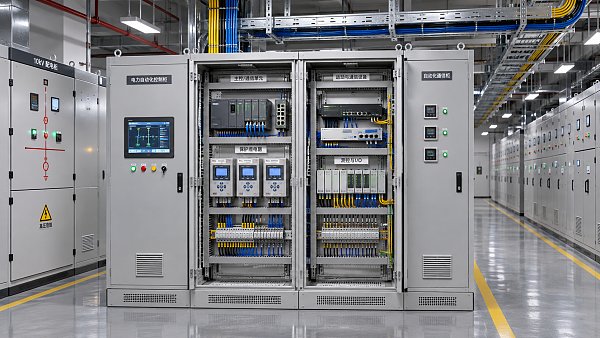
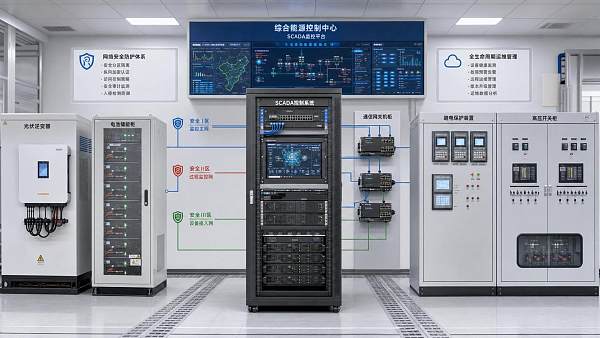
A complete scope may contain field devices, control panels, software, network equipment, engineering, installation, commissioning, and support. Some electrical assets may already have the necessary protection and measurement devices; others may need new sensors, meters, wiring, or replacement relays before useful automation is possible. Civil works, switchgear replacement, and utility connection costs may sit outside the automation contract even though they affect the overall budget.
Ask each bidder to separate its offer into comparable cost categories:
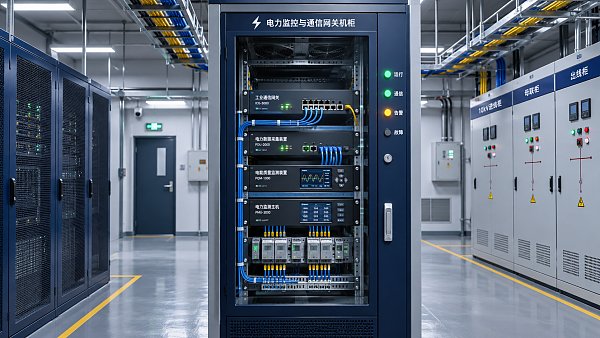
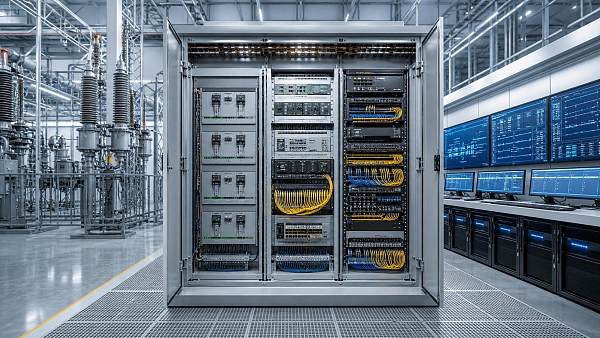
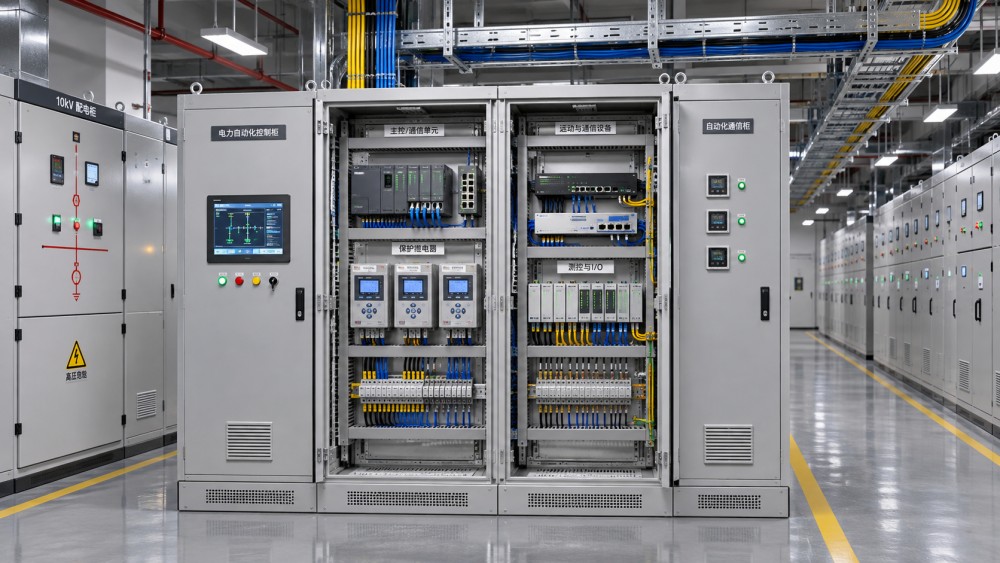
- Field equipment: controllers, remote terminal units, meters, protective relays, input/output modules, panels, power supplies, and communications hardware.
- Software: supervisory control and data acquisition (SCADA), operator interfaces, databases, engineering tools, licences, and any hosted services.
- Engineering and integration: design, configuration, control logic, protocol mapping, drawings, and interfaces with third-party equipment.
- Site execution: installation, wiring, network setup, travel, commissioning, and coordination during outages.
- Assurance and handover: testing, cybersecurity measures, documentation, training, and acceptance support.
- Lifecycle services: maintenance, software updates, remote support, spare parts, and licence renewals.
A category marked “by others” is not necessarily a problem. It becomes a cost risk when no contract or internal team clearly owns it. A bid comparison should identify the responsible party, estimated cost, and schedule dependency for every material exclusion.
System scale is more than the number of devices
Device counts help establish scope, but they are a poor standalone pricing metric. A monitored status point is not equivalent to a remotely operated circuit breaker. The latter can require interlocks, command verification, permissions, event logging, and carefully planned testing.
For each asset, distinguish between read-only monitoring, operator-initiated control, and automatic control. Record the number and type of signals, their update requirements, and whether alarms, historical records, or reports are required. Also specify whether functions must remain available during a communications failure or a controller fault.
Geography matters as well. A single site may use a local network and one commissioning team; dispersed sites can require additional communications links, travel, access arrangements, and testing at each location. Counting sites without describing their connectivity can conceal a significant difference between proposals.
Future capacity should be specified rather than left as an open-ended request for “scalability.” Extra input/output capacity, network ports, server resources, and software licences have an immediate cost, but adding them later may require redesign or downtime. A practical quotation should price the initial configuration and identified expansion options separately.
Existing equipment can determine the integration budget
For a retrofit, the condition and documentation of the installed system can matter as much as the equipment being purchased. An existing relay or controller may support a recognised communications protocol but still require configuration changes, firmware updates, additional licences, or a gateway to provide the required data and commands.
Compatibility also depends on the details behind the protocol name. Two devices using IEC 61850, Modbus, or DNP3 are not automatically ready to exchange every required signal. The parties still need to agree on data models or registers, time synchronisation, control permissions, event handling, and the behaviour expected when communications are lost.
Provide bidders with an asset list, available drawings, device models and firmware versions, communications architecture, and an initial point list. Where records are incomplete, define a paid survey or discovery phase before requesting a firm integration price. Otherwise, a supplier may price from assumptions that later become variation claims.
Interface ownership deserves particular attention. If one company supplies the plant controller and another supplies the SCADA system, the contract should identify who produces the interface specification, configures each end, supplies test equipment, and resolves defects. Merely stating that both systems must be “compatible” leaves the most expensive coordination work undefined.
Software pricing can change the lifetime cost
Software quotations need to be examined beyond the initial licence fee. A licence may be perpetual, subscription-based, or included only for a defined support period. Pricing can depend on server instances, operator seats, connected devices, data points, historians, redundancy, or individual software modules.
Request a schedule showing what is included at commissioning and what must be renewed. It should identify charges for updates, security patches, technical support, additional users, expanded point counts, and replacement hardware. Where cloud hosting is proposed, include connectivity, data retention, export, and any usage-based charges in the comparison.
Control over the configuration is another commercial issue. Confirm whether the owner receives the source or editable project files, configuration backups, engineering tools, documentation, and credentials needed to maintain the system. Access rights do not eliminate dependence on specialist support, but they affect the practical cost of changing suppliers or adding equipment later.
Availability, cybersecurity, and testing add cost for a reason
A monitoring system that can tolerate an interruption has a different cost structure from a control system expected to remain available through a component failure. Redundant servers, controllers, network paths, power supplies, and communications links increase equipment and engineering requirements. Their value depends on the consequences of failure and whether the wider electrical system can actually use the redundancy.
Specify the failure scenarios the design must address, rather than requiring redundancy everywhere. For example, duplicated servers offer limited protection if both depend on the same network switch or auxiliary power supply. The design review should show how alarms, operator access, and control functions behave during failure and restoration.
Cybersecurity requirements also need a defined scope. Network segmentation, access management, remote-support controls, logging, backup, patch management, and recovery procedures can involve both one-time implementation and recurring work. Relevant standards, such as the IEC 62443 series, can inform requirements, but the applicable parts, contractual obligations, and any required assessment should be stated explicitly. A general promise of “compliance” does not establish who will perform or pay for each control.
Testing is where these requirements become measurable. Factory acceptance testing can verify configuration and selected functions before shipment; site acceptance testing checks the installed system and its interfaces. Neither should be treated as a substitute for a written test plan. Define test cases, simulated versus live signals, responsibilities, witness requirements, defect resolution, and the conditions for final acceptance.
Installation and outage constraints can outweigh hardware savings
Automation work on an operating electrical system must fit the site’s access and safety rules. Site surveys, permits, isolation, temporary wiring, and coordination with other contractors can all affect labour and schedule. A quotation based on unrestricted daytime access is not equivalent to one that includes limited outage windows or work outside normal hours.
Ask bidders to state how many site visits, commissioning days, and outage windows are included. Identify who provides lifting equipment, cable routes, terminations, site network access, and assistance from existing equipment vendors. If an outage is delayed, the contract should address remobilisation and standby costs.
Delivery conditions are equally important in cross-border purchases. Compare quotations on the same delivery basis and clarify freight, insurance, customs clearance, duties, local taxes, and currency exposure. Confirm whether the supplier can provide local commissioning and warranty response, or whether travel from another country will be charged separately.
Compare bids on a common lifecycle basis
There is no meaningful universal price for a power system automation project without a defined scope. Rather than relying on a price per device or an unsupported benchmark, build a comparison around the same design assumptions and operating period.
A useful commercial evaluation adds the quoted supply and installation price to separately identified owner costs, foreseeable renewals, support, and priced expansion options. It should also show allowances for unresolved scope rather than hiding them inside a single contingency. Where costs occur in different years, finance teams can apply the project’s chosen discount rate; the assumptions should be the same for every bid.
For example, a lower initial offer may exclude protocol integration and annual software support, while a higher offer includes both. The comparison should add the missing items to the first bid using supplier quotations or documented estimates—not assume that the initial difference is a saving. Conversely, an offer that includes redundant infrastructure or advanced control functions should not receive credit for those features unless the project actually requires them.
Before award, resolve the largest differences in writing: the point list and control functions, interfaces, exclusions, test and acceptance criteria, licence rights, warranty response, and responsibility for changes. A defensible power system automation price is one tied to a deliverable operating system and a clear allocation of costs over its useful life.
Questions about market trends? Contact Market Scope Live for deeper business insights.
We respect your privacy. Your information is strictly confidential.
Related News
 Smart Grid TechnologiesPower System Automation Prices: What Drives Project Costs?Power system automation price depends on integration, software, testing, and support. Explore the key cost drivers and compare bids with confidence.MORE+
 Smart Grid TechnologiesGrid Flexibility Costs: Comparing Storage, Demand Response and Peaker PlantsCompare grid flexibility cost across battery storage, demand response and peaker plants. Discover key cost drivers and choose the right solution for your reliability needs.MORE+
 Smart Grid TechnologiesChoosing a Grid Monitoring Systems Supplier: Integration and Support CriteriaChoose a grid monitoring systems supplier with confidence. Compare integration, cybersecurity, lifecycle costs, commissioning, and support before you commit.MORE+
 Smart Grid TechnologiesUS Energy Department Announces $237 Million for Grid Supply ChainsUS Department of Energy announces $237 million for grid supply chains. Explore potential impacts on domestic manufacturing, sourcing and procurement.MORE+
 Smart Grid TechnologiesAdvanced Metering Systems in South Africa: Choosing Connectivity for MunicipalitiesExplore advanced metering systems in South Africa. Compare cellular, RF mesh and PLC to choose reliable municipal connectivity, control costs and plan a smarter rollout.MORE+
 Smart Grid TechnologiesVehicle-to-Grid Technology in Europe: EV, Charger and Grid RequirementsExplore vehicle to grid technology Europe-wide. Discover EV compatibility, charger standards and grid approval requirements to reduce risks and plan your V2G deployment with confidence.MORE+
 Smart Grid TechnologiesWhat Infrastructure Do Utility-Scale Renewables Need for Grid Connection?Explore utility renewable energy infrastructure for grid connection, from substations to controls and compliance. Learn how to spot connection risks and keep projects on track.MORE+
 Smart Grid TechnologiesHybrid Power Plants for Microgrids: Sizing Solar, Batteries, and DieselSize hybrid power plants for microgrids with confidence. Learn how to balance solar, batteries, and diesel to cut fuel use, protect critical loads, and meet reliability targets.MORE+
 Smart Grid TechnologiesRenewable Power Systems for Mining: Designing Reliable Off-Grid MicrogridsExplore renewable power systems for mining: design reliable off-grid microgrids with solar, storage, backup power, and smart controls to cut fuel use and protect uptime.MORE+
 Smart Grid TechnologiesCommercial Microgrids in Europe: When Do Energy Savings Justify the Investment?Considering commercial microgrids Europe-wide? Discover when energy savings justify investment, compare solar and storage returns, and avoid costly oversizing.MORE+
 Smart Grid TechnologiesMulti-Site Commercial Energy Planning: Balancing Load, Tariffs, and ResilienceMulti site commercial energy planning: balance load profiles, tariffs, EV charging, storage, and resilience to reduce costs, strengthen operations, and optimize every facility.MORE+
 Smart Grid TechnologiesWhat Should a Partner Deliver Across a Multi-Site Distributed Energy Portfolio?Best partners for distributed energy projects across a multi-site portfolio? Discover how to standardize design, data, commissioning, and lifecycle performance at scale.MORE+
 Smart Grid TechnologiesHow Can Multi-Site Owners Identify the Right Partners for Distributed Energy Projects?“Is it best partners for distributed energy projects across a multi-site portfolio?” Explore a practical framework to assess technical expertise, grid readiness, risk, data access, and lifecycle support.MORE+
 Smart Grid TechnologiesSmart Grid Technologies for Utilities: How to Prioritize Grid Modernization InvestmentsSmart grid technologies for utilities: learn how to prioritize modernization investments, reduce reliability risks, defer capital upgrades, and build a resilient, cost-effective grid.MORE+
 Smart Grid TechnologiesDigital Substations: How IEC 61850 Improves Protection, Control, and Data VisibilityDigital substations powered by IEC 61850 improve protection, flexible control, and data visibility. Explore the design principles that strengthen grid reliability.MORE+
 Smart Grid TechnologiesWhat Is Feeder Automation and How Does It Reduce Outages on Distribution Grids?Feeder automation helps utilities isolate faults, restore healthy sections faster, and reduce distribution grid outages. Explore how FLISR improves reliability.MORE+
 Smart Grid TechnologiesWhat Renewable Integration Studies Should Model Before a Grid Connection DecisionRenewable integration studies reveal grid connection risks before approval—from voltage and protection to curtailment, dynamic stability, and future network constraints.MORE+
 Smart Grid TechnologiesUtility Resilience Planning: How to Prioritize Grid Investments for Extreme WeatherUtility companies resilience planning: learn how to prioritize grid investments for extreme weather, protect critical services, speed restoration, and build a stronger, smarter energy network.MORE+
 Smart Grid TechnologiesWhat Drives Microgrid Controller Costs Across Commercial and Industrial Projects?Microgrid controllers cost depends on asset mix, islanding needs, legacy integration, software, and lifecycle support. Learn how to compare bids and reduce project risk.MORE+
 Smart Grid TechnologiesHow Does Demand Response Work with Battery Storage in Microgrids?How does demand response integrate with battery storage in microgrid operations? Explore coordinated dispatch, peak shaving, renewable use, and resilient backup strategies.MORE+
 Smart Grid TechnologiesWhich Energy Management Systems Integrate Best with Existing SCADA Platforms?Which energy management systems integrate best with existing SCADA platforms? Explore protocols, control authority, and practical selection insights for reliable energy optimization.MORE+
 Smart Grid TechnologiesHow to Plan Clean Energy Infrastructure for Reliable Industrial Power SupplyClean energy infrastructure planning for reliable industrial power: optimize loads, storage, controls, grid integration, and resilience.MORE+
 Smart Grid TechnologiesHow to Size Hybrid Microgrid Systems for Remote Sites With Variable LoadsHybrid microgrid systems for remote sites: learn how to size solar, batteries, inverters, and generators for variable loads, resilience, and lower fuel costs.MORE+
 Smart Grid TechnologiesGrid Resilience Technologies That Prevent Outages During Extreme WeatherGrid resilience technologies for outage prevention help utilities and facilities withstand extreme weather with automation, storage, microgrids, and demand flexibility. Explore practical strategies to protect critical loads and restore power faster.MORE+
 Smart Grid TechnologiesGrid Stability Solutions for Wind: Managing Variability and Power QualityGrid stability solutions for wind: explore practical strategies for voltage control, frequency response, power quality, storage, and reliable PCC compliance.MORE+
 Smart Grid TechnologiesWhich Grid Interconnection Standards Apply to Commercial Rooftop Solar?What grid interconnection standards apply to commercial rooftop solar? Explore utility rules, inverter certifications, export limits, and approval steps to avoid costly delays.MORE+
 Smart Grid TechnologiesHow Demand Response Supports Public EV Charging StationsSmart grid demand response for public charging stations helps operators control peak loads, protect costs, improve reliability, and deliver a clearer EV driver experience.MORE+
 Smart Grid TechnologiesDo Smart Grid Features Reduce Charging Station Electricity Bills?Do smart grid features actually reduce charging station electricity bills? Discover how load balancing, tariff scheduling, solar, and storage can cut peak costs.MORE+
 Smart Grid TechnologiesCan One Energy Management Platform Support Multiple Charger Brands?Can a single energy management platform handle multiple charger brands at one site? Discover how open integration enables scalable, reliable EV charging control.MORE+
 Smart Grid TechnologiesGrid Resilience Technologies Explained: Which Solutions Reduce Outage Risk?Grid resilience technologies explained clearly: compare batteries, microgrids, feeder automation, and digital controls to see which solutions truly reduce outage risk and protect critical loads.MORE+
 Smart Grid TechnologiesHow Utilities Evaluate Renewable Power Systems for Grid Stability and ROIRenewable power systems for utilities: learn how grids assess stability, storage, integration costs, and long-term ROI to choose resilient, high-value renewable investments.MORE+
 Smart Grid TechnologiesWhat Makes a Microgrid Energy Project Bankable for Investors and Lenders?Energy project bankability microgrids explained: learn what investors and lenders check most—revenue certainty, contract strength, risk allocation, and reliable performance.MORE+
 Smart Grid TechnologiesWhat Determines Grid Monitoring Price in Utility and Industrial Projects?Grid monitoring price depends on scope, accuracy, software, and integration complexity. Learn what drives costs in utility and industrial projects before you compare quotes.MORE+
 Smart Grid TechnologiesUrban Energy Infrastructure Planning: Key Factors for Resilient and Scalable CitiesUrban energy infrastructure planning for resilient, scalable cities: discover how grids, storage, EV charging, and smart forecasting reduce risk, cut costs, and support cleaner urban growth.MORE+
 Smart Grid TechnologiesHow Grid Infrastructure in the USA Is Evolving to Support Renewables and Grid ReliabilityGrid infrastructure USA is evolving fast to integrate renewables, storage, and EV charging while protecting reliability. Explore key trends, risks, and business opportunities shaping the market.MORE+
 Smart Grid TechnologiesGrid Power Infrastructure Investment: How to Compare ROI Across Utility-Scale ProjectsGrid power infrastructure investment explained: learn how to compare ROI across utility-scale projects using NPV, lifecycle cost, grid risk, and performance metrics to make smarter investment decisions.MORE+
 Smart Grid TechnologiesWhat Drives Substation Digitalization Cost? Hardware, Software, and Retrofit FactorsSubstation digitalization cost explained: compare hardware, software, retrofit risks, and lifecycle factors to budget smarter, avoid hidden costs, and choose higher-value upgrades.MORE+
 Smart Grid TechnologiesIndustrial Microgrids EMS Explained: Core Functions, Controls, and Use CasesIndustrial microgrids EMS explained: discover core functions, control priorities, and real-world use cases to improve resilience, cut energy costs, and evaluate platforms with confidence.MORE+
 Smart Grid TechnologiesSCADA for Power Systems Vendor Selection: Integration, Cybersecurity, and Lifecycle CostSCADA for power systems vendor selection made practical: compare integration, cybersecurity, and lifecycle cost to reduce risk, avoid hidden expenses, and choose a platform built to scale.MORE+
 Smart Grid TechnologiesVehicle-to-Grid Technology for Depots: How It Works and When It Makes Business SenseVehicle to grid technology for depots explained: learn how V2G works, where savings and revenue come from, and when it makes real business sense for fleet operators.MORE+