
Grid Resilience Technologies That Prevent Outages During Extreme Weather
Outage prevention during extreme weather is rarely solved by one device. A battery can keep critical loads running, but it cannot help if protection settings isolate the wrong feeder. Automated switches can reroute power, but they need accurate field data and an available source of capacity. A microgrid can island from a damaged network, but only if its controls, generation, storage, and load priorities have been designed to operate together.
That is why effective grid resilience technologies for outage prevention should be treated as a coordinated operating strategy, not a procurement list. The practical objective is to keep essential service available, limit the size and duration of an interruption, and restore normal operation safely after a storm, heatwave, flood, wildfire, or other disruptive event.
The right solution depends on the failure mode being addressed. Wind and ice may damage overhead lines. Heat can overload transformers and reduce equipment performance. Flooding can disable substations, communications, and access roads. Wildfire conditions may require preventive de-energization or force rapid changes in feeder operation. A resilient design starts by identifying which of these events can interrupt supply, which loads must remain energized, and how long they must operate without normal grid support.
Start with the outage scenario, not the technology
“Improve resilience” is too broad to guide engineering or investment decisions. A more useful brief defines the event, the consequence, and the recovery requirement. For example, a facility may need to maintain safety systems, communications, refrigeration, pumping, or controlled shutdown capability during a multi-hour loss of utility supply. A distribution network may need to sectionalize a fault and restore healthy sections from an alternate feeder. A renewable energy project may need to ride through voltage disturbances without unnecessarily disconnecting from the grid.
These are different problems. They require different combinations of physical hardening, flexible capacity, protection coordination, and control logic. Installing storage without deciding which loads it will serve can produce an expensive asset that is unavailable when the most important equipment needs power. Likewise, adding remote-controlled switches without reviewing fault current, relay coordination, and communications resilience may only move the operational bottleneck.
A useful resilience design separates loads into three groups:
- Life-safety and operationally critical loads: equipment that must remain powered or be shut down in a controlled way.
- Priority loads: processes where a short interruption is tolerable but an extended outage creates major operational or commercial consequences.
- Deferrable loads: demand that can be reduced, delayed, or disconnected during constrained conditions.
This hierarchy determines how much backup capacity is needed, how the microgrid should shed load, and where demand response can support the system without creating a new operational risk.
Build resilience in layers
Reliable outage prevention normally combines measures that prevent damage, limit the spread of a fault, provide local power, and accelerate restoration. The value comes from how those layers interact.
Physical hardening reduces avoidable failures
Hardening is less visible than digital grid technology, but it remains fundamental. Measures can include raising vulnerable equipment above expected flood exposure, improving drainage around electrical assets, protecting cable entries, using more robust enclosure arrangements, managing vegetation around lines, and selecting equipment layouts that allow maintenance access after severe weather.
For exposed networks, the choice between overhead and underground infrastructure should be made on site conditions and lifecycle risk, not on the assumption that underground cable eliminates all weather-related exposure. Underground systems can reduce some wind and vegetation risks, while creating different challenges around water ingress, fault location, repair access, and thermal conditions. The aim is not to eliminate every possible failure; it is to reduce the failures that are both plausible and consequential.
Automation contains the outage before it spreads
Distribution automation uses sensors, protection devices, communications, and remotely operated switches to identify a faulted section and isolate it quickly. Healthy portions of the network can then be supplied from another source where network capacity and protection arrangements allow.
This approach is especially valuable when a feeder has multiple sectionalizing points and alternate supply paths. Its limitations are equally important. Automation cannot restore power to a section with no viable source, and it should not be expected to compensate for an overloaded alternate feeder. Communications links also need their own resilience plan: backup power, redundant paths where justified, secure remote access, and clear manual operating procedures when telemetry is lost.
Digital substations and advanced monitoring can strengthen this layer by providing better visibility of breaker status, transformer condition, voltage, loading, and event data. However, more data does not automatically create better decisions. Alarm priorities, operator displays, device interoperability, and control authority must be established before an event occurs.
Energy storage provides fast, controllable capacity
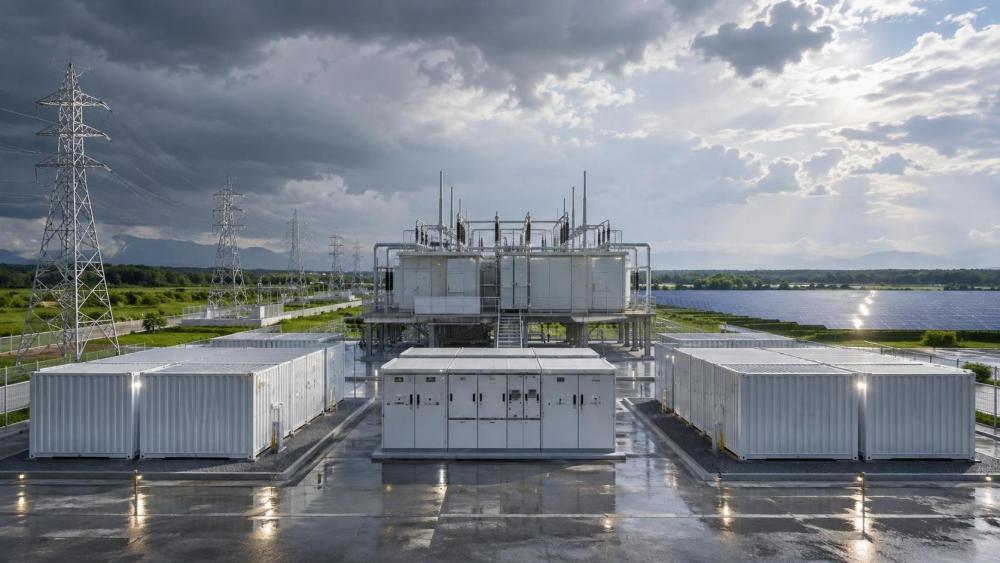
Battery energy storage systems are among the most flexible grid resilience technologies because they can respond quickly to changes in supply and demand. Depending on design and interconnection arrangements, storage can support frequency and voltage response, reduce peak loading, provide backup power, absorb excess local renewable generation, and help a microgrid transition into islanded operation.
The common mistake is sizing storage only by energy duration. A resilience system also needs enough power capacity to start or carry the required loads, adequate inverter capability for local grid-forming or grid-following duties, and controls that reserve energy for the actual contingency. A battery used aggressively for daily tariff optimization may be partially discharged when a storm-related outage occurs unless the operating strategy changes as risk conditions develop.
Thermal management, fire protection, emergency isolation, site access, and maintenance support are not secondary details. In severe heat, cold, smoke, flood exposure, or prolonged islanding, these design choices affect whether the storage system remains available. For critical applications, the storage plant should be tested as part of the full operating sequence, including transfer to backup operation, load shedding, communications loss, and restoration to normal service.
Microgrids are effective when the boundary is clear
A microgrid is useful when a defined electrical area needs to continue operating independently from the wider grid. It may combine local solar generation, dispatchable generation, battery storage, controllable loads, and a microgrid controller. During normal operation, the site can remain grid-connected. When the upstream network becomes unavailable or unstable, the controller separates the site and balances local generation with priority demand.
Microgrids work best where there is a clear islanding boundary, a manageable load profile, and enough local resource to sustain essential operations. They are less suitable when the site has no ability to reduce load, relies on very large motor starts without adequate design provision, or assumes solar generation alone will sustain operations through a long period of poor weather or overnight conditions.
The controller is the operational center of the system. It must coordinate protection settings, inverter modes, battery limits, generator dispatch where present, and staged load shedding. It also needs a safe reconnection sequence. Reconnecting an islanded system to the utility grid without synchronization can damage equipment and create safety hazards. This is why a microgrid should be evaluated as a system integration project rather than as a solar-plus-battery package.
Demand flexibility can protect the network before equipment trips
Demand response is often overlooked because it does not look like backup generation. Yet controlled load reduction can prevent a localized emergency from becoming an outage. During a heatwave, reducing non-essential cooling, shifting industrial processes, limiting EV charging power, or managing building loads can lower stress on feeders and transformers. In a constrained area, flexible demand may create the margin needed to keep priority customers energized.
Its usefulness depends on pre-agreed operational rules. Loads must be identified in advance, control interfaces must be reliable, and staff must understand what can be curtailed without causing safety, quality, or contractual problems. A demand response program based only on manual phone calls is vulnerable during fast-moving events. Automated load management is more effective when it includes override capability and clear escalation procedures.
EV charging deserves separate attention. High-power charging hubs can materially change local demand during stressed conditions. Smart charging can reduce charging rates, sequence vehicles, and preserve site capacity for higher-priority loads. For fleet depots, the resilience question is not simply whether charging continues; it is whether enough vehicles receive enough energy to sustain the next essential operating period.
Compare solutions by the job they perform
Design the controls, protection, and communications as one system
Many resilience projects underperform at the interfaces between equipment packages. The battery supplier may define one communication protocol, the inverter another, and the site controller a third. Protection settings may have been developed for a conventional radial network, then left unchanged after distributed generation and storage are added. During an outage, those mismatches can cause nuisance trips, failed islanding, or unsafe restoration attempts.
Control architecture should therefore be decided early. Establish which system has authority over storage dispatch, generator start signals, load shedding, switch operations, and utility interconnection status. Define how equipment behaves if the central controller loses communications. Local protective functions should remain able to act safely, while centralized controls should support coordinated recovery when communications are available.
Cybersecurity belongs in the same discussion. Remote access and connected devices improve operational response, but they also create pathways that must be managed. Segmented networks, controlled access rights, secure update processes, logging, and tested fallback operation help keep a digital resilience investment from introducing a different form of vulnerability.
A practical sequence for selecting an outage prevention solution
- Map credible weather-driven failure modes. Include electrical equipment exposure, access constraints, communications loss, fuel or supply limitations, and the possibility of multiple failures occurring together.
- Define the minimum service level. State which loads must operate, for how long, and what quality of supply they require.
- Assess existing network constraints. Review feeder topology, alternate sources, transformer loading, protection coordination, interconnection rules, and available space.
- Select the least complex combination that meets the requirement. A small automated switching scheme may solve a network restoration problem more efficiently than a large storage installation. In another location, only a microgrid with firm local capacity can meet the need.
- Test operating scenarios before handover. Include loss of utility supply, loss of communications, storage at different states of charge, priority load changes, severe weather access limitations, and return to normal operation.
For equipment comparison, tender preparation, and technology review, energy intelligence platforms such as Global EcoPower & Energy Matrix Intelligence Network (EPEM) can help organize the commercial and technical questions around storage, grid automation, distributed generation, charging infrastructure, and control systems. The useful comparison is not simply product against product. It is whether each component supports the required operating sequence across the full project lifecycle.
Do not judge resilience by installed capacity alone
A resilience project succeeds when it performs under the conditions it was built for. Installed megawatts, battery containers, smart meters, or remote switches are inputs, not proof of outage prevention. The more meaningful measures are whether critical loads remain served, whether faults are isolated safely, whether the system can operate with degraded communications, and whether normal supply can be restored without creating another incident.
Extreme weather exposes assumptions that look reasonable during ordinary operation. A disciplined design process identifies those assumptions early, assigns each technology a specific role, and tests the complete sequence instead of relying on individual equipment specifications. That is how grid modernization becomes a practical reliability tool rather than a collection of disconnected assets.
- renewable energy
- battery energy storage systems
- grid modernization
- microgrids
- digital substations
- smart meters
- demand response
- energy storage
- battery containers
- grid automation
- distribution automation
- distributed generation
- load management
- grid resilience
- grid resilience technologies
- charging hubs
- grid resilience technologies for outage prevention
Questions about market trends? Contact Market Scope Live for deeper business insights.
We respect your privacy. Your information is strictly confidential.
Related News
 Smart Grid TechnologiesChoosing a Grid Monitoring Systems Supplier: Integration and Support CriteriaChoose a grid monitoring systems supplier with confidence. Compare integration, cybersecurity, lifecycle costs, commissioning, and support before you commit.MORE+
 Smart Grid TechnologiesUS Energy Department Announces $237 Million for Grid Supply ChainsUS Department of Energy announces $237 million for grid supply chains. Explore potential impacts on domestic manufacturing, sourcing and procurement.MORE+
 Smart Grid TechnologiesAdvanced Metering Systems in South Africa: Choosing Connectivity for MunicipalitiesExplore advanced metering systems in South Africa. Compare cellular, RF mesh and PLC to choose reliable municipal connectivity, control costs and plan a smarter rollout.MORE+
 Smart Grid TechnologiesVehicle-to-Grid Technology in Europe: EV, Charger and Grid RequirementsExplore vehicle to grid technology Europe-wide. Discover EV compatibility, charger standards and grid approval requirements to reduce risks and plan your V2G deployment with confidence.MORE+
 Smart Grid TechnologiesWhat Infrastructure Do Utility-Scale Renewables Need for Grid Connection?Explore utility renewable energy infrastructure for grid connection, from substations to controls and compliance. Learn how to spot connection risks and keep projects on track.MORE+
 Smart Grid TechnologiesHybrid Power Plants for Microgrids: Sizing Solar, Batteries, and DieselSize hybrid power plants for microgrids with confidence. Learn how to balance solar, batteries, and diesel to cut fuel use, protect critical loads, and meet reliability targets.MORE+
 Smart Grid TechnologiesRenewable Power Systems for Mining: Designing Reliable Off-Grid MicrogridsExplore renewable power systems for mining: design reliable off-grid microgrids with solar, storage, backup power, and smart controls to cut fuel use and protect uptime.MORE+
 Smart Grid TechnologiesCommercial Microgrids in Europe: When Do Energy Savings Justify the Investment?Considering commercial microgrids Europe-wide? Discover when energy savings justify investment, compare solar and storage returns, and avoid costly oversizing.MORE+
 Smart Grid TechnologiesMulti-Site Commercial Energy Planning: Balancing Load, Tariffs, and ResilienceMulti site commercial energy planning: balance load profiles, tariffs, EV charging, storage, and resilience to reduce costs, strengthen operations, and optimize every facility.MORE+
 Smart Grid TechnologiesWhat Should a Partner Deliver Across a Multi-Site Distributed Energy Portfolio?Best partners for distributed energy projects across a multi-site portfolio? Discover how to standardize design, data, commissioning, and lifecycle performance at scale.MORE+
 Smart Grid TechnologiesHow Can Multi-Site Owners Identify the Right Partners for Distributed Energy Projects?“Is it best partners for distributed energy projects across a multi-site portfolio?” Explore a practical framework to assess technical expertise, grid readiness, risk, data access, and lifecycle support.MORE+
 Smart Grid TechnologiesSmart Grid Technologies for Utilities: How to Prioritize Grid Modernization InvestmentsSmart grid technologies for utilities: learn how to prioritize modernization investments, reduce reliability risks, defer capital upgrades, and build a resilient, cost-effective grid.MORE+
 Smart Grid TechnologiesDigital Substations: How IEC 61850 Improves Protection, Control, and Data VisibilityDigital substations powered by IEC 61850 improve protection, flexible control, and data visibility. Explore the design principles that strengthen grid reliability.MORE+
 Smart Grid TechnologiesWhat Is Feeder Automation and How Does It Reduce Outages on Distribution Grids?Feeder automation helps utilities isolate faults, restore healthy sections faster, and reduce distribution grid outages. Explore how FLISR improves reliability.MORE+
 Smart Grid TechnologiesWhat Renewable Integration Studies Should Model Before a Grid Connection DecisionRenewable integration studies reveal grid connection risks before approval—from voltage and protection to curtailment, dynamic stability, and future network constraints.MORE+
 Smart Grid TechnologiesUtility Resilience Planning: How to Prioritize Grid Investments for Extreme WeatherUtility companies resilience planning: learn how to prioritize grid investments for extreme weather, protect critical services, speed restoration, and build a stronger, smarter energy network.MORE+
 Smart Grid TechnologiesWhat Drives Microgrid Controller Costs Across Commercial and Industrial Projects?Microgrid controllers cost depends on asset mix, islanding needs, legacy integration, software, and lifecycle support. Learn how to compare bids and reduce project risk.MORE+
 Smart Grid TechnologiesHow Does Demand Response Work with Battery Storage in Microgrids?How does demand response integrate with battery storage in microgrid operations? Explore coordinated dispatch, peak shaving, renewable use, and resilient backup strategies.MORE+
 Smart Grid TechnologiesWhich Energy Management Systems Integrate Best with Existing SCADA Platforms?Which energy management systems integrate best with existing SCADA platforms? Explore protocols, control authority, and practical selection insights for reliable energy optimization.MORE+
 Smart Grid TechnologiesHow to Plan Clean Energy Infrastructure for Reliable Industrial Power SupplyClean energy infrastructure planning for reliable industrial power: optimize loads, storage, controls, grid integration, and resilience.MORE+
 Smart Grid TechnologiesHow to Size Hybrid Microgrid Systems for Remote Sites With Variable LoadsHybrid microgrid systems for remote sites: learn how to size solar, batteries, inverters, and generators for variable loads, resilience, and lower fuel costs.MORE+
 Smart Grid TechnologiesGrid Resilience Technologies That Prevent Outages During Extreme WeatherGrid resilience technologies for outage prevention help utilities and facilities withstand extreme weather with automation, storage, microgrids, and demand flexibility. Explore practical strategies to protect critical loads and restore power faster.MORE+
 Smart Grid TechnologiesGrid Stability Solutions for Wind: Managing Variability and Power QualityGrid stability solutions for wind: explore practical strategies for voltage control, frequency response, power quality, storage, and reliable PCC compliance.MORE+
 Smart Grid TechnologiesWhich Grid Interconnection Standards Apply to Commercial Rooftop Solar?What grid interconnection standards apply to commercial rooftop solar? Explore utility rules, inverter certifications, export limits, and approval steps to avoid costly delays.MORE+
 Smart Grid TechnologiesHow Demand Response Supports Public EV Charging StationsSmart grid demand response for public charging stations helps operators control peak loads, protect costs, improve reliability, and deliver a clearer EV driver experience.MORE+
 Smart Grid TechnologiesDo Smart Grid Features Reduce Charging Station Electricity Bills?Do smart grid features actually reduce charging station electricity bills? Discover how load balancing, tariff scheduling, solar, and storage can cut peak costs.MORE+
 Smart Grid TechnologiesCan One Energy Management Platform Support Multiple Charger Brands?Can a single energy management platform handle multiple charger brands at one site? Discover how open integration enables scalable, reliable EV charging control.MORE+
 Smart Grid TechnologiesGrid Resilience Technologies Explained: Which Solutions Reduce Outage Risk?Grid resilience technologies explained clearly: compare batteries, microgrids, feeder automation, and digital controls to see which solutions truly reduce outage risk and protect critical loads.MORE+
 Smart Grid TechnologiesHow Utilities Evaluate Renewable Power Systems for Grid Stability and ROIRenewable power systems for utilities: learn how grids assess stability, storage, integration costs, and long-term ROI to choose resilient, high-value renewable investments.MORE+
 Smart Grid TechnologiesWhat Makes a Microgrid Energy Project Bankable for Investors and Lenders?Energy project bankability microgrids explained: learn what investors and lenders check most—revenue certainty, contract strength, risk allocation, and reliable performance.MORE+
 Smart Grid TechnologiesWhat Determines Grid Monitoring Price in Utility and Industrial Projects?Grid monitoring price depends on scope, accuracy, software, and integration complexity. Learn what drives costs in utility and industrial projects before you compare quotes.MORE+
 Smart Grid TechnologiesUrban Energy Infrastructure Planning: Key Factors for Resilient and Scalable CitiesUrban energy infrastructure planning for resilient, scalable cities: discover how grids, storage, EV charging, and smart forecasting reduce risk, cut costs, and support cleaner urban growth.MORE+
 Smart Grid TechnologiesHow Grid Infrastructure in the USA Is Evolving to Support Renewables and Grid ReliabilityGrid infrastructure USA is evolving fast to integrate renewables, storage, and EV charging while protecting reliability. Explore key trends, risks, and business opportunities shaping the market.MORE+
 Smart Grid TechnologiesGrid Power Infrastructure Investment: How to Compare ROI Across Utility-Scale ProjectsGrid power infrastructure investment explained: learn how to compare ROI across utility-scale projects using NPV, lifecycle cost, grid risk, and performance metrics to make smarter investment decisions.MORE+
 Smart Grid TechnologiesWhat Drives Substation Digitalization Cost? Hardware, Software, and Retrofit FactorsSubstation digitalization cost explained: compare hardware, software, retrofit risks, and lifecycle factors to budget smarter, avoid hidden costs, and choose higher-value upgrades.MORE+
 Smart Grid TechnologiesIndustrial Microgrids EMS Explained: Core Functions, Controls, and Use CasesIndustrial microgrids EMS explained: discover core functions, control priorities, and real-world use cases to improve resilience, cut energy costs, and evaluate platforms with confidence.MORE+
 Smart Grid TechnologiesSCADA for Power Systems Vendor Selection: Integration, Cybersecurity, and Lifecycle CostSCADA for power systems vendor selection made practical: compare integration, cybersecurity, and lifecycle cost to reduce risk, avoid hidden expenses, and choose a platform built to scale.MORE+
 Smart Grid TechnologiesVehicle-to-Grid Technology for Depots: How It Works and When It Makes Business SenseVehicle to grid technology for depots explained: learn how V2G works, where savings and revenue come from, and when it makes real business sense for fleet operators.MORE+
 Smart Grid TechnologiesSmart Digital Energy for Commercial Sites: When Integrated Control Improves Load ManagementSmart digital energy helps commercial sites cut peak demand, optimize solar, storage, EV charging, and HVAC, while improving resilience, visibility, and ROI through integrated control.MORE+
 Smart Grid TechnologiesWhat Are Digital Grid Technologies for Substations and Which Functions Matter Most?Digital grid technologies for substations explained: discover the functions that matter most for reliability, renewable integration, cybersecurity, and smarter asset decisions.MORE+


