Commercial Microgrids in Europe: When Do Energy Savings Justify the Investment?
Energy savings justify a commercial microgrid when the electricity costs it can actually avoid exceed its full lifecycle cost at an acceptable investment return. A high electricity bill is not enough: the site must have a suitable load profile, an exploitable tariff structure, and sufficient operational flexibility to turn onsite generation and storage into measurable savings.
For commercial microgrids in Europe, the decisive comparison is often not “microgrid versus grid electricity.” It is “microgrid versus a simpler alternative,” such as rooftop solar alone, managed charging, or targeted load control. A combined system can produce a positive return while its battery or islanding capability still fails to justify the additional investment. Resilience and flexibility-market income should therefore be evaluated separately from the core energy-savings case.
Define the system before comparing its economics
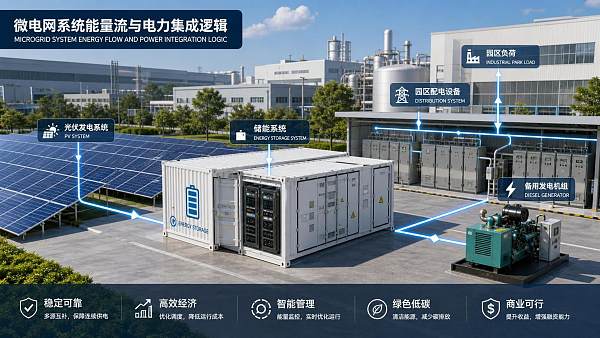
A quotation for a “microgrid” may cover very different capabilities. One supplier may offer solar PV, battery storage, and an energy management system operating only while connected to the grid. Another may include electrical protection, switching, grid-forming equipment, and controls that allow selected loads to operate during a grid outage.
That difference changes both capital cost and the value being purchased. A grid-connected solar-and-storage installation does not automatically provide backup power. Islanded operation requires an appropriate electrical design, compatible equipment, and a defined method for separating from and reconnecting to the public network.
The procurement specification should distinguish bill reduction from continuity of supply. If outages are not materially costly, paying for whole-site islanding can weaken the investment case. If continuity is essential, supporting a defined critical-load circuit may be more economical than backing up the entire facility.
Identify the electricity costs that can genuinely disappear
The correct value of onsite electricity is the marginal import cost avoided, not the total annual bill divided by consumption. Fixed connection charges, capacity-based charges, recoverable taxes, and contractual minimum payments may remain even when grid purchases fall.
European markets do not share a single commercial tariff model. Applicable costs depend on the country, network area, voltage level, supply contract, and metering arrangement. A regional average electricity price is therefore a weak basis for approving a site-specific investment.
This distinction prevents a common modelling error: valuing every solar kilowatt-hour at the full retail electricity price. Generation used onsite and generation exported to the grid can have substantially different values. Where export compensation follows wholesale prices, surplus solar should be valued at the relevant generation-time prices, not an annual market average.
The load profile determines whether solar needs storage
A facility with stable daytime consumption can use much of its solar production directly. That strengthens the solar investment but can leave limited surplus for a battery to capture. Adding storage because the site has a large annual electricity demand confuses consumption volume with storage opportunity.
A site with substantial evening consumption and midday solar surplus has a different proposition. Storage can move generation into higher-value periods, provided the avoided import cost exceeds the export revenue forgone, conversion losses, and the cost of operating and wearing out the battery.
For solar shifting, the gross value of a delivered battery kilowatt-hour can be expressed as:
Avoided import price − (forgone export price ÷ round-trip efficiency).
This calculation assumes the charging energy would otherwise have been exported. Energy that would otherwise be curtailed has a different opportunity cost. Grid-charged arbitrage must instead use the full applicable charging cost, including charges that still apply to battery imports.
Short demand spikes create another opportunity, but the battery must match the tariff’s measurement method. Reducing an instantaneous equipment peak does not necessarily reduce a charge based on a longer averaging period. Conversely, a relatively short-duration battery may reduce a bill effectively if the chargeable peaks are brief and predictable.

Battery power determines how much demand can be reduced at one time; usable energy determines how long that reduction can last. Both must be tested against interval data. A high-power battery with insufficient duration can run out before the billing peak ends. An energy-heavy battery can be unnecessarily expensive when the only valuable task is suppressing short peaks.
A worked example: a viable package can contain an uneconomic battery
Consider a hypothetical site evaluating solar alone against solar plus storage and integrated controls. The figures below are illustrative assumptions, not European equipment-price benchmarks or an actual project.
Assume annual solar generation of 900 MWh, with 630 MWh consumed directly and 270 MWh exported. The avoidable import price is €0.20/kWh and the export value is €0.05/kWh. Annual gross value is therefore:
- Direct self-consumption: 630,000 kWh × €0.20 = €126,000.
- Exports: 270,000 kWh × €0.05 = €13,500.
- Total before operating costs: €139,500.
With assumed annual operating costs of €9,500, solar alone provides €130,000 in annual net benefit. At an assumed installed cost of €800,000, simple payback is approximately 6.2 years.
Now add a battery and controls costing another €400,000. Assume the battery delivers 180 MWh annually from surplus solar at 90% round-trip efficiency. It needs 200 MWh of charging energy that would otherwise have been exported.
The battery avoids €36,000 of imports but sacrifices €10,000 of export revenue, producing €26,000 of additional gross value. After €6,000 of additional annual operating costs, its incremental net benefit is €20,000. No peak-demand savings or flexibility revenues are assumed.
The combined package appears attractive on simple payback, but the additional €400,000 earns only €20,000 annually: a 20-year incremental payback.
Using a simplified 15-year evaluation at an 8% discount rate, with constant annual benefits and no residual value, solar alone has a net present value of approximately €313,000. The combined system has approximately €84,000. Adding storage reduces investment value by about €229,000.
These calculations exclude tax effects, degradation, replacements, and changes in electricity prices. A procurement-grade model must include them. Nevertheless, the example shows why suppliers should disclose incremental economics: a strong solar return can conceal a weak storage return.
Include the costs that equipment quotations leave outside the boundary
A hardware quotation is not necessarily a completed-project price. The investment boundary should include engineering, connection studies, electrical modifications, metering, commissioning, communications, civil works, and any necessary fire-safety provisions. Roof reinforcement or replacement can materially affect a rooftop installation’s economics.
Lifecycle costs should include maintenance, software subscriptions, insurance changes, auxiliary electricity consumption, component replacement, and eventual decommissioning. Battery cooling and standby consumption should be represented consistently: either included within modelled system efficiency or deducted separately, without double counting.
Battery capacity and performance warranties also need to match the proposed dispatch. The relevant constraints include retained capacity, energy throughput, operating temperature, charging rates, and warranty duration. A forecast that assumes intensive daily cycling is not credible if the associated warranty or replacement allowance does not support that operation.
Financing should be evaluated on a consistent basis. An unlevered project model should use an appropriate project discount rate; an equity model should explicitly account for debt drawdown, interest, and repayment. Comparing an unlevered return with a financing offer without reconciling the two can distort the decision.
Keep resilience and market revenues out of the basic savings claim
Backup capability has value only when the system can support the required loads for the required duration. An estimate of avoided outage losses should reflect interruption frequency, production restart costs, spoiled goods, contractual penalties, and existing backup arrangements—not a generic percentage added to annual savings.
Reserve requirements can also reduce bill savings. Battery energy held for an outage is unavailable for some arbitrage or peak-shaving activities. The financial model must reflect the operating policy rather than assuming the same capacity simultaneously provides every service.
Flexibility-market revenue requires equally careful treatment. Eligibility, minimum participation requirements, aggregation contracts, metering, availability commitments, and settlement rules differ by market and service. Gross revenue projections should be reduced by aggregator fees and the cost of maintaining the required availability.
The same battery cannot be credited with incompatible dispatches at the same time. A prudent approval case separates dependable bill savings from contracted service revenues and speculative upside. If the project only clears its investment hurdle through uncontracted market income, it is not justified by energy savings alone.
What to require before committing capital
A credible proposal should use at least a full seasonal cycle of interval consumption data at a resolution suitable for the tariff and intended controls. Annual consumption totals cannot establish self-consumption, charging opportunities, or peak reduction. Planned fleet charging, production changes, and operating-hour changes should be modelled separately rather than hidden inside a single growth assumption.
Request a common-boundary comparison of the proposed system against solar alone and relevant lower-cost control measures. Managed EV charging or rescheduling flexible loads may capture part of the benefit without battery investment.
The commercial offer should make assumptions auditable: generation yield, export limits, dispatch priorities, usable battery capacity, losses, degradation, service fees, and replacement timing. Performance commitments should identify what is guaranteed, how it is measured, and which tariff or operational changes fall outside the supplier’s responsibility.
Finally, test lower avoidable electricity prices, weaker demand reduction, reduced battery utilisation, higher capital costs, and changes to site operations. The useful threshold is not a universal European payback period; it is whether the project still meets the company’s return requirement under defensible downside assumptions.
Where solar alone delivers most of the savings, a staged installation can preserve capital while leaving room for storage later, provided the initial design supports expansion. A full microgrid is financially justified when its additional capabilities earn their additional cost—not merely when the combined proposal produces a lower electricity bill.
Questions about market trends? Contact Market Scope Live for deeper business insights.
We respect your privacy. Your information is strictly confidential.
Related News
 Smart Grid TechnologiesPower System Automation Prices: What Drives Project Costs?Power system automation price depends on integration, software, testing, and support. Explore the key cost drivers and compare bids with confidence.MORE+
 Smart Grid TechnologiesGrid Flexibility Costs: Comparing Storage, Demand Response and Peaker PlantsCompare grid flexibility cost across battery storage, demand response and peaker plants. Discover key cost drivers and choose the right solution for your reliability needs.MORE+
 Smart Grid TechnologiesChoosing a Grid Monitoring Systems Supplier: Integration and Support CriteriaChoose a grid monitoring systems supplier with confidence. Compare integration, cybersecurity, lifecycle costs, commissioning, and support before you commit.MORE+
 Smart Grid TechnologiesUS Energy Department Announces $237 Million for Grid Supply ChainsUS Department of Energy announces $237 million for grid supply chains. Explore potential impacts on domestic manufacturing, sourcing and procurement.MORE+
 Smart Grid TechnologiesAdvanced Metering Systems in South Africa: Choosing Connectivity for MunicipalitiesExplore advanced metering systems in South Africa. Compare cellular, RF mesh and PLC to choose reliable municipal connectivity, control costs and plan a smarter rollout.MORE+
 Smart Grid TechnologiesVehicle-to-Grid Technology in Europe: EV, Charger and Grid RequirementsExplore vehicle to grid technology Europe-wide. Discover EV compatibility, charger standards and grid approval requirements to reduce risks and plan your V2G deployment with confidence.MORE+
 Smart Grid TechnologiesWhat Infrastructure Do Utility-Scale Renewables Need for Grid Connection?Explore utility renewable energy infrastructure for grid connection, from substations to controls and compliance. Learn how to spot connection risks and keep projects on track.MORE+
 Smart Grid TechnologiesHybrid Power Plants for Microgrids: Sizing Solar, Batteries, and DieselSize hybrid power plants for microgrids with confidence. Learn how to balance solar, batteries, and diesel to cut fuel use, protect critical loads, and meet reliability targets.MORE+
 Smart Grid TechnologiesRenewable Power Systems for Mining: Designing Reliable Off-Grid MicrogridsExplore renewable power systems for mining: design reliable off-grid microgrids with solar, storage, backup power, and smart controls to cut fuel use and protect uptime.MORE+
 Smart Grid TechnologiesCommercial Microgrids in Europe: When Do Energy Savings Justify the Investment?Considering commercial microgrids Europe-wide? Discover when energy savings justify investment, compare solar and storage returns, and avoid costly oversizing.MORE+
 Smart Grid TechnologiesMulti-Site Commercial Energy Planning: Balancing Load, Tariffs, and ResilienceMulti site commercial energy planning: balance load profiles, tariffs, EV charging, storage, and resilience to reduce costs, strengthen operations, and optimize every facility.MORE+
 Smart Grid TechnologiesWhat Should a Partner Deliver Across a Multi-Site Distributed Energy Portfolio?Best partners for distributed energy projects across a multi-site portfolio? Discover how to standardize design, data, commissioning, and lifecycle performance at scale.MORE+
 Smart Grid TechnologiesHow Can Multi-Site Owners Identify the Right Partners for Distributed Energy Projects?“Is it best partners for distributed energy projects across a multi-site portfolio?” Explore a practical framework to assess technical expertise, grid readiness, risk, data access, and lifecycle support.MORE+
 Smart Grid TechnologiesSmart Grid Technologies for Utilities: How to Prioritize Grid Modernization InvestmentsSmart grid technologies for utilities: learn how to prioritize modernization investments, reduce reliability risks, defer capital upgrades, and build a resilient, cost-effective grid.MORE+
 Smart Grid TechnologiesDigital Substations: How IEC 61850 Improves Protection, Control, and Data VisibilityDigital substations powered by IEC 61850 improve protection, flexible control, and data visibility. Explore the design principles that strengthen grid reliability.MORE+
 Smart Grid TechnologiesWhat Is Feeder Automation and How Does It Reduce Outages on Distribution Grids?Feeder automation helps utilities isolate faults, restore healthy sections faster, and reduce distribution grid outages. Explore how FLISR improves reliability.MORE+
 Smart Grid TechnologiesWhat Renewable Integration Studies Should Model Before a Grid Connection DecisionRenewable integration studies reveal grid connection risks before approval—from voltage and protection to curtailment, dynamic stability, and future network constraints.MORE+
 Smart Grid TechnologiesUtility Resilience Planning: How to Prioritize Grid Investments for Extreme WeatherUtility companies resilience planning: learn how to prioritize grid investments for extreme weather, protect critical services, speed restoration, and build a stronger, smarter energy network.MORE+
 Smart Grid TechnologiesWhat Drives Microgrid Controller Costs Across Commercial and Industrial Projects?Microgrid controllers cost depends on asset mix, islanding needs, legacy integration, software, and lifecycle support. Learn how to compare bids and reduce project risk.MORE+
 Smart Grid TechnologiesHow Does Demand Response Work with Battery Storage in Microgrids?How does demand response integrate with battery storage in microgrid operations? Explore coordinated dispatch, peak shaving, renewable use, and resilient backup strategies.MORE+
 Smart Grid TechnologiesWhich Energy Management Systems Integrate Best with Existing SCADA Platforms?Which energy management systems integrate best with existing SCADA platforms? Explore protocols, control authority, and practical selection insights for reliable energy optimization.MORE+
 Smart Grid TechnologiesHow to Plan Clean Energy Infrastructure for Reliable Industrial Power SupplyClean energy infrastructure planning for reliable industrial power: optimize loads, storage, controls, grid integration, and resilience.MORE+
 Smart Grid TechnologiesHow to Size Hybrid Microgrid Systems for Remote Sites With Variable LoadsHybrid microgrid systems for remote sites: learn how to size solar, batteries, inverters, and generators for variable loads, resilience, and lower fuel costs.MORE+
 Smart Grid TechnologiesGrid Resilience Technologies That Prevent Outages During Extreme WeatherGrid resilience technologies for outage prevention help utilities and facilities withstand extreme weather with automation, storage, microgrids, and demand flexibility. Explore practical strategies to protect critical loads and restore power faster.MORE+
 Smart Grid TechnologiesGrid Stability Solutions for Wind: Managing Variability and Power QualityGrid stability solutions for wind: explore practical strategies for voltage control, frequency response, power quality, storage, and reliable PCC compliance.MORE+
 Smart Grid TechnologiesWhich Grid Interconnection Standards Apply to Commercial Rooftop Solar?What grid interconnection standards apply to commercial rooftop solar? Explore utility rules, inverter certifications, export limits, and approval steps to avoid costly delays.MORE+
 Smart Grid TechnologiesHow Demand Response Supports Public EV Charging StationsSmart grid demand response for public charging stations helps operators control peak loads, protect costs, improve reliability, and deliver a clearer EV driver experience.MORE+
 Smart Grid TechnologiesDo Smart Grid Features Reduce Charging Station Electricity Bills?Do smart grid features actually reduce charging station electricity bills? Discover how load balancing, tariff scheduling, solar, and storage can cut peak costs.MORE+
 Smart Grid TechnologiesCan One Energy Management Platform Support Multiple Charger Brands?Can a single energy management platform handle multiple charger brands at one site? Discover how open integration enables scalable, reliable EV charging control.MORE+
 Smart Grid TechnologiesGrid Resilience Technologies Explained: Which Solutions Reduce Outage Risk?Grid resilience technologies explained clearly: compare batteries, microgrids, feeder automation, and digital controls to see which solutions truly reduce outage risk and protect critical loads.MORE+
 Smart Grid TechnologiesHow Utilities Evaluate Renewable Power Systems for Grid Stability and ROIRenewable power systems for utilities: learn how grids assess stability, storage, integration costs, and long-term ROI to choose resilient, high-value renewable investments.MORE+
 Smart Grid TechnologiesWhat Makes a Microgrid Energy Project Bankable for Investors and Lenders?Energy project bankability microgrids explained: learn what investors and lenders check most—revenue certainty, contract strength, risk allocation, and reliable performance.MORE+
 Smart Grid TechnologiesWhat Determines Grid Monitoring Price in Utility and Industrial Projects?Grid monitoring price depends on scope, accuracy, software, and integration complexity. Learn what drives costs in utility and industrial projects before you compare quotes.MORE+
 Smart Grid TechnologiesUrban Energy Infrastructure Planning: Key Factors for Resilient and Scalable CitiesUrban energy infrastructure planning for resilient, scalable cities: discover how grids, storage, EV charging, and smart forecasting reduce risk, cut costs, and support cleaner urban growth.MORE+
 Smart Grid TechnologiesHow Grid Infrastructure in the USA Is Evolving to Support Renewables and Grid ReliabilityGrid infrastructure USA is evolving fast to integrate renewables, storage, and EV charging while protecting reliability. Explore key trends, risks, and business opportunities shaping the market.MORE+
 Smart Grid TechnologiesGrid Power Infrastructure Investment: How to Compare ROI Across Utility-Scale ProjectsGrid power infrastructure investment explained: learn how to compare ROI across utility-scale projects using NPV, lifecycle cost, grid risk, and performance metrics to make smarter investment decisions.MORE+
 Smart Grid TechnologiesWhat Drives Substation Digitalization Cost? Hardware, Software, and Retrofit FactorsSubstation digitalization cost explained: compare hardware, software, retrofit risks, and lifecycle factors to budget smarter, avoid hidden costs, and choose higher-value upgrades.MORE+
 Smart Grid TechnologiesIndustrial Microgrids EMS Explained: Core Functions, Controls, and Use CasesIndustrial microgrids EMS explained: discover core functions, control priorities, and real-world use cases to improve resilience, cut energy costs, and evaluate platforms with confidence.MORE+
 Smart Grid TechnologiesSCADA for Power Systems Vendor Selection: Integration, Cybersecurity, and Lifecycle CostSCADA for power systems vendor selection made practical: compare integration, cybersecurity, and lifecycle cost to reduce risk, avoid hidden expenses, and choose a platform built to scale.MORE+
 Smart Grid TechnologiesVehicle-to-Grid Technology for Depots: How It Works and When It Makes Business SenseVehicle to grid technology for depots explained: learn how V2G works, where savings and revenue come from, and when it makes real business sense for fleet operators.MORE+