
What grid interconnection standards apply to commercial rooftop solar? The practical answer is that there is no single worldwide rulebook. A compliant project must meet the local utility’s interconnection requirements, the applicable electrical code, and the grid-support certification required for its inverter and protection equipment. Those requirements usually cover anti-islanding, voltage and frequency settings, power quality, export limits, metering, communications, and formal utility approval.
The point is not merely to “connect solar to the grid.” A commercial system can materially change how power flows through a building service and the local distribution feeder. If the standards are missed early, a project may face inverter replacement, redesign of the point of common coupling, delayed permission to operate, or a lower approved export capacity than the financial model assumed.
A useful rule is this: select equipment that is certified for the country, then design the project to the utility’s specific connection study and operating conditions. Equipment compliance alone does not guarantee interconnection approval.
What Grid Interconnection Standards Apply to Commercial Rooftop Solar?
Most jurisdictions apply the same technical themes, but use different standards, test methods, terminology, and approval processes. The comparison below shows the standards that commonly form the starting point for commercial rooftop solar design. It is a screening guide, not a substitute for the current requirements issued by the relevant utility, grid operator, authority having jurisdiction, or electrical inspector.
In the United States, IEEE 1547 is often the central technical reference for distributed energy resources connected to the electric power system. It addresses how the system should behave at the grid interface. UL 1741 is closely associated with testing and certification of inverters and related equipment. The National Electrical Code addresses installation safety, but it is not the utility interconnection agreement. A project needs all three layers addressed, along with the serving utility’s own requirements.
Across Europe, EN 50549 provides a common technical basis for connecting generating plants to distribution networks, but country-level rules still matter. Germany, Italy, Spain, France, and other markets may have distinct documentation, protection, metering, or commissioning expectations. It is risky to assume that an inverter accepted in one European country will be accepted without qualification in another.
The United Kingdom offers a clear example of why project size matters. Smaller, simpler installations may follow a lighter route under G98, while larger or more complex systems generally fall under G99 and require more detailed review. The relevant distribution network operator may impose export limits, monitoring obligations, or reinforcement conditions.
For Australia and New Zealand, AS/NZS 4777 is widely relevant to inverter energy systems, but network businesses can specify connection settings and export conditions that go beyond the base standard. A site in a constrained area may receive approval only with dynamic export control or a lower fixed export limit.
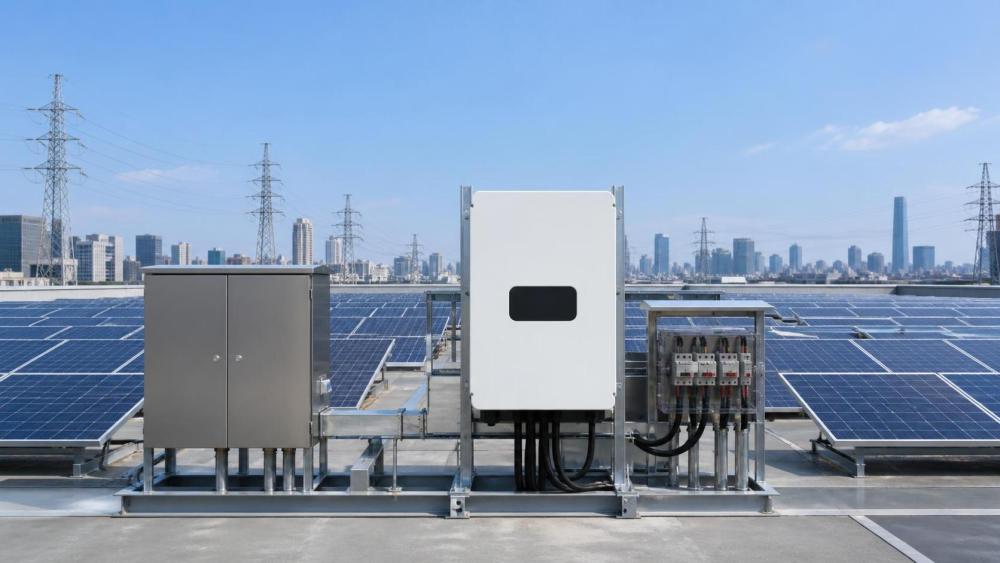
The technical requirements that recur in nearly every market
The standard number differs, but the engineering concerns are remarkably consistent. Grid operators need to know that a rooftop plant will disconnect when it should, remain connected when it should, and avoid degrading voltage or power quality for nearby customers.
Inverter certification and approved grid profiles
The inverter is the control point between the PV array and the grid. Its country-specific certification must match the project location and, in many cases, the utility’s approved list or required settings profile. A generic claim that an inverter is “grid-tied” is insufficient for commercial work.
Confirm the exact model number, firmware version, nominal voltage, phase configuration, and certification documents before procurement. Commercial projects often use multiple inverter sizes or substitute equipment when supply chains tighten. A substitution that appears electrically equivalent can still create an approval problem if its certification differs.
Anti-islanding protection
Anti-islanding prevents the solar system from continuing to energize a section of the network after the utility supply has been interrupted. This protects line workers, utility equipment, and the customer installation. The inverter normally detects abnormal grid conditions and disconnects within the required operating window.
A common misconception is that solar can keep the building powered during an outage simply because panels are producing electricity. Standard grid-tied rooftop solar generally shuts down during a utility outage. Intentional backup operation requires a properly designed islanding arrangement, suitable switching equipment, load management, and usually battery storage. It must be explicitly permitted by local rules.
Voltage, frequency, and ride-through settings
Older distributed-generation practices focused strongly on immediate disconnection when voltage or frequency left a narrow band. Modern grids often require more nuanced behavior. Depending on the local rule, an inverter may need to ride through certain short-duration disturbances instead of disconnecting immediately. It may also need to provide voltage support through reactive power functions or respond to frequency changes by adjusting active power.
This is where project teams can make an expensive assumption: a factory-default inverter configuration may not match the approved utility profile. Settings should be controlled, recorded, and verified during commissioning. Any later firmware update deserves the same discipline.
Power quality and export management
Commercial rooftop systems must maintain acceptable power quality at the point of common coupling. Utilities may assess harmonics, flicker, phase imbalance, power factor, voltage rise, and reverse power flow. These issues become more visible at larger capacities, on weak feeders, or where several PV sites operate nearby.
Export management is particularly important where the building’s daytime load is lower than the PV system’s output. A warehouse may have a large roof but modest midday demand. Without a suitable export arrangement, the project may require a smaller PV capacity, a zero-export controller, dynamic export control, storage, or feeder upgrades. The best answer depends on site load data and the network study, not roof area alone.
Where projects usually get caught out
The first problem is treating the inverter certificate as the whole interconnection package. It is only one part. The utility may also require a single-line diagram, site plan, equipment data sheets, protection settings, transformer details, load profile, proposed export capacity, communications architecture, and commissioning test records.
The second is submitting an application after the design is effectively fixed. A preliminary interconnection request should be made before equipment orders, detailed structural work, or a final financial commitment. The utility may limit export, require an upgraded service transformer, request protection changes, or decline the proposed capacity because of feeder constraints.
Another frequent mistake is confusing AC inverter capacity, DC module capacity, and approved export capacity. They are related but not interchangeable. A system can have a higher DC array rating than its AC inverter rating, and a site can have a higher installed inverter capacity than its permitted export capacity if controls reliably enforce the limit. Whether that arrangement is acceptable depends on the local utility rule and its evidence requirements.
Battery storage adds another layer. It can reduce export peaks, shift self-consumption, and support backup loads, but it may also be treated as a separate grid-connected resource. The utility may ask how the battery is charged, whether it can export, what its maximum combined PV-plus-storage export is, and how controls behave after loss of communications. Do not assume that adding storage after PV approval is an administrative detail.
Choose the right compliance path before choosing the equipment
There are usually two broad paths. The first is a standard, low-complexity connection: certified inverters, a straightforward electrical design, limited capacity, predictable export, and no unusual operational mode. This path can be efficient where the local network has adequate hosting capacity.
The second is a managed or studied connection. It may involve export caps, protection relays, revenue-grade meters, remote communications, utility-visible controls, transformer upgrades, or a formal network impact assessment. Larger systems, systems on weak grids, solar-plus-storage projects, and sites with significant EV charging are more likely to fall into this category.
Neither path is inherently better. A managed connection can unlock a commercially viable project where an unrestricted export application would fail. The real question is whether the control strategy is robust enough to meet the approved limit under normal operation, equipment faults, communications loss, and maintenance conditions.
A practical pre-application checklist
- Identify the serving utility or distribution network operator and obtain its latest commercial distributed-generation requirements.
- Confirm the site service voltage, transformer rating, main switchboard rating, interval load data, and existing generation or storage.
- Define the proposed AC capacity, DC capacity, expected export, and whether export must be capped.
- Check that each proposed inverter model carries the required local certification and supports the required grid settings.
- Ask early whether protection studies, communications, new metering, or a network impact study may be required.
- Keep approved drawings, certificates, inverter setting records, and commissioning test results in the handover package.
This preparation also improves commercial decisions. A project with a lower module count but a clean interconnection route may outperform a larger proposal that waits months for upgrades or depends on uncertain export revenue.
How to compare proposals from EPC contractors
When comparing commercial rooftop solar proposals, look past the energy-yield estimate and installed price. Ask each contractor to state the assumed interconnection basis in writing: proposed export limit, required certifications, utility application status, anticipated studies, protection scope, metering scope, and responsibility for utility-driven changes.
A proposal that says “utility approval included” without defining the scope leaves room for disagreement later. It may cover application administration but exclude transformer replacement, switchboard modifications, protection relay installation, communications hardware, civil works, or utility fees. Those exclusions are not necessarily unreasonable; they need to be visible before the contract is signed.
It is also sensible to ask who owns the final inverter configuration. The party that commissions the system should provide a settings report that can be traced to the approved grid profile. Facility teams should retain it. Years later, when an inverter is replaced or a battery is added, that record can prevent avoidable compliance uncertainty.
FAQ
Can a commercial rooftop solar system export power without a special agreement?
Usually not. Even where simplified approval exists, the utility normally needs notification, an application, or formal permission before parallel operation and export. The required process depends on capacity, location, and local rules.
Does an inverter with international certification work everywhere?
No. Certification must match the destination market and may need to meet a specific local revision or utility acceptance list. Confirm this before purchase, especially for imported equipment.
Is zero export easier to approve?
Sometimes, but it is not automatic. The utility may require proof that the export-control system is reliable, correctly commissioned, and fail-safe. A zero-export design can still affect voltage, fault levels, and site electrical equipment.
When should the interconnection application begin?
Begin during feasibility, before finalizing capacity and ordering major equipment. The utility response can determine the viable system size and whether storage or export control has value.
Make interconnection a design input, not a closing task
Commercial rooftop solar succeeds when the electrical design, site load, export strategy, and utility requirements align from the beginning. The applicable standards may be IEEE 1547 and UL 1741 in one market, EN 50549 and national rules in another, or a local framework such as G98/G99 or AS/NZS 4777. Yet the project discipline remains the same: verify certified equipment, document protection and control settings, understand network constraints, and obtain written approval before energization.
For teams comparing markets, equipment, or distributed-energy project structures, EPEM tracks the practical relationship between rooftop solar, storage, grid modernization, and commercial power demand. The key question, What grid interconnection standards apply to commercial rooftop solar, should be answered using the current utility documents for the exact site, not a generic equipment brochure or a rule from another region.
- grid modernization
- rooftop solar
- distributed energy resources
- load management
- grid interconnection
- power quality
- protection relays
- grid interconnection standards
- interconnection standards
- EPC contractors
- grid operators
- distributed energy
- commercial rooftop solar
- What grid interconnection standards apply to commercial rooftop solar