
How Utilities Evaluate Renewable Power Systems for Grid Stability and ROI
As utilities accelerate the energy transition, evaluating renewable power systems now requires more than comparing generation costs. Decision-makers are being asked to judge whether a proposed mix of solar, wind, storage, digital controls, and grid upgrades will improve reliability without creating new operational risk. That shifts the procurement discussion from a simple equipment purchase to a system-level investment decision.
For many utility teams, the real question is not whether renewable power belongs in the portfolio. That debate has largely moved on. The harder question is which renewable configuration fits the local grid, the local load profile, the regulatory environment, and the utility’s balance sheet. A project that looks attractive in a headline levelized cost comparison can still underperform if it triggers curtailment, weakens voltage stability, increases congestion, or depends on control strategies that are difficult to execute in the field.
That is why serious evaluation of renewable power systems for utilities tends to converge on two tests at the same time: can the system support grid stability, and can it deliver an acceptable long-term return on investment after integration costs, operational constraints, and asset performance risk are included?
Why utility evaluation has become more complicated
Traditional generation planning assumed a relatively predictable relationship between supply, demand, and dispatch. Variable renewable generation changes that logic. Solar output can rise and fall rapidly with weather conditions. Wind production can be strong at times when local demand is weak. Distributed energy resources can create reverse power flow on networks that were not originally designed for it. At the same time, utilities are under pressure to reduce emissions, modernize aging infrastructure, and connect new loads such as EV charging, data centers, and electrified industrial processes.
In that environment, buying generation capacity is no longer enough. Utilities are effectively procuring a combination of energy production, controllability, response speed, communications capability, and compliance performance. A photovoltaic plant with weak inverter functionality is a different grid asset from one that can provide advanced voltage support and fault ride-through. A battery system sized only for headline megawatt-hours is very different from one designed around ramp control, frequency response, peak shaving, and reserve value.
This is also where many market narratives become too simplistic. Low module prices do not automatically mean a low-cost utility asset. High renewable penetration does not automatically reduce system cost in the near term if transmission constraints, curtailment, or balancing costs rise quickly. And storage does not automatically solve intermittency unless the dispatch logic, duration, interconnection design, and market participation model are aligned.
What utilities are actually trying to determine
When a utility evaluates a renewable power system, the underlying decision usually includes several business questions at once.
- Will this system improve resource adequacy or mainly add energy during already saturated hours?
- Will it strengthen local grid performance or require expensive upgrades elsewhere on the network?
- Can the assets comply with current interconnection rules and still remain adaptable if standards tighten?
- Does the project create operational flexibility, or does it shift risk to dispatch teams and field maintenance teams?
- Will the economics still hold if curtailment, degradation, financing costs, and delayed connection are worse than expected?
These are procurement questions as much as engineering questions. For enterprise decision-makers, the key is to avoid evaluating renewable projects as standalone technologies. Utilities do not operate isolated devices. They operate portfolios, substations, feeders, balancing areas, markets, and reliability obligations.
Grid stability is not a side issue
In many procurements, grid stability is still treated as a technical appendix after the commercial case is built. That sequence is risky. Stability characteristics should shape the commercial evaluation from the start because they affect both project viability and downstream system cost.
At utility scale, several operational factors matter early:
- Voltage regulation: High solar and distributed generation penetration can create local voltage rise, especially on weaker feeders or remote grid sections.
- Frequency response: Inverter-based resources can support frequency control, but the capability depends on plant controls, inverter settings, and operator coordination.
- Ramp behavior: Fast changes in solar or wind output may require flexible backup, storage, or demand-side response.
- Fault ride-through and protection coordination: Projects must behave predictably during grid disturbances and fit existing protection schemes.
- Congestion and curtailment risk: A technically efficient plant may still lose value if network bottlenecks limit deliverability.
Utilities increasingly look beyond the generation asset itself and ask whether the full system includes the control capabilities needed to behave like a grid-supporting resource. That includes inverter functionality, SCADA integration, plant controller quality, response latency, forecasting tools, and interoperability with utility control rooms.
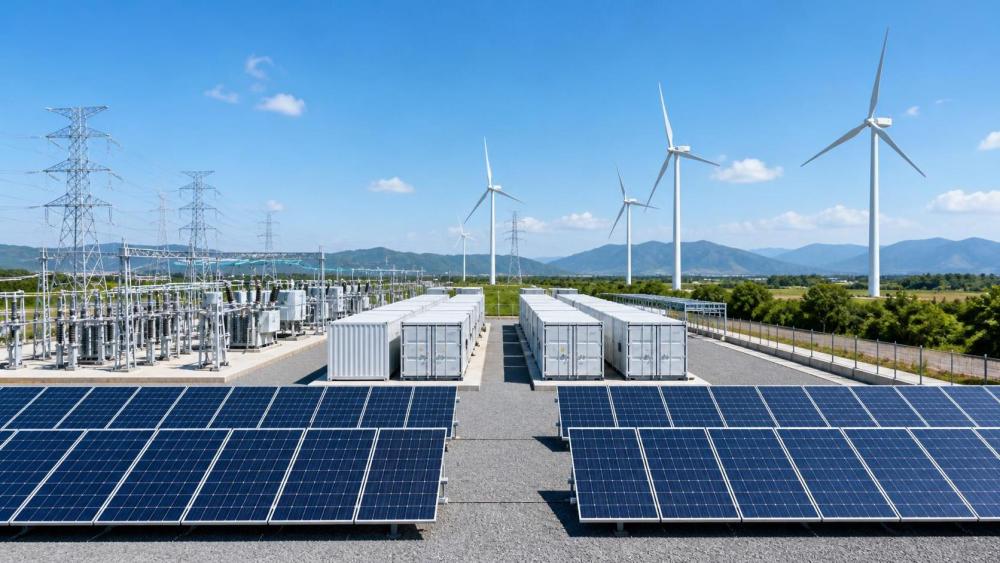
For this reason, a utility-scale solar or wind project cannot be judged only by installed capacity, expected annual generation, or EPC price. The more useful question is how the asset behaves during stressed operating conditions and whether that behavior is visible and manageable for the grid operator.
Storage changes the evaluation, but does not simplify it
Battery energy storage has become central to many utility renewable strategies because it can reduce ramping stress, absorb excess generation, defer some grid upgrades, and capture value across multiple use cases. But its presence should not be treated as a generic solution box in a project model.
Utilities need to test what the storage system is really being asked to do. A battery configured for daily energy shifting may not be optimized for fast frequency response. A system designed for capacity support may not deliver the expected value if cycling assumptions prove too aggressive. Thermal management, degradation, warranty structure, fire protection design, augmentation planning, and software integration can materially affect lifecycle economics.
That means ROI analysis for solar-plus-storage or wind-plus-storage needs to separate at least three layers of value:
- Energy arbitrage or capture of otherwise curtailed generation
- Grid support services such as frequency response, reserve, or congestion relief
- Deferred infrastructure spending or improved reliability performance
Many investment cases look strong because these values are stacked together in a model. The risk appears when one or more of those value streams are uncertain, regulated differently, or operationally difficult to realize. In some markets, compensation mechanisms for ancillary services or non-wires alternatives remain immature or are changing quickly【待核实】. Utilities should be careful about underwriting revenue or avoided-cost assumptions that depend on policy details not yet settled.
ROI depends on system fit, not just low capex
For enterprise buyers, one of the most common mistakes is to let capex dominate the conversation too early. Lower upfront cost matters, but utilities earn or lose value over decades of operation. A cheaper project with weaker controls, lower availability, slower service response, or higher integration cost can be more expensive over time than a slightly higher-priced but better-aligned system.
A more disciplined ROI view typically includes:
Notice that this framework pushes the discussion beyond simple payback. Utilities often need to justify projects in terms of resilience, regulatory alignment, and network flexibility, not only direct revenue. That is especially true where electrification is expected to increase peak demand or where transmission expansion timelines are long.
The procurement decision should start with the grid scenario
Utilities sometimes begin by asking which technology is best. A more useful starting point is to define the operating scenario the system must solve.
A renewable procurement serving a fast-growing suburban distribution network has different priorities from one serving an industrial corridor, an islanded system, or a transmission-constrained rural region. In one case, midday solar combined with short-duration storage may be the logical answer. In another, wind paired with longer-duration flexibility, digital demand response, or substation automation may deliver better system value.
For selection decisions, it helps to classify the use case first:
- Energy-led projects: Primarily focused on adding clean megawatt-hours at acceptable delivered cost
- Capacity-led projects: Focused on peak support, adequacy, and reserve contribution
- Reliability-led projects: Designed to stabilize weak grids, support remote areas, or reduce outage exposure
- Network optimization projects: Built to defer upgrades, manage congestion, or support high DER penetration
Many projects combine these goals, but usually one dominates. If that priority is not explicit, technology selection becomes muddled and suppliers will optimize proposals around the wrong metrics.
What to test before selecting vendors or system configurations
For utility buyers, the most valuable diligence often happens before the formal comparison of bids. That is the stage where requirements should be translated into operational and commercial filters.
1. Interconnection reality
The project’s business case should be stress-tested against actual interconnection conditions, not assumed network access. Available capacity, queue delays, upgrade obligations, and connection point constraints can reshape economics quickly. In some markets, interconnection timing is becoming as important as equipment price.
2. Control architecture
Utilities should examine how plant controllers, inverters, battery management systems, EMS platforms, and utility-side SCADA will work together. Interoperability issues often remain hidden during procurement and emerge during commissioning. A technically compliant component set can still create operational friction if response logic and data visibility are weak.
3. Dispatchability and flexibility
Not every renewable asset needs to be dispatchable in the traditional sense, but utilities should know exactly how much control they have over active power, reactive power, ramp rates, and charging or discharging schedules. Flexibility claims need to be tied to tested operating modes, not marketing language.
4. Lifecycle service model
Long-term ROI is highly sensitive to field support quality, spare parts availability, software maintenance, and response times for critical failures. This is particularly important for battery systems, power conversion equipment, and digital control platforms. Procurement teams should review not just warranties, but also the practical path to restoring performance after an incident.
5. Regulatory durability
Grid codes, market rules, fire safety expectations, cybersecurity obligations, and local content policies can change during a project’s life. Utilities should ask whether the selected architecture can adapt without major retrofit cost. A low-cost configuration that barely meets today’s rules may become a stranded compromise later.
Common assumptions that deserve more skepticism
Several ideas circulate widely in renewable procurement, but they deserve closer review in utility settings.
- “More renewable capacity always means better economics.” Not if incremental output arrives during low-value hours or worsens curtailment.
- “Battery attachment automatically fixes intermittency.” Only if the duration, control logic, cycling profile, and market design fit the actual grid problem.
- “The cheapest EPC offer reduces total project cost.” It may also increase commissioning delays, performance disputes, or maintenance burden.
- “Software can solve hardware limitations later.” Digital optimization is powerful, but it cannot fully compensate for weak interconnection design or underspecified equipment.
- “A successful project in another market can be replicated directly.” Resource profiles, tariffs, land constraints, reliability standards, and permitting pathways differ too much for that assumption to hold cleanly.
For enterprise decision-makers, skepticism is not a sign of resistance to renewable investment. It is a way to preserve project quality as the market matures and asset combinations become more complex.
Where the market is heading
Utilities evaluating renewable systems over the next few years should pay attention to several shifts. First, grid-support capabilities from inverter-based resources are likely to become more central in procurement specifications. Second, storage will increasingly be judged by operational usefulness rather than installed energy capacity alone. Third, digital visibility and controllability will move from “nice to have” to basic infrastructure requirements. Fourth, project economics will be shaped more heavily by network constraints, permitting timelines, and integration cost than by equipment pricing alone.
There is also a broader strategic implication. Renewable procurement is gradually becoming part of grid architecture planning rather than a separate clean energy track. Utilities that evaluate projects in that integrated way are usually better positioned to combine generation, storage, flexible demand, EV charging growth, and modernization investments into a coherent capital plan.
That is the practical standard for judging renewable power systems today. The question is not whether a solar plant, wind farm, battery site, or digital control platform looks attractive on its own. The question is whether the full configuration behaves like a reliable utility asset, fits the network it enters, and still makes commercial sense after real-world constraints are counted.
Questions about market trends? Contact Market Scope Live for deeper business insights.
We respect your privacy. Your information is strictly confidential.
Related News
 Smart Grid TechnologiesChoosing a Grid Monitoring Systems Supplier: Integration and Support CriteriaChoose a grid monitoring systems supplier with confidence. Compare integration, cybersecurity, lifecycle costs, commissioning, and support before you commit.MORE+
 Smart Grid TechnologiesUS Energy Department Announces $237 Million for Grid Supply ChainsUS Department of Energy announces $237 million for grid supply chains. Explore potential impacts on domestic manufacturing, sourcing and procurement.MORE+
 Smart Grid TechnologiesAdvanced Metering Systems in South Africa: Choosing Connectivity for MunicipalitiesExplore advanced metering systems in South Africa. Compare cellular, RF mesh and PLC to choose reliable municipal connectivity, control costs and plan a smarter rollout.MORE+
 Smart Grid TechnologiesVehicle-to-Grid Technology in Europe: EV, Charger and Grid RequirementsExplore vehicle to grid technology Europe-wide. Discover EV compatibility, charger standards and grid approval requirements to reduce risks and plan your V2G deployment with confidence.MORE+
 Smart Grid TechnologiesWhat Infrastructure Do Utility-Scale Renewables Need for Grid Connection?Explore utility renewable energy infrastructure for grid connection, from substations to controls and compliance. Learn how to spot connection risks and keep projects on track.MORE+
 Smart Grid TechnologiesHybrid Power Plants for Microgrids: Sizing Solar, Batteries, and DieselSize hybrid power plants for microgrids with confidence. Learn how to balance solar, batteries, and diesel to cut fuel use, protect critical loads, and meet reliability targets.MORE+
 Smart Grid TechnologiesRenewable Power Systems for Mining: Designing Reliable Off-Grid MicrogridsExplore renewable power systems for mining: design reliable off-grid microgrids with solar, storage, backup power, and smart controls to cut fuel use and protect uptime.MORE+
 Smart Grid TechnologiesCommercial Microgrids in Europe: When Do Energy Savings Justify the Investment?Considering commercial microgrids Europe-wide? Discover when energy savings justify investment, compare solar and storage returns, and avoid costly oversizing.MORE+
 Smart Grid TechnologiesMulti-Site Commercial Energy Planning: Balancing Load, Tariffs, and ResilienceMulti site commercial energy planning: balance load profiles, tariffs, EV charging, storage, and resilience to reduce costs, strengthen operations, and optimize every facility.MORE+
 Smart Grid TechnologiesWhat Should a Partner Deliver Across a Multi-Site Distributed Energy Portfolio?Best partners for distributed energy projects across a multi-site portfolio? Discover how to standardize design, data, commissioning, and lifecycle performance at scale.MORE+
 Smart Grid TechnologiesHow Can Multi-Site Owners Identify the Right Partners for Distributed Energy Projects?“Is it best partners for distributed energy projects across a multi-site portfolio?” Explore a practical framework to assess technical expertise, grid readiness, risk, data access, and lifecycle support.MORE+
 Smart Grid TechnologiesSmart Grid Technologies for Utilities: How to Prioritize Grid Modernization InvestmentsSmart grid technologies for utilities: learn how to prioritize modernization investments, reduce reliability risks, defer capital upgrades, and build a resilient, cost-effective grid.MORE+
 Smart Grid TechnologiesDigital Substations: How IEC 61850 Improves Protection, Control, and Data VisibilityDigital substations powered by IEC 61850 improve protection, flexible control, and data visibility. Explore the design principles that strengthen grid reliability.MORE+
 Smart Grid TechnologiesWhat Is Feeder Automation and How Does It Reduce Outages on Distribution Grids?Feeder automation helps utilities isolate faults, restore healthy sections faster, and reduce distribution grid outages. Explore how FLISR improves reliability.MORE+
 Smart Grid TechnologiesWhat Renewable Integration Studies Should Model Before a Grid Connection DecisionRenewable integration studies reveal grid connection risks before approval—from voltage and protection to curtailment, dynamic stability, and future network constraints.MORE+
 Smart Grid TechnologiesUtility Resilience Planning: How to Prioritize Grid Investments for Extreme WeatherUtility companies resilience planning: learn how to prioritize grid investments for extreme weather, protect critical services, speed restoration, and build a stronger, smarter energy network.MORE+
 Smart Grid TechnologiesWhat Drives Microgrid Controller Costs Across Commercial and Industrial Projects?Microgrid controllers cost depends on asset mix, islanding needs, legacy integration, software, and lifecycle support. Learn how to compare bids and reduce project risk.MORE+
 Smart Grid TechnologiesHow Does Demand Response Work with Battery Storage in Microgrids?How does demand response integrate with battery storage in microgrid operations? Explore coordinated dispatch, peak shaving, renewable use, and resilient backup strategies.MORE+
 Smart Grid TechnologiesWhich Energy Management Systems Integrate Best with Existing SCADA Platforms?Which energy management systems integrate best with existing SCADA platforms? Explore protocols, control authority, and practical selection insights for reliable energy optimization.MORE+
 Smart Grid TechnologiesHow to Plan Clean Energy Infrastructure for Reliable Industrial Power SupplyClean energy infrastructure planning for reliable industrial power: optimize loads, storage, controls, grid integration, and resilience.MORE+
 Smart Grid TechnologiesHow to Size Hybrid Microgrid Systems for Remote Sites With Variable LoadsHybrid microgrid systems for remote sites: learn how to size solar, batteries, inverters, and generators for variable loads, resilience, and lower fuel costs.MORE+
 Smart Grid TechnologiesGrid Resilience Technologies That Prevent Outages During Extreme WeatherGrid resilience technologies for outage prevention help utilities and facilities withstand extreme weather with automation, storage, microgrids, and demand flexibility. Explore practical strategies to protect critical loads and restore power faster.MORE+
 Smart Grid TechnologiesGrid Stability Solutions for Wind: Managing Variability and Power QualityGrid stability solutions for wind: explore practical strategies for voltage control, frequency response, power quality, storage, and reliable PCC compliance.MORE+
 Smart Grid TechnologiesWhich Grid Interconnection Standards Apply to Commercial Rooftop Solar?What grid interconnection standards apply to commercial rooftop solar? Explore utility rules, inverter certifications, export limits, and approval steps to avoid costly delays.MORE+
 Smart Grid TechnologiesHow Demand Response Supports Public EV Charging StationsSmart grid demand response for public charging stations helps operators control peak loads, protect costs, improve reliability, and deliver a clearer EV driver experience.MORE+
 Smart Grid TechnologiesDo Smart Grid Features Reduce Charging Station Electricity Bills?Do smart grid features actually reduce charging station electricity bills? Discover how load balancing, tariff scheduling, solar, and storage can cut peak costs.MORE+
 Smart Grid TechnologiesCan One Energy Management Platform Support Multiple Charger Brands?Can a single energy management platform handle multiple charger brands at one site? Discover how open integration enables scalable, reliable EV charging control.MORE+
 Smart Grid TechnologiesGrid Resilience Technologies Explained: Which Solutions Reduce Outage Risk?Grid resilience technologies explained clearly: compare batteries, microgrids, feeder automation, and digital controls to see which solutions truly reduce outage risk and protect critical loads.MORE+
 Smart Grid TechnologiesHow Utilities Evaluate Renewable Power Systems for Grid Stability and ROIRenewable power systems for utilities: learn how grids assess stability, storage, integration costs, and long-term ROI to choose resilient, high-value renewable investments.MORE+
 Smart Grid TechnologiesWhat Makes a Microgrid Energy Project Bankable for Investors and Lenders?Energy project bankability microgrids explained: learn what investors and lenders check most—revenue certainty, contract strength, risk allocation, and reliable performance.MORE+
 Smart Grid TechnologiesWhat Determines Grid Monitoring Price in Utility and Industrial Projects?Grid monitoring price depends on scope, accuracy, software, and integration complexity. Learn what drives costs in utility and industrial projects before you compare quotes.MORE+
 Smart Grid TechnologiesUrban Energy Infrastructure Planning: Key Factors for Resilient and Scalable CitiesUrban energy infrastructure planning for resilient, scalable cities: discover how grids, storage, EV charging, and smart forecasting reduce risk, cut costs, and support cleaner urban growth.MORE+
 Smart Grid TechnologiesHow Grid Infrastructure in the USA Is Evolving to Support Renewables and Grid ReliabilityGrid infrastructure USA is evolving fast to integrate renewables, storage, and EV charging while protecting reliability. Explore key trends, risks, and business opportunities shaping the market.MORE+
 Smart Grid TechnologiesGrid Power Infrastructure Investment: How to Compare ROI Across Utility-Scale ProjectsGrid power infrastructure investment explained: learn how to compare ROI across utility-scale projects using NPV, lifecycle cost, grid risk, and performance metrics to make smarter investment decisions.MORE+
 Smart Grid TechnologiesWhat Drives Substation Digitalization Cost? Hardware, Software, and Retrofit FactorsSubstation digitalization cost explained: compare hardware, software, retrofit risks, and lifecycle factors to budget smarter, avoid hidden costs, and choose higher-value upgrades.MORE+
 Smart Grid TechnologiesIndustrial Microgrids EMS Explained: Core Functions, Controls, and Use CasesIndustrial microgrids EMS explained: discover core functions, control priorities, and real-world use cases to improve resilience, cut energy costs, and evaluate platforms with confidence.MORE+
 Smart Grid TechnologiesSCADA for Power Systems Vendor Selection: Integration, Cybersecurity, and Lifecycle CostSCADA for power systems vendor selection made practical: compare integration, cybersecurity, and lifecycle cost to reduce risk, avoid hidden expenses, and choose a platform built to scale.MORE+
 Smart Grid TechnologiesVehicle-to-Grid Technology for Depots: How It Works and When It Makes Business SenseVehicle to grid technology for depots explained: learn how V2G works, where savings and revenue come from, and when it makes real business sense for fleet operators.MORE+
 Smart Grid TechnologiesSmart Digital Energy for Commercial Sites: When Integrated Control Improves Load ManagementSmart digital energy helps commercial sites cut peak demand, optimize solar, storage, EV charging, and HVAC, while improving resilience, visibility, and ROI through integrated control.MORE+
 Smart Grid TechnologiesWhat Are Digital Grid Technologies for Substations and Which Functions Matter Most?Digital grid technologies for substations explained: discover the functions that matter most for reliability, renewable integration, cybersecurity, and smarter asset decisions.MORE+


