
Industrial Microgrids EMS Explained: Core Functions, Controls, and Use Cases
Why is industrial microgrids EMS getting so much attention?
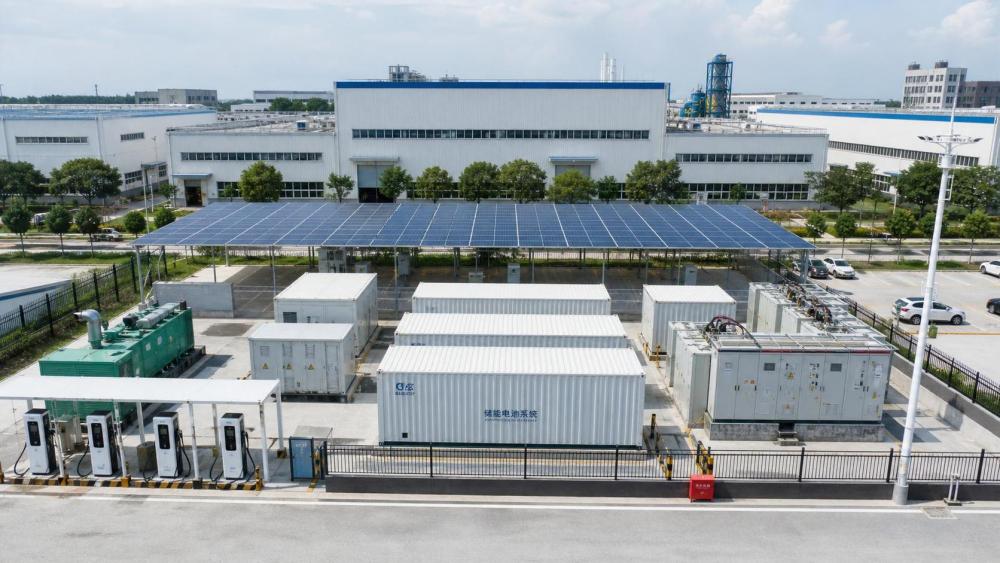
Industrial power systems are changing fast. Facilities now combine solar, storage, diesel backup, flexible loads, and utility power in one operating environment.
That shift creates a control problem. Assets may be installed, but without coordination, the site still misses cost, resilience, and performance targets.
This is where industrial microgrids EMS matters. It is the operational brain that decides when to charge, discharge, shed load, import power, or island.
In practical terms, industrial microgrids EMS turns separate devices into a managed energy system. It links technical control with economic logic and operating constraints.
The topic also matters because energy infrastructure is no longer judged only by installed capacity. It is judged by dispatch quality, uptime, compliance, and lifecycle value.
Across global energy transition coverage, EPEM often frames this issue clearly: modern energy assets deliver value only when control strategy matches real operating conditions.
For sites with renewable generation, storage, EV charging, or sensitive industrial processes, the EMS layer becomes central to technical evaluation.
So what does an industrial microgrids EMS actually do?
A useful way to understand industrial microgrids EMS is to separate monitoring from control. Many platforms can display data. Fewer can manage power decisions in real time.
A capable EMS usually performs four connected jobs: visibility, forecasting, optimization, and execution. Missing one of these often limits site performance.
- Visibility: collect asset, meter, breaker, and load data from inverters, BESS, gensets, chargers, and switchgear.
- Forecasting: estimate solar output, load demand, tariff exposure, and reserve needs.
- Optimization: choose the best dispatch path under technical and commercial constraints.
- Execution: send commands safely through plant controllers, protection logic, and communication interfaces.
In real projects, core functions often include peak shaving, demand charge control, backup reserve management, black start sequencing, and islanding support.
More advanced industrial microgrids EMS platforms also handle tariff arbitrage, renewable curtailment reduction, EV charging coordination, and emissions-aware dispatch.
The control stack usually sits above local device controllers. It does not replace inverter control, battery management, or generator protection.
Instead, it orchestrates them. That distinction matters during evaluation, because system-level intelligence and device-level safety serve different purposes.
Which control decisions matter most during evaluation?
Not every control feature has equal value. The most important functions depend on the site’s risk profile, tariff structure, process sensitivity, and grid stability.
A compact evaluation table helps separate useful capabilities from marketing language.
A good industrial microgrids EMS should also show its priorities clearly. For example, resilience mode and lowest-cost mode may produce different dispatch outcomes.
That is why control hierarchy matters. The platform should define what happens when economic optimization conflicts with spinning reserve, battery protection, or process uptime.
Where does industrial microgrids EMS create the most value?
The answer depends on the operating profile. Industrial microgrids EMS is most valuable where energy assets interact frequently and power quality has financial consequences.
Manufacturing sites are a common example. Short outages, voltage events, or uncontrolled generator starts can interrupt production and create expensive restart losses.
Mining and remote operations also benefit. There, the EMS reduces diesel dependence, stabilizes renewable integration, and improves fuel planning.
Ports, logistics hubs, and transport depots face another challenge. EV charging, refrigeration, cranes, and building loads can create steep peaks and local network stress.
In those cases, industrial microgrids EMS is not only a power control tool. It becomes part of site infrastructure planning.
Campuses, hospitals, water facilities, and data-rich commercial sites also use similar logic, especially when backup power must be coordinated with solar and storage.
EPEM’s broader coverage of storage, grid modernization, charging systems, and distributed energy helps explain why these use cases are converging.
The same site may now operate as a load center, a flexible demand resource, and a partially self-supplied energy asset.
How is an EMS different from SCADA, BMS, or a plant controller?
This question comes up often because project teams use overlapping terms. The confusion can distort both technical scope and budget planning.
SCADA is mainly about supervisory visibility and command. It gathers data, displays alarms, and supports operator interaction.
A battery management system protects battery cells and modules. It focuses on voltage, temperature, balancing, and safety boundaries.
A plant controller usually manages fast electrical behavior, such as active and reactive power targets, ramp rates, or interconnection compliance.
Industrial microgrids EMS sits above those layers. It decides operating strategy across assets, time periods, and business rules.
For instance, SCADA may show that a battery is available. The EMS decides whether that battery should preserve backup reserve or reduce a tariff peak.
The best evaluations map these boundaries early. Otherwise, teams may assume key functions exist somewhere in the stack, while no controller actually performs them.
What usually goes wrong in implementation?
The biggest mistake is treating industrial microgrids EMS as a software dashboard rather than an operating policy engine.
When that happens, projects underestimate site surveys, communication mapping, control permissions, and fail-safe behavior.
Another common issue is weak definition of operating modes. Grid-connected optimization, backup readiness, islanded stability, and maintenance states need separate logic.
Battery use is also frequently overestimated. A savings model may assume daily cycling, while reliability policy requires the same battery to hold emergency reserve.
Communication quality matters more than many teams expect. Latency, protocol mismatches, missing data points, and inconsistent timestamps can undermine dispatch decisions.
Before deployment, it helps to check these points:
- Clear asset list with controllable versus monitor-only devices
- Defined priorities for cost, resilience, emissions, and process continuity
- Documented islanding, reconnection, and black start sequences
- Battery warranty limits aligned with dispatch assumptions
- Cybersecurity and remote access policies aligned with site requirements
A sound industrial microgrids EMS project is usually defined by control discipline, not by interface design.
What is the best next step when comparing options?
Start with operating scenarios, not feature lists. A platform may look impressive but still fail the site’s most important dispatch decisions.
Build three to five test cases. Include a tariff peak event, a grid outage, a renewable surplus period, and a constrained battery reserve condition.
Then ask how the industrial microgrids EMS responds in each case. The quality of that answer is often more useful than a long function checklist.
It is also worth reviewing how the platform fits wider energy planning. Sites increasingly combine storage, charging, flexible demand, and grid-interactive operation.
That broader system view is where EPEM’s industry intelligence is relevant. Control software should be judged within the full asset and market context, not in isolation.
In the end, industrial microgrids EMS is valuable because it shapes real operating outcomes. The right evaluation standard is simple: can it make the site more reliable, more coordinated, and more economically predictable?
A practical next move is to define control priorities, confirm asset interfaces, compare scenario responses, and review implementation risks before final selection.
Questions about market trends? Contact Market Scope Live for deeper business insights.
We respect your privacy. Your information is strictly confidential.
Related News
 Smart Grid TechnologiesChoosing a Grid Monitoring Systems Supplier: Integration and Support CriteriaChoose a grid monitoring systems supplier with confidence. Compare integration, cybersecurity, lifecycle costs, commissioning, and support before you commit.MORE+
 Smart Grid TechnologiesUS Energy Department Announces $237 Million for Grid Supply ChainsUS Department of Energy announces $237 million for grid supply chains. Explore potential impacts on domestic manufacturing, sourcing and procurement.MORE+
 Smart Grid TechnologiesAdvanced Metering Systems in South Africa: Choosing Connectivity for MunicipalitiesExplore advanced metering systems in South Africa. Compare cellular, RF mesh and PLC to choose reliable municipal connectivity, control costs and plan a smarter rollout.MORE+
 Smart Grid TechnologiesVehicle-to-Grid Technology in Europe: EV, Charger and Grid RequirementsExplore vehicle to grid technology Europe-wide. Discover EV compatibility, charger standards and grid approval requirements to reduce risks and plan your V2G deployment with confidence.MORE+
 Smart Grid TechnologiesWhat Infrastructure Do Utility-Scale Renewables Need for Grid Connection?Explore utility renewable energy infrastructure for grid connection, from substations to controls and compliance. Learn how to spot connection risks and keep projects on track.MORE+
 Smart Grid TechnologiesHybrid Power Plants for Microgrids: Sizing Solar, Batteries, and DieselSize hybrid power plants for microgrids with confidence. Learn how to balance solar, batteries, and diesel to cut fuel use, protect critical loads, and meet reliability targets.MORE+
 Smart Grid TechnologiesRenewable Power Systems for Mining: Designing Reliable Off-Grid MicrogridsExplore renewable power systems for mining: design reliable off-grid microgrids with solar, storage, backup power, and smart controls to cut fuel use and protect uptime.MORE+
 Smart Grid TechnologiesCommercial Microgrids in Europe: When Do Energy Savings Justify the Investment?Considering commercial microgrids Europe-wide? Discover when energy savings justify investment, compare solar and storage returns, and avoid costly oversizing.MORE+
 Smart Grid TechnologiesMulti-Site Commercial Energy Planning: Balancing Load, Tariffs, and ResilienceMulti site commercial energy planning: balance load profiles, tariffs, EV charging, storage, and resilience to reduce costs, strengthen operations, and optimize every facility.MORE+
 Smart Grid TechnologiesWhat Should a Partner Deliver Across a Multi-Site Distributed Energy Portfolio?Best partners for distributed energy projects across a multi-site portfolio? Discover how to standardize design, data, commissioning, and lifecycle performance at scale.MORE+
 Smart Grid TechnologiesHow Can Multi-Site Owners Identify the Right Partners for Distributed Energy Projects?“Is it best partners for distributed energy projects across a multi-site portfolio?” Explore a practical framework to assess technical expertise, grid readiness, risk, data access, and lifecycle support.MORE+
 Smart Grid TechnologiesSmart Grid Technologies for Utilities: How to Prioritize Grid Modernization InvestmentsSmart grid technologies for utilities: learn how to prioritize modernization investments, reduce reliability risks, defer capital upgrades, and build a resilient, cost-effective grid.MORE+
 Smart Grid TechnologiesDigital Substations: How IEC 61850 Improves Protection, Control, and Data VisibilityDigital substations powered by IEC 61850 improve protection, flexible control, and data visibility. Explore the design principles that strengthen grid reliability.MORE+
 Smart Grid TechnologiesWhat Is Feeder Automation and How Does It Reduce Outages on Distribution Grids?Feeder automation helps utilities isolate faults, restore healthy sections faster, and reduce distribution grid outages. Explore how FLISR improves reliability.MORE+
 Smart Grid TechnologiesWhat Renewable Integration Studies Should Model Before a Grid Connection DecisionRenewable integration studies reveal grid connection risks before approval—from voltage and protection to curtailment, dynamic stability, and future network constraints.MORE+
 Smart Grid TechnologiesUtility Resilience Planning: How to Prioritize Grid Investments for Extreme WeatherUtility companies resilience planning: learn how to prioritize grid investments for extreme weather, protect critical services, speed restoration, and build a stronger, smarter energy network.MORE+
 Smart Grid TechnologiesWhat Drives Microgrid Controller Costs Across Commercial and Industrial Projects?Microgrid controllers cost depends on asset mix, islanding needs, legacy integration, software, and lifecycle support. Learn how to compare bids and reduce project risk.MORE+
 Smart Grid TechnologiesHow Does Demand Response Work with Battery Storage in Microgrids?How does demand response integrate with battery storage in microgrid operations? Explore coordinated dispatch, peak shaving, renewable use, and resilient backup strategies.MORE+
 Smart Grid TechnologiesWhich Energy Management Systems Integrate Best with Existing SCADA Platforms?Which energy management systems integrate best with existing SCADA platforms? Explore protocols, control authority, and practical selection insights for reliable energy optimization.MORE+
 Smart Grid TechnologiesHow to Plan Clean Energy Infrastructure for Reliable Industrial Power SupplyClean energy infrastructure planning for reliable industrial power: optimize loads, storage, controls, grid integration, and resilience.MORE+
 Smart Grid TechnologiesHow to Size Hybrid Microgrid Systems for Remote Sites With Variable LoadsHybrid microgrid systems for remote sites: learn how to size solar, batteries, inverters, and generators for variable loads, resilience, and lower fuel costs.MORE+
 Smart Grid TechnologiesGrid Resilience Technologies That Prevent Outages During Extreme WeatherGrid resilience technologies for outage prevention help utilities and facilities withstand extreme weather with automation, storage, microgrids, and demand flexibility. Explore practical strategies to protect critical loads and restore power faster.MORE+
 Smart Grid TechnologiesGrid Stability Solutions for Wind: Managing Variability and Power QualityGrid stability solutions for wind: explore practical strategies for voltage control, frequency response, power quality, storage, and reliable PCC compliance.MORE+
 Smart Grid TechnologiesWhich Grid Interconnection Standards Apply to Commercial Rooftop Solar?What grid interconnection standards apply to commercial rooftop solar? Explore utility rules, inverter certifications, export limits, and approval steps to avoid costly delays.MORE+
 Smart Grid TechnologiesHow Demand Response Supports Public EV Charging StationsSmart grid demand response for public charging stations helps operators control peak loads, protect costs, improve reliability, and deliver a clearer EV driver experience.MORE+
 Smart Grid TechnologiesDo Smart Grid Features Reduce Charging Station Electricity Bills?Do smart grid features actually reduce charging station electricity bills? Discover how load balancing, tariff scheduling, solar, and storage can cut peak costs.MORE+
 Smart Grid TechnologiesCan One Energy Management Platform Support Multiple Charger Brands?Can a single energy management platform handle multiple charger brands at one site? Discover how open integration enables scalable, reliable EV charging control.MORE+
 Smart Grid TechnologiesGrid Resilience Technologies Explained: Which Solutions Reduce Outage Risk?Grid resilience technologies explained clearly: compare batteries, microgrids, feeder automation, and digital controls to see which solutions truly reduce outage risk and protect critical loads.MORE+
 Smart Grid TechnologiesHow Utilities Evaluate Renewable Power Systems for Grid Stability and ROIRenewable power systems for utilities: learn how grids assess stability, storage, integration costs, and long-term ROI to choose resilient, high-value renewable investments.MORE+
 Smart Grid TechnologiesWhat Makes a Microgrid Energy Project Bankable for Investors and Lenders?Energy project bankability microgrids explained: learn what investors and lenders check most—revenue certainty, contract strength, risk allocation, and reliable performance.MORE+
 Smart Grid TechnologiesWhat Determines Grid Monitoring Price in Utility and Industrial Projects?Grid monitoring price depends on scope, accuracy, software, and integration complexity. Learn what drives costs in utility and industrial projects before you compare quotes.MORE+
 Smart Grid TechnologiesUrban Energy Infrastructure Planning: Key Factors for Resilient and Scalable CitiesUrban energy infrastructure planning for resilient, scalable cities: discover how grids, storage, EV charging, and smart forecasting reduce risk, cut costs, and support cleaner urban growth.MORE+
 Smart Grid TechnologiesHow Grid Infrastructure in the USA Is Evolving to Support Renewables and Grid ReliabilityGrid infrastructure USA is evolving fast to integrate renewables, storage, and EV charging while protecting reliability. Explore key trends, risks, and business opportunities shaping the market.MORE+
 Smart Grid TechnologiesGrid Power Infrastructure Investment: How to Compare ROI Across Utility-Scale ProjectsGrid power infrastructure investment explained: learn how to compare ROI across utility-scale projects using NPV, lifecycle cost, grid risk, and performance metrics to make smarter investment decisions.MORE+
 Smart Grid TechnologiesWhat Drives Substation Digitalization Cost? Hardware, Software, and Retrofit FactorsSubstation digitalization cost explained: compare hardware, software, retrofit risks, and lifecycle factors to budget smarter, avoid hidden costs, and choose higher-value upgrades.MORE+
 Smart Grid TechnologiesIndustrial Microgrids EMS Explained: Core Functions, Controls, and Use CasesIndustrial microgrids EMS explained: discover core functions, control priorities, and real-world use cases to improve resilience, cut energy costs, and evaluate platforms with confidence.MORE+
 Smart Grid TechnologiesSCADA for Power Systems Vendor Selection: Integration, Cybersecurity, and Lifecycle CostSCADA for power systems vendor selection made practical: compare integration, cybersecurity, and lifecycle cost to reduce risk, avoid hidden expenses, and choose a platform built to scale.MORE+
 Smart Grid TechnologiesVehicle-to-Grid Technology for Depots: How It Works and When It Makes Business SenseVehicle to grid technology for depots explained: learn how V2G works, where savings and revenue come from, and when it makes real business sense for fleet operators.MORE+
 Smart Grid TechnologiesSmart Digital Energy for Commercial Sites: When Integrated Control Improves Load ManagementSmart digital energy helps commercial sites cut peak demand, optimize solar, storage, EV charging, and HVAC, while improving resilience, visibility, and ROI through integrated control.MORE+
 Smart Grid TechnologiesWhat Are Digital Grid Technologies for Substations and Which Functions Matter Most?Digital grid technologies for substations explained: discover the functions that matter most for reliability, renewable integration, cybersecurity, and smarter asset decisions.MORE+


