Hybrid Power Plants for Microgrids: Sizing Solar, Batteries, and Diesel
Hybrid power plants for microgrids should be sized against a chronological power balance, a defined reliability target, and an explicit operating strategy. Annual electricity demand alone cannot establish the right combination of solar PV, battery storage, and diesel generation. Two sites with identical annual consumption can require very different equipment because their evening loads, motor starts, cloudy periods, and tolerance for interruptions differ.
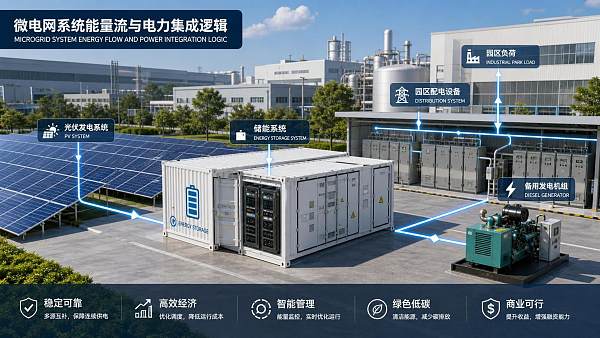
A workable design separates three questions: how much energy must be supplied, how much instantaneous power must be available, and which equipment establishes voltage and frequency during islanded operation. Solar capacity influences fuel displacement; battery power and energy determine different operating capabilities; diesel capacity supports sustained deficits and recovery. These ratings become meaningful only when tested together.
Build the load model around operating constraints
Start with time-aligned measurements of active power, reactive power, and electricity consumption across representative operating seasons. Hourly data supports initial energy sizing, but shorter intervals are needed where cloud ramps, production cycles, or large load steps affect dispatch. Motor starting and protection behavior require separate electrical studies because even short-interval energy data will not capture their full effects.
Separate critical demand from loads that can be interrupted, delayed, or restarted sequentially. Record the permitted interruption duration for each category. A requirement to maintain essential controls continuously creates a different battery duty from a requirement to restore a water pump after generator startup.
Include the plant’s own consumption: battery cooling, control power, inverter standby losses, transformers, and other auxiliaries. Cooling demand can coincide with high ambient temperatures that also reduce equipment output. Omitting these loads overstates both renewable coverage and outage endurance.
Future demand should enter the model as explicit scenarios. A new process operating at night changes storage requirements differently from an equivalent daytime load. Likewise, a grid-connected microgrid needs separate assumptions for normal operation and islanding, including whether an outage begins with a full battery, a partially discharged battery, or equipment already unavailable.
Size solar against the energy the microgrid can absorb
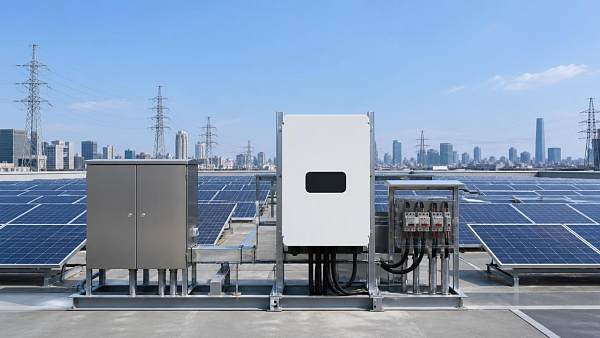
An initial PV estimate can be obtained by dividing the desired solar energy contribution by the modeled specific yield at the site. That estimate is only a starting point. Use a solar production time series that accounts for module temperature, orientation, shading, soiling, conversion losses, and inverter clipping, then align it with demand.
The distinction between PV module capacity in kWp DC and inverter capacity in kW AC matters. Additional DC capacity can improve production outside peak sunlight hours, while the AC rating limits instantaneous delivery. Compare both ratings whenever proposed configurations appear to offer the same solar capacity.
At every interval, PV output must serve load, charge storage, support permitted export, or be curtailed. Once the battery reaches its charging or state-of-charge limit, additional midday generation has little fuel-saving value unless flexible demand can absorb it. This is why increasing PV capacity eventually produces diminishing fuel displacement.
Seasonal alignment changes that result. A design optimized around average daily sunshine can still require substantial diesel operation during a prolonged low-solar season. Adding enough PV to cover that season may create extensive curtailment during brighter months. Compare the incremental reduction in fuel use with the incremental installed capacity across the full time series.
Charging topology also affects usable production. In an AC-coupled arrangement, solar charging passes through the battery power conversion system. A DC-coupled arrangement has different conversion paths and shared equipment constraints. Model the actual architecture, including charging limits and which PV production remains available during islanding.
Battery power and battery energy solve different problems
Battery power, expressed in kW, determines the rate of support; battery energy, expressed in kWh, determines its duration. A battery with sufficient overnight energy can still fail to support a large load step if its converter rating is inadequate. Conversely, a powerful converter attached to a small energy reserve will provide only brief support.
For a selected operating period, calculate the energy deficit remaining after available PV and scheduled generator output. Integrate that deficit over time, then account for conversion losses, the permitted state-of-charge window, and capacity retention at the design assessment point.
E_nominal ≥ E_required,AC / (η_discharge × usable_SOC_fraction × retained_capacity_fraction)
Here, required AC energy includes the loads and auxiliaries assigned to the battery during the event. Discharge efficiency must match the boundary used in the calculation; do not substitute round-trip efficiency without adjusting the energy model. The equation is an initial bound and assumes power limits do not prevent delivery.
A protected emergency reserve reduces the energy available for routine cycling. Represent that reserve either in the accessible state-of-charge window or as an additional energy requirement, with consistent accounting. Counting the same reserve twice oversizes storage; ignoring it allows normal dispatch to consume the promised backup capability.
Battery power sizing must cover the largest credible residual load, required charging rate, and assigned transient support. Reactive power consumes inverter current capacity, so an apparent-power rating in kVA does not guarantee the same numerical active-power output in kW. Confirm the converter’s capability at the required power factor, temperature, and operating voltage.
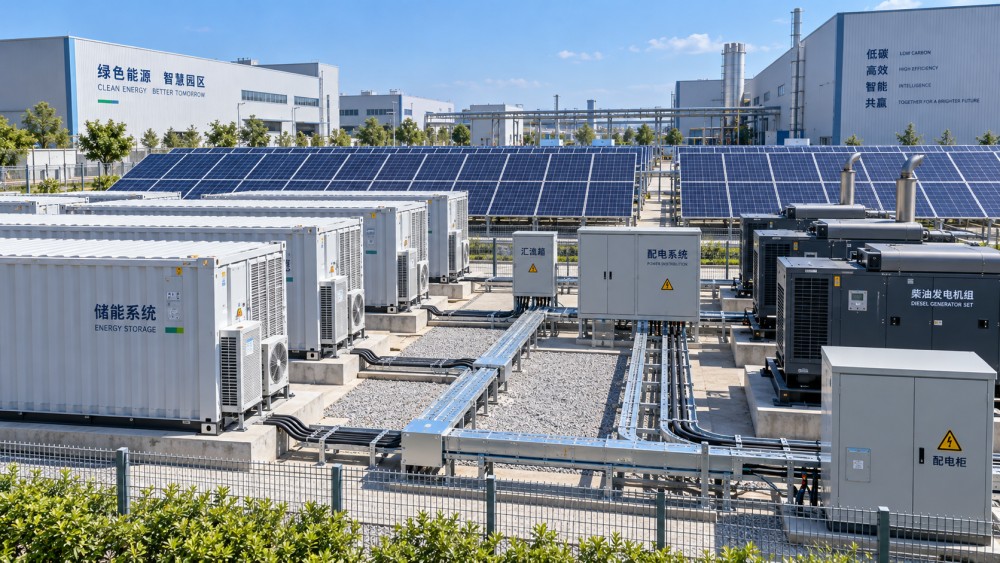
A daily dispatch plot makes these constraints visible: PV rises through the morning, the battery absorbs surplus, evening demand draws down stored energy, and diesel starts when the reserve threshold is reached. Overlay battery power limits and state of charge. This exposes configurations that balance daily energy on paper but cannot charge fast enough or preserve sufficient reserve.
Degradation must affect both available energy and deliverable power. Capacity retention alone does not describe an aged battery’s performance; increased resistance and temperature limits can restrict output. Replacement timing, augmentation space, and compatibility with later battery additions therefore belong in the sizing assumptions.
Diesel capacity follows the permitted operating modes
Establish whether diesel generation must carry the entire critical load independently or whether battery support is allowed during peaks. If the battery is required to bridge generator starting, its reserved energy must cover the specified start sequence and any allowed retry. A failed start cannot be treated as equivalent to a successful start with a short delay.
Use generator ratings appropriate to the expected duty, ambient temperature, altitude, and maintenance regime. A standby rating does not automatically support extended daily operation. Account for reactive demand and starting performance as well as steady active power.
Minimum loading is a dispatch constraint with direct sizing consequences. The acceptable operating envelope comes from the engine manufacturer and duty conditions; a universal percentage is unsuitable. An oversized set operating through low-demand periods can consume fuel inefficiently and create maintenance problems. Battery charging can raise its load, but only while sufficient charging power and energy headroom remain.
Multiple smaller sets provide additional commitment options: one unit can serve light demand while others remain available for peaks or maintenance. The tradeoff includes additional switchgear, synchronization, controls, and servicing. Compare these arrangements using manufacturer fuel-consumption curves rather than a constant fuel-per-kWh assumption.
Reserve calculations must distinguish online capability from equipment that is still starting. Generator headroom is limited by load acceptance and ramp response. Battery headroom is limited by converter power, state of charge, temperature, and the required support duration. A reserve allocation that works for a brief PV ramp may be inadequate for a generator trip.
Dispatch strategy changes the capacity result
Equipment sizing and dispatch should be solved iteratively. A controller that starts diesel only at a low battery threshold will produce different cycling and fuel use from one that starts earlier to protect contingency reserve or prepare for forecast poor weather.
Charging from diesel is justified only when the resulting operating pattern improves the chosen objective. Concentrating generation into more efficient loading periods can reduce runtime, but battery losses and wear remain real costs. The model must also enforce minimum generator run and stop times to avoid unrealistic rapid cycling.
Apply identical reliability requirements when comparing strategies. A configuration that consumes less fuel because it permits deeper reserve depletion is offering a different service level. Report reserve violations and unserved load alongside fuel savings so that this difference remains visible.
Energy adequacy does not establish electrical stability
A chronological energy simulation cannot demonstrate stable island operation. When diesel is off, an appropriately configured grid-forming source must establish voltage and frequency. Grid-following PV inverters require a suitable electrical reference; installed solar capacity alone does not provide that function.
Study transitions between operating modes, including generator synchronization, generator disconnection, sudden PV loss, and connection of the largest permitted load. Converter overload capability has a specified magnitude and duration. It should not be treated as unlimited support for motor acceleration or transformer energization.
Protection also changes when the microgrid moves between generator-backed and inverter-dominated operation. Inverter fault current is constrained and may behave differently from synchronous-machine fault current. Protection coordination, grounding, fault detection, and load-shedding logic must remain effective in each intended configuration.
Define applicable interconnection, electrical installation, battery safety, and generating-set requirements for the project location and operating mode. Equipment compliance addresses only part of this work. System acceptance criteria should translate the design into measurable tests for black start, islanding, load acceptance, reserve response, and restoration.
Compare configurations at their limiting conditions
Run candidate configurations through a full chronological operating period, then test adverse sequences separately: sustained weak solar production, peak demand during generator maintenance, a generator trip near the battery reserve threshold, and recovery after an extended outage. Keep weather and demand correlations intact where possible; independently selected extremes can obscure plausible operating sequences.
Report fuel consumption, generator starts and runtime, PV curtailment, battery throughput, unmet critical energy, and interruption duration. Annual renewable fraction alone conceals timing failures. Lifecycle comparisons should include fuel delivery, maintenance linked to runtime and starts, battery replacement or augmentation, and the consequences of unmet demand.
The final equipment specification should state the modeled dispatch rules, reserve thresholds, environmental derating, and battery condition at which performance is required. Acceptance tests can then reproduce the limiting transitions and confirm that the installed plant delivers the operating envelope used to justify its size.
Questions about market trends? Contact Market Scope Live for deeper business insights.
We respect your privacy. Your information is strictly confidential.
Related News
 Smart Grid TechnologiesPower System Automation Prices: What Drives Project Costs?Power system automation price depends on integration, software, testing, and support. Explore the key cost drivers and compare bids with confidence.MORE+
 Smart Grid TechnologiesGrid Flexibility Costs: Comparing Storage, Demand Response and Peaker PlantsCompare grid flexibility cost across battery storage, demand response and peaker plants. Discover key cost drivers and choose the right solution for your reliability needs.MORE+
 Smart Grid TechnologiesChoosing a Grid Monitoring Systems Supplier: Integration and Support CriteriaChoose a grid monitoring systems supplier with confidence. Compare integration, cybersecurity, lifecycle costs, commissioning, and support before you commit.MORE+
 Smart Grid TechnologiesUS Energy Department Announces $237 Million for Grid Supply ChainsUS Department of Energy announces $237 million for grid supply chains. Explore potential impacts on domestic manufacturing, sourcing and procurement.MORE+
 Smart Grid TechnologiesAdvanced Metering Systems in South Africa: Choosing Connectivity for MunicipalitiesExplore advanced metering systems in South Africa. Compare cellular, RF mesh and PLC to choose reliable municipal connectivity, control costs and plan a smarter rollout.MORE+
 Smart Grid TechnologiesVehicle-to-Grid Technology in Europe: EV, Charger and Grid RequirementsExplore vehicle to grid technology Europe-wide. Discover EV compatibility, charger standards and grid approval requirements to reduce risks and plan your V2G deployment with confidence.MORE+
 Smart Grid TechnologiesWhat Infrastructure Do Utility-Scale Renewables Need for Grid Connection?Explore utility renewable energy infrastructure for grid connection, from substations to controls and compliance. Learn how to spot connection risks and keep projects on track.MORE+
 Smart Grid TechnologiesHybrid Power Plants for Microgrids: Sizing Solar, Batteries, and DieselSize hybrid power plants for microgrids with confidence. Learn how to balance solar, batteries, and diesel to cut fuel use, protect critical loads, and meet reliability targets.MORE+
 Smart Grid TechnologiesRenewable Power Systems for Mining: Designing Reliable Off-Grid MicrogridsExplore renewable power systems for mining: design reliable off-grid microgrids with solar, storage, backup power, and smart controls to cut fuel use and protect uptime.MORE+
 Smart Grid TechnologiesCommercial Microgrids in Europe: When Do Energy Savings Justify the Investment?Considering commercial microgrids Europe-wide? Discover when energy savings justify investment, compare solar and storage returns, and avoid costly oversizing.MORE+
 Smart Grid TechnologiesMulti-Site Commercial Energy Planning: Balancing Load, Tariffs, and ResilienceMulti site commercial energy planning: balance load profiles, tariffs, EV charging, storage, and resilience to reduce costs, strengthen operations, and optimize every facility.MORE+
 Smart Grid TechnologiesWhat Should a Partner Deliver Across a Multi-Site Distributed Energy Portfolio?Best partners for distributed energy projects across a multi-site portfolio? Discover how to standardize design, data, commissioning, and lifecycle performance at scale.MORE+
 Smart Grid TechnologiesHow Can Multi-Site Owners Identify the Right Partners for Distributed Energy Projects?“Is it best partners for distributed energy projects across a multi-site portfolio?” Explore a practical framework to assess technical expertise, grid readiness, risk, data access, and lifecycle support.MORE+
 Smart Grid TechnologiesSmart Grid Technologies for Utilities: How to Prioritize Grid Modernization InvestmentsSmart grid technologies for utilities: learn how to prioritize modernization investments, reduce reliability risks, defer capital upgrades, and build a resilient, cost-effective grid.MORE+
 Smart Grid TechnologiesDigital Substations: How IEC 61850 Improves Protection, Control, and Data VisibilityDigital substations powered by IEC 61850 improve protection, flexible control, and data visibility. Explore the design principles that strengthen grid reliability.MORE+
 Smart Grid TechnologiesWhat Is Feeder Automation and How Does It Reduce Outages on Distribution Grids?Feeder automation helps utilities isolate faults, restore healthy sections faster, and reduce distribution grid outages. Explore how FLISR improves reliability.MORE+
 Smart Grid TechnologiesWhat Renewable Integration Studies Should Model Before a Grid Connection DecisionRenewable integration studies reveal grid connection risks before approval—from voltage and protection to curtailment, dynamic stability, and future network constraints.MORE+
 Smart Grid TechnologiesUtility Resilience Planning: How to Prioritize Grid Investments for Extreme WeatherUtility companies resilience planning: learn how to prioritize grid investments for extreme weather, protect critical services, speed restoration, and build a stronger, smarter energy network.MORE+
 Smart Grid TechnologiesWhat Drives Microgrid Controller Costs Across Commercial and Industrial Projects?Microgrid controllers cost depends on asset mix, islanding needs, legacy integration, software, and lifecycle support. Learn how to compare bids and reduce project risk.MORE+
 Smart Grid TechnologiesHow Does Demand Response Work with Battery Storage in Microgrids?How does demand response integrate with battery storage in microgrid operations? Explore coordinated dispatch, peak shaving, renewable use, and resilient backup strategies.MORE+
 Smart Grid TechnologiesWhich Energy Management Systems Integrate Best with Existing SCADA Platforms?Which energy management systems integrate best with existing SCADA platforms? Explore protocols, control authority, and practical selection insights for reliable energy optimization.MORE+
 Smart Grid TechnologiesHow to Plan Clean Energy Infrastructure for Reliable Industrial Power SupplyClean energy infrastructure planning for reliable industrial power: optimize loads, storage, controls, grid integration, and resilience.MORE+
 Smart Grid TechnologiesHow to Size Hybrid Microgrid Systems for Remote Sites With Variable LoadsHybrid microgrid systems for remote sites: learn how to size solar, batteries, inverters, and generators for variable loads, resilience, and lower fuel costs.MORE+
 Smart Grid TechnologiesGrid Resilience Technologies That Prevent Outages During Extreme WeatherGrid resilience technologies for outage prevention help utilities and facilities withstand extreme weather with automation, storage, microgrids, and demand flexibility. Explore practical strategies to protect critical loads and restore power faster.MORE+
 Smart Grid TechnologiesGrid Stability Solutions for Wind: Managing Variability and Power QualityGrid stability solutions for wind: explore practical strategies for voltage control, frequency response, power quality, storage, and reliable PCC compliance.MORE+
 Smart Grid TechnologiesWhich Grid Interconnection Standards Apply to Commercial Rooftop Solar?What grid interconnection standards apply to commercial rooftop solar? Explore utility rules, inverter certifications, export limits, and approval steps to avoid costly delays.MORE+
 Smart Grid TechnologiesHow Demand Response Supports Public EV Charging StationsSmart grid demand response for public charging stations helps operators control peak loads, protect costs, improve reliability, and deliver a clearer EV driver experience.MORE+
 Smart Grid TechnologiesDo Smart Grid Features Reduce Charging Station Electricity Bills?Do smart grid features actually reduce charging station electricity bills? Discover how load balancing, tariff scheduling, solar, and storage can cut peak costs.MORE+
 Smart Grid TechnologiesCan One Energy Management Platform Support Multiple Charger Brands?Can a single energy management platform handle multiple charger brands at one site? Discover how open integration enables scalable, reliable EV charging control.MORE+
 Smart Grid TechnologiesGrid Resilience Technologies Explained: Which Solutions Reduce Outage Risk?Grid resilience technologies explained clearly: compare batteries, microgrids, feeder automation, and digital controls to see which solutions truly reduce outage risk and protect critical loads.MORE+
 Smart Grid TechnologiesHow Utilities Evaluate Renewable Power Systems for Grid Stability and ROIRenewable power systems for utilities: learn how grids assess stability, storage, integration costs, and long-term ROI to choose resilient, high-value renewable investments.MORE+
 Smart Grid TechnologiesWhat Makes a Microgrid Energy Project Bankable for Investors and Lenders?Energy project bankability microgrids explained: learn what investors and lenders check most—revenue certainty, contract strength, risk allocation, and reliable performance.MORE+
 Smart Grid TechnologiesWhat Determines Grid Monitoring Price in Utility and Industrial Projects?Grid monitoring price depends on scope, accuracy, software, and integration complexity. Learn what drives costs in utility and industrial projects before you compare quotes.MORE+
 Smart Grid TechnologiesUrban Energy Infrastructure Planning: Key Factors for Resilient and Scalable CitiesUrban energy infrastructure planning for resilient, scalable cities: discover how grids, storage, EV charging, and smart forecasting reduce risk, cut costs, and support cleaner urban growth.MORE+
 Smart Grid TechnologiesHow Grid Infrastructure in the USA Is Evolving to Support Renewables and Grid ReliabilityGrid infrastructure USA is evolving fast to integrate renewables, storage, and EV charging while protecting reliability. Explore key trends, risks, and business opportunities shaping the market.MORE+
 Smart Grid TechnologiesGrid Power Infrastructure Investment: How to Compare ROI Across Utility-Scale ProjectsGrid power infrastructure investment explained: learn how to compare ROI across utility-scale projects using NPV, lifecycle cost, grid risk, and performance metrics to make smarter investment decisions.MORE+
 Smart Grid TechnologiesWhat Drives Substation Digitalization Cost? Hardware, Software, and Retrofit FactorsSubstation digitalization cost explained: compare hardware, software, retrofit risks, and lifecycle factors to budget smarter, avoid hidden costs, and choose higher-value upgrades.MORE+
 Smart Grid TechnologiesIndustrial Microgrids EMS Explained: Core Functions, Controls, and Use CasesIndustrial microgrids EMS explained: discover core functions, control priorities, and real-world use cases to improve resilience, cut energy costs, and evaluate platforms with confidence.MORE+
 Smart Grid TechnologiesSCADA for Power Systems Vendor Selection: Integration, Cybersecurity, and Lifecycle CostSCADA for power systems vendor selection made practical: compare integration, cybersecurity, and lifecycle cost to reduce risk, avoid hidden expenses, and choose a platform built to scale.MORE+
 Smart Grid TechnologiesVehicle-to-Grid Technology for Depots: How It Works and When It Makes Business SenseVehicle to grid technology for depots explained: learn how V2G works, where savings and revenue come from, and when it makes real business sense for fleet operators.MORE+