How Does Demand Response Work with Battery Storage in Microgrids?
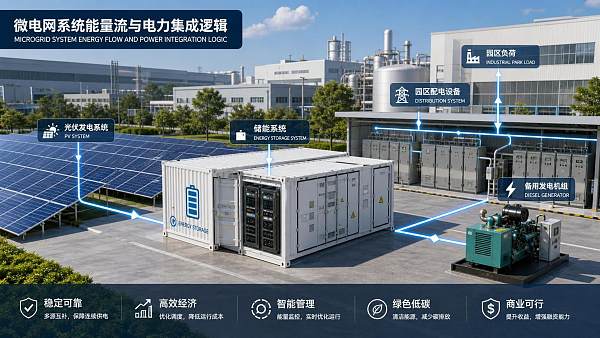
Demand response and battery storage serve different functions in a microgrid, but they become far more valuable when controlled as one operating system. Demand response changes when and how electricity is consumed; battery storage changes when electricity is supplied. Coordinated correctly, they reduce peak imports, preserve backup capacity, absorb more renewable generation, and allow the microgrid to respond to grid events without disrupting critical operations.
The key point is that a battery should not be treated as an isolated asset that simply charges from solar and discharges at high tariff periods. In a functioning microgrid, battery dispatch must be evaluated alongside flexible loads, renewable forecasts, state of charge, outage risk, contractual demand-response commitments, and the operating limits of inverters, generators, and interconnection equipment. The battery is often the fastest resource available, but it is also finite. Demand response helps reserve that finite energy for the moments when it creates the greatest operational or economic value.
Demand response changes the load profile; batteries reshape the power balance
Demand response is the deliberate adjustment of electricity demand in response to a signal, operating condition, or local control objective. The signal may be a utility event, a demand charge threshold, a time-of-use tariff, a shortage of renewable output, or an internal microgrid constraint. The adjustment can involve reducing, shifting, delaying, or temporarily substituting electrical loads.
In a commercial or industrial microgrid, flexible loads may include HVAC systems, chilled-water plants, electric boilers, pumps, compressors, refrigeration defrost cycles, water treatment equipment, non-critical production processes, and EV charging. Not every load is suitable. Life-safety systems, mission-critical IT equipment, regulated process loads, and equipment that cannot safely tolerate interruption should be excluded or assigned strict operating boundaries.
Battery energy storage systems respond differently. A battery can discharge to reduce grid imports or support islanded loads, then recharge when surplus renewable generation or lower-cost electricity is available. Its response is generally faster and more precise than many load-control actions. However, a battery has energy-duration limits, usable state-of-charge limits, cycle-life considerations, and power conversion constraints. A microgrid that relies only on battery discharge for every demand-response event can exhaust stored energy before the event ends or compromise resilience for a later outage.
The combined strategy therefore has a practical hierarchy: reduce or defer non-essential load where the operational impact is acceptable; use battery power to cover rapid changes, residual peaks, and critical loads; and preserve a defined energy reserve when reliability is a priority.
What coordinated dispatch looks like in operation
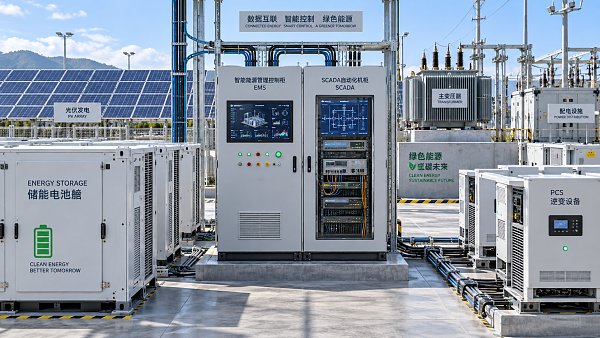
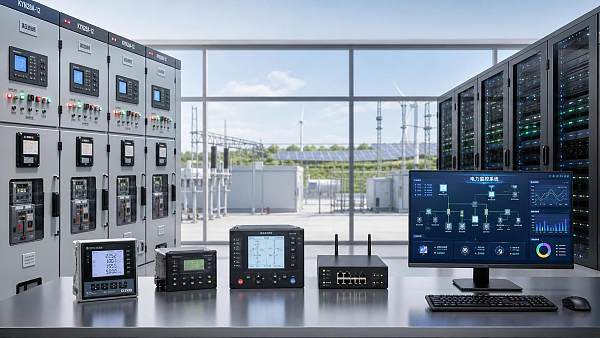
Integration occurs through the microgrid controller or energy management system (EMS). This control layer collects information from meters, battery management and power conversion systems, solar inverters, generators, building management systems, EV chargers, weather services, and utility communication channels. It converts those inputs into dispatch instructions while respecting technical and commercial constraints.
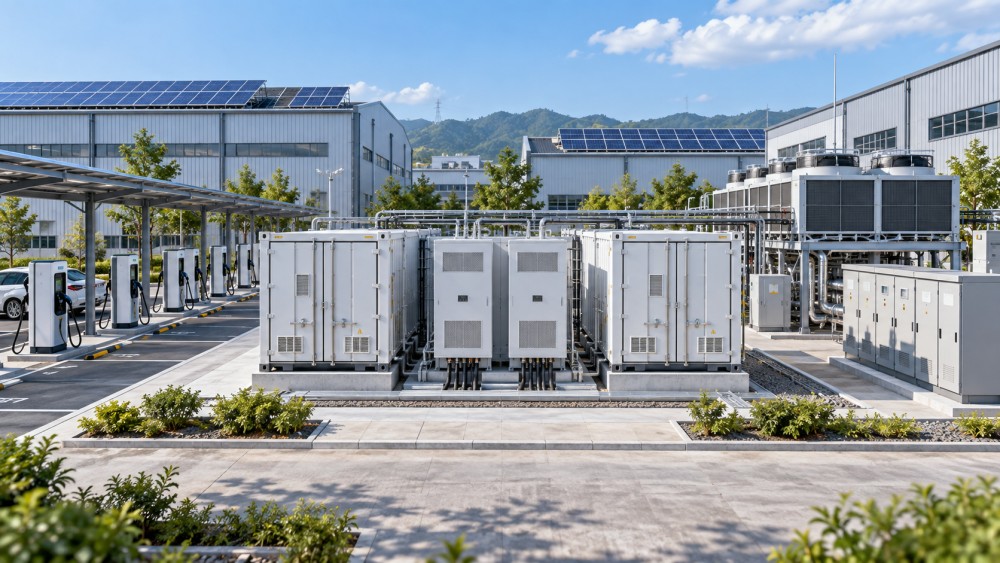
Consider a facility with rooftop solar, a battery, controllable HVAC loads, and a utility tariff that includes a monthly peak-demand charge. On a hot afternoon, building load rises while solar output begins to decline. If the site approaches its target import limit, the controller may first adjust HVAC setpoints within approved comfort bands, pause selected EV charging sessions, and delay a non-urgent pumping cycle. If these actions do not reduce import sufficiently, the battery discharges to hold grid demand below the target.
This sequence matters. Load actions can reduce the total energy requirement for the event, while the battery handles the remaining power gap. If the battery were dispatched first and the flexible loads left unchanged, it might discharge at a high rate for a prolonged period. The same peak could then reappear after the battery reaches its minimum state of charge, producing an import spike that defeats the demand-management objective.
For utility or aggregator demand-response programs, the control logic is similar but must also meet an external performance obligation. The microgrid may receive a notice requesting a specified reduction from a defined baseline during a particular event window. The controller must determine whether the committed reduction can be delivered without breaching battery reserve requirements, violating load-process limits, or creating a rebound peak after the event.
Battery storage is not automatically the best first response
A common misconception is that battery storage makes demand response unnecessary. It does not. Batteries can deliver demand reduction at the point of grid connection, but this may not be the lowest-cost or most resilient response.
Battery cycling has an economic cost. The relevant figure is not merely the electricity price at charging and discharging times. It includes conversion losses, thermal management consumption, degradation associated with throughput and depth of discharge, warranty operating limits, and the opportunity cost of using stored energy now rather than retaining it for backup power or a higher-value dispatch interval.
Some demand-response actions have little or no direct energy-storage cost. A short adjustment to cooling load, coordinated charging management, or a shift in a discretionary process can lower the required battery discharge. The value is particularly clear where the event duration exceeds the battery’s economical discharge duration. A two-hour battery may reduce a four-hour peak, but without load flexibility it could require conservative power dispatch, a larger storage system, on-site generation, or acceptance of grid imports in the latter half of the event.
The opposite mistake is to assume that load curtailment should always take priority. Load flexibility is constrained by comfort, production quality, food or material storage requirements, contractual service levels, and equipment cycling limits. Battery storage can protect these operational requirements by filling in around the limits of demand response. The optimal arrangement is based on the value and controllability of each resource, not on a fixed preference for either one.
Time horizons must be separated
Microgrid control is often described as “real-time,” but effective demand response with battery storage requires decisions across several time horizons.
Day-ahead scheduling estimates solar production, site demand, electricity prices, anticipated demand-response events, and required backup reserve. This schedule determines whether the battery should charge during low-cost periods, absorb expected midday solar surplus, or remain partially empty to preserve charging headroom. Charging headroom is important when solar curtailment is a concern; reserve energy is important when outage exposure is high. These objectives can conflict.
Intraday optimization updates the plan as weather, occupancy, production activity, and grid conditions change. A forecast may indicate strong afternoon solar output, leading the controller to defer battery charging. If cloud cover then reduces output, the controller may need to charge from the grid earlier than planned or revise the peak target.
Sub-minute and minute-level control manages frequency support, sudden load changes, inverter limits, and the immediate response to a grid event. Batteries are especially useful at this speed because many building loads cannot be adjusted instantaneously. Fast battery response can stabilize the microgrid while demand-response actions ramp in or while operators confirm that a load can be curtailed safely.
These layers should not work independently. A controller that reacts only to current meter readings may meet a short-term import limit but leave too little stored energy for the evening peak or for an islanding event. Conversely, a controller that rigidly protects battery reserve may fail to use available load flexibility and renewable energy efficiently.
State of charge is an operating commitment, not just a battery reading
State of charge is central to the integration of demand response and storage. In grid-connected operation, a battery may be managed within a broad range to support tariff optimization. In a microgrid that must maintain critical loads during an outage, the usable operating range is narrower because a portion of capacity must be reserved.
A sensible reserve target depends on the critical-load profile, the expected outage duration, renewable availability during an outage, generator capability where installed, and the battery’s usable capacity under current temperature and power conditions. The target cannot be selected simply as a fixed percentage for every day. A facility with substantial daylight solar may accept a different reserve before noon than after sunset. A site entering a period of severe weather, grid instability, or planned maintenance may require more conservative dispatch.
Demand response expands the practical value of that reserve. During islanded operation, controlled load shedding can extend battery autonomy by removing non-essential consumption. Before an outage, flexible-load management can also prevent unnecessary battery discharge and preserve stored energy. This is why demand response in microgrids is not limited to utility program participation; it is part of resilience planning.
Renewable energy makes coordination more valuable—and more complex
Solar and wind generation introduce variability that a microgrid must manage locally when grid support is constrained or unavailable. Battery storage can absorb surplus generation and smooth short-term fluctuations. Demand response can move consumption toward periods of renewable availability.
For example, a site may schedule thermal storage charging, water pumping, or managed EV charging during periods of high solar output. This approach uses solar electricity directly rather than charging and later discharging the battery for every flexible load. The battery can then retain capacity for fast fluctuations, evening peaks, or backup service.
Direct renewable consumption is not always possible. Loads may have fixed operating schedules, chargers may be subject to fleet departure requirements, and some processes may require continuous power quality. In those cases, storage provides the temporal bridge. But the controller still needs to prevent conflicting actions, such as charging the battery from the grid while simultaneously curtailing flexible loads because of a local import limit, unless that outcome is intentional and economically justified.
Reverse power flow and export constraints add another layer. Where export is limited, the controller may prioritize flexible consumption, battery charging, or renewable curtailment depending on battery state of charge, load availability, and applicable interconnection rules. The correct decision is site-specific. It depends on whether avoiding curtailment, protecting battery life, reducing imports later, or maintaining backup reserve has the highest value at that moment.
Measurement and baseline rules determine whether demand response delivers real value
For internal peak shaving, performance is straightforward: the relevant measure is net demand at the point of common coupling or another defined meter boundary. For external demand-response programs, measurement can be more complicated. Compensation and compliance may depend on a baseline calculation that estimates what the site would have consumed without the event.
Battery discharge can reduce metered imports, but program rules may treat storage differently from load reduction. Some arrangements permit battery-backed response; others impose specific eligibility, metering, telemetry, charging-source, or availability requirements. A microgrid operator should not assume that every reduction in grid import qualifies for payment or capacity credit. The agreement, dispatch instructions, settlement methodology, and local market rules govern that result.
Accurate metering is equally important for internal decisions. Separate measurement of renewable production, battery charge and discharge power, critical loads, flexible loads, generator output, and grid exchange helps identify whether savings result from genuine peak reduction, shifted demand, or merely a transfer of consumption to another interval. Without this visibility, a site can create a rebound peak after an event, miss battery losses, or overestimate the benefit of a control strategy.
Control integration is often harder than adding the battery
Battery containers, inverters, and load-control devices can all be technically capable, yet the microgrid may still perform poorly if their control interfaces are fragmented. A battery system may have its own controller, HVAC equipment may be managed by a building automation system, EV chargers may use a separate cloud platform, and solar inverters may follow local export-limiting logic. When these systems pursue different targets, they can produce unstable or uneconomic behavior.
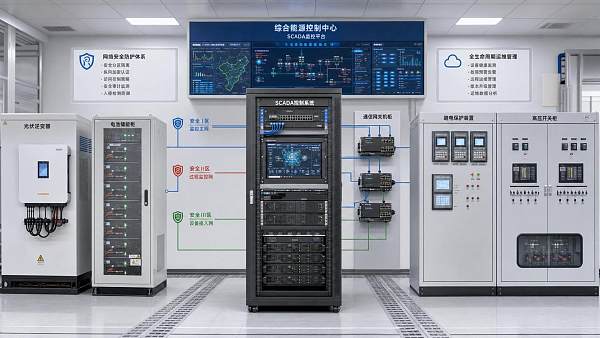
A coordinated architecture needs clear control authority. The microgrid EMS should know which system sets the site import limit, which device can override normal schedules during an outage, how battery reserve is protected, and what happens if communications fail. Local fallback controls are essential: critical protection functions, anti-islanding behavior, inverter safety limits, and battery protection cannot depend entirely on a remote optimization platform.
Interoperability should be reviewed early. It includes communication protocols, data update frequency, command acknowledgment, timestamp consistency, cybersecurity controls, and the ability to expose usable operating constraints rather than only basic on/off status. A controller cannot optimize a battery properly if it cannot access available power, state of charge, charge-discharge limits, fault status, and warranty-relevant restrictions. It cannot dispatch flexible loads safely if it does not know their minimum run times, recovery needs, and permitted curtailment windows.
The right design question is not “How large should the battery be?”
Battery sizing remains important, but it should follow a broader operational question: which combination of controllable demand, stored energy, renewable generation, and backup resources can meet the site’s priority outcomes under realistic conditions?
Those outcomes may include a grid-import cap, avoidance of a specific demand-charge exposure, participation in a demand-response contract, renewable self-consumption, continuity for critical loads, or reduced generator runtime. Each objective creates different requirements for battery power rating, energy duration, control response, reserve policy, and load-control capability.
A load profile alone is insufficient. Design work should examine interval demand data, peak timing and duration, coincident solar output, critical-load segmentation, process flexibility, tariff rules, expected event durations, interconnection limits, and outage scenarios. The battery must be assessed at the AC point where the microgrid interacts with the grid, not only by its DC nameplate capacity. Inverter capacity, transformer limits, auxiliary consumption, and protection settings can all constrain the response delivered at that meter.
Demand response is most effective when it is designed into the microgrid operating philosophy rather than added after the battery has been commissioned. Flexible loads reduce the amount of storage required for some objectives; battery storage makes load management less disruptive; and a capable control system turns both into a dispatchable flexibility resource. The result is not simply lower consumption. It is a microgrid that can decide, with greater precision, when to consume, store, export, curtail, or preserve energy for the condition that matters most.
Questions about market trends? Contact Market Scope Live for deeper business insights.
We respect your privacy. Your information is strictly confidential.
Related News
 Smart Grid TechnologiesPower System Automation Prices: What Drives Project Costs?Power system automation price depends on integration, software, testing, and support. Explore the key cost drivers and compare bids with confidence.MORE+
 Smart Grid TechnologiesGrid Flexibility Costs: Comparing Storage, Demand Response and Peaker PlantsCompare grid flexibility cost across battery storage, demand response and peaker plants. Discover key cost drivers and choose the right solution for your reliability needs.MORE+
 Smart Grid TechnologiesChoosing a Grid Monitoring Systems Supplier: Integration and Support CriteriaChoose a grid monitoring systems supplier with confidence. Compare integration, cybersecurity, lifecycle costs, commissioning, and support before you commit.MORE+
 Smart Grid TechnologiesUS Energy Department Announces $237 Million for Grid Supply ChainsUS Department of Energy announces $237 million for grid supply chains. Explore potential impacts on domestic manufacturing, sourcing and procurement.MORE+
 Smart Grid TechnologiesAdvanced Metering Systems in South Africa: Choosing Connectivity for MunicipalitiesExplore advanced metering systems in South Africa. Compare cellular, RF mesh and PLC to choose reliable municipal connectivity, control costs and plan a smarter rollout.MORE+
 Smart Grid TechnologiesVehicle-to-Grid Technology in Europe: EV, Charger and Grid RequirementsExplore vehicle to grid technology Europe-wide. Discover EV compatibility, charger standards and grid approval requirements to reduce risks and plan your V2G deployment with confidence.MORE+
 Smart Grid TechnologiesWhat Infrastructure Do Utility-Scale Renewables Need for Grid Connection?Explore utility renewable energy infrastructure for grid connection, from substations to controls and compliance. Learn how to spot connection risks and keep projects on track.MORE+
 Smart Grid TechnologiesHybrid Power Plants for Microgrids: Sizing Solar, Batteries, and DieselSize hybrid power plants for microgrids with confidence. Learn how to balance solar, batteries, and diesel to cut fuel use, protect critical loads, and meet reliability targets.MORE+
 Smart Grid TechnologiesRenewable Power Systems for Mining: Designing Reliable Off-Grid MicrogridsExplore renewable power systems for mining: design reliable off-grid microgrids with solar, storage, backup power, and smart controls to cut fuel use and protect uptime.MORE+
 Smart Grid TechnologiesCommercial Microgrids in Europe: When Do Energy Savings Justify the Investment?Considering commercial microgrids Europe-wide? Discover when energy savings justify investment, compare solar and storage returns, and avoid costly oversizing.MORE+
 Smart Grid TechnologiesMulti-Site Commercial Energy Planning: Balancing Load, Tariffs, and ResilienceMulti site commercial energy planning: balance load profiles, tariffs, EV charging, storage, and resilience to reduce costs, strengthen operations, and optimize every facility.MORE+
 Smart Grid TechnologiesWhat Should a Partner Deliver Across a Multi-Site Distributed Energy Portfolio?Best partners for distributed energy projects across a multi-site portfolio? Discover how to standardize design, data, commissioning, and lifecycle performance at scale.MORE+
 Smart Grid TechnologiesHow Can Multi-Site Owners Identify the Right Partners for Distributed Energy Projects?“Is it best partners for distributed energy projects across a multi-site portfolio?” Explore a practical framework to assess technical expertise, grid readiness, risk, data access, and lifecycle support.MORE+
 Smart Grid TechnologiesSmart Grid Technologies for Utilities: How to Prioritize Grid Modernization InvestmentsSmart grid technologies for utilities: learn how to prioritize modernization investments, reduce reliability risks, defer capital upgrades, and build a resilient, cost-effective grid.MORE+
 Smart Grid TechnologiesDigital Substations: How IEC 61850 Improves Protection, Control, and Data VisibilityDigital substations powered by IEC 61850 improve protection, flexible control, and data visibility. Explore the design principles that strengthen grid reliability.MORE+
 Smart Grid TechnologiesWhat Is Feeder Automation and How Does It Reduce Outages on Distribution Grids?Feeder automation helps utilities isolate faults, restore healthy sections faster, and reduce distribution grid outages. Explore how FLISR improves reliability.MORE+
 Smart Grid TechnologiesWhat Renewable Integration Studies Should Model Before a Grid Connection DecisionRenewable integration studies reveal grid connection risks before approval—from voltage and protection to curtailment, dynamic stability, and future network constraints.MORE+
 Smart Grid TechnologiesUtility Resilience Planning: How to Prioritize Grid Investments for Extreme WeatherUtility companies resilience planning: learn how to prioritize grid investments for extreme weather, protect critical services, speed restoration, and build a stronger, smarter energy network.MORE+
 Smart Grid TechnologiesWhat Drives Microgrid Controller Costs Across Commercial and Industrial Projects?Microgrid controllers cost depends on asset mix, islanding needs, legacy integration, software, and lifecycle support. Learn how to compare bids and reduce project risk.MORE+
 Smart Grid TechnologiesHow Does Demand Response Work with Battery Storage in Microgrids?How does demand response integrate with battery storage in microgrid operations? Explore coordinated dispatch, peak shaving, renewable use, and resilient backup strategies.MORE+
 Smart Grid TechnologiesWhich Energy Management Systems Integrate Best with Existing SCADA Platforms?Which energy management systems integrate best with existing SCADA platforms? Explore protocols, control authority, and practical selection insights for reliable energy optimization.MORE+
 Smart Grid TechnologiesHow to Plan Clean Energy Infrastructure for Reliable Industrial Power SupplyClean energy infrastructure planning for reliable industrial power: optimize loads, storage, controls, grid integration, and resilience.MORE+
 Smart Grid TechnologiesHow to Size Hybrid Microgrid Systems for Remote Sites With Variable LoadsHybrid microgrid systems for remote sites: learn how to size solar, batteries, inverters, and generators for variable loads, resilience, and lower fuel costs.MORE+
 Smart Grid TechnologiesGrid Resilience Technologies That Prevent Outages During Extreme WeatherGrid resilience technologies for outage prevention help utilities and facilities withstand extreme weather with automation, storage, microgrids, and demand flexibility. Explore practical strategies to protect critical loads and restore power faster.MORE+
 Smart Grid TechnologiesGrid Stability Solutions for Wind: Managing Variability and Power QualityGrid stability solutions for wind: explore practical strategies for voltage control, frequency response, power quality, storage, and reliable PCC compliance.MORE+
 Smart Grid TechnologiesWhich Grid Interconnection Standards Apply to Commercial Rooftop Solar?What grid interconnection standards apply to commercial rooftop solar? Explore utility rules, inverter certifications, export limits, and approval steps to avoid costly delays.MORE+
 Smart Grid TechnologiesHow Demand Response Supports Public EV Charging StationsSmart grid demand response for public charging stations helps operators control peak loads, protect costs, improve reliability, and deliver a clearer EV driver experience.MORE+
 Smart Grid TechnologiesDo Smart Grid Features Reduce Charging Station Electricity Bills?Do smart grid features actually reduce charging station electricity bills? Discover how load balancing, tariff scheduling, solar, and storage can cut peak costs.MORE+
 Smart Grid TechnologiesCan One Energy Management Platform Support Multiple Charger Brands?Can a single energy management platform handle multiple charger brands at one site? Discover how open integration enables scalable, reliable EV charging control.MORE+
 Smart Grid TechnologiesGrid Resilience Technologies Explained: Which Solutions Reduce Outage Risk?Grid resilience technologies explained clearly: compare batteries, microgrids, feeder automation, and digital controls to see which solutions truly reduce outage risk and protect critical loads.MORE+
 Smart Grid TechnologiesHow Utilities Evaluate Renewable Power Systems for Grid Stability and ROIRenewable power systems for utilities: learn how grids assess stability, storage, integration costs, and long-term ROI to choose resilient, high-value renewable investments.MORE+
 Smart Grid TechnologiesWhat Makes a Microgrid Energy Project Bankable for Investors and Lenders?Energy project bankability microgrids explained: learn what investors and lenders check most—revenue certainty, contract strength, risk allocation, and reliable performance.MORE+
 Smart Grid TechnologiesWhat Determines Grid Monitoring Price in Utility and Industrial Projects?Grid monitoring price depends on scope, accuracy, software, and integration complexity. Learn what drives costs in utility and industrial projects before you compare quotes.MORE+
 Smart Grid TechnologiesUrban Energy Infrastructure Planning: Key Factors for Resilient and Scalable CitiesUrban energy infrastructure planning for resilient, scalable cities: discover how grids, storage, EV charging, and smart forecasting reduce risk, cut costs, and support cleaner urban growth.MORE+
 Smart Grid TechnologiesHow Grid Infrastructure in the USA Is Evolving to Support Renewables and Grid ReliabilityGrid infrastructure USA is evolving fast to integrate renewables, storage, and EV charging while protecting reliability. Explore key trends, risks, and business opportunities shaping the market.MORE+
 Smart Grid TechnologiesGrid Power Infrastructure Investment: How to Compare ROI Across Utility-Scale ProjectsGrid power infrastructure investment explained: learn how to compare ROI across utility-scale projects using NPV, lifecycle cost, grid risk, and performance metrics to make smarter investment decisions.MORE+
 Smart Grid TechnologiesWhat Drives Substation Digitalization Cost? Hardware, Software, and Retrofit FactorsSubstation digitalization cost explained: compare hardware, software, retrofit risks, and lifecycle factors to budget smarter, avoid hidden costs, and choose higher-value upgrades.MORE+
 Smart Grid TechnologiesIndustrial Microgrids EMS Explained: Core Functions, Controls, and Use CasesIndustrial microgrids EMS explained: discover core functions, control priorities, and real-world use cases to improve resilience, cut energy costs, and evaluate platforms with confidence.MORE+
 Smart Grid TechnologiesSCADA for Power Systems Vendor Selection: Integration, Cybersecurity, and Lifecycle CostSCADA for power systems vendor selection made practical: compare integration, cybersecurity, and lifecycle cost to reduce risk, avoid hidden expenses, and choose a platform built to scale.MORE+
 Smart Grid TechnologiesVehicle-to-Grid Technology for Depots: How It Works and When It Makes Business SenseVehicle to grid technology for depots explained: learn how V2G works, where savings and revenue come from, and when it makes real business sense for fleet operators.MORE+