Vehicle-to-Grid Technology in Europe: EV, Charger and Grid Requirements
Vehicle-to-Grid Technology in Europe: EV, Charger and Grid Requirements
Evaluating vehicle-to-grid technology Europe-wide requires more than checking whether an EV supports bidirectional charging. Technical teams must verify compatibility across the vehicle, charger, communication protocols and local grid connection rules—and determine whether the complete system can deliver reliable, controllable power export.
The challenge is that these capabilities belong to different parties. A vehicle manufacturer controls battery access, a charger supplier manages power conversion, an aggregator dispatches flexibility, and the distribution system operator (DSO) sets connection conditions. A successful demonstration between two devices does not prove that the installation can operate commercially at a particular European site.
Define the service before selecting the hardware
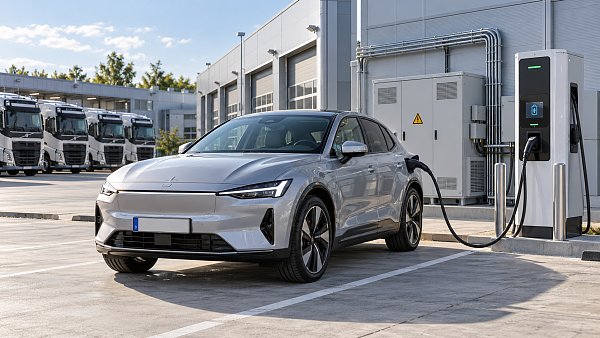
V2G means exporting electricity from an EV to the public network. It differs from vehicle-to-load, which supplies appliances, and vehicle-to-home or vehicle-to-building, which can supply local loads. Bidirectional capability alone does not establish permission to export, and grid-connected V2G does not automatically provide backup power during an outage.
Start with the intended operating service. Depot peak reduction, local congestion management, wholesale trading and frequency response have different requirements for availability, response time, telemetry and settlement. Some flexibility can be delivered simply by reducing charging demand; battery discharge is not always necessary.
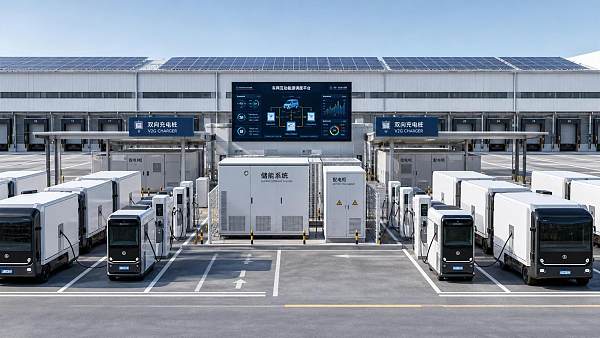
For a fleet depot, the decisive constraint may be departure readiness rather than inverter power. Define the minimum departure state of charge, connection windows, daily energy requirement and driver override rules before calculating dispatchable capacity. Battery nameplate capacity is not the same as energy available to the grid.
Vehicle approval must be specific to the configuration
A connector type is not a compatibility certificate. Two vehicles with CCS interfaces may differ in bidirectional capability, supported communication functions and manufacturer authorization. CHAdeMO has supported bidirectional deployments, but that does not make every CHAdeMO vehicle and charger pairing suitable for a new project.
Request written confirmation for the exact model year, battery variant, software release, country and charger combination. Distinguish between functionality available at delivery and functionality dependent on a future update. The latter should remain a deployment risk until released and validated.
Battery limits also need closer attention than a headline discharge rating. Export power may change with state of charge, temperature, battery voltage and thermal management demand. Obtain operating envelopes showing continuous capability and derating conditions, including any restrictions on repeated charge-to-discharge transitions.
Warranty review should cover permitted V2G use, energy-throughput limits where applicable, degradation exclusions and responsibility for recording operation. A general traction-battery warranty is not sufficient evidence that third-party dispatch is covered. Where commercial permission is unclear, resolve it before using projected grid-service revenue in the business case.
AC and DC architectures move the compliance boundary
In AC bidirectional charging, the vehicle’s onboard converter performs grid-facing power conversion. In DC bidirectional charging, conversion takes place in the external charger. This distinction changes which equipment must demonstrate the relevant grid-support and protection behavior.
Neither architecture is inherently the correct choice for Europe. Compare installation cost, supported vehicles, serviceability, conversion losses and national acceptance requirements. Evaluate efficiency at expected operating power, not only at rated output: auxiliary consumption can materially affect low-power, long-duration operation.
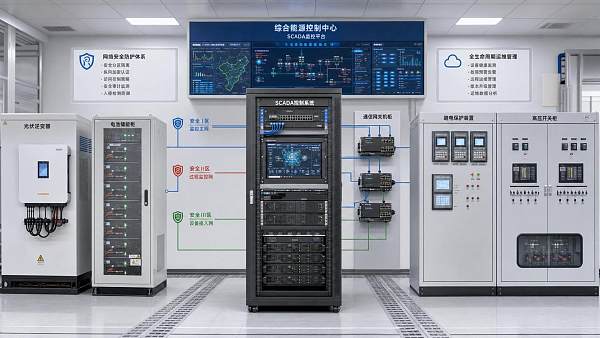
The system boundary should be documented from battery to connection point: vehicle and battery management system, bidirectional converter, site switchgear, protection, metering, local controller and remote dispatch platform.
Communication standards are necessary, but not sufficient
ISO 15118-20 defines communication functions supporting bidirectional power transfer between EVs and charging equipment. It is a key reference for newer implementations, but a claim of “ISO 15118 support” is too broad. Ask which edition, charging mode and bidirectional functions are implemented in the supplied software.
ISO 15118-2 support should not be treated as equivalent to ISO 15118-20 bidirectional functionality. Nor does a standards declaration demonstrate interoperability between a particular vehicle and charger. Require evidence of session establishment, power negotiation, controlled export, limit changes and orderly shutdown with the intended pairing.
The charger-to-backend interface is a separate layer. OCPP is commonly used for charging-station management; OCPP 2.1 adds explicit bidirectional charging support. Earlier versions and proprietary extensions may be used in particular systems, but a generic OCPP claim does not establish end-to-end V2G control.
Trace a dispatch instruction through every interface. Confirm how the platform requests power, how the charger reports available capacity, and how vehicle limits reach the aggregator. Define ownership of scheduling conflicts, timestamps, certificate management and software updates. Cloud control must not override local electrical protection or the agreed mobility reserve.
European grid connection remains a local approval exercise
Europe does not have a single V2G approval that automatically authorizes export everywhere. Harmonized standards provide common foundations, but national implementation, connection classification and DSO procedures determine what a project must submit.
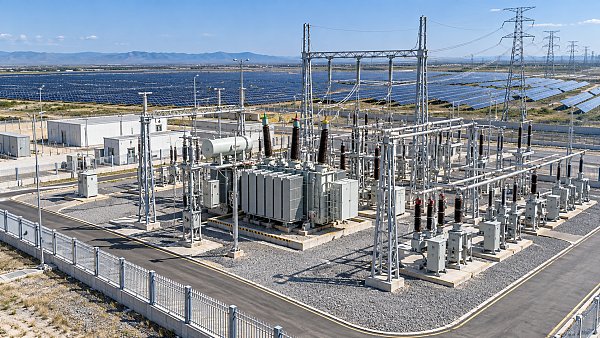
EN 50549-1 and EN 50549-2 are relevant references for generating plants connected to low- and medium-voltage distribution networks, respectively. Their applicability to a particular V2G installation, together with national requirements, should be confirmed with the network operator. Examples of national frameworks include Germany’s VDE-AR-N 4105 for low-voltage generation connections and Great Britain’s Engineering Recommendation G99; these are not interchangeable approvals.
Before equipment selection, obtain the DSO’s requirements for:
- Maximum import and export capacity at the connection point, including simultaneous operation with solar PV or stationary storage.
- Voltage and frequency protection, loss-of-mains behavior, reconnection conditions and required settings.
- Reactive-power capability, power quality, phase imbalance and any required grid-support functions.
- Accepted test evidence, commissioning procedures and responsibility for connection-point protection.
CE marking alone does not establish permission to export to a specific network. Likewise, an export-limited arrangement may still require DSO review. Where export limitation is accepted, verify measurement location, controller response and behavior following meter or communications failure.
Outage operation deserves a separate design decision. Conventional grid-connected V2G must not continue energizing an unintentionally islanded public network. Backup supply requires an approved arrangement for isolation, earthing, transfer and islanded operation—not merely a bidirectional charger.
Metering and aggregation determine whether export is usable
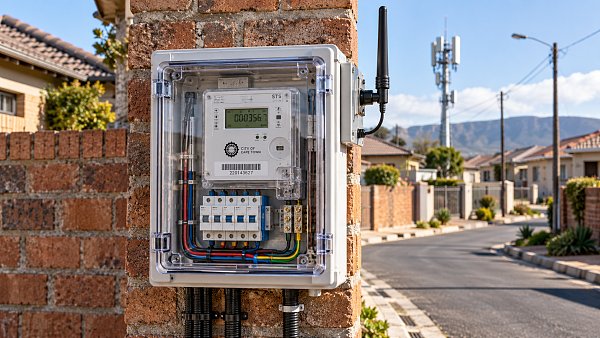
A charger’s energy register may be adequate for operational monitoring but insufficient for commercial settlement. Confirm the required import/export metering, accuracy, time resolution and applicable metrology rules with the supplier, network operator and market participant. Do not assume that a billing meter automatically meets every grid-service requirement.
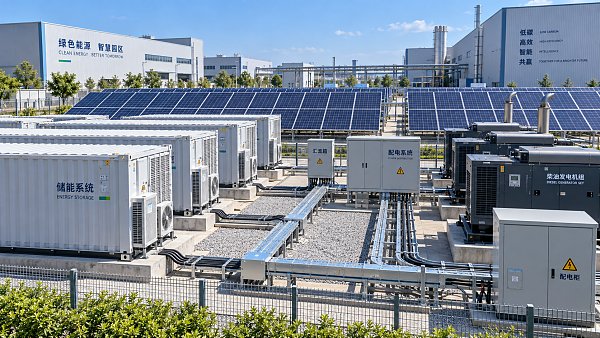
At a mixed-energy site, the settlement boundary matters. Solar generation, building demand, stationary storage and EV export can overlap. The metering design must distinguish delivered service from changes elsewhere on site, using whatever baseline and verification methods the selected market requires.
Aggregator assessment should cover minimum participation thresholds, service qualification, telemetry, dispatch response and non-delivery obligations. These vary by country and service. A fleet’s technically controllable power is not necessarily its qualified or commercially available capacity.
Also test loss of connectivity. The agreed fallback might stop export, maintain a local schedule or revert to mobility charging, subject to connection conditions. It should never leave a stale remote command operating indefinitely without defined limits.
Make the pilot an acceptance test, not a demonstration
A useful pilot tests operating boundaries as well as successful power flow. Freeze the vehicle, charger and backend software versions in the test record, then repeat critical checks after updates.
- Verify the operating envelope: measure charging and export at different battery states and representative temperatures, recording derating and auxiliary consumption.
- Measure complete response: timestamp the dispatch request and measured power at the connection point, including ramping, tracking error and charge/discharge transitions.
- Challenge control priorities: test driver override, departure reserve, site import/export constraints and simultaneous PV or storage operation.
- Exercise failures safely: use approved procedures to test communication loss, meter faults, emergency stop and restart after interruption.
- Reconcile the records: compare vehicle, charger, site-meter and aggregator data to identify missing intervals, inconsistent signs or clock errors.
For technical comparison, build an evidence matrix rather than a feature checklist. Each requirement should identify the responsible supplier, supporting document, tested configuration and unresolved dependency. Separate manufacturer declarations from independent test evidence and site-specific approval.
This system-level approach connects the EV infrastructure, grid modernization and distributed-energy topics covered by Global EcoPower & Energy Matrix Intelligence Network (EPEM). For developers, EPC teams and utilities, the practical question is not whether V2G exists, but whether a defined installation can deliver an approved service without compromising transport operations.
Before committing to deployment, close three gaps: written vehicle authorization, accepted grid-connection evidence and measured end-to-end dispatch performance. If any remains dependent on an unverified update or unspecified approval, treat it as an open project risk—not an available capability.
Questions about market trends? Contact Market Scope Live for deeper business insights.
We respect your privacy. Your information is strictly confidential.
Related News
 Smart Grid TechnologiesPower System Automation Prices: What Drives Project Costs?Power system automation price depends on integration, software, testing, and support. Explore the key cost drivers and compare bids with confidence.MORE+
 Smart Grid TechnologiesGrid Flexibility Costs: Comparing Storage, Demand Response and Peaker PlantsCompare grid flexibility cost across battery storage, demand response and peaker plants. Discover key cost drivers and choose the right solution for your reliability needs.MORE+
 Smart Grid TechnologiesChoosing a Grid Monitoring Systems Supplier: Integration and Support CriteriaChoose a grid monitoring systems supplier with confidence. Compare integration, cybersecurity, lifecycle costs, commissioning, and support before you commit.MORE+
 Smart Grid TechnologiesUS Energy Department Announces $237 Million for Grid Supply ChainsUS Department of Energy announces $237 million for grid supply chains. Explore potential impacts on domestic manufacturing, sourcing and procurement.MORE+
 Smart Grid TechnologiesAdvanced Metering Systems in South Africa: Choosing Connectivity for MunicipalitiesExplore advanced metering systems in South Africa. Compare cellular, RF mesh and PLC to choose reliable municipal connectivity, control costs and plan a smarter rollout.MORE+
 Smart Grid TechnologiesVehicle-to-Grid Technology in Europe: EV, Charger and Grid RequirementsExplore vehicle to grid technology Europe-wide. Discover EV compatibility, charger standards and grid approval requirements to reduce risks and plan your V2G deployment with confidence.MORE+
 Smart Grid TechnologiesWhat Infrastructure Do Utility-Scale Renewables Need for Grid Connection?Explore utility renewable energy infrastructure for grid connection, from substations to controls and compliance. Learn how to spot connection risks and keep projects on track.MORE+
 Smart Grid TechnologiesHybrid Power Plants for Microgrids: Sizing Solar, Batteries, and DieselSize hybrid power plants for microgrids with confidence. Learn how to balance solar, batteries, and diesel to cut fuel use, protect critical loads, and meet reliability targets.MORE+
 Smart Grid TechnologiesRenewable Power Systems for Mining: Designing Reliable Off-Grid MicrogridsExplore renewable power systems for mining: design reliable off-grid microgrids with solar, storage, backup power, and smart controls to cut fuel use and protect uptime.MORE+
 Smart Grid TechnologiesCommercial Microgrids in Europe: When Do Energy Savings Justify the Investment?Considering commercial microgrids Europe-wide? Discover when energy savings justify investment, compare solar and storage returns, and avoid costly oversizing.MORE+
 Smart Grid TechnologiesMulti-Site Commercial Energy Planning: Balancing Load, Tariffs, and ResilienceMulti site commercial energy planning: balance load profiles, tariffs, EV charging, storage, and resilience to reduce costs, strengthen operations, and optimize every facility.MORE+
 Smart Grid TechnologiesWhat Should a Partner Deliver Across a Multi-Site Distributed Energy Portfolio?Best partners for distributed energy projects across a multi-site portfolio? Discover how to standardize design, data, commissioning, and lifecycle performance at scale.MORE+
 Smart Grid TechnologiesHow Can Multi-Site Owners Identify the Right Partners for Distributed Energy Projects?“Is it best partners for distributed energy projects across a multi-site portfolio?” Explore a practical framework to assess technical expertise, grid readiness, risk, data access, and lifecycle support.MORE+
 Smart Grid TechnologiesSmart Grid Technologies for Utilities: How to Prioritize Grid Modernization InvestmentsSmart grid technologies for utilities: learn how to prioritize modernization investments, reduce reliability risks, defer capital upgrades, and build a resilient, cost-effective grid.MORE+
 Smart Grid TechnologiesDigital Substations: How IEC 61850 Improves Protection, Control, and Data VisibilityDigital substations powered by IEC 61850 improve protection, flexible control, and data visibility. Explore the design principles that strengthen grid reliability.MORE+
 Smart Grid TechnologiesWhat Is Feeder Automation and How Does It Reduce Outages on Distribution Grids?Feeder automation helps utilities isolate faults, restore healthy sections faster, and reduce distribution grid outages. Explore how FLISR improves reliability.MORE+
 Smart Grid TechnologiesWhat Renewable Integration Studies Should Model Before a Grid Connection DecisionRenewable integration studies reveal grid connection risks before approval—from voltage and protection to curtailment, dynamic stability, and future network constraints.MORE+
 Smart Grid TechnologiesUtility Resilience Planning: How to Prioritize Grid Investments for Extreme WeatherUtility companies resilience planning: learn how to prioritize grid investments for extreme weather, protect critical services, speed restoration, and build a stronger, smarter energy network.MORE+
 Smart Grid TechnologiesWhat Drives Microgrid Controller Costs Across Commercial and Industrial Projects?Microgrid controllers cost depends on asset mix, islanding needs, legacy integration, software, and lifecycle support. Learn how to compare bids and reduce project risk.MORE+
 Smart Grid TechnologiesHow Does Demand Response Work with Battery Storage in Microgrids?How does demand response integrate with battery storage in microgrid operations? Explore coordinated dispatch, peak shaving, renewable use, and resilient backup strategies.MORE+
 Smart Grid TechnologiesWhich Energy Management Systems Integrate Best with Existing SCADA Platforms?Which energy management systems integrate best with existing SCADA platforms? Explore protocols, control authority, and practical selection insights for reliable energy optimization.MORE+
 Smart Grid TechnologiesHow to Plan Clean Energy Infrastructure for Reliable Industrial Power SupplyClean energy infrastructure planning for reliable industrial power: optimize loads, storage, controls, grid integration, and resilience.MORE+
 Smart Grid TechnologiesHow to Size Hybrid Microgrid Systems for Remote Sites With Variable LoadsHybrid microgrid systems for remote sites: learn how to size solar, batteries, inverters, and generators for variable loads, resilience, and lower fuel costs.MORE+
 Smart Grid TechnologiesGrid Resilience Technologies That Prevent Outages During Extreme WeatherGrid resilience technologies for outage prevention help utilities and facilities withstand extreme weather with automation, storage, microgrids, and demand flexibility. Explore practical strategies to protect critical loads and restore power faster.MORE+
 Smart Grid TechnologiesGrid Stability Solutions for Wind: Managing Variability and Power QualityGrid stability solutions for wind: explore practical strategies for voltage control, frequency response, power quality, storage, and reliable PCC compliance.MORE+
 Smart Grid TechnologiesWhich Grid Interconnection Standards Apply to Commercial Rooftop Solar?What grid interconnection standards apply to commercial rooftop solar? Explore utility rules, inverter certifications, export limits, and approval steps to avoid costly delays.MORE+
 Smart Grid TechnologiesHow Demand Response Supports Public EV Charging StationsSmart grid demand response for public charging stations helps operators control peak loads, protect costs, improve reliability, and deliver a clearer EV driver experience.MORE+
 Smart Grid TechnologiesDo Smart Grid Features Reduce Charging Station Electricity Bills?Do smart grid features actually reduce charging station electricity bills? Discover how load balancing, tariff scheduling, solar, and storage can cut peak costs.MORE+
 Smart Grid TechnologiesCan One Energy Management Platform Support Multiple Charger Brands?Can a single energy management platform handle multiple charger brands at one site? Discover how open integration enables scalable, reliable EV charging control.MORE+
 Smart Grid TechnologiesGrid Resilience Technologies Explained: Which Solutions Reduce Outage Risk?Grid resilience technologies explained clearly: compare batteries, microgrids, feeder automation, and digital controls to see which solutions truly reduce outage risk and protect critical loads.MORE+
 Smart Grid TechnologiesHow Utilities Evaluate Renewable Power Systems for Grid Stability and ROIRenewable power systems for utilities: learn how grids assess stability, storage, integration costs, and long-term ROI to choose resilient, high-value renewable investments.MORE+
 Smart Grid TechnologiesWhat Makes a Microgrid Energy Project Bankable for Investors and Lenders?Energy project bankability microgrids explained: learn what investors and lenders check most—revenue certainty, contract strength, risk allocation, and reliable performance.MORE+
 Smart Grid TechnologiesWhat Determines Grid Monitoring Price in Utility and Industrial Projects?Grid monitoring price depends on scope, accuracy, software, and integration complexity. Learn what drives costs in utility and industrial projects before you compare quotes.MORE+
 Smart Grid TechnologiesUrban Energy Infrastructure Planning: Key Factors for Resilient and Scalable CitiesUrban energy infrastructure planning for resilient, scalable cities: discover how grids, storage, EV charging, and smart forecasting reduce risk, cut costs, and support cleaner urban growth.MORE+
 Smart Grid TechnologiesHow Grid Infrastructure in the USA Is Evolving to Support Renewables and Grid ReliabilityGrid infrastructure USA is evolving fast to integrate renewables, storage, and EV charging while protecting reliability. Explore key trends, risks, and business opportunities shaping the market.MORE+
 Smart Grid TechnologiesGrid Power Infrastructure Investment: How to Compare ROI Across Utility-Scale ProjectsGrid power infrastructure investment explained: learn how to compare ROI across utility-scale projects using NPV, lifecycle cost, grid risk, and performance metrics to make smarter investment decisions.MORE+
 Smart Grid TechnologiesWhat Drives Substation Digitalization Cost? Hardware, Software, and Retrofit FactorsSubstation digitalization cost explained: compare hardware, software, retrofit risks, and lifecycle factors to budget smarter, avoid hidden costs, and choose higher-value upgrades.MORE+
 Smart Grid TechnologiesIndustrial Microgrids EMS Explained: Core Functions, Controls, and Use CasesIndustrial microgrids EMS explained: discover core functions, control priorities, and real-world use cases to improve resilience, cut energy costs, and evaluate platforms with confidence.MORE+
 Smart Grid TechnologiesSCADA for Power Systems Vendor Selection: Integration, Cybersecurity, and Lifecycle CostSCADA for power systems vendor selection made practical: compare integration, cybersecurity, and lifecycle cost to reduce risk, avoid hidden expenses, and choose a platform built to scale.MORE+
 Smart Grid TechnologiesVehicle-to-Grid Technology for Depots: How It Works and When It Makes Business SenseVehicle to grid technology for depots explained: learn how V2G works, where savings and revenue come from, and when it makes real business sense for fleet operators.MORE+