
On June 26, 2026, the Office of the United States Trade Representative (USTR) opened a Section 301 tariff review covering Chinese-made solar inverters under HTS 8504.40, with a decision expected by August 10 on whether the current 25% additional tariff will remain in place or whether exemptions for some products could be restored. For U.S. importers, project developers, procurement teams, and supply chain service providers, the significance is immediate: the review reaches string, central, and hybrid storage inverters, and the outcome may directly affect customs costs, project economics, and near-term supply planning.
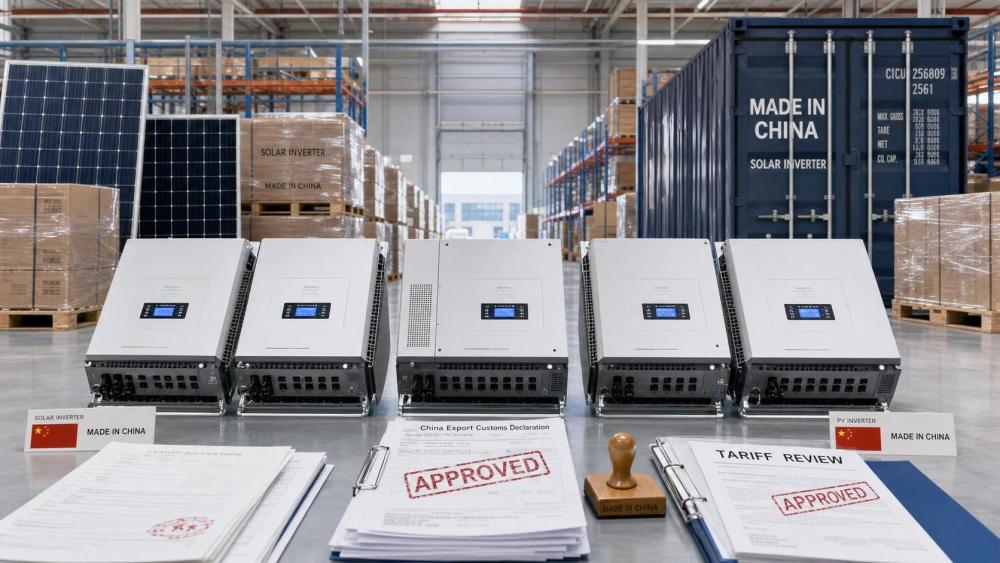
What the USTR has formally put in motion
According to the information provided, the USTR issued its notice on June 26, 2026 and formally initiated a Section 301 review focused on Chinese solar inverters classified under HTS 8504.40.
The review covers three product categories: string inverters, central inverters, and hybrid storage inverters.
The notice indicates that by August 10, the USTR plans to decide whether to continue the existing 25% additional tariff or restore exemption eligibility for certain products.
The same notice also requires importers to submit evidence by July 15 regarding supply chain substitutability, technical non-substitutability, and local assembly.
Where the pressure points may emerge across the market
Import-side cost exposure is the most immediate issue
From an industry perspective, U.S. importers are likely to feel the impact first because the review directly concerns whether the current tariff burden continues or whether some products may regain exemption treatment. The business effect would center on customs clearance cost assumptions, landed cost calculations, and contract pricing that depends on those assumptions.
Project economics may come under closer review
For project developers and procurement functions, the relevance lies in the stated connection between inverter tariff treatment and project IRR. Analysis shows that any decision on tariff continuation or exemption restoration could affect how equipment budgets are modeled, especially where inverter selection is already tied to delivery timing and commercial returns.
Suppliers and assemblers may face a documentation challenge
What deserves closer attention is the evidence standard named in the notice. The request for proof on supply chain alternatives, technical non-substitutability, and local assembly means manufacturers, assemblers, and related service providers may need to support importer filings with product, process, and sourcing documentation. The effect is not limited to pricing; it also reaches the quality and readiness of compliance materials.
Supply chain service providers may need to track timing more closely
For customs, trade compliance, and logistics-related service providers, the short filing window is itself a practical issue. The key operational impact may fall on document preparation, classification consistency, and communication between importers and upstream suppliers before the July 15 submission deadline.
What companies should watch during the 45-day window
Focus on product scope under HTS 8504.40
Companies should first verify whether the products they import, assemble, procure, or quote fall within the scope described in the notice. Because the review covers string, central, and hybrid storage inverters, attention should stay on the exact product category involved in each transaction or project pipeline.
Prepare evidence around substitutability and local assembly
Analysis shows that the filing requirement is not a general policy statement; it is tied to specific types of evidence. Importers and their suppliers should pay close attention to materials that address supply chain alternatives, technical non-substitutability, and local assembly, since these are explicitly identified in the notice.
Separate policy signals from operational assumptions
It is more appropriate to understand this stage as a live review process rather than a final outcome. Businesses should avoid treating a possible exemption restoration as settled, while also avoiding the assumption that the present tariff structure is automatically unchanged beyond the decision date. In practice, this means keeping procurement, pricing, and delivery assumptions flexible until the August 10 decision point is clearer.
Strengthen customer and supplier communication
For teams handling contracts, fulfillment, or project delivery, the near-term priority is communication discipline. Observably, the review affects cost exposure and timing assumptions, so counterparties may need alignment on supporting documents, lead times, and the potential impact of the USTR decision on ongoing or upcoming shipments.
Why this reads as a live policy signal, not a settled outcome
Analysis shows that this development carries two messages at once. First, it is a concrete procedural event with defined deadlines, so it has immediate relevance for companies that need to file evidence or reassess cost assumptions. Second, it does not yet establish the final tariff treatment for the covered products. The market therefore should treat it as an active policy checkpoint rather than a completed regulatory result.
From an industry perspective, the need for importer submissions on substitutability, technical necessity, and local assembly is especially notable because it points attention toward the rationale that may shape the coming decision. That makes the next several weeks more important than a routine watch-and-wait period.
How the market may need to frame this development
At this stage, the most balanced reading is that the USTR review introduces a short-term decision window with direct commercial relevance, while also serving as a longer-view policy signal that still requires confirmation through the August 10 outcome. For affected companies, the issue is not only whether tariffs stay at 25% or whether some exemptions return, but also how quickly they can align documentation, internal assumptions, and external communication around that uncertainty.
It is more appropriate to understand this as a development that demands close monitoring rather than a final change in market conditions. The immediate facts are clear; the final commercial implications still depend on the formal decision that follows.
Basis of this article and what still needs verification
This article is based on the user-provided news title, event date, and event summary. The confirmed facts used here are limited to the stated June 26, 2026 USTR notice, the Section 301 review covering Chinese solar inverters under HTS 8504.40, the referenced August 10 decision timing, the current 25% additional tariff, the possible restoration of exemptions for some products, the covered inverter categories, and the July 15 evidence submission requirement.
For this type of industry update, commonly relevant source types may include official government notices, company disclosures, industry association updates, authoritative media reporting, and standards-related documents. A specific official source link was not provided in the input, so the exact underlying notice should still be verified on an ongoing basis. The next points requiring continued attention are any updated USTR wording, any clarification on scope or evidentiary requirements, and the final August 10 determination.