
On July 31, 2026, the Office of the United States Trade Representative (USTR) opened a Section 301 tariff review covering electric vehicle charging equipment made in China, with a hearing scheduled for September. The review concerns whether the current additional 25% tariff on products including AC and DC chargers, liquid-cooled modules, and power distribution units should be maintained, adjusted, or removed. For distributors, importers, compliance teams, and companies operating across both BESS and EV charging infrastructure supply chains, this is a development worth close attention because it directly touches landed cost, customs handling, and purchasing timing.
What the Review Covers at This Stage
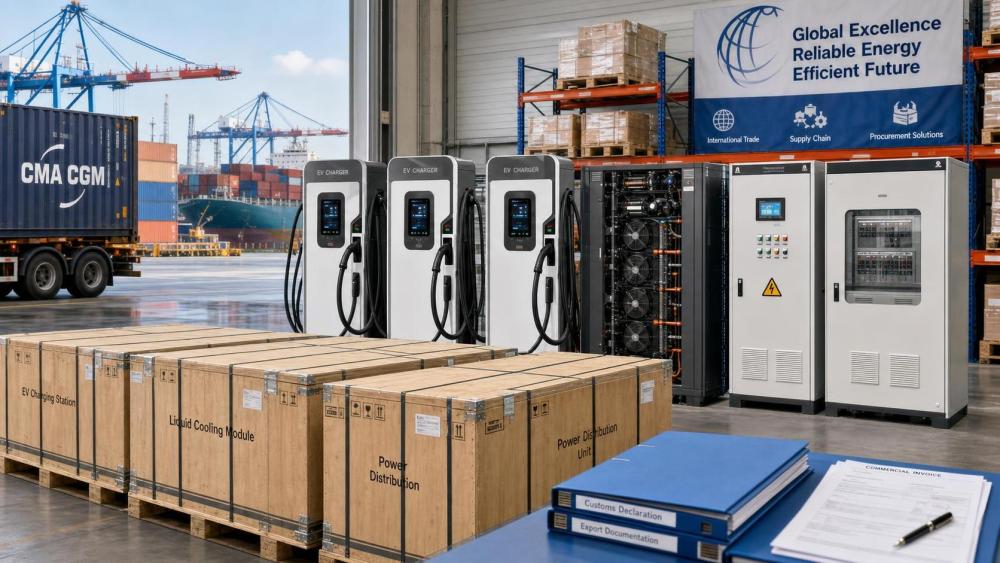
According to the information provided, USTR announced the review process on July 31, 2026 for China-made EV charging equipment. The scope referenced here includes AC charging piles, DC charging piles, liquid-cooled modules, and power distribution units. The stated purpose of the review is to assess whether the existing additional 25% tariff under Section 301 should remain in place, be adjusted, or be cancelled. The current timeline also indicates that a hearing will be held in September.
Where the Pressure May Appear Across the Supply Chain
Import cost exposure for distributors and trading companies
From an industry perspective, distributors and direct trading companies may feel the impact first because tariff treatment directly affects import cost structure. The main pressure point is not only pricing itself, but also the timing of procurement decisions, especially where shipments, quotations, and customer commitments are being arranged before the review outcome becomes clearer.
Compliance and customs execution for supply chain service providers
Analysis shows that customs brokers, logistics coordinators, and other supply chain service providers may need to pay closer attention to classification, documentation, and customs clearance pathways. The review does not itself confirm a tariff change, but it raises the practical importance of tracking how covered product categories are described and processed in actual trade flows.
Cross-linked exposure for BESS and EV charging suppliers
What deserves closer attention is the overlap between BESS and EV charging infrastructure supply chains. Companies supplying components or subsystems into both areas may face a more complex planning environment, because the review concerns equipment categories that can influence sourcing logic, product allocation, and order sequencing across adjacent energy infrastructure businesses.
Procurement timing for downstream project participants
For procurement teams and downstream application-side buyers, the immediate issue is decision timing rather than a confirmed policy result. Observably, the review introduces another variable into equipment purchasing cycles, particularly where imported charging hardware or related modules are part of ongoing supply planning.
Operational Priorities for Companies Right Now
Watch official wording, not just headline direction
Analysis shows that companies should focus on how official language develops around covered products, tariff treatment, and procedural updates. A review announcement and a final policy outcome are not the same thing, so commercial teams need to separate current facts from forward assumptions.
Recheck exposure by product category
Businesses tied to AC chargers, DC chargers, liquid-cooled modules, and power distribution units should review which product lines, orders, or customer programs are most exposed. The practical issue is to understand where tariff sensitivity sits within the portfolio, rather than treating all charging-related products as affected in the same way.
Prepare documentation and delivery coordination early
For teams managing imports and customer delivery schedules, it is reasonable to review supporting documents, supplier information, and shipment planning in advance. The review has direct relevance to customs compliance pathways, so internal coordination between sourcing, logistics, and sales becomes more important during the observation period.
Keep customer communication tied to confirmed developments
What deserves closer attention is how companies communicate with customers and channel partners during the review window. Where pricing or lead-time discussions are involved, it is more appropriate to frame the situation as an active policy review with potential implications, rather than as a settled outcome.
Why This Reads More as a Signal Than a Result
Observably, this development should not yet be read as a final change in tariff policy. It is more appropriate to understand this as a live policy signal with direct business relevance: the review has started, the scope includes key EV charging equipment categories, and the process will continue with a September hearing. From an industry perspective, the significance lies in the uncertainty it introduces into import cost planning and compliance execution, especially for companies operating across interconnected energy infrastructure product lines.
How the Industry May Need to Frame It
At this stage, the most balanced reading is that the USTR review creates a near-term decision variable and a longer-term policy watchpoint at the same time. It does not by itself establish a new tariff outcome, but it does affect how companies think about procurement rhythm, customs preparation, and supplier communication. For the market, this is less a concluded policy shift than a development that requires continued tracking.
Basis of This Report and What Still Needs Verification
This article is based on the user-provided news title, event date, and event summary. For developments of this kind, relevant source types usually include official government notices, company statements, industry association updates, authoritative media reporting, and standard-setting or trade-related documents. A specific official source link was not provided in the input, so the precise source document should continue to be verified. The next area to watch is any official procedural update tied to the September hearing and any later clarification on whether the existing 25% additional tariff will be maintained, adjusted, or cancelled.