
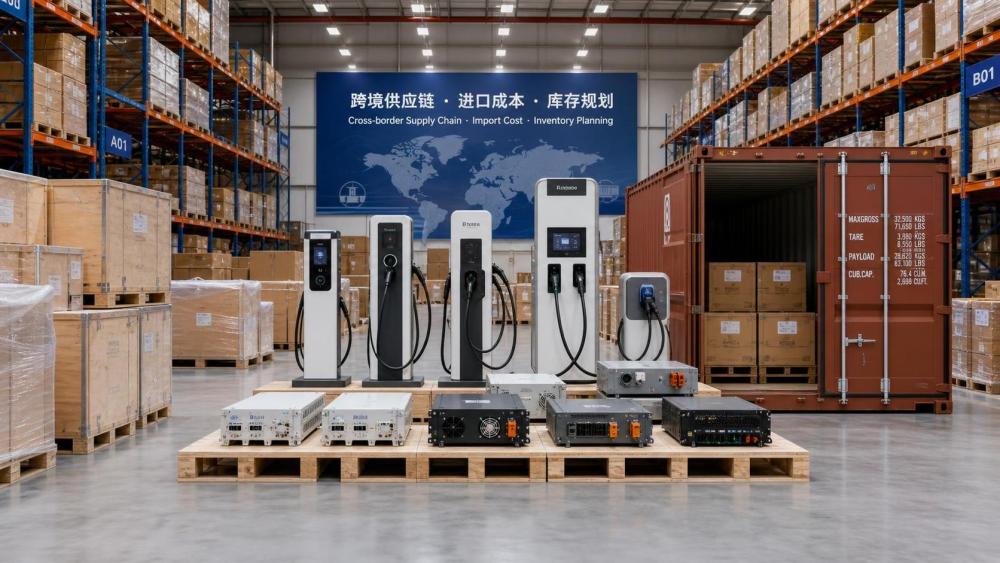
On July 24, 2026, the Office of the United States Trade Representative (USTR) opened a Section 301 tariff review covering EV charging equipment made in China. The review concerns AC and DC chargers, liquid-cooling modules, charging controllers, and related power electronics, and it matters because the outcome could directly reshape import costs, pricing decisions, and inventory planning across the US charging equipment channel before the end of August.
What the July 24 notice confirms
According to the information provided, USTR formally began a review process on July 24, 2026 for Section 301 tariffs applied to Chinese EV charging equipment. The review will assess whether the current additional 25% tariff remains necessary. It will also consider whether the covered product scope should be expanded or whether tariff rates should be raised. The expected timing for the review result is before the end of August.
Where the immediate pressure may appear
Imported equipment and customs cost exposure
From an industry perspective, US importers are among the first groups likely to feel the impact because any change in tariff scope or rate would affect landed cost at customs clearance. What deserves closer attention is not only the current 25% additional duty, but also whether more product categories within EV charging equipment are brought into the review outcome.
Distributor pricing and channel planning
Distributors and channel operators may face a more complicated pricing window. Analysis shows that when tariff treatment is under review, pricing strategy can become harder to stabilize, especially for products already moving through quotation, order confirmation, and stock allocation stages. The practical issue here is timing: firms may need to watch how the end-of-August result aligns with existing sales commitments and inventory turnover plans.
Component and subsystem suppliers
Manufacturers and suppliers tied to liquid-cooling modules, charging controllers, and supporting power electronics may also need to pay attention, because the review is not limited to complete charging piles alone. Observably, this matters at the component and subsystem level as much as at the finished-equipment level, particularly where cross-border supply arrangements depend on product classification and delivery schedules.
What companies should monitor now
Track the exact product coverage
Analysis shows that one of the most important points is whether the final outcome keeps the current scope or extends it further. Companies should closely review how their shipped or planned product lines map to the categories named in the review, including AC/DC charging equipment, liquid-cooling modules, charging controllers, and related power electronics.
Separate policy language from business execution
What deserves closer attention is the difference between a review announcement and an already finalized tariff adjustment. At this stage, the process has been launched and the result is expected before the end of August, but the final treatment is not yet confirmed in the information provided. That distinction matters for procurement timing, sales quotations, and customer communication.
Recheck documents, classifications, and delivery timing
For importers, distributors, and supply chain service providers, current attention should stay on documentation and execution details that could influence customs handling and downstream planning. This includes product descriptions, shipment timing, and the consistency of materials used in trade and customer communication, especially where orders may span the review period.
Prepare inventory and quotation contingencies
Observably, the review timeline creates a short decision window for channel businesses. Firms with active US-bound inventory or near-term quoting activity may need contingency plans for different tariff outcomes, including unchanged treatment, broader product coverage, or higher rates, while avoiding assumptions that have not yet been confirmed.
Why this should be read as a signal, not a final result
Analysis shows that this development is more appropriately understood as an active policy signal rather than a completed tariff change. The confirmed fact is that USTR has opened the review and is evaluating the current 25% additional tariff, possible scope expansion, and possible rate increases. The industry therefore still needs to watch the official outcome before treating any one scenario as settled.
From an industry perspective, the significance lies in the combination of short review timing and direct commercial exposure. Even without a final result yet, the announcement already affects how market participants think about customs cost, resale pricing, and inventory rhythm over the next several weeks.
How the market is likely to frame this development
At this point, it is more appropriate to understand the news as a near-term operational issue with possible longer-term policy implications. The short-term concern is clear: businesses connected to US imports of Chinese EV charging equipment may need to adjust planning before the review result is released. The longer-term meaning is still subject to the final decision, so the most rational reading today is that the market has entered a watch-and-prepare phase rather than a fully determined outcome.
Basis of this article and points for follow-up
This article is based on the user-provided news title, event date, and event summary. For this type of development, commonly relevant source categories may include official government notices, company statements, industry association updates, authoritative media coverage, and standards-related documents. A specific official source link was not provided in the input, so the exact notice text and any subsequent updates still require continued verification. The main follow-up points are the final review result expected before the end of August, any confirmed change to product scope, and whether the current additional 25% tariff is maintained or adjusted.