
On July 22, 2026, the European Commission announced in notice C/2026/4892 that it had confirmed the existence of material subsidization in electric vehicle charging equipment made in China and will impose a 17.1% provisional countervailing duty from August 1, 2026. For companies involved in AC/DC charging piles, charging modules, liquid-cooled terminals, and related power conversion systems, this is not just a policy update. It directly affects customs declarations, landed costs, and contract execution for exporters serving the BESS and EV charging infrastructure markets.
What the Commission Has Confirmed
According to the information provided, the European Commission released notice C/2026/4892 on July 22, 2026 and formally confirmed that Chinese-made EV charging equipment had received material subsidies. Based on that determination, the Commission decided to levy a 17.1% provisional countervailing duty starting on August 1, 2026.
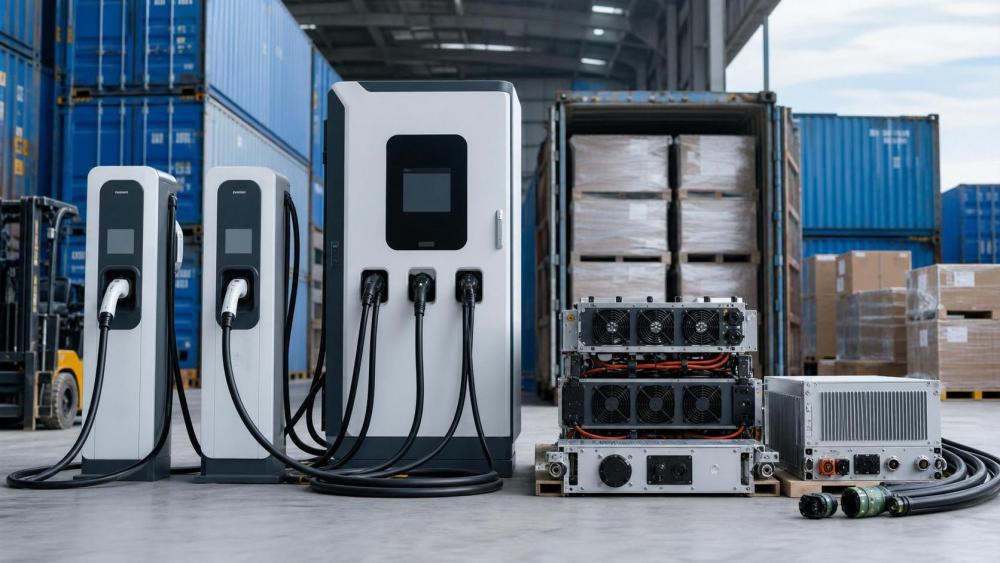
The measure applies to products covered under HS codes including 8536.69 and 8537.10. The scope includes AC and DC charging piles, charging modules, liquid-cooled terminals, and supporting power conversion systems.
The information provided also indicates that the measure has direct relevance for compliance declarations, customs clearance costs, and contract performance arrangements affecting exporters connected to BESS and EV charging infrastructure.
Where the Pressure Is Likely to Appear First
Exporters shipping affected charging equipment
From an industry perspective, the most immediate exposure falls on companies directly exporting the covered products to the EU market. The reason is straightforward: the provisional countervailing duty changes the cost and declaration framework attached to the covered goods. The main pressure points are likely to be product classification, customs paperwork, and the cost assumptions built into ongoing shipments and signed orders.
Manufacturers supplying system-level components
Manufacturers of charging modules, liquid-cooled terminals, and related power conversion systems may also face practical disruption because these products are explicitly included in the measure's scope. What deserves closer attention is whether internal product mapping, technical documentation, and shipment descriptions are aligned with the covered categories and HS coding used in actual export filings.
BESS and EV charging infrastructure project participants
Observably, the impact is not limited to standalone charger vendors. Businesses serving BESS and EV charging infrastructure projects may need to reassess procurement timing, delivery terms, and project-side cost calculations where affected equipment is embedded in broader infrastructure deliveries. In these cases, the issue may surface through contract execution rather than only through customs handling.
Supply chain and trade service providers
Customs brokers, compliance teams, freight coordinators, and related service providers are also likely to see more operational sensitivity around declarations and clearance. Their exposure comes from the need to interpret scope accurately, align documents across parties, and avoid mismatches that could delay clearance or alter duty treatment.
What Companies Should Track Now
Check whether products fall within the stated scope
Companies should first review whether their exported goods match the product categories and HS codes identified in the notice, including the cited codes 8536.69 and 8537.10. This is a practical starting point because the difference between being covered and not being covered directly affects customs treatment and cost exposure.
Revisit declaration and documentation readiness
Analysis shows that compliance risk may rise when commercial descriptions, technical files, and customs declarations are not fully aligned. For affected exporters, supporting documents tied to AC/DC charging equipment, modules, liquid-cooled terminals, and power conversion systems deserve immediate review before the August 1 effective date.
Assess contract execution and cost allocation
What deserves closer attention is the interaction between the new provisional duty and existing delivery commitments. Companies with pending shipments or active customer agreements may need to recheck pricing assumptions, delivery schedules, and responsibility allocation for additional customs costs, especially where project execution depends on imported charging equipment.
Separate the policy signal from the operational detail
Observably, the announcement establishes a clear near-term trade measure, but businesses still need to focus on how that measure is applied in day-to-day transactions. In practice, that means watching official wording, scope interpretation, and any follow-on clarifications that could affect filing treatment, customer communication, or shipment planning.
Why This Matters Beyond a Single Notice
Analysis shows that this development should be read as both an immediate operational change and a broader regulatory signal for cross-border EV charging equipment trade. The immediate change is the 17.1% provisional countervailing duty effective from August 1, 2026. The broader signal is that compliance, classification accuracy, and trade remedy exposure are becoming more central to business planning for suppliers connected to EV charging infrastructure and BESS exports.
At the same time, it is more appropriate to understand this as an active trade development that still requires continued monitoring, rather than as a complete and final picture of downstream market outcomes. The notice creates a confirmed compliance event, but the full commercial effect will depend on how companies, buyers, and service providers respond in actual transactions.
How the Market Is Most Usefully Reading It
For the industry, the clearest takeaway is not simply that a new duty has been announced, but that affected EV charging equipment exports to the EU now face a more demanding execution environment. The practical significance lies in customs treatment, landed cost changes, and contract handling for the covered product categories.
From a neutral editorial perspective, this is best understood as a short-term operational shift with longer-term policy significance. It already creates real compliance and cost questions for current business, while its broader structural implications still need to be observed through subsequent implementation and market response.
Basis of This Article and Ongoing Verification
This article is based on the user-provided news title, event date, and event summary concerning the European Commission notice C/2026/4892 issued on July 22, 2026 and the provisional 17.1% countervailing duty effective August 1, 2026.
For this type of industry update, commonly relevant source categories include official government or regulatory notices, company disclosures, industry association releases, authoritative media reporting, and standard-setting or customs-related documents. A specific official source link was not provided in the input, so the exact link still needs to be verified on an ongoing basis.
Further monitoring should focus on any additional official clarifications regarding scope, implementation, product classification, customs practice, and the downstream handling of contracts and shipments involving affected EV charging equipment.