How to Evaluate an EV Charging Software Platform for Multi-Site Charging Operations
How to Evaluate an EV Charging Software Platform for Multi-Site Charging Operations
Selecting an EV charging software platform for one site is already a technical exercise. Doing it across multiple depots, commercial properties, retail sites, fleet yards, or mixed public-private locations is a different job. The problem usually is not whether the dashboard looks polished. It is whether the platform can keep chargers online, handle different site constraints, and stay workable when the network grows from ten charge points to hundreds.
For technical evaluation teams, the useful question is simple: what will break first when this system is under real operating pressure? That is where a good checklist helps. The points below are the ones that tend to matter after procurement meetings are over and actual operations begin.
Start with the operating model, not the feature list
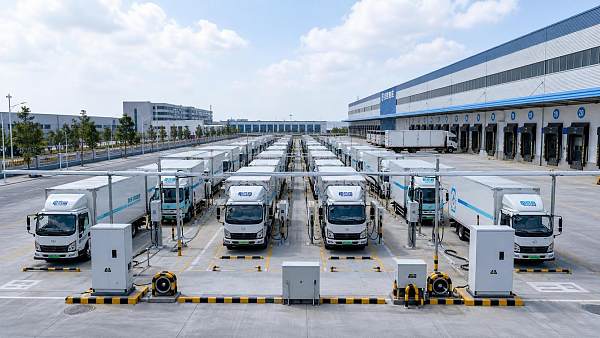
Before comparing vendors, write down what the network actually looks like. A platform that works well for office AC charging may struggle in a fleet depot with overnight load management. A system designed for public DC fast charging may be oversized, and overpriced, for workplace or residential portfolios.
- How many sites are live now, and how many are planned in 12 to 36 months?
- Are the sites uniform, or does each one have different charger brands, grid limits, user groups, and tariff logic?
- Is the network public, semi-public, private fleet, employee-only, or mixed?
- Who needs access: drivers, site managers, finance, field service teams, roaming partners, utility-facing energy managers?
If the vendor cannot map its software structure to your actual operating model early in the evaluation, that is usually a warning sign. You will spend the next year building workarounds.
Interoperability is not a checkbox
Most teams say they want an open EV charging software platform. What they often mean is: we do not want to be trapped by one charger supplier, one payment stack, or one service contractor. That depends on actual interoperability, not marketing language.
Check supported protocols carefully. OCPP support matters, but the version and implementation details matter more. A vendor may say it supports OCPP, yet only for a limited command set or only with selected hardware. Ask for the charger compatibility list, but do not stop there. Ask which functions are fully validated across those chargers: remote start/stop, firmware management, smart charging, fault code visibility, meter data handling, reservation, and local authorization fallback.
Roaming and payment integrations deserve the same treatment. If your network may interact with external e-mobility service providers, ask about OCPI support and the current operating scope. If payment terminals or app-based billing are required, verify who owns PCI-related responsibilities and which parts are handled by third-party providers. If the answers stay vague, assume integration effort will land on your side.
Multi-site control should be designed for exceptions
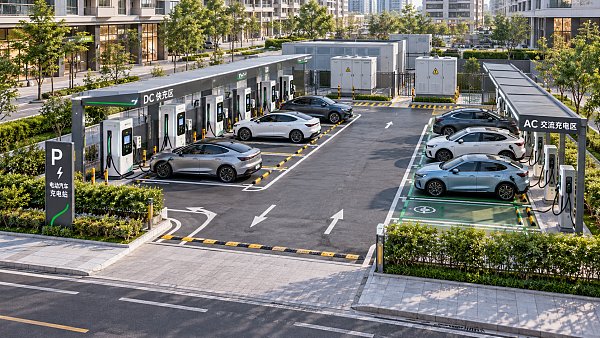
In a live network, sites do not behave the same way. One depot has transformer constraints. One retail location has unstable backhaul. One office site wants RFID-only access. Another needs guests, employees, and fleet vehicles billed differently. If the software assumes a clean, standard configuration everywhere, operations become painful very quickly.
Look for platform controls that can be applied by hierarchy: network, region, site, charger group, individual connector. You want policy inheritance, but you also need safe local overrides. This is especially important for pricing rules, user permissions, charging windows, power caps, and maintenance settings.
A practical test: ask the vendor to show how one operator would manage 50 sites with three different charger brands and two billing models, without cloning chaos into the back end.
Load management needs engineering depth
This is where many evaluations stay too shallow. Smart charging is often presented as a simple balancing feature. In practice, for multi-site operations it touches grid connection limits, transformer loading, contracted capacity, demand charges, fleet readiness, and sometimes on-site solar or storage dispatch.
Ask what kind of load management the platform actually supports:
- Static load balancing based on fixed limits
- Dynamic load management using real-time site measurements
- Priority logic by vehicle type, departure time, user class, or operational urgency
- Coordination with building loads, PV generation, or battery storage
- Fallback behavior if meter signals or communications are lost
Do not accept a demo that only shows equal power sharing between chargers. That proves very little. The better question is what happens on a cold evening when every vehicle plugs in at once, the building load rises, and the site still has to stay under its grid limit.
Metering, billing, and settlement are where small errors turn into disputes
For technical teams, billing may look like a commercial layer. It is not. It depends on meter data quality, session integrity, tariff logic, timezone handling, tax treatment, and user identity mapping. In multi-site operations, those details accumulate fast.
Verify what data is captured per session, how missing values are flagged, and whether corrected records are traceable. If the network spans multiple countries or regions, ask how the system handles local invoicing requirements, tax configuration, currency differences, and metering compliance obligations. Specific legal and calibration rules vary by market, so anything beyond the vendor’s documented scope should be marked 【待核实】 until local review is complete.
Also check whether the platform can separate reimbursement models. Employee charging, company fleet charging, public ad hoc charging, and landlord-tenant billing often coexist in one portfolio. A platform that treats all sessions the same will create manual finance work every month.
Remote operations should reduce truck rolls
Uptime is rarely just a hardware issue. A lot depends on whether the software makes faults visible early and gives the operations team useful remote controls. Ask to see alarm handling in detail, not just a green-red status screen.
Good platforms usually let you filter by site, charger type, severity, error frequency, and communication status. They keep event history, support remote reboot and configuration changes where hardware allows it, and show enough diagnostic detail for first-line triage. Firmware update orchestration matters too, especially in mixed hardware environments. You need staged deployment, rollback awareness, and change logging. Otherwise a routine update can turn into a network-wide outage.
One useful test is to ask the vendor to walk through three failure cases: charger offline, transaction not closing, and dynamic load controller not responding. If the troubleshooting flow is messy in the demo, it will be worse at scale.
Data access is part of the product
A surprising number of platforms still treat reporting as downloadable PDFs and a few CSV exports. That may work for a pilot. It does not work for a serious charging network that needs integration with ERP, fleet systems, CMMS, energy management platforms, or investor reporting tools.
Check the API structure, rate limits, webhook support, data latency, and field-level documentation. Confirm whether data can be extracted by site, charger, connector, session, user, tariff, and alert type. Also ask who owns the operational data and what happens if you migrate away. If export rights are restricted or historical data extraction is cumbersome, consider that a lock-in risk.
Security and access control need plain answers
This is one of those topics that gets dressed up in general statements. Keep it practical. Ask about role-based access control, SSO options, MFA support, credential management, audit logs, and how remote commands are authorized. If third-party maintenance contractors will access the system, permission boundaries matter even more.
For cloud architecture, ask where data is hosted, how backups work, how incidents are handled, and what the vendor’s patching process looks like. If the project touches regulated infrastructure or public-sector procurement, the internal security review may need more detail than a sales security FAQ can provide.
Scalability is about operations, not just server capacity
Vendors often answer scaling questions with cloud language. That is only part of it. A platform is truly scalable when onboarding, exception handling, reporting, user support, and change control still work after the portfolio becomes messy.
Ask how long it typically takes to add a new site with a familiar hardware configuration, and what still requires manual engineering. Ask whether templates exist for recurring site types. Ask how software releases are communicated and whether changes can affect existing charger integrations. This is where mature operators save time and immature ones accumulate hidden cost.
Do not skip the commercial-operational boundary
Even when the technical team leads the selection, contract terms can undermine a technically acceptable platform. Review service levels, response times, support hours, hardware compatibility responsibilities, API pricing, data export conditions, and upgrade policies. Some platforms look competitive until every integration, user role, roaming link, or premium support layer is priced separately.
If the business expects regional expansion, check language support, local payment options, tax handling, and whether field service can be coordinated across markets. A multi-site network often turns into a multi-country network faster than the original RFP assumed.
A short proof test is worth more than a polished demo
If the shortlist is serious, push for a controlled proof phase using your likely hardware mix and at least two site profiles. Not a generic sandbox. Not a slide deck. Real charger behavior, real user roles, real reporting outputs.
- Test onboarding and configuration time.
- Trigger fault scenarios and see how quickly they are detected.
- Run charging sessions under constrained site power.
- Verify billing records and exported data.
- Check whether operations staff can use the platform without vendor hand-holding.
That last point matters more than teams admit. If routine tasks depend on specialist intervention, the platform may be technically capable but operationally expensive.
A good EV charging software platform for multi-site charging operations should make hardware diversity manageable, keep energy constraints visible, and reduce the amount of manual correction your team has to do later. When evaluating vendors, the strongest signal is not how many features appear on the sheet. It is how clearly the platform behaves under the awkward conditions that real charging networks face every week.
Questions about market trends? Contact Market Scope Live for deeper business insights.
We respect your privacy. Your information is strictly confidential.
Related News
 EV Charging InfrastructureIndian Minister Proposes Lower EV Charging Rates to Encourage AdoptionIndia EV charging rates could fall in Maharashtra under Nitin Gadkari’s proposal. Explore the potential impact on drivers, fleets and charging operators.MORE+
 EV Charging InfrastructureEV Charging for Industrial Parks: Sizing Capacity and Managing Peak LoadsPlan industrial parks EV charging with confidence. Learn how to size capacity, manage peak loads, reduce demand costs, and keep fleets ready without disrupting production.MORE+
 EV Charging InfrastructureArlington County, Virginia, to Raise Public EV Charging Rates by 72%Arlington County public EV charging rates will rise 72% to $0.30/kWh on November 1, 2026. Explore the potential impact on fleet budgets and how businesses can prepare.MORE+
 EV Charging InfrastructurePlanning Solar EV Charging Hubs: Sizing PV, Battery Storage, and Grid CapacityPlan solar EV charging hubs with confidence. Learn how to size PV, battery storage, and grid capacity to meet peak demand, control costs, and support reliable charging.MORE+
 EV Charging InfrastructureChery Unveils 1.44 MW Charging System, Claims 500 km of Range in Five MinutesChery’s 1.44 MW charging system claims 500 km of range in five minutes. Explore its ultrafast EV charging technology, vehicle compatibility and global rollout plans.MORE+
 EV Charging InfrastructureComparing EV Charging Equipment Manufacturers: Warranty, Lead Times, and SupportCompare EV charging equipment manufacturers on warranty coverage, lead times, and support. Discover how to reduce downtime, uncover hidden costs, and choose the right supplier.MORE+
 EV Charging InfrastructurePlanning Urban EV Charging Hubs: Site Selection, Power Needs, and Charger MixPlan urban EV charging hubs with confidence. Discover how to select sites, size power capacity, and balance AC/DC chargers to control costs and deliver reliable charging.MORE+
 EV Charging InfrastructureHow to Plan Charging Corridors for Fleet Routes, Grid Capacity, and Future DemandCharging corridor infrastructure planning helps fleets align routes, grid capacity, reliable charging, and scalable site design for future demand.MORE+
 EV Charging InfrastructureHow to Size Fast EV Charging Equipment for Fleet Depots Without OverbuildingFast EV charging equipment for fleet depots: learn how to match power, charging windows, grid capacity, and smart controls without costly overbuilding.MORE+
 EV Charging InfrastructureHow to Plan EV Charging Infrastructure in Indonesia for Fleet and Public SitesCharging infrastructure planning in Indonesia for fleet and public sites: optimize energy, grid capacity, smart load management, safety, and scalable EV charging.MORE+
 EV Charging InfrastructureHow to Size DC EV Charging Equipment for Fleet Depots and Peak DemandDC EV charging equipment sizing guide for fleet depots: balance energy demand, peak loads, utility limits, smart charging, and scalable growth.MORE+
 EV Charging InfrastructureAre EV Charger Payment Systems Interoperable Across Regions?Are there interoperability standards for EV charger payment systems across regions? Explore OCPP, OCPI, Plug & Charge, roaming, and payment strategies for seamless EV charging.MORE+
 EV Charging InfrastructureHow to Evaluate Total Cost of Ownership for a Fleet DC Charging DepotHow to evaluate total cost of ownership for a fleet DC charging depot: compare grid costs, tariffs, uptime, smart charging, and scalable infrastructure.MORE+
 EV Charging InfrastructurePublic Charging Infrastructure Planning: Site Criteria, Grid Capacity, and UtilizationPublic charging infrastructure planning made practical: evaluate site access, grid capacity, utilization, and scalable design to build reliable, investable EV charging hubs.MORE+
 EV Charging InfrastructureHow Behind-the-Meter Energy Systems for EV Charging Cut Peak-Demand CostsBehind the meter energy systems for EV charging help cut peak-demand costs, defer grid upgrades, and improve charging reliability with storage and smart controls.MORE+
 EV Charging InfrastructureIs Building a Public EV Charging Network in Rural Areas Financially Viable?Is it financially viable to build public charging networks in rural areas? Explore grid costs, utilization, funding, AC/DC choices, and strategies for profitable rural EV charging.MORE+
 EV Charging InfrastructureHow Public EV Charging Load Management Prevents Peak Demand and Grid Overloadspublic EV charging load management prevents costly peak demand and grid overloads. Explore smarter controls, capacity planning, and scalable charging performance.MORE+
 EV Charging InfrastructureHow to Assess Long-Term EV Charger Reliability Before ProcurementHow to evaluate long-term reliability of EV chargers before procurement? Explore practical checks for uptime, grid compatibility, software stability, service support, and lifecycle costs.MORE+
 EV Charging InfrastructureIs AC Charging Still Worth Investing in for New Public Stations in 2026?Is AC charging still worth investing in for new public stations in 2026? Explore where smart, managed AC charging delivers value, revenue, and scalable EV infrastructure.MORE+
 EV Charging InfrastructureHow to Plan Power Capacity for Highway EV Charging CorridorsHighway charging corridor power capacity planning: learn how to size grid connections, manage peak demand, use storage, and phase EV hubs for reliable, scalable growth.MORE+
 EV Charging InfrastructureWhat Is the Typical BMS Failure Rate in EV Charging Equipment?Battery management system failure rate in charging equipment: learn what BMS faults mean, key risks, and how to protect EV charger uptime.MORE+
 EV Charging InfrastructureHow Should Fleet Depot Charging Stations Be Laid Out?Fleet depot charging station layout design guidelines for safer vehicle flow, smart power use, scalable infrastructure, and reliable fleet readiness. Explore practical planning tips.MORE+
 EV Charging InfrastructureDC Fast Chargers vs Liquid-Cooled Ultra-Fast Chargers in 2026DC fast charger vs liquid-cooled ultra-fast charging stations 2026: compare power, costs, grid demands, uptime, and ideal deployment scenarios for smarter EV infrastructure.MORE+
 EV Charging InfrastructureWhat Does the Global EcoPower Charging Intelligence Platform Do?Global EcoPower EV charging infrastructure intelligence platform delivers actionable insights on grid capacity, storage, technology, risk, and profitable charging project planning.MORE+
 EV Charging InfrastructureHow Global EcoPower Manages Energy Across EV Charging NetworksGlobal EcoPower energy management systems for charging networks optimize EV charging with dynamic load control, storage, solar integration, and reliable data insights.MORE+
 EV Charging InfrastructureWhat Switchgear Specifications Are Needed for a 500 kW Charging Site?What switchgear specifications are required for a 500kW charging installation? Explore load sizing, transformer selection, fault ratings, protection, and expansion planning.MORE+
 EV Charging InfrastructureWhich Communication Protocols Matter When Mixing Charger Brands?What communication protocols matter most when mixing charger brands at one station? Explore OCPP, OCPI, ISO 15118, and energy controls for reliable interoperability.MORE+
 EV Charging InfrastructureWhat Grid Connection Capacity Does a 10-Bay Fast Charging Hub Need?What grid connection capacity is needed for a 10-bay fast charging hub? Explore demand, power sharing, batteries, and scalable planning for reliable EV charging.MORE+
 EV Charging InfrastructureHow to Plan EV Charging Systems for Apartments Without Overloading the Building?EV charging systems for apartments start with capacity, not charger count. Learn how to prevent overloads, use smart load management, and plan scalable charging that fits your building.MORE+
 EV Charging InfrastructureHow City Charging Infrastructure Planning Can Reduce Costs and Avoid Grid BottlenecksCharging infrastructure planning for cities helps cut costs, avoid grid bottlenecks, and speed EV rollout with smarter, scalable deployment.MORE+
 EV Charging InfrastructureEU Mandates EN 61851-23:2026 for EV ChargersEU Mandates EN 61851-23:2026 for EV Chargers: learn how the new EU rule impacts certification, customs clearance, and market access before October 2026.MORE+
 EV Charging InfrastructureITC Ruling Puts Chinese EV Chargers Under 337 PressureITC ruling on Chinese EV chargers puts Section 337 pressure on imports, compliance, and OEM supply chains. Learn how patent risks may impact U.S. customs, distributors, and EV charger sourcing.MORE+
 EV Charging InfrastructureHow EV Charging Technology Affects Charging Speed, Compatibility, and Site PlanningEV charging technology shapes real charging speed, vehicle compatibility, and site planning. Learn how to avoid costly design mistakes and build charging projects that perform.MORE+
 EV Charging InfrastructureUS Requires UL 1741 SA-2025 EVSE ModulesUS Requires UL 1741 SA-2025 EVSE Modules for imported DC fast chargers. Learn how V2G, FCC+UL testing, and firmware compliance will reshape US market access.MORE+
 EV Charging InfrastructureUSTR Opens Section 301 Review on China EV ChargersUSTR Opens Section 301 Review on China EV Chargers: learn how the 25% tariff review may affect import costs, customs compliance, and procurement timing across EV charging and BESS supply chains.MORE+
 EV Charging InfrastructureHow to Plan Fleet Charging Infrastructure for Logistics Depots and Delivery HubsFleet charging infrastructure for logistics starts with duty cycles, dwell time, and grid limits. Learn how to design depot and hub charging that cuts bottlenecks and supports scalable fleet electrification.MORE+
 EV Charging InfrastructureWhat Is Load Management in EV Charging and How Does It Reduce Peak Power Costs?Load management in EV charging helps control peak demand, lower grid upgrade pressure, and cut costly power spikes. Learn how smart power allocation improves site economics.MORE+
 EV Charging InfrastructureHow to Evaluate an EV Charging Software Platform for Multi-Site Charging OperationsEV charging software platform evaluation made practical: learn how to assess interoperability, load management, billing, security, and scalability for multi-site charging operations.MORE+
 EV Charging InfrastructureUSTR Opens 301 Review on China EV Charging GearUSTR opens a Section 301 review on China EV charging gear, putting tariffs, import costs, pricing, and inventory plans at risk. See what US importers and distributors should watch now.MORE+
 EV Charging InfrastructureEU Sets 17.1% Duty on Chinese EV ChargersEU Sets 17.1% Duty on Chinese EV Chargers: see how the new EU tariff affects EV charging equipment exports, customs costs, HS codes, and contract risks for suppliers.MORE+