
On July 21, 2026, the European Commission announced a countervailing investigation into Chinese-made EV DC fast-charging equipment and said provisional import duties of up to 23.6% will apply from August 1, 2026. The measure covers charging piles and core components of Chinese origin cleared in the EU, making it immediately relevant for importers, distributors, project buyers, and suppliers managing customs cost, stock planning, compliance documentation, and delivery timing.
What has been formally announced
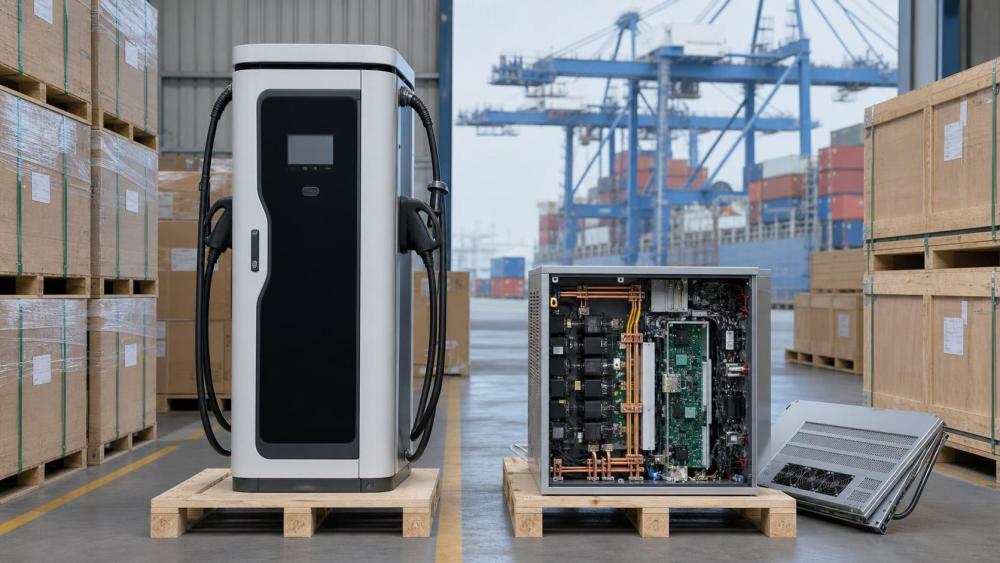
The confirmed facts are limited but commercially significant. The investigation concerns Chinese-origin EV DC fast-charging equipment, including liquid-cooled charging guns, 400V/800V compatible chargers, and intelligent power distribution modules. According to the announcement date provided, the European Commission formally launched the countervailing investigation on July 21, 2026, and provisional import duties of up to 23.6% are set to apply from August 1, 2026. The scope covers all Chinese-origin charging piles and core component suppliers whose products are cleared through EU customs.
The event summary also makes clear that the immediate pressure points are customs clearance cost, distributor inventory strategy, and project delivery schedules. Beyond that, no further implementation detail, company-specific outcome, or final ruling has been provided in the input.
Where the operational pressure is likely to appear first
Import transactions may face a direct cost and timing reset
From an industry perspective, importers are the first group likely to feel the change because the announced provisional duty attaches directly to goods entering EU customs clearance. The practical effect may appear in landed cost calculations, contract execution, pricing confirmation, and shipment release planning. What deserves closer attention is whether existing transaction documents, customs paperwork, and product scope descriptions are sufficiently clear for the affected categories.
Distributors may need to reassess stock exposure
For distributors and channel operators, the issue is not only purchase price. The summary already indicates an effect on inventory strategy, which suggests a need to review stock turnover assumptions, replenishment timing, and the exposure of products already ordered but not yet cleared. Observably, any business handling multiple charger configurations or component combinations may need tighter internal mapping between product specifications and the investigated scope.
Project buyers and delivery teams may need to revisit schedules
Project owners, procurement teams, and delivery coordinators may be affected where charging equipment supply is tied to installation milestones. Analysis shows that when a trade measure takes effect on a near-term date, delivery sequencing, equipment substitution discussions, and procurement approval flows often become more sensitive. In this case, the input specifically points to project delivery cycles, so schedule risk deserves attention even before any broader market outcome is known.
Core component suppliers may face wider document scrutiny
Suppliers of covered core components are also within the announced scope. That matters because compliance review in trade actions can extend beyond the finished charging pile to the supporting technical and commercial documentation used in customs and procurement processes. What deserves closer attention is the consistency of origin-related records, product descriptions, and technical files attached to shipments or tender submissions.
What companies should monitor now
Keep product scope and supporting files aligned
Analysis shows that companies dealing in affected chargers or core modules should first verify whether internal product descriptions, customs-facing documents, technical specifications, and shipment files describe the goods consistently. This is not yet a statement about final enforcement outcomes; it is a practical control point because the announced measure is tied to product scope and customs treatment.
Watch for updates in official wording and execution practice
Because the input provides the launch of an investigation and the start date for provisional duties, but not the full execution detail, companies should continue monitoring official language, implementation notices, and any clarification affecting classification, scope interpretation, or duty application. It is more appropriate to understand the current event as an executed trade signal with further procedural detail still requiring confirmation.
Recheck procurement and delivery commitments
Businesses with open orders, framework supply arrangements, or project-based delivery commitments should review whether pricing, shipment windows, and acceptance timelines remain workable under the announced duty change. Observably, the risk is not limited to customs cost; it may also affect procurement sequencing and customer delivery communication where imported equipment is part of a fixed project schedule.
Prepare for closer traceability in after-sales and quality files
Where covered equipment or components are already moving through the market, companies may also want to ensure that technical records, quality files, and supply traceability materials are complete and retrievable. This does not mean new requirements have been confirmed in the input, but it is a sensible compliance precaution when trade measures begin to affect identified product categories and suppliers.
Why this looks like more than a headline event
Observably, this development should not be read only as a news item about tariffs. It points to a concrete rule change in trade treatment from a fixed date, while also opening a wider compliance and execution question for companies handling Chinese-origin EV charging equipment in the EU market. Analysis shows that the near-term relevance lies less in broad market prediction and more in immediate operational review: customs cost assumptions, product scope confirmation, shipment planning, and contract execution discipline.
At the same time, it would be premature to present this as a fully settled end-state. The input confirms a formal investigation and provisional duties, but it does not provide the later procedural detail that market participants will need for long-cycle decisions. For that reason, the event is best understood as both an active trade measure and a continuing rule-development signal.
How this development is best understood at this stage
The significance of this announcement lies in its immediate effect on import treatment and its likely knock-on impact across procurement, distribution, and delivery planning for EV fast-charging equipment and related components. A measured reading is more appropriate than a dramatic one: this is a real and actionable change for affected transactions from August 1, 2026, but the full market response and the detailed execution path still require continued observation.
For industry participants, the current priority is not broad speculation. It is to identify where exposure exists, confirm how affected products are documented and scheduled, and stay alert to further clarification in trade and compliance practice.
Basis of this report and what still needs verification
This article is based on the user-provided news title, event date, and event summary. For events of this type, relevant source categories commonly include official announcements, releases from regulatory authorities, customs or trade administration information, industry association updates, standard-setting documents, and reporting by established business media.
No specific official source link was provided in the input, so the underlying official publication and any later clarification still need to be checked on an ongoing basis. Further observation should focus on detailed implementation wording, compliance interpretation, tender document changes, market feedback, and how affected companies adjust procurement, customs, and delivery execution.