
On August 5, 2026, a new EU regulatory move turned EN 61851-23:2026 into a mandatory compliance requirement for EV charging infrastructure placed on the EU market, with enforcement starting in October 2026 after a 60-day transition period. The change directly affects AC and DC charger manufacturers, exporters, importers, distributors, certification-related service providers, and buyers managing delivery to the EU. The issue matters because it is not just a technical update: it creates an immediate market-access condition tied to certification, customs clearance, and sales eligibility.
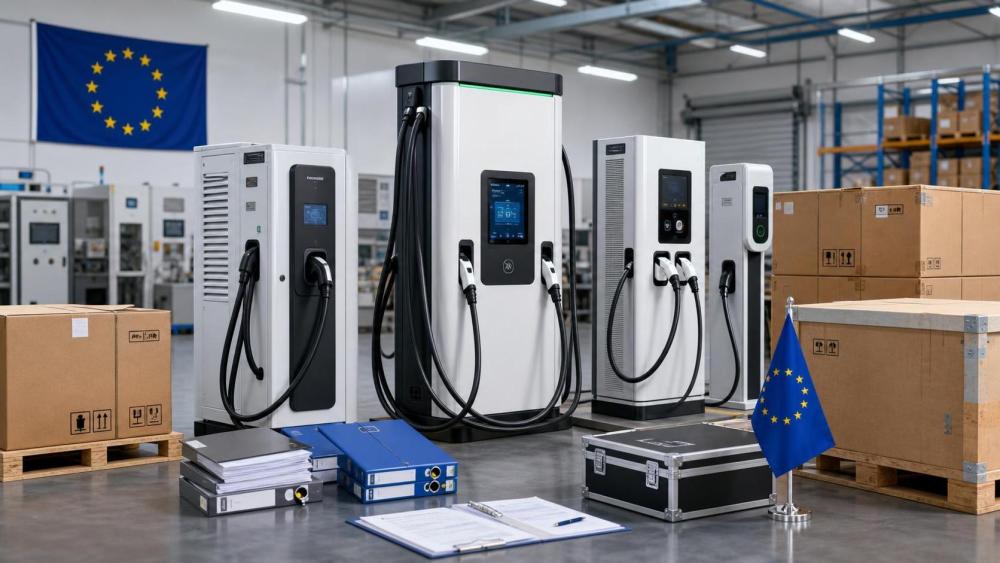
What the new EU requirement confirms
According to the information provided, the Official Journal of the European Union (OJEU) published Regulation (EU) 2026/1427 on August 5, 2026, listing EN 61851-23:2026 as a mandatory harmonized standard for EV Charging Infrastructure. The requirement applies to all AC/DC charging piles placed on the EU market. The transition period is 60 days. The new rule strengthens requirements related to thermal runaway protection in liquid-cooling systems, V2G communication security, and grid-interaction compliance. Products without the required certification will not be allowed to clear customs or be sold in the EU market.
Where the pressure will likely appear across the supply chain
Export shipments facing a new market-entry condition
From an industry perspective, exporters shipping chargers to the EU are likely to face the most immediate exposure because certification becomes tied to whether goods can enter and move through the market. What deserves closer attention is the practical connection between product readiness, shipment timing, customs documentation, and sales release. For export-oriented businesses, the main concern is whether current product models, supporting files, and delivery schedules align with the October 2026 enforcement point.
Manufacturing and engineering teams under tighter technical review
Analysis shows that manufacturers may need to focus on the parts of product design and validation most directly linked to the rule update: liquid-cooling thermal runaway protection, V2G communication security, and grid interaction. The operational impact is likely to appear in technical file review, test planning, model qualification, change control, and release approval. This is especially relevant where products are already committed to EU-bound orders but may still be under revision or certification preparation.
Importers and distributors exposed at the clearance and sales stage
Importers and distribution channels may be affected because the rule is framed as a condition for placing products on the EU market. Observably, this shifts risk beyond the factory gate and into customs clearance, inventory planning, channel acceptance, and sales continuity. These parties will need to pay closer attention to the certification status of incoming products, the completeness of compliance documents, and whether product listings or contracts need to reflect the updated requirement.
Procurement and project delivery teams may need to revisit sourcing assumptions
Buyers, project procurement teams, and supply-chain service providers may also feel the change through delivery timing and supplier qualification. It is more appropriate to understand this as a compliance checkpoint that can affect sourcing decisions, order confirmation, and shipment release, rather than as a purely technical standards update. Where procurement is linked to EU delivery, attention may need to shift toward certification readiness, documentation completeness, and whether suppliers can support updated technical and compliance requests in time.
What companies should review now
Check certification readiness against the October deadline
Analysis shows that the short transition period makes timing a central issue. Companies involved in EU-bound charger business should review which AC/DC products fall within scope, whether certification work is complete, and whether any current shipments or pending orders could cross into the enforcement window without the required compliance status.
Recheck technical documents and test-related materials
What deserves closer attention is the consistency between product claims and supporting technical materials. Given the stated focus on liquid-cooling thermal runaway protection, V2G communication security, and grid-interaction compliance, companies may need to review test reports, technical files, product specifications, and bid or tender materials to ensure they are aligned with the new mandatory requirement.
Review contracts, delivery schedules, and customs-facing paperwork
Observably, this rule change is relevant not only to engineering teams but also to trade execution. Exporters, importers, and distributors may need to examine delivery commitments, shipping schedules, commercial documents, and compliance records to reduce the risk of goods reaching the customs or sales stage without the required certification basis.
Track how the requirement is reflected in execution practice
The input does not provide detailed enforcement procedures, so it would be premature to describe a settled execution pattern. Still, companies should watch for how the requirement is reflected in official wording, certification practice, procurement documents, and market acceptance checks, especially where product approval and shipment timing are tightly linked.
Why this reads as an execution signal, not just a standards update
In analytical terms, this development is better understood as a live compliance trigger rather than a distant policy discussion. The combination of mandatory status, a short 60-day transition period, and the stated consequence of blocked customs clearance and sales points to a near-term execution signal for the EV charging supply chain. At the same time, further observation is still needed on how certification interpretation, procurement-side requirements, and market feedback develop once the rule begins to operate in practice.
How the market may need to interpret this change
From an industry perspective, the immediate significance of this update lies in market access discipline. It does not automatically establish a complete picture of implementation outcomes, but it does clearly raise the compliance threshold for EV chargers entering the EU market. A rational reading is that companies should treat the rule as an active requirement with direct implications for certification, shipment planning, sales eligibility, and supplier coordination, while continuing to monitor how execution details are reflected in practice.
Basis of this article and what still needs verification
This article is based on the user-provided news title, event date, and event summary. For developments of this kind, relevant source categories commonly include official notices, regulator publications, customs or trade authority information, industry association updates, standardization documents, and reporting by established professional media. A specific official source link was not provided in the input, so continued verification is still needed. Areas that remain worth tracking include detailed implementation language, certification interpretation, tender document changes, market feedback, and how affected companies carry the requirement into actual delivery and sales practice.