
For business evaluators, understanding what drives wind power nacelle maintenance costs is essential to assessing lifetime asset value and operational risk. Expenses do not remain flat over a turbine’s life. They change with turbine age, component reliability, service strategy, labor availability, spare-parts pricing, site access, weather windows, and the occurrence of unplanned failures.
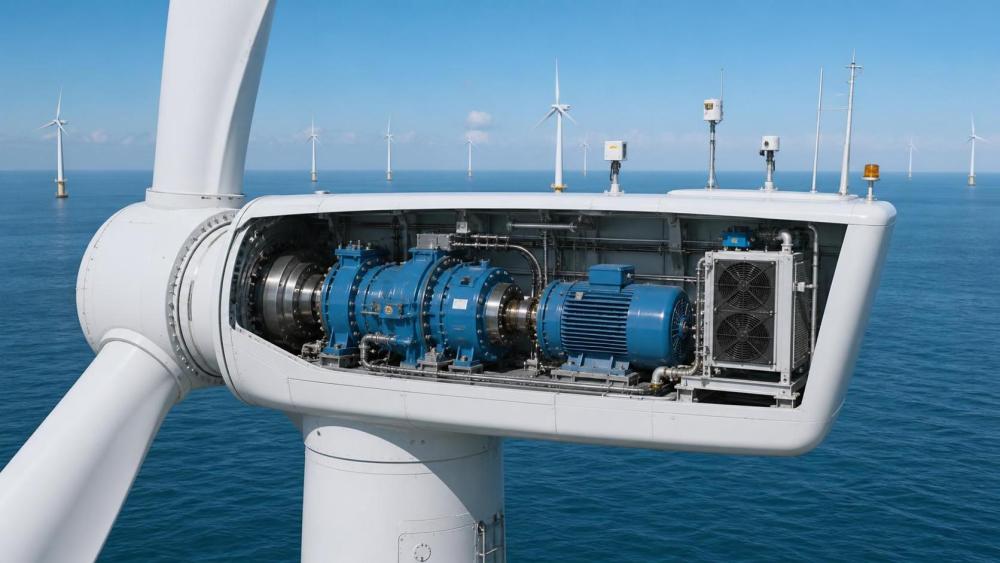
A nacelle may appear to be one major assembly at the top of the tower, but financially it behaves more like a tightly connected system of high-value mechanical, electrical, hydraulic, and control assets. A relatively small fault in a sensor, cooling circuit, or lubrication system can be inexpensive to correct when detected early. Left unresolved, it can contribute to gearbox stress, generator overheating, repeated shutdowns, crane mobilization, and long production losses. For procurement teams, the central question is not simply, “What is the annual service price?” It is, “Which risks are included, which are transferred back to the owner, and how likely is the maintenance plan to protect availability over time?”
Why nacelle maintenance is a lifecycle cost, not a fixed operating line
Routine wind turbine maintenance is often budgeted as a predictable annual cost. In reality, nacelle-related expenditure follows a different rhythm. During the early operating years, costs may be dominated by scheduled inspections, lubrication, bolt checks, oil sampling, filter replacement, software updates, and minor corrective work. As turbines move beyond their initial warranty period, the mix shifts. More labor is spent diagnosing intermittent faults, replacing wear components, addressing obsolescence, and managing larger mechanical or electrical interventions.
The cost curve is also shaped by the original turbine design and operating environment. Two turbines with the same rated capacity can have very different nacelle maintenance profiles if one operates in a hot, dusty inland region and the other faces salt spray, high turbulence, or difficult offshore access. Therefore, a maintenance budget based only on turbine count or megawatt capacity can conceal meaningful exposure.
Commercial assessments should separate three categories: planned preventive maintenance, condition-based or predictive interventions, and unplanned corrective repairs. The first is generally controllable. The third is where budgets can quickly become strained.
The components that create the largest cost exposure
Not every nacelle component carries the same consequence when it fails. Consumables and minor auxiliary parts matter operationally, but major cost escalation usually comes from components whose replacement requires substantial labor, specialist tooling, long lead times, or lifting equipment.
Drivetrain systems: gearbox, main bearing, and coupling issues
Gearbox and drivetrain work remains one of the most closely watched cost areas in geared turbines. Damage may be associated with bearing wear, lubrication degradation, misalignment, vibration, torque events, or loading conditions that differ from the assumptions used in the original design. Even when a gearbox does not require complete replacement, internal inspection, oil flushing, borescope work, bearing repair, and downtime can be expensive.
Main bearing issues can create a similarly difficult decision. Symptoms may develop gradually through vibration trends, grease analysis, temperature changes, or abnormal noise. The cost is not limited to the component itself. Access constraints, rotor positioning, replacement methodology, weather risk, and possible collateral damage all affect the final repair bill.
Generator, converter, and electrical equipment
Generator maintenance costs depend on the turbine architecture, duty cycle, cooling performance, insulation condition, bearing health, and power quality. A generator fault can range from a manageable bearing replacement to a major repair involving rewinding or exchange logistics. In direct-drive turbines, the absence of a gearbox changes the failure profile but does not eliminate high-value nacelle maintenance risk; generator and power-electronic issues remain commercially significant.
Converters, transformers, switchgear, control cabinets, cable terminations, and grounding systems also deserve attention. Electrical faults may be difficult to reproduce, particularly when they are linked to temperature, moisture ingress, harmonics, grid disturbances, or communication errors. A service provider’s diagnostic capability can make a material difference: replacing parts by trial and error is far more costly than identifying the actual root cause.
Yaw, pitch, hydraulic, and auxiliary systems
Yaw drives, pitch systems, brakes, hydraulic units, cooling circuits, lubrication systems, and nacelle ventilation equipment are sometimes treated as secondary maintenance items. Yet they can trigger long outages or accelerate damage in major assemblies. A failing cooling fan, blocked heat exchanger, contaminated hydraulic fluid, or poor lubrication delivery may be a modest repair on its own, but it can compromise the operating conditions of much more expensive equipment.
For this reason, a procurement review should ask whether the proposed scope covers inspections of auxiliary systems in enough detail, rather than assuming that a basic annual visit will capture early warning signs.
Ageing turbines bring a different set of procurement questions
Maintenance costs typically become less predictable as a wind fleet ages. This does not mean older turbines are automatically poor assets. Many continue to operate productively with disciplined maintenance and sensible life-extension planning. The challenge is that age introduces uncertainty: components have accumulated operating hours, original suppliers may have changed ownership, control hardware may be outdated, and some spare parts may no longer be readily available.
Obsolescence is especially relevant to the wind power nacelle control environment. Sensors, PLC modules, communication interfaces, drives, and software-supported electronics can become difficult to source long before the mechanical structure reaches the end of its useful life. When a failed component is obsolete, the owner may face a retrofit rather than a like-for-like replacement. That can require engineering review, compatibility testing, updated documentation, and downtime coordination.
Evaluators should also look beyond the condition of a single turbine. Fleet size and model commonality influence cost. A site with many identical units can justify dedicated spares, technician training, and standardized repair procedures. A small fleet of older or mixed-model turbines may pay more per unit because suppliers cannot spread inventory and specialist resources across a large installed base.
Site conditions determine how much a repair really costs
A nacelle repair quoted at the workshop is not the same as a nacelle repair completed in the field. The practical cost of intervention depends heavily on access. Remote mountain sites may involve long travel times, road restrictions, limited accommodation, and seasonal weather barriers. Offshore projects introduce vessel availability, marine coordination, transfer safety, wave conditions, and much narrower work windows. In cold climates, ice, low temperatures, and short daylight hours can delay even routine work.
Crane requirements are another major variable. A repair that can be completed with an internal service crane or up-tower lifting arrangement is fundamentally different from one requiring a large external crane. Mobilization, transport permits, ground preparation, crane standby, and weather delays can exceed the price of some replacement parts. Contract language should make clear who pays when lifting plans change or weather prevents completion after equipment has been mobilized.
Local labor markets also matter. Regions with dense wind development may have better access to trained technicians and competing service providers. In newer markets, qualified high-voltage, hydraulic, and turbine-control specialists can be scarce. A low quoted labor rate has limited value if the provider cannot mobilize the right personnel when a critical fault occurs.
The hidden cost of lost production and availability guarantees
Maintenance invoices are only one part of nacelle cost exposure. Lost energy production can be more consequential, particularly during high-wind months or under favorable power-price conditions. A turbine waiting for a spare converter board, generator bearing, or specialist crew may produce no revenue for weeks. The financial impact depends on wind resource, market structure, curtailment conditions, contractual penalties, and the project’s debt or investor obligations.
This is why availability guarantees require close reading. A service agreement may promise a percentage of technical availability, but the calculation method can contain exclusions for grid outages, force majeure events, major component failures, waiting time for owner-approved repairs, or access limitations. These exclusions may be reasonable, yet they determine how much protection the guarantee actually provides.
Business evaluators should request a transparent definition of downtime categories. Ask how alarms are classified, when the clock starts and stops, whether remote resets count as resolved events, and whether repeat faults are tracked separately. A contract that looks inexpensive can become costly if prolonged downtime is consistently categorized outside the provider’s responsibility.
Spare-parts strategy can reduce volatility—or merely move it off the balance sheet
Spare-parts pricing is influenced by manufacturer support, model maturity, inventory location, transport requirements, repairability, and market demand. For proprietary turbine designs, owners may have limited sourcing flexibility. For more mature fleets, independent service providers and repaired-component markets may offer alternatives, although quality assurance, warranty terms, and technical compatibility must be evaluated carefully.
A practical spare-parts strategy does not mean buying every possible component. Excess inventory ties up capital and can create storage, preservation, and obsolescence problems. Instead, the owner should identify critical parts based on failure likelihood, replacement lead time, revenue impact, and availability of repair options. Low-cost items that frequently cause stoppages may deserve local stock. Rare but catastrophic items may be better handled through framework agreements, shared inventory pools, exchange programs, or pre-negotiated repair capacity.
When comparing O&M proposals, clarify whether parts are included at fixed prices, supplied at cost plus margin, or subject to future price adjustment. Check freight, customs, packaging, warehousing, emergency shipment, and disposal terms. These details often appear minor during tender review but can materially affect total cost during an unplanned campaign.
Data quality changes the maintenance conversation
Modern condition monitoring can improve maintenance decisions, but only when the data is interpreted and acted upon. SCADA trends, vibration monitoring, oil analysis, thermal data, alarm histories, and maintenance records can reveal developing issues before they become visible failures. Their value lies in helping operators schedule work around weather, production forecasts, and crew availability.
Still, condition monitoring is not a guarantee against failure. False alarms, incomplete sensor coverage, inconsistent data quality, and weak diagnostic processes can undermine the business case. Procurement teams should avoid treating “remote monitoring included” as a complete answer. Better questions include: Who reviews the data? What thresholds initiate action? Is root-cause analysis included? Who owns the data? Can the owner access raw records if the service provider changes?
For portfolios that include storage, solar, grid-interconnection assets, or hybrid renewable projects, integrated asset data can be particularly useful. Coordinating turbine maintenance with substation work, battery dispatch constraints, grid outages, and market schedules may reduce operational disruption across the wider energy asset—not just at the individual turbine.
How to evaluate a nacelle maintenance proposal before signing
A sound comparison should convert service proposals into a common lifecycle view. The cheapest annual fee may exclude major labor, consumables, troubleshooting time, travel, or high-risk components. Conversely, a broader contract may cost more upfront but offer better protection against budget shocks. Neither model is automatically superior; the appropriate choice depends on the owner’s risk appetite, technical capability, financing structure, and fleet scale.
- Map the scope line by line. Distinguish scheduled tasks, corrective labor, major component work, remote support, inspections, consumables, and crane-related responsibilities.
- Test exclusions against real scenarios. Consider a gearbox alarm, converter failure, repeated pitch fault, cooling-system issue, and weather-delayed repair. Determine who pays in each case.
- Review response and mobilization commitments. A response time is not the same as repair completion time. Check staffing, local presence, and escalation procedures.
- Examine parts governance. Confirm pricing mechanisms, lead-time commitments, alternative sourcing rights, warranty coverage, and ownership of unused stock.
- Require reporting that supports investment decisions. Monthly reports should show failure trends, recurring alarms, lost production, planned work, safety observations, and recommended capital actions.
- Plan for the end of warranty early. Independent inspections, data handover, punch-list resolution, and spare-parts planning are easier before warranty responsibilities expire.
Maintenance cost control is really risk control
The most useful way to assess wind power nacelle maintenance costs is to look beyond the scheduled service visit. Cost is created by the interaction of equipment condition, operational environment, access, supply-chain resilience, technical competence, contract structure, and the value of energy lost during downtime.
For business evaluators, the objective is not to eliminate maintenance spending. It is to distinguish necessary preventive investment from avoidable failure exposure, and predictable operating cost from poorly defined liability. A well-structured maintenance strategy gives owners clearer budget visibility, supports higher availability, and creates a stronger basis for refinancing, acquisition review, life-extension decisions, and long-term asset management.