
Nacelle cooling is one of the less visible systems that keeps a wind turbine productive. When a turbine is generating at high output, the generator, gearbox, converter cabinets, transformer components, hydraulic equipment, and control electronics all release heat inside a compact enclosure at the top of the tower. Without a reliable way to remove that heat, temperatures can rise quickly, especially during warm weather, low-wind conditions, or periods when the nacelle is exposed to direct sunlight.
For operators, the practical question is not simply whether a cooling unit is running. It is whether the wind energy nacelle can keep critical equipment within its permitted operating range while handling dust, salt, humidity, vibration, and changing ambient temperatures. A cooling problem may begin as a temperature alarm, but it can turn into converter derating, repeated turbine trips, accelerated insulation aging, lubricant degradation, or an expensive repair campaign if it is left unresolved.
Why heat builds up inside a wind energy nacelle
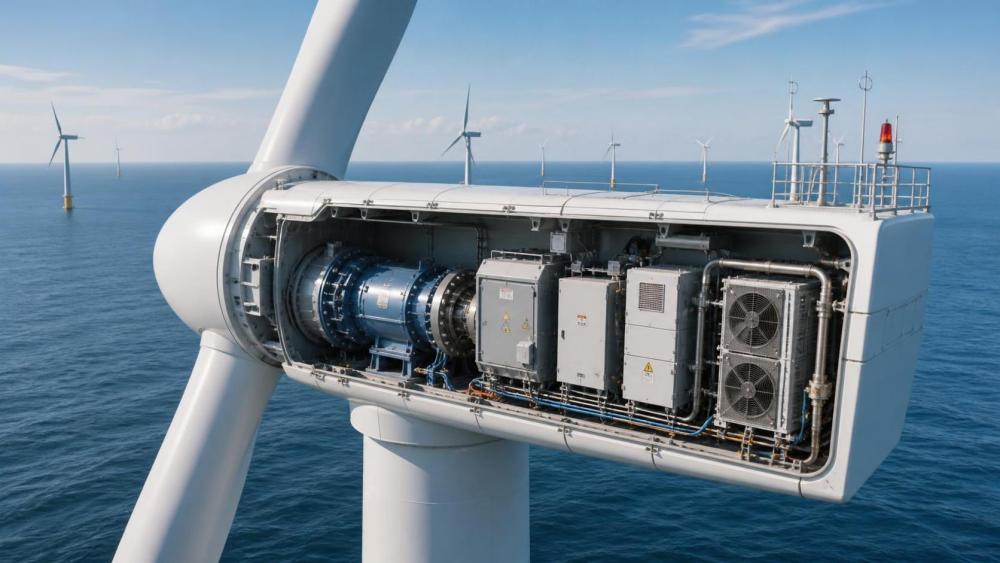
A nacelle is not an open machine room. It is a weather-protected housing with limited internal space, restricted airflow paths, and several large heat sources operating close together. The generator produces electrical and mechanical losses. In geared turbines, the gearbox creates heat through gear meshing, bearings, and lubricant circulation. Power converters generate heat while converting variable-frequency generator output into grid-compatible electricity. Even control panels, communication equipment, brake systems, and yaw drives add to the thermal load.
The situation becomes more demanding when the turbine is operating near rated power. Strong wind can increase generation, but it does not automatically mean that cooling is easy. External air may be hot, filters may be partly blocked, and internal fans may not distribute air evenly around converter cabinets or gearbox coolers. In offshore locations, salt-laden air adds corrosion risk. In desert or agricultural regions, airborne dust can reduce heat-exchanger performance faster than teams expect. In cold climates, the concern may shift between preventing overheating during operation and avoiding condensation when equipment cools down after shutdown.
This is why nacelle thermal management should be viewed as an operating system rather than a single fan or air-conditioning unit. The goal is stable equipment temperature, not merely moving air.
How nacelle cooling protects turbine components
Most wind turbine cooling arrangements use a combination of forced ventilation, filtered air, liquid cooling loops, heat exchangers, fans, and control logic. The exact design depends on turbine size, drivetrain architecture, site climate, and equipment supplier requirements. Smaller or earlier-generation machines may rely more heavily on air movement through the nacelle. Larger modern turbines commonly use more targeted cooling for converters, generators, transformers, and lubrication systems.
The first layer of protection is removing accumulated heat before sensitive components reach alarm or trip thresholds. Air-cooled systems pull or push air across heat-producing surfaces and through cabinet ventilation paths. Liquid cooling systems carry heat away through coolant circuits, often providing more controlled performance where power density is high. Heat exchangers then transfer that heat to ambient air or another cooling medium.
The second layer is temperature uniformity. A nacelle can have a reasonable average temperature while still developing local hot spots. Converter modules at the top of a cabinet, bearings near a restricted airflow zone, or a transformer compartment with poor circulation may run hotter than the nacelle sensor indicates. Good cooling design considers sensor placement, cable routing, baffles, cabinet seals, fan direction, and the possibility that one blocked intake can affect several downstream components.
Cooling also protects materials that do not fail immediately when warm. Electrical insulation, seals, hoses, electronic boards, and lubricants can gradually lose useful life under sustained thermal stress. Operators may not see an instant turbine shutdown, yet repeated operation at elevated temperature can make later failures more likely. That long-term effect is one reason maintenance teams should investigate recurring high-temperature warnings even if the turbine resets and returns to service.
Cooling is tied directly to power availability
When temperatures rise, turbine control systems may reduce output to protect equipment. This is often described as thermal derating. From a protection standpoint, derating is appropriate: it is better to reduce generation than to damage a converter or generator. From an operations standpoint, however, a recurring derate during high-resource periods can be frustrating because it happens when the turbine has the strongest opportunity to produce.
The important operational distinction is between a genuine site limitation and a maintainable cooling fault. A turbine installed in a consistently hot climate may require a cooling configuration designed for that ambient range. But a sudden change in thermal behavior may point to fouled filters, a failed fan, low coolant level, a pump issue, contamination on heat-exchanger fins, a damaged damper, or inaccurate temperature feedback. Treating both conditions as “normal hot-weather behavior” can conceal a correctable problem.
For wind farm operators, this is also a fleet-management issue. If several turbines of the same model begin showing similar converter or gearbox temperature trends, the cause may be common: seasonal dust loading, an aging batch of fans, a software-control setting, or a maintenance interval that no longer matches local conditions. Comparing trends across the fleet is often more useful than reviewing a single alarm in isolation.
Common cooling failures that deserve early attention
Cooling systems usually show warning signs before a major component fails. The challenge is that many of those signs look minor when viewed separately. A small increase in cabinet temperature, longer fan run time, a rise in coolant temperature, or a recurring alarm that clears after restart may each appear manageable. Together, they can indicate declining heat-rejection capacity.
- Blocked or incorrectly fitted filters: Dust and debris restrict airflow, while poorly seated filters can allow contamination to bypass the intended path.
- Fouled heat exchangers: Dirt, oil residue, insects, salt deposits, or airborne fibers can insulate fins and reduce heat transfer.
- Fan, pump, or motor degradation: A device may still run but deliver insufficient airflow or coolant circulation under load.
- Coolant leaks or unsuitable coolant condition: Loss of fluid, contamination, incorrect concentration, or trapped air can reduce cooling performance and create corrosion concerns.
- Condensation inside cabinets: In humid or cold-to-warm cycling conditions, moisture can threaten electrical connections and electronic assemblies.
- Sensor or control faults: A misleading temperature value may cause unnecessary trips, delayed fan operation, or missed overheating events.
One frequent mistake is replacing a fan after a temperature alarm without finding out why the fan was operating under strain. If the heat exchanger is fouled or the airflow route is blocked, a new fan may only postpone the next alarm. Likewise, cleaning filters without checking pressure drop, cabinet seals, and external intake conditions can leave the underlying restriction in place.
What operators should monitor during routine operation
SCADA data can provide a useful early warning, provided the data is interpreted in context. A gearbox oil temperature should not be assessed only against a fixed alarm point; it should also be compared with ambient temperature, turbine output, wind conditions, and the behavior of similar turbines. The same applies to converter cabinet temperatures and generator winding temperature where those signals are available.
Look for changes in the relationship between power and temperature. If a turbine historically maintained stable converter temperatures at a given output level but now heats up more rapidly, the cooling margin may be shrinking. If temperature drops slowly after output falls, airflow or liquid circulation may be impaired. If one sensor diverges sharply from nearby sensors, check both the physical thermal condition and the sensor itself before making conclusions.
Maintenance records matter here. A temperature trend is more meaningful when it can be connected to filter replacement dates, fan replacement history, coolant service, heat-exchanger cleaning, or a recent control-system update. In practice, operations teams benefit when SCADA analysts and field technicians review the same event history. Data can identify the pattern; an on-site inspection confirms whether the problem is contamination, mechanical wear, wiring, control logic, or site exposure.
Matching the cooling approach to the site, not just the turbine model
A cooling system that performs well in a temperate inland wind farm may need different maintenance practices in a coastal, desert, tropical, or high-altitude site. Coastal projects may require particular attention to corrosion protection, cabinet sealing, salt deposits, and the condition of external coils. In dusty environments, filter inspection and heat-exchanger cleaning frequency often need to reflect actual contamination levels rather than a generic calendar interval. At sites with large daily temperature swings, condensation management can be as important as heat removal.
Operators should also consider access. A component located inside the nacelle may be inexpensive compared with the cost of reaching it during difficult weather, arranging lifting support, or taking a turbine offline during a valuable generation window. That does not mean every cooling component should be replaced early. It means maintenance planning should prioritize failure modes that can cause immediate derating, repeated trips, or secondary damage to high-value equipment.
For EPC teams and asset owners, thermal design review should continue beyond commissioning. Early operation can reveal site-specific conditions that were not obvious in design assumptions: prevailing dust direction, unusual solar loading, weak ventilation around a transformer compartment, or access limitations that make routine cleaning less practical. The wind energy nacelle is part of a larger asset system, and its cooling arrangement should be assessed with availability, maintenance logistics, grid obligations, and lifecycle cost in mind.
A practical response when temperature alarms appear
When a thermal alarm occurs, avoid jumping directly to a component replacement decision. Start by confirming the operating context: ambient conditions, turbine output, recent alarms, curtailment status, and whether the issue affects one machine or multiple units. Then check the basics that can be inspected safely under the turbine manufacturer’s procedures: filter condition, fan operation, visible contamination, cabinet doors and seals, coolant level where applicable, and obvious leakage or damaged wiring.
The next step is to compare expected and actual behavior. Is the fan commanded on but not delivering airflow? Is a pump running but the temperature difference across the cooling loop unusually small? Does the alarm occur only at high output, only in one wind direction, or after a certain number of operating hours? These questions narrow the fault path and reduce the risk of treating symptoms rather than causes.
Any intervention should follow the turbine OEM documentation, site safety procedures, electrical isolation requirements, and approved consumables. Cooling loops and converter cabinets are not areas for improvised fixes. Incorrect filter media, unsuitable coolant, altered airflow paths, or bypassed temperature protections can create a larger reliability problem than the alarm that prompted the work.
Cooling reliability belongs in the asset-performance conversation
Wind power is increasingly managed alongside battery storage, digital substations, flexible grid controls, and other responsive energy assets. In that environment, turbine availability is not only a maintenance metric; it affects forecasting, dispatch expectations, contractual performance, and the ability of a renewable plant to respond predictably. A turbine that repeatedly reduces power because of nacelle overheating can complicate operations beyond the individual machine.
This wider view is central to the practical market intelligence covered by Global EcoPower & Energy Matrix Intelligence Network (EPEM). Equipment choices, operating conditions, maintenance strategies, and grid-facing performance are closely connected. Cooling is a good example: it may seem like a small auxiliary system, yet it influences the condition of the generator, gearbox, converter, controls, and ultimately the availability of the entire turbine.
The best approach is usually disciplined rather than dramatic: monitor thermal trends, inspect airflow and heat-transfer paths before alarms become routine, adapt maintenance intervals to the actual site environment, and investigate recurring derating instead of accepting it as inevitable. In a wind energy nacelle, keeping heat under control is one of the most direct ways to protect expensive equipment from avoidable wear and keep generation available when the wind is there.