
On July 10, 2026, the U.S. Department of Energy launched the Grid Resilience Procurement Program with an initial allocation of $320 million, linking funding for smart grid procurement to a domestic manufacturing requirement for key components. For suppliers of AMI smart meters, distributed energy management systems, and distribution automation terminals, this is not just a funding announcement but a procurement rule change that can affect sourcing structures, bid eligibility, delivery planning, and cross-border cooperation models. What deserves closer attention is how this local-content threshold may reshape market access for exporters and implementation choices for project participants.
What the program formally requires
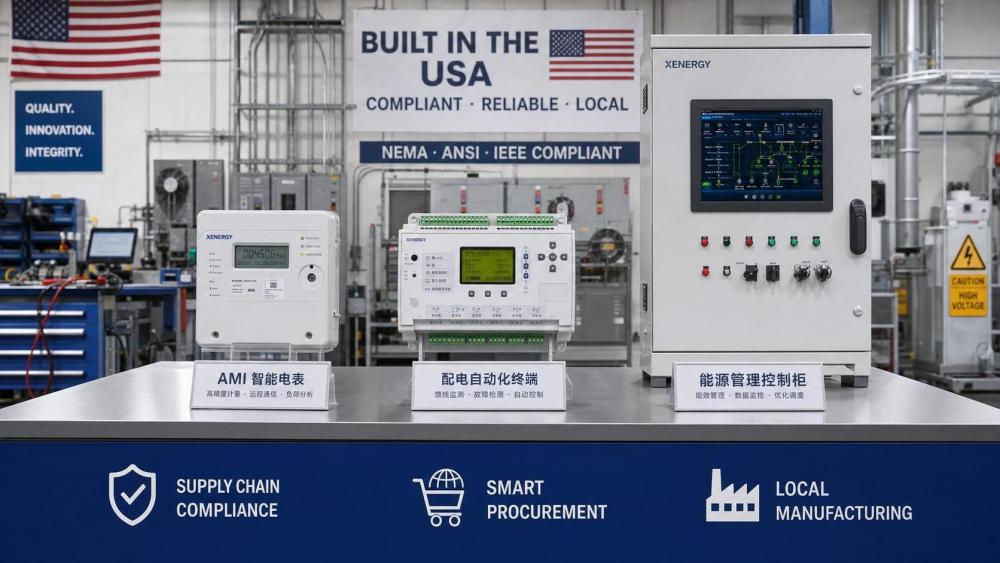
According to the provided event information, the U.S. Department of Energy started the Grid Resilience Procurement Program on July 10, 2026, with a first-round funding amount of $320 million. The program requires smart grid equipment used in funded projects to meet a threshold of 55% domestic manufacturing for key components. The equipment scope stated in the input includes AMI smart meters, distributed energy management systems, and distribution automation terminals. The same input also states that this development is expected to accelerate joint packaging or technology licensing cooperation between relevant Chinese exporters and U.S. local partners.
Where the compliance pressure may appear first
Bid access may tighten for equipment exporters
From an industry perspective, exporters supplying the covered product categories may be affected because funding eligibility is now tied to a local manufacturing threshold for key components. The practical impact is likely to show up in bid preparation, partner selection, product configuration, and supply-chain mapping. What these companies need to watch is not only the commercial opportunity but also whether their documentation can support claims related to component origin, manufacturing location, and the structure of local cooperation.
Project buyers may need stronger procurement screening
For procurement teams and funded project owners, the rule change may shift attention from price and technical fit alone to eligibility control during supplier onboarding and award decisions. Analysis shows that procurement files, technical submissions, and contract terms may need closer alignment with the domestic-content condition. Buyers are likely to focus more on whether suppliers can provide traceable component information, manufacturing disclosures, and supporting technical records that are consistent with program requirements.
Manufacturing and integration partners may become more central
Observably, local manufacturing, packaging, or integration partners may play a more important role where exporters seek to remain commercially relevant under the program. The impact here is less about headline trade flows and more about execution structure: component allocation, assembly arrangements, technical handoff, and quality accountability may all become more sensitive. Companies involved in these arrangements should pay attention to how responsibilities are documented across production, testing, and delivery stages.
Service and compliance support functions may face higher demand
Compliance-related service providers, testing support organizations, and after-sales operators may also be affected because a local-content requirement can increase demand for documentary consistency and traceability across the delivery cycle. Even where no new certification rule is stated in the input, businesses supporting bids and project delivery should monitor whether customers begin requesting additional origin evidence, technical files, quality records, or service commitments linked to funded procurement.
What companies should monitor now
Check whether current product structures can support local-content claims
Analysis shows that suppliers in the listed smart grid categories should review how their products are built and which components may fall into the "key components" scope in practice. The input does not provide an official execution definition beyond the 55% threshold, so companies should treat this as an area requiring continued verification rather than a settled interpretation.
Prepare for closer document review in funded procurement
What deserves closer attention is the readiness of technical and commercial records. Bid materials, product descriptions, manufacturing statements, testing references, and supply-chain documentation may carry more weight if project owners need to demonstrate alignment with funding conditions. Companies should therefore examine whether existing files can withstand more detailed procurement and compliance review.
Reassess cooperation models with local partners
Observably, the input points toward faster use of joint packaging or technology licensing cooperation between Chinese exporters and U.S. local partners. For companies considering that route, the immediate issue is not only business development but also how roles, technical responsibilities, and deliverable boundaries are defined. Without clear execution records, cooperation structures may create uncertainty in delivery and compliance review.
Watch for shifts in timing, delivery, and after-sales expectations
From an industry perspective, any procurement rule tied to manufacturing location can influence lead times, supplier qualification steps, and post-delivery accountability. The current input does not confirm how these points will be enforced in project documents, so companies should monitor later official wording, bid requirements, and customer-side implementation practices before treating any assumption as final.
How this signal should be read at this stage
Analysis shows that this development is best understood as a concrete procurement signal rather than a fully detailed compliance regime. The funding amount and the 55% domestic-manufacturing threshold indicate that local-content treatment is moving closer to actual project execution in the covered smart grid categories. At the same time, the input does not provide detailed calculation methods, audit procedures, or product-specific interpretations, which means the market still needs to watch how the rule is reflected in later procurement documents and implementation language.
A practical reading for the smart grid supply chain
It is more appropriate to understand this event as an executed policy direction with open implementation questions. The announced funding and threshold already matter because they can affect sourcing decisions, partnership structures, and bid readiness for smart grid equipment. However, the full commercial and compliance effect will depend on how subsequent procurement practice defines key components, verifies local manufacturing content, and translates the rule into delivery expectations. For now, the most rational conclusion is that companies should treat this as an active market-access signal and continue tracking how it is applied in real procurement settings.
Basis of this article and what still needs verification
This article is based on the user-provided news title, event date, and event summary. For developments of this kind, relevant source types typically include official government announcements, regulator releases, trade or customs authority information, industry association updates, standards-related documents, tender materials, and reporting by established business or industry media. No specific official source link was provided in the input, so the underlying official publication and any later interpretive materials still require ongoing verification. Further observation should focus on policy detail, implementation wording, procurement document changes, compliance interpretation, industry feedback, and how companies adjust execution arrangements in response.