
What Does a Nacelle in a Wind Turbine Actually Do?
A nacelle in a wind turbine is far more than a protective housing. It is the operating center that turns rotor motion into controlled electrical power.
Mounted at the top of the tower behind the rotor, the nacelle contains the drivetrain, generator, controls, cooling equipment, and key safety systems.
For developers, EPC contractors, investors, and procurement teams, nacelle design directly affects turbine availability, maintenance costs, energy yield, and project economics.
Understanding what happens inside the nacelle helps buyers compare turbine platforms beyond rated capacity, rotor diameter, and headline efficiency claims.
Why the Nacelle Is the Operational Hub of a Wind Turbine
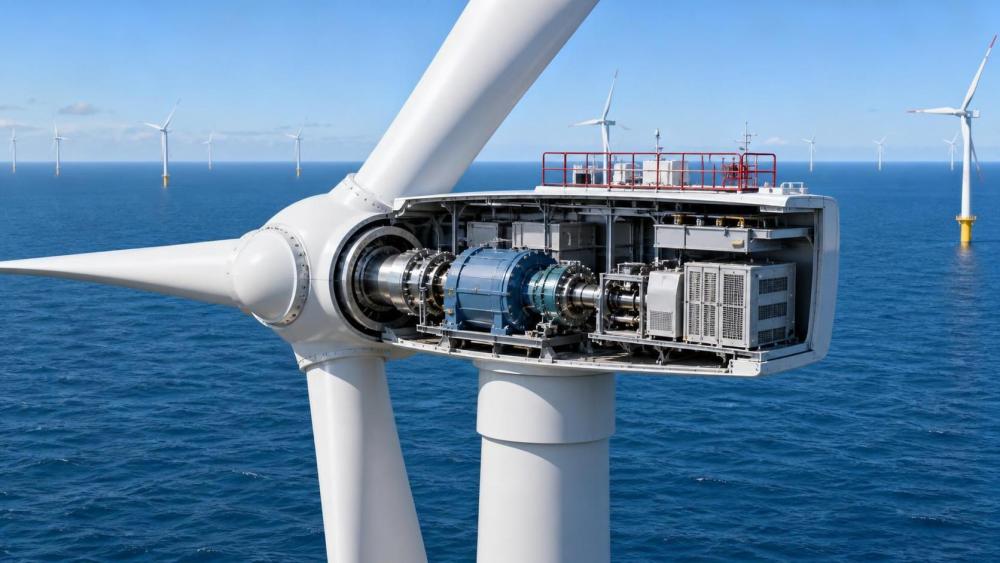
The nacelle connects the rotating rotor to the electrical and control systems that allow a wind turbine to produce grid-ready electricity safely.
Wind pushes the blades, causing the rotor to rotate. That mechanical energy enters the nacelle through the main shaft and drivetrain.
Inside the nacelle, equipment either increases rotational speed through a gearbox or transfers motion directly to a low-speed direct-drive generator.
The generator converts mechanical rotation into electricity. Power electronics and transformers then condition that electricity before it travels down the tower.
The nacelle also determines how the turbine responds to changing wind conditions, grid events, mechanical loads, component temperatures, and operator commands.
Without the nacelle's control architecture, a turbine could not reliably align with the wind, regulate output, protect itself, or communicate with a wind farm control system.
Its purpose is therefore both mechanical and digital. It manages energy conversion while protecting expensive equipment from overload, vibration, heat, and weather exposure.
For a utility-scale project, nacelle performance is closely connected to annual energy production, operational expenditure, spare-parts planning, and long-term asset availability.
What Components Are Located Inside a Wind Turbine Nacelle?
Although the layout varies by manufacturer and turbine type, most nacelles contain a set of core components with closely linked operating responsibilities.
The main shaft transfers torque from the rotor hub into the drivetrain. It is supported by bearings designed to withstand substantial radial and axial loads.
In geared turbines, the gearbox increases the relatively slow rotor speed to a higher speed suitable for a conventional generator.
Gearboxes are highly engineered assemblies containing gears, shafts, bearings, lubrication circuits, filtration equipment, and condition-monitoring sensors.
In direct-drive turbines, the gearbox is removed. The rotor connects more directly to a large generator designed to operate at lower rotational speeds.
The generator converts rotational energy into electrical energy. Its design influences turbine weight, cooling needs, maintenance requirements, and electrical performance.
A high-speed shaft, coupling, brake, and mechanical support structures may also be included, depending on the drivetrain configuration and manufacturer design philosophy.
The nacelle brake is mainly a parking and emergency braking device. Normal power regulation is generally handled through blade pitch control.
Yaw drives and yaw bearings allow the nacelle to rotate around the tower axis. This keeps the rotor correctly oriented toward incoming wind.
Pitch systems rotate each blade around its longitudinal axis. By adjusting blade angle, the turbine captures energy efficiently and limits mechanical loading.
The nacelle also contains controllers, sensors, communication equipment, cooling systems, lighting, service platforms, fire detection equipment, and sometimes an internal crane.
Large offshore nacelles may include additional redundancy, corrosion protection, enhanced environmental sealing, and more sophisticated monitoring because repair access is difficult.
How Does the Nacelle Control Power Production?
A nacelle in a wind turbine does not simply transmit motion. It continuously decides how the machine should operate under changing conditions.
The turbine controller collects data from wind sensors, rotational-speed sensors, temperature sensors, vibration monitors, electrical measurements, and grid communication systems.
Using this information, it sends commands to the yaw system, pitch actuators, generator controls, cooling units, and safety equipment.
At low wind speeds, the turbine remains below its cut-in threshold because operating would produce too little energy to justify normal generation.
Once wind speed reaches the required level, the controller releases operating constraints, turns the nacelle toward the wind, and adjusts blade pitch.
As wind speed rises, pitch control keeps rotor speed and electrical output within target ranges. This protects the drivetrain from excessive torque.
When wind reaches rated conditions, the turbine usually limits output near its nameplate capacity rather than allowing power to rise indefinitely.
During extremely high winds, the controller stops the turbine by pitching blades out of the wind and applying appropriate shutdown procedures.
The nacelle must also react to faults such as overheating, abnormal vibration, lubrication pressure loss, generator irregularities, or grid disconnection events.
These responses are essential to turbine reliability. A delayed or inaccurate control action can increase component stress and create costly downtime.
Modern wind farms add another layer of control. Individual nacelles receive instructions from plant-level systems that manage curtailment, reactive power, and grid compliance.
Why Nacelle Design Matters for Wind Farm Economics
For project stakeholders, the commercial value of a nacelle lies in its effect on energy production, reliability, maintainability, and lifecycle cost.
A turbine may have an attractive power rating, but weak drivetrain reliability can reduce availability and erode revenue over the operating life.
Availability measures how often a turbine is capable of generating when wind and grid conditions allow. Nacelle failures can materially reduce this metric.
Failures involving gearboxes, main bearings, generators, converters, or yaw systems may require cranes, specialized technicians, replacement parts, and extended outages.
Offshore projects face greater exposure because weather windows, vessel availability, port logistics, and marine safety requirements can delay repairs substantially.
For this reason, procurement teams should evaluate more than turbine purchase price. They should consider service capability, warranty terms, failure history, and repair strategy.
The choice between geared and direct-drive configurations also has commercial implications. Neither design is automatically superior for every project or operating environment.
Geared turbines can use smaller, faster generators, but their gearboxes require robust lubrication, condition monitoring, and maintenance planning.
Direct-drive machines eliminate a major drivetrain component, but their larger generators can increase nacelle mass, transport complexity, and material requirements.
The right choice depends on site conditions, turbine size, logistics limitations, local service resources, financing assumptions, and the supplier's proven operating record.
Investors should treat nacelle reliability as an asset-performance issue. It affects revenue forecasts, insurance exposure, reserve accounts, and lender confidence.
What Should Buyers and Developers Evaluate Before Selecting a Turbine?
A technical datasheet provides a useful starting point, but it rarely gives a complete picture of nacelle quality or lifetime operating risk.
Developers should ask which drivetrain architecture is used, how long it has operated commercially, and how closely it matches the intended project conditions.
Relevant conditions include average wind speed, turbulence intensity, ambient temperature, altitude, humidity, salt exposure, dust levels, and grid strength.
High-turbulence sites can impose additional loads on the rotor, main bearing, gearbox, yaw system, and nacelle structural frame.
Hot or dusty environments place greater demands on cooling, filtration, electrical cabinets, lubrication systems, and maintenance procedures.
Cold-climate projects may need heating systems, low-temperature lubricants, blade de-icing capability, and controls designed for ice-related operating risks.
Offshore developers should examine corrosion protection, sealing performance, component redundancy, remote diagnostics, vessel access assumptions, and major-component replacement methodology.
It is also important to assess the supplier's service network. A technically capable nacelle still becomes a commercial problem if parts and technicians are unavailable.
Buyers should review warranty exclusions carefully, especially provisions related to grid disturbances, extreme weather, site suitability, maintenance compliance, and component wear.
Condition-monitoring systems deserve close attention. They can identify developing issues in bearings, gearboxes, generators, and lubrication systems before catastrophic failure occurs.
Useful procurement questions include sensor coverage, data ownership, alarm thresholds, remote access, predictive-maintenance capabilities, and integration with the owner's asset-management platform.
A credible supplier should explain not only the nacelle's design advantages but also its planned inspection intervals, common service tasks, and replacement-part lead times.
How Is a Nacelle Maintained During Wind Farm Operations?
Nacelle maintenance combines scheduled servicing, remote monitoring, field inspection, and corrective work based on detected equipment conditions.
Routine maintenance often includes lubrication checks, oil sampling, filter changes, bolt inspections, electrical testing, cooling-system servicing, and visual condition assessments.
Technicians also inspect hydraulic systems, pitch equipment, yaw components, safety devices, lightning protection interfaces, and internal cable connections.
Oil analysis is particularly important for geared turbines. Contamination, metal particles, moisture, or lubricant degradation can indicate emerging gearbox problems.
Vibration monitoring helps identify bearing wear, gear damage, shaft misalignment, imbalance, and other drivetrain issues that may not be visible during routine inspections.
Temperature trends can reveal cooling failures, electrical resistance problems, lubrication concerns, or abnormal mechanical friction before a component reaches a critical condition.
Remote monitoring centers use nacelle data to prioritize technician dispatches. This can reduce unnecessary site visits and improve response to early warning signs.
However, data alone does not eliminate maintenance risk. Operators need trained personnel, clear escalation rules, spare-parts inventory, and access to specialized lifting equipment.
For older wind farms, operators may face obsolescence issues involving controllers, sensors, converters, communication hardware, and unavailable drivetrain parts.
Life-extension decisions should therefore consider nacelle condition in detail. A turbine reaching its original design life may remain viable with targeted upgrades and inspections.
How Does the Nacelle Affect Grid Performance and Plant Control?
In modern wind projects, the nacelle is not isolated from the grid. Its electrical and control systems help determine how the plant behaves at the connection point.
Power converters and turbine controls can support voltage regulation, reactive power management, frequency response, ramp-rate control, and fault ride-through requirements.
Grid codes differ by market, but many require wind turbines to remain connected during certain voltage disturbances rather than disconnecting immediately.
Meeting these requirements depends on coordinated performance from the generator, converter, controller, transformer, protection systems, and plant-level control platform.
For weak-grid locations, developers should verify that the selected turbine's nacelle controls can operate reliably under voltage fluctuations and changing system conditions.
As renewable penetration increases, grid operators may request more active support from wind farms. This raises the importance of software updates and control flexibility.
Hybrid projects combining wind, solar, and battery storage also require coordinated dispatch. Nacelle controls must work effectively with broader energy-management strategies.
For project owners, this means turbine selection should include a grid-integration review, not only an energy-yield comparison based on wind resource data.
What Is the Practical Takeaway for Energy Decision-Makers?
The nacelle in a wind turbine is the machine's central operating platform. It converts rotor movement into electricity while controlling, protecting, and monitoring the turbine.
Its components influence energy yield, mechanical reliability, grid compliance, maintenance requirements, and the total cost of ownership for a wind energy asset.
When evaluating turbines, focus on drivetrain maturity, service capability, monitoring quality, site suitability, warranty coverage, and the supplier's demonstrated field performance.
A nacelle should be assessed as a long-term operational system, not merely as a housing behind the blades. That perspective supports stronger procurement and investment decisions.