
On September 15, 2026, a new compliance threshold took effect for newly declared grid-connected photovoltaic inverters entering the U.S. import process. The change follows UL’s Q3 2026 technical notice for photovoltaic equipment and adds two concrete requirements: fire safety testing under IEC 62109-3 Edition 2 and bidirectional communication interoperability validation against IEEE 1547.1-2024 and SunSpec Modbus-TCP v2.0. For inverter manufacturers, exporters, certification-related service providers, project bidders, and procurement teams, the development is worth close attention because it directly touches product qualification, document readiness, delivery timing, and access to new project tenders.
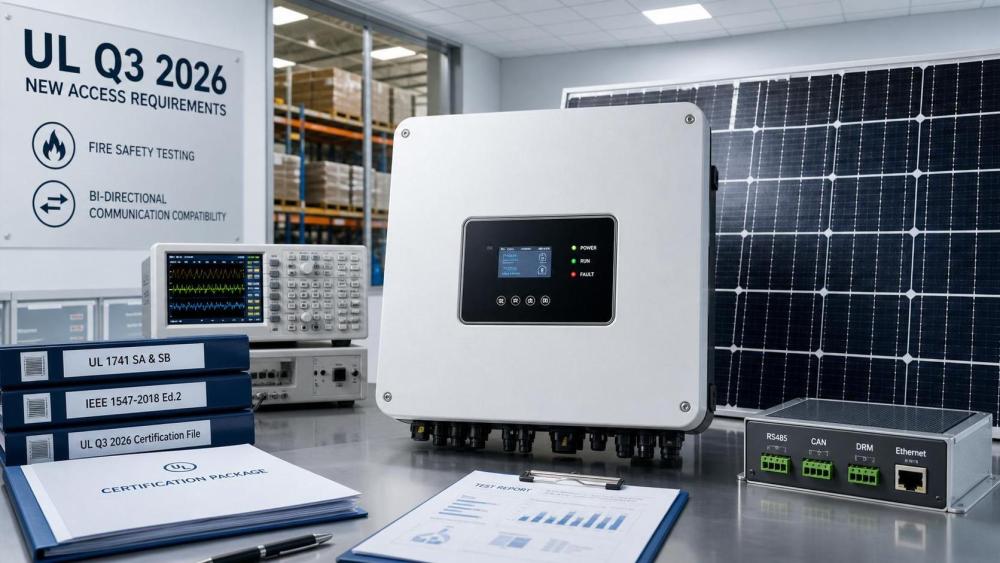
What the updated import notice now requires
According to the information provided, UL issued its “Q3 2026 Photovoltaic Equipment Import Technical Notice” on July 2, 2026. Under that notice, from September 15, 2026 onward, all newly declared grid-connected photovoltaic inverters, including string inverters and central inverters, must pass the fire safety test in IEC 62109-3 Edition 2.
The same notice also requires those newly declared products to complete bidirectional communication interoperability validation with IEEE 1547.1-2024 and SunSpec Modbus-TCP v2.0. The rule does not apply retroactively, but it does affect delivery of in-transit orders and eligibility for bidding on new projects.
Where the pressure is likely to show up first
Product qualification is becoming more document-sensitive
From an industry perspective, manufacturers and exporters are likely to feel the change first because the new requirement is tied to newly declared grid-connected photovoltaic inverters. The immediate business impact is not only technical testing itself, but also whether the supporting compliance file can demonstrate that fire safety and communication interoperability requirements have been completed in line with the updated notice. What deserves closer attention is the readiness of test reports, validation records, and technical documentation used in import declaration and project qualification processes.
Procurement and bidding teams may face a narrower selection window
For buyers and project procurement teams, the rule change matters because product eligibility is now more clearly linked to compliance status under the updated notice. Analysis shows that the practical issue is whether candidate inverter models for new projects can still meet bid requirements after September 15, 2026. Where tender participation depends on proof of conformity, teams will need to review whether technical specifications, supplier qualification materials, and submission packages reflect the new testing and interoperability expectations.
Certification and testing service chains may become a timing bottleneck
Certification-related companies and testing service providers may also be affected because the rule adds both a fire safety element and a communication interoperability element to the entry process for newly declared products. Observably, this can shift attention from a single certification checkpoint to a broader package of evidence. The operational concern is less about the existence of the rule, which is already stated, and more about how quickly supporting assessments and documentation can be completed for products tied to shipment schedules or project milestones.
Delivery and after-sales planning may need closer contract review
For supply chain service providers and after-sales teams, the stated impact on in-transit order delivery means contract execution and handover timing deserve review. Analysis shows that even without retroactive application, products already moving through commercial channels may still face pressure where delivery acceptance or project entry depends on updated compliance evidence. This makes contract documents, product traceability records, and model-specific technical files more relevant in the near term.
Immediate compliance points companies should not leave vague
Check which declared models fall inside the effective date
Analysis shows that the first practical step is to separate products already outside the new declaration scope from those that will be newly declared on or after September 15, 2026. The notice is described as non-retroactive, but the same summary states that in-transit orders and new project bidding eligibility may still be affected. That makes model-by-model and shipment-by-shipment review important for export, logistics, and project teams.
Reconcile technical files with the new testing and interoperability language
What deserves closer attention is whether existing product dossiers clearly support IEC 62109-3 Edition 2 fire safety testing and bidirectional interoperability validation under IEEE 1547.1-2024 and SunSpec Modbus-TCP v2.0. Where bid documents, import declaration materials, or customer qualification packages still use earlier wording, companies should treat that as a point for immediate review rather than assume existing files remain sufficient.
Watch tender documents and customer-side qualification requests
Observably, one of the most immediate transmission channels for this type of rule change is the project tender process. Even where official enforcement details are not fully described in the input, bidders should pay attention to whether customer qualification questionnaires, technical bid requirements, or supply agreements begin to incorporate the updated UL notice language. This is especially relevant because the summary already indicates an effect on new project bidding eligibility.
Keep execution assumptions under review rather than treating them as settled
Because the input does not provide detailed implementation guidance, it is more appropriate to understand current company action as risk control and document alignment rather than as a response to a fully detailed enforcement framework. Firms should continue monitoring later official wording, certification interpretation, and market-side acceptance practice before treating any internal compliance pathway as fully settled.
Why this reads as an execution signal, not just a technical update
Analysis shows that this development is more than a routine adjustment in product testing language. The combination of a fire safety requirement and a communication interoperability requirement indicates that market entry expectations are being expressed in a more operational way, covering both hardware safety and grid-facing communication performance. It is more appropriate to understand this as an executed rule change for newly declared products from the stated effective date, while also recognizing that the detailed market response, certification handling, and tender-side adoption still need continued observation.
How the market should frame this change for now
From an industry perspective, the main significance of the update is that compliance for newly declared photovoltaic grid-connected inverters is no longer only about broad product acceptance, but about whether specific testing and interoperability evidence can support import and project participation from the effective date onward. A rational reading is that this is already a live entry requirement for the affected declaration scope, while the full extent of its impact on delivery schedules, procurement screening, and bid qualification should still be assessed case by case.
Basis of this article and what still needs verification
This article is generated based on the user-provided news title, event date, and event summary. For developments of this kind, commonly relevant source types include official notices, regulator or standards-body releases, customs or trade authority information, industry association updates, standards documents, and reporting by authoritative trade media.
The specific official source link was not provided in the input, so continued verification is still necessary. Observably, the points that remain worth tracking include later implementation details, certification interpretation, changes in tender documentation, market feedback, and how companies execute against the new requirements in practice.