
On July 27, 2026, the European Commission formally opened an anti-subsidy investigation into battery energy storage systems from China, covering lithium-ion and sodium-ion BESS as well as containerized storage units, PCS, BMS, and full turnkey projects. For distributors, project developers, manufacturers, and financing parties tied to the European storage market, this matters because the issue is no longer limited to product pricing: it now directly touches sourcing decisions, project bankability, and the timing and completeness of compliance documentation such as CE, UN38.3, and IEC62619.
What the Commission has formally put under review
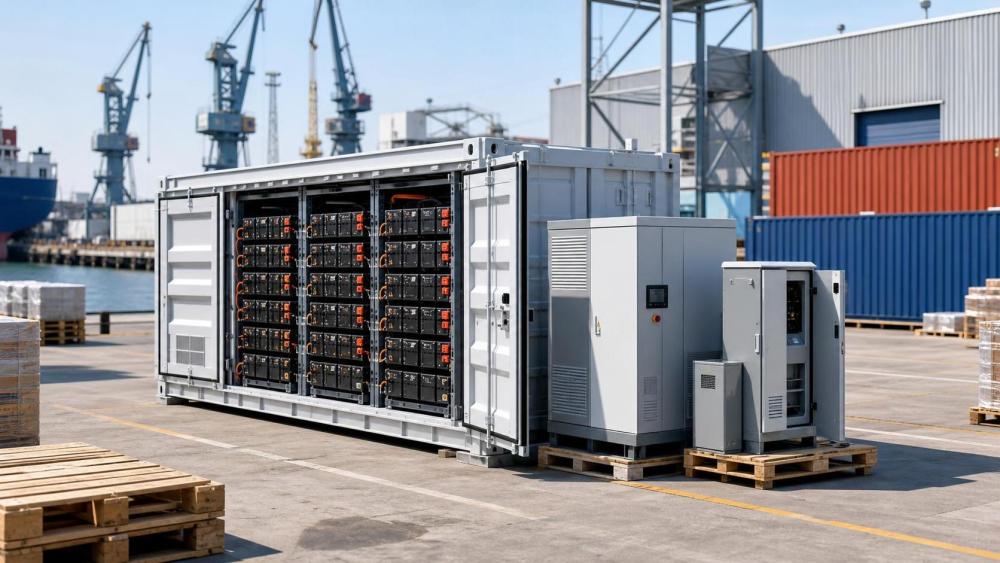
According to the information provided, the European Commission announced the investigation on July 27, 2026. The scope includes Chinese lithium-ion and sodium-ion battery energy storage systems, specifically covering containerized storage units, PCS, BMS, and complete turnkey projects.
The investigation will assess whether Chinese suppliers received non-market support, including export credit, land or electricity price subsidies, and VAT rebates. The same information indicates that provisional duties could be imposed before Q1 2027.
The stated immediate relevance of the case lies in its effect on global distributor purchasing decisions, project financing conditions, and the preparation pace for compliance files tied to CE, UN38.3, and IEC62619.
Where the pressure may appear across the value chain
Purchasing and distribution decisions may tighten first
From an industry perspective, distributors and procurement teams are likely to feel the earliest pressure because the investigation directly affects how imported BESS products are evaluated for cost, timing, and delivery risk. The issue is not only whether duties may emerge, but whether current quotations, order structures, and supplier comparisons remain reliable during the investigation period.
What deserves closer attention is the decision cycle for contracts linked to Europe. Buyers may need to watch for changes in landed-cost assumptions, product scope definitions, and documentary readiness before committing to new orders or long lead-time supply arrangements.
Project financing may become more documentation-sensitive
Analysis shows that financing parties and project sponsors may focus more closely on supply-chain certainty once a formal trade investigation is underway. Where a project depends on imported BESS equipment, any perceived uncertainty around duties or procurement timing can affect how counterparties assess execution risk.
The practical impact may show up in financing review, milestone planning, and requests for clearer supporting documentation. In that context, compliance records and supplier-side declarations may receive more scrutiny than they would under a stable trade environment.
System suppliers and integrators face broader exposure than single-component sellers
Because the published scope covers not only complete containerized units but also PCS, BMS, and turnkey projects, the impact may extend across multiple business models. This means exposure is not limited to a finished battery enclosure; system integrators and suppliers tied to complete delivery packages may also need to review how their offerings are presented and documented for the EU market.
Observably, the broader the project package, the more business functions may be involved, including commercial structuring, technical documentation, and delivery commitments.
What companies should be watching now
Track how official language defines the scope
Analysis shows that companies should pay close attention to how the investigated product scope is described in subsequent official communication. The current information already names lithium-ion and sodium-ion BESS, containerized units, PCS, BMS, and turnkey projects, so any clarification around classification or scope boundaries could matter for quoting, contracting, and customs preparation.
Review subsidy-related disclosures and supporting records
Because the investigation will examine export credit, land or electricity price subsidies, and VAT rebates, suppliers connected to the EU market may need to review the consistency and availability of related records. This is not the same as assuming any finding in advance; it is a practical response to the fact that these areas are explicitly named in the inquiry.
Do not separate compliance files from trade risk planning
What deserves closer attention is the link between trade scrutiny and compliance timing. The information provided specifically mentions CE, UN38.3, and IEC62619 preparation rhythm, which suggests that document completeness and readiness may become part of commercial credibility in addition to technical compliance.
Prepare customer communication around timing and terms
Observably, counterparties in Europe may ask more questions about delivery schedules, commercial validity periods, and documentation status. Companies involved in ongoing or upcoming BESS transactions may need clearer internal coordination between sales, compliance, and supply-chain teams so that external communication stays consistent.
Why this should be read as a signal, not yet a final outcome
Analysis shows that the July 27 announcement is best understood as a formal escalation in trade scrutiny rather than a completed market outcome. The investigation is real and operationally relevant, but the possible imposition of provisional duties before Q1 2027 remains framed as a potential next step rather than a confirmed result.
It is more appropriate to understand this as a tightening compliance and risk window for BESS exports into Europe. The immediate consequence is not that all trade terms have already changed, but that market participants may start adjusting procurement reviews, financing assumptions, and document preparation earlier than they otherwise would.
How the market is likely to frame this stage
At this stage, the development carries both short-term and longer-horizon meaning. In the short term, it affects transaction planning, supplier review, and file preparation for Europe-facing BESS business. In a broader sense, it signals that trade and compliance issues are becoming more closely linked in storage-system exports.
A neutral reading is that the investigation has already become a practical business variable, even though its final commercial effect is not yet determined. For that reason, the current phase is best treated as an active watch point rather than a settled result.
Basis of this article and points requiring follow-up
This article is based on the user-provided news title, event date, and event summary. The specific official source link was not provided in the input, so the exact text of the formal notice and any later procedural updates still require ongoing verification.
For this type of development, relevant source categories typically include official government or regulatory notices, company disclosures, industry association updates, authoritative media reporting, and standard-related documentation where applicable. Follow-up attention should remain on any further official wording about product scope, procedural steps, provisional duties, and compliance-document expectations tied to CE, UN38.3, and IEC62619.