
Effective from September 1, 2026, India’s Ministry of New and Renewable Energy has moved the import process for EV charging equipment into a more document-intensive and time-sensitive compliance track. The change centers on a mandatory pre-registration for an AI-powered Grid Compatibility Certificate before AC and DC EV chargers can be imported, which puts importers, OEM suppliers, independent brands, testing partners, procurement teams, and delivery planning functions under immediate operational pressure. For the industry, the key issue is not only the new certificate itself, but the way it ties import timing to technical records, recognized laboratory inputs, and a longer approval sequence.
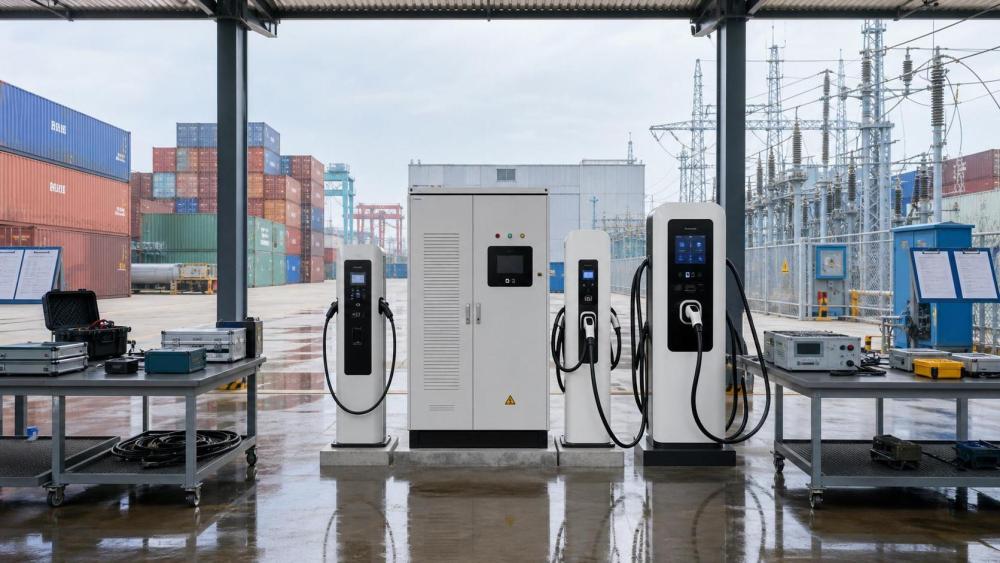
A new pre-import gate for AC/DC EV charging equipment
According to the provided information, the Ministry of New and Renewable Energy (MNRE) issued Circular No. MNRE/2026/EC/REV-7 on July 12, 2026. The circular requires that, from September 1, 2026, all AC and DC EV charging equipment imported into India, including both OEM and independent-brand products, must apply 60 days in advance through the online platform of the National Smart Grid Center (NSGC) for an AI Grid Compatibility Certificate (AIGCC).
The certificate is described as being generated on the basis of AI testing for real-time grid load simulation and V2G protocol compatibility. The rule also states that only original communication logs and firmware version records provided by BIS-recognized laboratories will be accepted for filing. The provided summary further states that the new requirement will significantly lengthen import approval timelines and raise the threshold for technical documentation.
Where the rule change may be felt first
Import planning shifts from shipment readiness to certificate readiness
From an industry perspective, companies directly importing EV chargers may be affected first because the new rule adds a mandatory pre-import step with a 60-day lead time. The practical impact is likely to appear in shipment scheduling, customs preparation, purchase order timing, and delivery commitments. What deserves closer attention is whether internal import workflows are currently built around product availability alone rather than around certificate lead times and technical filing readiness.
Manufacturers and brand owners face a higher documentation burden
OEM suppliers and independent brands may be affected because the certificate process is tied to original communication logs and firmware version filings. This means product compliance preparation may no longer be limited to hardware specifications or standard commercial documents. The affected business links are likely to include product configuration control, firmware traceability, technical file preparation, and coordination with laboratories whose records are acceptable under the new rule.
Testing and certification coordination becomes more critical
Certification-related service providers and laboratories may feel the impact through tighter requirements on acceptable testing records. The rule specifically refers to BIS-recognized laboratories and to original communication logs, which makes document origin and admissibility central to the import process. Analysis shows that companies relying on fragmented testing arrangements or incomplete version-control records may face more friction when preparing submissions.
Procurement and delivery teams may need to rework contract timing
Buyers, project procurement teams, and supply chain service providers may be affected because the rule can extend approval timelines before products are cleared for import. In operational terms, attention may need to move toward contract clauses tied to compliance milestones, supplier document readiness, and handover schedules. Observably, the issue is not only whether a charger meets technical expectations, but whether its documentation package can move through the required pre-registration path in time.
Practical issues companies should review now
Check whether current product files can support AIGCC submission
Analysis shows that companies involved in exporting or importing EV chargers into India should review whether existing technical files include the communication logs and firmware version records that the new process requires. If those records are incomplete, inconsistent, or not aligned with recognized laboratory output, the problem may appear before shipment rather than after arrival.
Reassess lead times in purchasing and delivery schedules
Because the rule requires filing 60 days in advance and the provided summary says approval timelines will be significantly extended, procurement and logistics teams should closely track whether current order cycles leave enough time for pre-registration. It is more appropriate to understand this as a planning issue as much as a certification issue, especially where delivery dates depend on imported equipment.
Watch the exact execution approach on the NSGC platform
The provided information confirms the platform route and the certificate requirement, but it does not provide detailed operating procedures, review timelines beyond the 60-day advance filing, or platform-specific filing mechanics. What deserves closer attention is the eventual execution approach: application format, document validation standards, handling of firmware updates, and any clarifications on acceptable test records.
Review supplier qualification and after-sales traceability
From an industry perspective, supplier qualification may need to extend beyond price, output, and basic certification status to include laboratory coordination capability and firmware record traceability. This also matters for after-sales support, because any product revision, communication protocol issue, or version inconsistency could affect the integrity of the technical record expected in the import process.
Why this looks like an execution signal, not just a policy headline
Observably, this development is more than a broad policy direction because it links a clear start date, a defined pre-registration window, a named certificate, a designated platform, and specific document-source conditions. At the same time, analysis shows that the market still needs to watch how the rule will be implemented in practice. The available information confirms the compliance trigger, but it does not yet settle all operational questions around review interpretation, documentation sufficiency, or how market participants will adapt their delivery models.
It is more appropriate to understand this as a rule change with immediate planning consequences and with further execution details still worth monitoring. For companies active in cross-border EV charging equipment trade, the critical issue is whether internal technical, certification, and commercial teams can work from the same compliance timeline.
What the market should take from this now
The immediate significance of this update is that imported EV charging equipment for India is moving into a more formal pre-clearance framework tied to AI-based grid compatibility review and recognized laboratory evidence. Analysis shows that the most relevant near-term impact will likely be on lead times, documentation quality, and coordination across certification, procurement, and delivery functions. At this stage, the development is best read as an implemented compliance change with practical effects already defined at a high level, while the detailed enforcement approach and market feedback still require continued observation.
Basis of this article and what still needs verification
This article is based on the user-provided news title, event date, and event summary. For developments of this kind, commonly relevant source types may include official government notices, regulator releases, customs or trade authority updates, industry association communications, standard-setting documents, and reporting by established professional media. The specific official source link was not provided in the input, so continued verification is still necessary. Further observation should focus on detailed implementation rules, certification review practice, changes in tender or procurement documentation, industry feedback, and how companies execute the new requirement in actual import workflows.