
On July 14, 2026, the U.S. Department of Energy released its NEVI Program Phase II Implementation Update, adding a new localization threshold for key parts used in liquid-cooled DC fast charging modules seeking NEVI funding from October 1, 2026. The change is worth close attention from charger manufacturers, module suppliers, procurement teams, and cross-border supply chain partners because it shifts compliance from a general funding question into a component-level sourcing issue.
What the DOE Update Specifically Changes
According to the information provided, the new rule applies to DC fast charging equipment that will apply for National Electric Vehicle Infrastructure (NEVI) funding.
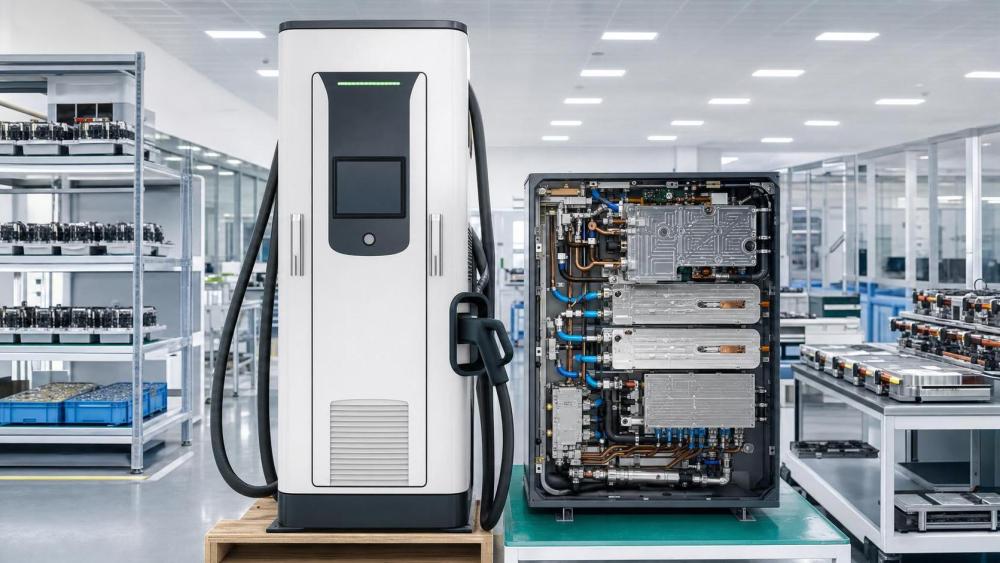
Beginning October 1, 2026, key components within liquid-cooled charging modules, including cooling plates, flow channel connectors, and thermal interface materials, must be produced locally in North America or in friendly countries identified in the update, including South Korea, Japan, and Vietnam.
The same update states that the localization rate for those key components must be no less than 40%.
The provided summary also indicates that Chinese manufacturers may meet the requirement through ODM cooperation with partners in the countries covered by the rule.
Where the Pressure Will Be Felt First
Compliance risk moves upstream into component sourcing
From an industry perspective, the most immediate impact may fall on manufacturers of DC fast charging equipment and liquid-cooled charging modules. The reason is straightforward: eligibility for NEVI funding now depends not only on the finished charger, but also on where specific thermal-management-related parts are made and how localization is counted. The business impact is likely to show up first in supplier selection, bill-of-material review, and compliance documentation.
Procurement teams will need clearer component traceability
For procurement functions and sourcing managers, the change may require closer verification of origin at the part level. Cooling plates, flow channel connectors, and thermal interface materials are now directly tied to subsidy eligibility under the provided update, so purchasing decisions may need to align more tightly with documentary proof, supplier declarations, and production-location consistency.
Cross-border manufacturing partnerships gain practical relevance
Observably, the update matters not only to U.S.-based supply chains but also to overseas suppliers serving the EV charging market. The provided information explicitly notes that Chinese manufacturers can still pursue compliance through ODM cooperation in North America or the listed friendly countries. That means the impact is not limited to exclusion or access; it also affects how manufacturing partnerships are structured, where assembly or component production is placed, and how customer-facing compliance claims are supported.
Project buyers and service providers may face earlier qualification checks
For project purchasers, integrators, and service providers involved in NEVI-related deployments, the policy change may influence vendor screening before equipment selection is finalized. What deserves closer attention is whether a supplier can demonstrate that the relevant liquid-cooling module parts satisfy both the geographic production condition and the 40% localization threshold described in the update.
What Companies Should Watch Before October 2026
Track the exact wording in future official clarification
Analysis shows that the practical effect of this update will depend heavily on how terms such as localization rate and qualifying production are interpreted in implementation. Companies exposed to NEVI-funded business should continue monitoring whether later official materials further clarify calculation methods, proof requirements, or component boundaries for liquid-cooled modules.
Review whether current suppliers match the named component scope
The update names cooling plates, flow channel connectors, and thermal interface materials as key parts. For manufacturers and sourcing teams, a near-term priority is to check whether current supplier arrangements for these items align with the stated production geography and threshold, rather than assuming that overall charger compliance will be sufficient.
Separate policy eligibility from operational readiness
From an industry perspective, subsidy eligibility and actual delivery readiness are related but not identical. Even where a company sees a possible compliance route through ODM cooperation in North America, South Korea, Japan, or Vietnam, it still needs to assess contract structure, lead times, production consistency, and document preparation for customer communication and funding-related review.
Prepare customer-facing compliance materials early
For sales, bid, and account teams, this update may affect how products are positioned in NEVI-related conversations. What deserves closer attention is whether supplier qualifications, origin records, and localization evidence can be presented clearly enough for buyers and project stakeholders who are screening equipment for funding compatibility.
How This Update Is Best Understood Right Now
Observably, this is more than a narrow wording change for one charger subassembly. It signals that subsidy-linked compliance in EV charging infrastructure can reach deeper into specific component categories, especially where thermal management is involved in high-power charging systems.
At the same time, it is more appropriate to understand this as a concrete policy signal rather than a fully settled market outcome. The confirmed facts establish a rule change and an implementation date, but the broader commercial effect will still depend on how companies reorganize sourcing and how future compliance interpretation develops in practice.
A Near-Term Rule Change With Longer-Term Supply Chain Meaning
Based on the provided information, the DOE update creates a clear near-term compliance requirement for NEVI-funded DC fast chargers using liquid-cooled modules, with October 1, 2026 as the key date. The wider industry meaning is not that market results are already fixed, but that component origin, localization structure, and ODM-based supply chain design are becoming more central to funding eligibility.
For now, it is more appropriate to understand this development as both an immediate operational checkpoint and a longer-term signal about how EV charging infrastructure rules may increasingly evaluate supply chains at the component level.
Source Basis and What Still Needs Verification
This article is based on the user-provided news title, event date, and event summary concerning the DOE's July 14, 2026 NEVI Program Phase II Implementation Update.
For this type of industry development, commonly relevant source categories include official government announcements, company disclosures, industry association updates, authoritative media coverage, and standards-related documents. No specific official source link was provided in the input, so the exact official publication path still requires ongoing verification.
Areas that merit continued follow-up include any later official clarification on calculation standards for the 40% localization threshold, evidence requirements for compliance, and whether additional implementation guidance affects how companies structure ODM cooperation in the named regions.