
On June 29, 2026, Germany’s Federal Network Agency (BNetzA) formally released the revised VDE-AR-E 2100-712:2026 standard, introducing new requirements for newly commissioned AC and DC EV charging facilities in Germany. The update deserves close attention from charging equipment manufacturers, exporters, certification teams, and project delivery participants because it links charger communication capability and local load control more directly to low-voltage grid adjustment needs, while also affecting technical adaptation and type-approval timelines for Chinese EV charger exports to Europe.
What the revised standard now requires
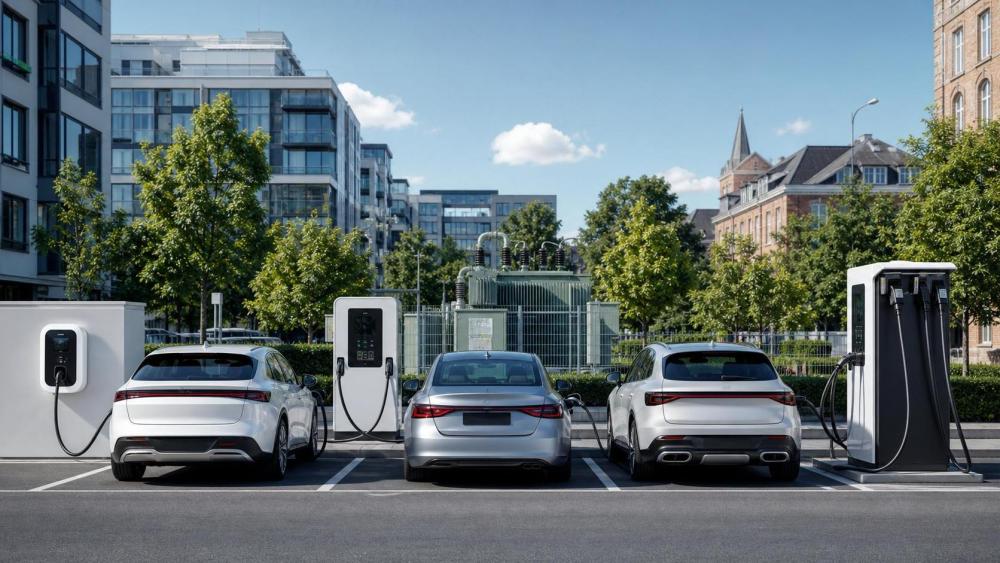
According to the provided information, the revised VDE-AR-E 2100-712:2026 standard was officially issued by BNetzA on June 29, 2026. It requires all newly commissioned AC and DC EV charging facilities, including wall-mounted chargers, pedestal chargers, and liquid-cooled ultra-fast chargers, to support bidirectional communication through DIN SPEC 70121 and OCPP 2.1.1.
The same revision also requires these charging facilities to include Local Load Management logic. The stated purpose is to align EV charging infrastructure with the dynamic regulation needs of Germany’s low-voltage distribution network.
The provided summary further states that the new rule will affect the technical adaptation path and type-certification cycle for Chinese EV charger exports to Europe.
Where the operational impact is likely to appear first
Product design and export-facing manufacturing
From an industry perspective, manufacturers serving the European market may be affected first because the new requirement is tied directly to charger functionality. The likely impact point is the product definition stage: communication protocol support and embedded local load scheduling logic are no longer peripheral features for newly commissioned equipment in the German market. What deserves closer attention is whether current AC, DC, wallbox, pedestal, and liquid-cooled ultra-fast charging product lines already match these protocol and control expectations for export projects.
Certification and compliance workflows
Certification, testing, and regulatory affairs teams may see the impact in type-approval preparation and documentation cycles. Analysis shows that when a standard revision adds explicit communication and control requirements, the practical pressure often falls on technical file readiness, feature verification, and alignment between product configuration and approval scope. In this case, the supplied information already indicates that type-certification timelines for Chinese exports to Europe may be affected.
Project delivery and channel-side coordination
Distributors, integrators, and project delivery participants may be affected through specification matching and delivery planning. The reason is straightforward: newly commissioned equipment in Germany will need to meet the revised requirements, which means project-side parties may need to recheck charger models, software capabilities, and deployment readiness before installation or acceptance. What they need to watch is whether existing product selections and delivery schedules still fit the updated compliance path.
What companies should monitor now
Protocol support in actual export configurations
Companies should look closely at whether the specific export configurations intended for Germany support both DIN SPEC 70121 and OCPP 2.1.1 in practice, not only at the platform or roadmap level. The distinction between a technical possibility and a deliverable configuration may become important in customer communication and compliance review.
How Local Load Management is defined in implementation
What deserves closer attention is the implementation boundary of Local Load Management within charger products and delivery packages. For commercial teams and engineering teams, this is less about generic feature naming and more about whether the embedded logic is aligned with the requirement as applied to newly commissioned equipment in Germany.
Certification timing and document readiness
Exporters and compliance managers should prepare for possible adjustments in certification sequencing, product documentation, and customer-facing technical clarification. Observably, the stated effect on type-certification cycles means internal coordination between R&D, compliance, and sales may need to tighten around model definitions, protocol declarations, and delivery commitments.
Ongoing changes in official interpretation
Companies should continue monitoring whether subsequent official wording, implementation guidance, or market-side interpretation changes the operational meaning of the revised standard. The current information confirms the new requirements and their direction of impact, but practical execution often depends on how compliance expectations are communicated and applied in real projects.
Why this looks like more than a routine specification update
Analysis shows that this development is not just about adding one more checkbox to EV charger specifications. It signals a closer link between EV charging infrastructure and low-voltage grid management requirements in Germany. That matters because the change reaches beyond a single hardware category and applies across newly commissioned AC and DC charging facilities, including mainstream and high-power deployment formats.
It is more appropriate to understand this as a concrete regulatory and technical signal rather than a fully settled market outcome. The confirmed facts already point to immediate relevance for compliance and export planning, but the broader commercial effect still depends on how manufacturers, certification bodies, and project stakeholders respond in the next stage.
How the market should read the update for now
At this stage, the most balanced reading is that BNetzA’s release of the revised VDE-AR-E 2100-712:2026 standard creates a clear near-term compliance issue for EV charging equipment entering or being deployed in Germany, while also sending a longer-term signal about grid-responsive charging infrastructure. The impact should not be overstated beyond the provided facts, but it should not be treated as a marginal revision either, especially for companies managing European export programs and certification schedules.
Basis of this article and what still needs verification
This article is based on the user-provided news title, event date, and event summary regarding BNetzA’s June 29, 2026 release of the revised VDE-AR-E 2100-712:2026 standard. For this type of industry update, commonly relevant source categories include official notices, company announcements, industry association information, authoritative media coverage, and standard organization documents.
No specific official source link was provided in the input, so the exact source document link still needs to be verified on an ongoing basis. Follow-up attention should focus on any later official clarification, implementation wording, certification interpretation, and market-side application affecting EV charging equipment exported to Germany and Europe.