
A driver arriving at a public charger in another country may find that the connector fits and the charger starts normally, yet payment still fails. The app may not recognize the station, the RFID card may be rejected, or a fleet account may not be authorized for the local operator. For charging-network operators and developers, this is more than a customer-service inconvenience: failed payment can reduce utilization, complicate reconciliation, and damage confidence in a charging corridor.
Are EV charger payment systems interoperable across regions? Only partly. There are standards that support interoperability, but no single global payment method, roaming arrangement, or regulatory framework guarantees that every driver can pay at every charger. Practical interoperability depends on several layers working together: charger-to-backend communication, roaming data exchange, authentication, payment processing, local tax rules, and the accepted consumer payment methods in each market.
Interoperability is not one thing
Payment compatibility is often discussed as though it were a property of the charging station itself. In reality, a charger can be technically compatible with a vehicle while remaining commercially inaccessible to the driver. The physical connection, charging session authorization, price display, and final payment settlement may each rely on different systems.
A useful way to assess a cross-regional charging experience is to separate it into four layers:
These layers explain why a network may advertise “interoperable charging” while still requiring local registration or accepting only certain payment instruments. It may support roaming between selected charge point operators and mobility service providers, rather than universal access.
The standards that matter—and what they do not solve
Several industry standards improve the chance that charging and payment systems can work across company and regional boundaries. Their roles are different, and none should be mistaken for a universal payment standard.
OCPP supports charger-to-operator communication
Open Charge Point Protocol (OCPP) is used to connect charge points with a charging management system. It can support remote start and stop functions, transaction records, tariff-related data handling, fault reporting, and device management. This is important when a hardware supplier, a site owner, and a charge point operator use separate systems.
However, OCPP does not automatically enable a driver from one app or network to pay at another network. A charger may be fully OCPP-capable but still be connected to an operator backend with no roaming integrations. In procurement, OCPP conformance should therefore be considered a foundation for operational flexibility, not proof of consumer payment interoperability.
OCPI helps roaming platforms exchange commercial data
Open Charge Point Interface (OCPI) is designed for communication between charging operators, mobility service providers, and roaming platforms. It can exchange information such as station locations, connector status, tariffs, authentication tokens, charging session records, and charge detail records used for settlement.
Where OCPI is implemented consistently and commercial agreements exist, a driver may use one service-provider app or RFID credential at another operator’s station. Yet OCPI does not compel companies to enter those agreements, align pricing models, or accept every token. It provides a structured route for data exchange; it does not remove commercial boundaries.
ISO 15118 can simplify authorization, but rollout varies
ISO 15118 supports advanced vehicle-to-charger communication and is associated with Plug & Charge functionality. In a suitable ecosystem, the vehicle can present a secure digital credential, and charging can begin without a driver opening an app or tapping a card. The billing relationship is then handled through linked contracts and certificates.
This can make cross-border charging feel more seamless, especially for fleets using centrally managed vehicle accounts. Its limits are practical: the vehicle, charger, backend, certificate-management process, and service-provider arrangement all need compatible support. Plug & Charge also does not eliminate the need for regional billing, tax, consumer-disclosure, or contract-management processes.
Bank-card acceptance is a separate payment question
Contactless card terminals can reduce dependence on charging apps and network-specific RFID cards. A visitor who has no local charging account may be able to pay with a familiar debit or credit card, just as at other unattended retail equipment. But card acceptance is shaped by local acquiring banks, card-network rules, supported currencies, terminal certification, fraud controls, and site connectivity.
Even where bank-card payment is available, the charging operator must determine how to handle preauthorization amounts, final billing after a variable-energy session, receipts, taxes, refunds, and offline transactions. A card reader is valuable for access, but it is not a simple replacement for a charging payment platform.
Why regional differences remain visible to users
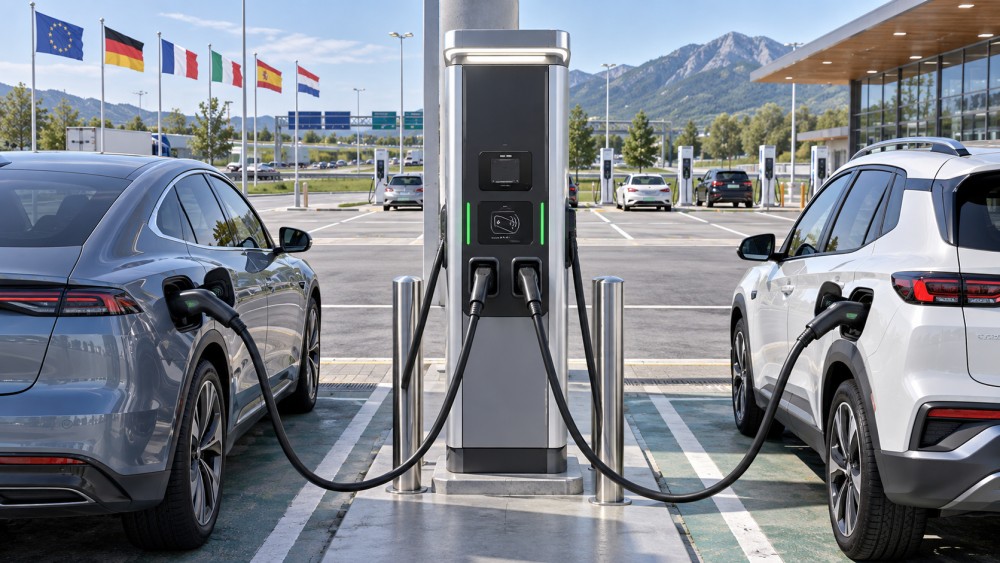
Charging markets developed through different combinations of utility policy, fuel-retail practices, digital-wallet adoption, bank-card habits, and public-infrastructure requirements. As a result, the “normal” payment journey varies by region. In one market, RFID membership cards may remain widely used. In another, QR-code payment or mobile wallets may be expected. Elsewhere, contactless payment at the charger may be the preferred access method for occasional users.
Local rules can also affect the information that must be displayed before a session begins. Operators may need to present prices in a particular format, identify taxes clearly, provide ad hoc access without membership, retain transaction data in a defined way, or use approved fiscal processes. These requirements influence backend design and may prevent a single global checkout flow from being deployed unchanged.
Currency conversion introduces another friction point. A roaming provider may display a tariff in the customer’s home currency, while the station operator bills in local currency and the payment processor settles through another channel. The customer needs a clear view of the applicable price basis, any session fee or idle fee, and whether the amount shown is final or estimated. Poor tariff synchronization is one of the fastest ways to create billing disputes.
A practical test for developers planning multi-region sites
When a charging program covers multiple countries or serves international drivers, the key question is not “Which protocol is best?” It is whether the full user journey works in every intended operating region. This should be tested before hardware selection is finalized, because payment requirements can affect terminal layout, connectivity, backend integration, support workflows, and commercial contracts.
Start by defining the actual user groups. A depot serving a contracted fleet has very different needs from a highway site used by visitors who may never have seen the operator’s brand before. Fleet users may prioritize account-level invoicing, driver permissions, vehicle identification, and cost-center allocation. Public users need immediate access, understandable prices, and a fallback when an app or roaming credential fails.
Then map each intended payment path from start to settlement:
- Identify how the user will authenticate: app, RFID card, QR code, payment terminal, Plug & Charge, fleet token, or a combination.
- Confirm what system validates that identity and whether it can operate across the selected countries.
- Check how tariff data is sent to the user interface, roaming partner, and payment system before charging begins.
- Verify that the platform can calculate energy charges, time-based charges, idle fees, taxes, discounts, and currency requirements correctly.
- Confirm how charge detail records are transferred, reconciled, corrected, and retained when a session is interrupted or disputed.
- Test failure modes, including weak mobile signal, card-terminal outage, delayed roaming authorization, failed app login, and a charger that completes energy delivery but cannot immediately close payment.
The last point is often overlooked. A payment design may work well during a controlled demonstration but fail under ordinary field conditions. Public chargers may be located in parking structures, remote corridors, logistics yards, or sites with inconsistent communications. The system needs defined behavior for interrupted sessions: whether charging stops, whether the driver can leave safely, how an authorization hold is adjusted, and how the operator resolves an incomplete record.
Choosing an operating model: direct payment, roaming, or both
There is no single model suitable for every location. The strongest approach is often a layered one that gives users more than one legitimate way to access charging.
Direct payment at the charger is especially useful for public, destination, and corridor charging. It reduces the barrier for occasional drivers and visitors. Its downside is that the operator must manage payment-terminal deployment, merchant services, transaction exceptions, and local compliance obligations.
Operator app or RFID access can support loyalty programs, subscriptions, detailed session history, and targeted pricing. It may work well where users charge repeatedly within one network. It becomes less convenient when drivers cross into areas where the operator has limited coverage.
Roaming access expands reach without requiring every operator to build a direct relationship with every driver. It is useful for regional networks and corporate mobility programs. The limitations are commercial rather than purely technical: not all partners exchange the same tariff structure, authentication methods, customer-service responsibilities, or settlement terms.
Plug & Charge can offer the smoothest experience when the ecosystem supports it. It is particularly relevant where vehicles are managed under a known contract relationship. For general public access, it should be treated as an additional channel rather than the only payment route, since vehicle and account support will remain uneven.
Questions to ask before signing a software or hardware contract
A procurement review should request answers that are specific enough to be tested. Broad claims such as “supports roaming” or “payment-ready” are not sufficient.
- Which OCPP versions and security functions are supported by the charger and backend?
- Does the platform support OCPI directly, through a roaming intermediary, or through custom interfaces?
- Which authentication methods can be active at the same station, and what happens if one fails?
- Can payment terminals be deployed in each target country with local acquiring and currency support?
- How are tariffs versioned, displayed, and synchronized with roaming partners?
- Can the system distinguish operator revenue, roaming charges, tax components, site-host fees, and fleet billing rules?
- Who owns customer support when authorization succeeds but a settlement record is incorrect?
- Can transaction records be exported in a usable format for audit, reconciliation, and dispute handling?
It is also worth separating protocol compatibility from commercial availability in contract language. A platform may be technically able to connect to a roaming ecosystem, but activation may depend on separate onboarding, bilateral agreements, fees, testing, or local legal arrangements. Treat these as implementation dependencies, not assumptions.
How fleet managers can reduce payment friction now
Fleet charging does not always require the same open-access design as public charging, but regional travel can expose gaps quickly. A fleet manager should confirm where drivers will charge: home depots, third-party depots, public urban stations, customer sites, or highway corridors. Each environment may use different authorization and billing methods.
Before vehicles travel across borders, provide drivers with a planned primary payment method and at least one fallback. This could mean a roaming-enabled fleet credential plus an approved payment card, rather than relying only on a single app. Keep charging permissions tied to the correct vehicle, driver, or cost center where possible, and establish a process for handling receipts and incomplete sessions. The operational objective is not merely to start charging; it is to preserve a transaction trail that finance and operations teams can reconcile later.
For operators, the realistic target is not universal interoperability on day one. It is to avoid trapping users inside one narrow access method. Open communication interfaces, clear roaming strategy, locally appropriate payment options, accurate tariffs, and tested exception handling create a charging experience that can expand across regions without forcing every user into the same account or payment habit.