
What is shaping the wind turbine nacelle market today?
The wind turbine nacelle market is no longer defined simply by annual turbine installations. It is increasingly shaped by where projects are built, how large turbines become, how difficult they are to service, and whether manufacturers can deliver reliable machines under intense cost and schedule pressure. The nacelle remains the highest-value mechanical and electrical assembly on a wind turbine, housing the drivetrain, generator, converter, yaw system, main control equipment, cooling systems, and much of the machinery that determines availability.
For project developers, equipment suppliers, investors, and procurement teams, this changes the central question. The relevant issue is not only which nacelle platform has the highest nameplate capacity. It is whether a platform can achieve predictable energy production, satisfy increasingly demanding grid requirements, arrive on site within the construction schedule, and remain serviceable throughout a 20- to 30-year operating period.
The market is therefore moving in two directions at once: toward fewer, larger and more technically complex turbine platforms, while also placing greater value on local service capability, standardized components, repairability, and long-term operational evidence.
Upscaling remains the main force behind nacelle demand
Turbine ratings have continued to rise, especially in offshore wind. Larger rotors and higher hub heights allow a project to capture more energy from a given site, while reducing the number of foundations, cables, installation campaigns, and grid connection points needed for a target capacity. This has a direct effect on nacelle design. A nacelle intended for a high-capacity turbine must manage greater torque loads, more demanding thermal conditions, heavier components, and stricter structural requirements without becoming impractical to manufacture, transport, install, or maintain.
In offshore projects, the difference is particularly significant. A turbine with a larger rating can reduce the total number of units in a wind farm, but each individual failure becomes more consequential. Access may depend on vessel availability and weather windows, and a major drivetrain replacement can involve specialized cranes, jack-up vessels, or heavy-lift campaigns. This creates a strong commercial preference for nacelle designs that combine high output with demonstrated reliability and manageable service procedures.
Onshore wind is also moving toward larger turbines, although the constraints differ. Roads, bridge clearances, turning radii, crane availability, local permitting rules, and site-specific wind conditions can limit the practical value of very large machines. In many markets, the best nacelle is not the largest available platform. It is the platform that can be transported and erected with acceptable logistical risk while delivering strong capacity factor at the relevant wind regime.
The resulting wind turbine nacelle market is becoming more segmented. Offshore platforms are designed around scale, marine durability, remote diagnostics, and access limitations. Onshore products must increasingly balance higher ratings with transportability and site adaptability. A supplier that performs well in one category may not automatically be competitive in the other.
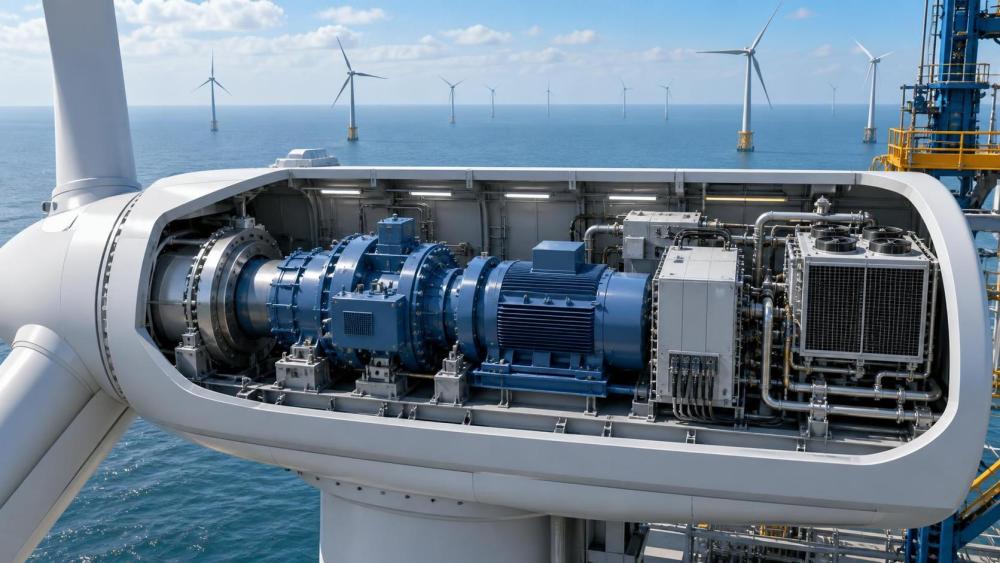
Drivetrain architecture is again a strategic procurement issue
The longstanding discussion between geared, medium-speed, and direct-drive turbine architectures has become more commercially important as turbine sizes rise. There is no universal winner because the best configuration depends on project conditions, supplier capability, service strategy, and the owner’s tolerance for different failure modes.
Geared designs use a gearbox to increase rotational speed before electricity generation. They have a long operating history and can offer a familiar maintenance model, but gearboxes remain a critical component requiring careful lubrication management, vibration monitoring, and quality control. At larger turbine ratings, gearbox loads and heat management become more demanding, raising the value of proven component suppliers and robust validation programs.
Direct-drive systems remove the main gearbox and use a large generator operating at low rotational speed. In principle, fewer rotating drivetrain stages can reduce certain mechanical risks. However, direct-drive nacelles may use larger generators and substantial quantities of specialized materials, depending on the generator design. Repair economics, weight distribution, generator supply chains, and the availability of trained service teams all affect the real-world outcome.
Medium-speed arrangements sit between these approaches, seeking a balance between gearbox reduction ratios, generator dimensions, and nacelle weight. Their market position reflects the fact that turbine engineering is rarely about a single component. The drivetrain must work with the converter, cooling system, tower interface, control strategy, and maintenance plan as an integrated package.
Procurement evaluations should therefore avoid treating drivetrain type as a shortcut for reliability. More useful questions include: What is the operating record of the specific platform? Which major components are common across the installed fleet? What are the planned and unplanned maintenance assumptions? Can key repairs be completed with locally available lifting equipment? Who carries responsibility for serial defects discovered after commissioning?
Reliability has become a lifecycle economics issue, not only an engineering target
Higher turbine capacity magnifies the cost of lost availability. When a single machine represents a larger share of a wind farm’s output, an extended outage can materially affect revenue, contractual performance obligations, and debt-service assumptions. This is especially true in offshore wind, where weather delays and vessel constraints can turn a technical repair into a lengthy operational event.
As a result, nacelle reliability is increasingly evaluated through lifecycle cost rather than initial turbine price alone. A lower equipment price may be less attractive if it is paired with weak service coverage, uncertain spare-parts access, or limited evidence from comparable operating conditions. Conversely, a higher-priced platform may justify its cost when it offers strong availability guarantees, mature condition-monitoring systems, and transparent repair responsibilities.
Condition monitoring has become central to this assessment. Nacelle systems now generate operational data from vibration sensors, oil-quality monitoring, temperature sensors, electrical measurements, yaw systems, hydraulic equipment, and converter controls. The commercial value of this data lies in earlier intervention. Detecting bearing wear, lubrication issues, overheating, alignment problems, or converter abnormalities before a failure can reduce outage duration and prevent secondary damage.
However, digital monitoring should not be treated as a substitute for mechanical quality. A predictive maintenance platform is only useful when alarms are credible, operating data is accessible, service teams can act on findings, and spare parts are available. Asset owners should clarify data ownership, cybersecurity responsibilities, remote-access rules, and the extent to which diagnostic models remain usable after a service agreement expires.
Grid compliance is changing the nacelle’s electrical and control value
Wind projects are being connected to power systems with growing shares of inverter-based generation. This places greater emphasis on voltage control, frequency response, fault ride-through, reactive power capability, and the ability to remain stable during grid disturbances. While grid-code requirements vary by country and connection point, the broad direction is clear: wind turbines are expected to contribute more actively to system stability.
The nacelle is a key part of this transition because its converter, controller, sensors, and communications equipment determine how the turbine responds to grid events. A turbine cannot be evaluated only on mechanical output. Its ability to meet local grid-code obligations, integrate with plant-level controls, and respond to utility instructions may influence commissioning schedules and project bankability.
This is particularly relevant where transmission congestion is rising or where wind farms are being built far from load centers. Curtailment, reactive-power requirements, and grid connection delays can alter project economics even when wind resources are strong. Developers should confirm not only that a turbine is certified to relevant standards, including the applicable IEC 61400 design and power-performance framework, but also that its control configuration can be accepted by the local grid operator.
Late changes to turbine control settings, plant controllers, or grid studies can create costly rework. In markets with evolving connection rules, suppliers with local engineering support and a record of completing grid-compliance testing may hold an advantage over suppliers whose products are technically capable but less established in the region.
Supply-chain localization is reshaping competitive positions
The nacelle supply chain is under pressure from several directions: trade restrictions, local-content policies, transport costs, geopolitical uncertainty, port capacity constraints, and demand for domestic industrial development. Governments increasingly view wind manufacturing as part of energy security and employment policy, not merely as an equipment procurement category.
Localization does not always mean full domestic nacelle manufacturing. It may involve local assembly, generator production, machining, electrical cabinets, converter integration, blade factories, service hubs, or component repair facilities. The commercial importance lies in lead times and operational support. A locally supported platform can reduce exposure to shipping disruptions, simplify warranty response, and improve access to trained technicians and spare parts.
Yet localization also introduces risk. New facilities require stable order volumes, skilled labor, quality systems, and a viable supplier base. When project pipelines are irregular or auction prices are too low, manufacturers may be reluctant to invest in local capacity. Policy ambitions can therefore exceed the short-term economics of turbine production.
For buyers, it is important to distinguish between announced localization and operational capability. A supplier’s local footprint should be assessed through practical evidence: installed service teams, stocked critical components, repair turnaround times, local engineering authority, and contractual commitments on response times. A regional office alone does not solve a major drivetrain or converter failure.
Offshore growth creates opportunity, but not uncomplicated volume
Offshore wind remains one of the most important demand drivers for high-capacity nacelles. It offers access to stronger and more consistent wind resources and can support large-scale projects where land constraints limit onshore development. At the same time, offshore economics have become more difficult in several markets because of inflation, higher financing costs, vessel scarcity, supply-chain bottlenecks, and mismatches between auction structures and actual project costs.
This has important implications for nacelle suppliers. The addressable market may be large, but project schedules can be delayed, renegotiated, or rebid. Manufacturers must decide how much capacity to commit to platforms that require substantial investment in factories, test facilities, ports, and specialized installation infrastructure.
Buyers should not assume that a large announced offshore pipeline will automatically translate into near-term nacelle deliveries. A more realistic market view separates leased capacity, permitted projects, financially committed projects, and projects that have reached firm turbine procurement. The latter category is the more meaningful indicator for factory loading and supply availability.
Pricing pressure is testing manufacturer strategies
Wind turbine manufacturers have faced a difficult balance between winning volume and protecting margins. Competitive auctions and aggressive project pricing have often pushed equipment prices downward, while material costs, warranty exposure, logistics expenses, and the cost of developing larger platforms have risen. The result is a more disciplined approach to commercial terms.
Nacelle supply contracts are likely to place greater emphasis on indexation mechanisms, delivery schedules, payment security, warranty limitations, transport responsibilities, and clearly defined site conditions. Suppliers may also become more selective about markets where permitting uncertainty, weak grid readiness, or unfavorable contractual structures create a high risk of delayed delivery and unplanned cost.
For project owners, this means that the lowest initial bid deserves careful scrutiny. A price advantage can disappear if the contract leaves key risks unresolved: port delays, crane availability, abnormal transport requirements, grid-code modifications, liquidated damages, spare-parts pricing, or availability exclusions. The procurement process should compare total contractual exposure rather than turbine price per megawatt.
What to watch in the next market cycle
The next phase of the wind turbine nacelle market will be determined less by headline turbine ratings alone than by industrial execution. Larger units will continue to attract attention, but commercially successful platforms will be those that can move from prototype to repeatable series production without creating excessive warranty and service burdens.
Three indicators are especially useful. The first is the installed operating base: reliability claims become more credible once turbines have accumulated meaningful operating time in comparable climates and grid environments. The second is service infrastructure: component availability, technician capacity, diagnostic access, and repair logistics matter as much as design specifications. The third is contract quality: clear allocation of performance, availability, grid-compliance, and long-term maintenance obligations is essential in a market where a single nacelle outage can have material financial consequences.
Wind power will remain central to electricity-system decarbonization, but the nacelle is becoming a more demanding asset class. It combines heavy engineering, digital control, grid interaction, and lifecycle service in one package. Market participants that evaluate those elements together will be better positioned than those relying on capacity ratings, headline price, or factory announcements alone.
Questions about market trends? Contact Market Scope Live for deeper business insights.
We respect your privacy. Your information is strictly confidential.
Related News
 Wind Power ComponentsDistributed Wind Energy Systems: How They Work and Where They FitDistributed wind energy systems can power farms, businesses, and communities. Discover how they work, where they fit, and what makes a project viable.MORE+
 Wind Power ComponentsTroubleshooting Nacelle Wind Turbine Parts That Cause Unplanned DowntimeTroubleshoot nacelle wind turbine parts with proven checks for gearbox, generator, yaw, hydraulic, and wiring faults to reduce unplanned downtime.MORE+
 Wind Power ComponentsHow to Evaluate Wind Turbine Blades for Fatigue Life, Erosion, and Site LoadsWind turbine blades: learn how to assess fatigue life, leading-edge erosion, lightning exposure, and site-specific loads to improve reliability, energy yield, and lifecycle decisions.MORE+
 Wind Power ComponentsNacelle of Wind Turbine: Lifecycle Cost Drivers Buyers Should EvaluateNacelle of wind turbine lifecycle costs: evaluate drivetrain design, service access, warranty scope, spares, and availability risks before buying.MORE+
 Wind Power ComponentsSelecting a Nacelle in Wind Turbine Projects for Cold, Coastal, and Dusty SitesNacelle in wind turbine selection guide for cold, coastal, and dusty sites—compare sealing, corrosion control, thermal management, filtration, and maintenance access.MORE+
 Wind Power ComponentsNacelle and Hub Interfaces: Alignment Risks That Can Shorten Turbine LifeNacelle and hub alignment risks can accelerate turbine wear. Learn how precise interface control protects drivetrain life, uptime, and project value.MORE+
 Wind Power ComponentsInside a Wind Turbine Nacelle: Which Components Need the Most Maintenance?Inside nacelle wind turbine systems, discover which components demand the most maintenance—from gearboxes to cooling and controls—and protect uptime with smarter inspections.MORE+
 Wind Power ComponentsNacelle Wind Turbine Parts: An Inspection Checklist for Preventing DowntimeNacelle wind turbine parts inspection checklist: detect early faults in drivetrain, cooling, yaw, brakes, and controls to prevent costly downtime.MORE+
 Wind Power ComponentsWhat Is a Nacelle in a Wind Turbine? The Systems That Control Power GenerationWhat is a nacelle in a wind turbine? Explore the drivetrain, controls, pitch, yaw, cooling, and safety systems that shape power output, reliability, and lifecycle costs.MORE+
 Wind Power ComponentsWhat Is a Nacelle on a Wind Turbine? Safe Access Rules for Field OperatorsWhat is a nacelle on a wind turbine? Explore its vital systems, key hazards, and safe access rules that help field operators protect people and turbine uptime.MORE+
 Wind Power ComponentsWhat Is Nacelle in Wind Turbine Design and Why Does It Affect Energy Output?What is nacelle in wind turbine design? Discover how this vital housing supports alignment, cooling, controls, and reliable energy output.MORE+
 Wind Power ComponentsThe Nacelle of a Wind Turbine Explained: Functions, Layout, and Key SystemsNacelle of a wind turbine explained: explore its drivetrain, yaw, pitch, cooling, electrical, and control systems—and see how nacelle design impacts reliability, maintenance, and energy output.MORE+
 Wind Power ComponentsWind Turbine Hub and Nacelle: How Loads Travel from Blades to DrivetrainWind turbine hub and nacelle: discover how blade loads flow through bearings, shafts, gearboxes, and supports to improve drivetrain reliability and maintenance decisions.MORE+
 Wind Power ComponentsInside a Wind Turbine Nacelle: How Drivetrain Layout Affects Maintenance AccessExplore how drivetrain layout inside the nacelle of wind turbine shapes maintenance access, lifting routes, safety, and lifecycle service costs.MORE+
 Wind Power ComponentsWhat is shaping the wind turbine nacelle market today?Wind turbine nacelle market trends: explore turbine scaling, drivetrain choices, reliability, grid compliance, localization, and offshore supply risks shaping smarter investment decisions.MORE+
 Wind Power ComponentsHow to inspect a wind turbine nacelle before commissioningWind turbine nacelle inspection guide: verify mechanical, electrical, safety, fire-protection, and documentation readiness before commissioning.MORE+
 Wind Power ComponentsWhich nacelle of wind turbine design suits offshore projects?Nacelle of wind turbine design for offshore projects: explore drivetrain options, marine protection, maintenance access, and vessel logistics for reliable performance.MORE+
 Wind Power ComponentsWhat should operators check when a wind turbine nacelle overheats?Nacelle wind turbine overheating? Learn the essential checks for cooling, gearbox, generator, and electrical systems to prevent failures and protect uptime.MORE+
 Wind Power ComponentsHow does nacelle cooling protect wind energy turbines?Wind energy nacelle cooling protects turbines from overheating, derating, and costly failures. Discover practical maintenance insights to improve reliability and power availability.MORE+
 Wind Power ComponentsWhat drives wind power nacelle maintenance costs over time?Wind power nacelle maintenance costs evolve with age, failures, access, parts, and downtime. Discover key risks and smarter lifecycle cost controls.MORE+
 Wind Power ComponentsHow does turbine nacelle weight affect foundation design?Turbine nacelle weight affects foundation loads, dynamics, fatigue, soil response, and crane planning. Discover key design factors for reliable wind projects.MORE+
 Wind Power ComponentsWhich nacelle components affect wind turbine reliability most?Nacelle components wind turbine reliability depends on drivetrain, generator, bearings, yaw, cooling, and controls. Explore high-impact risks and smarter maintenance priorities.MORE+
 Wind Power ComponentsHow are the nacelle and hub different in a wind turbine?Nacelle and hub: discover how these vital wind turbine components differ, from blade control and power conversion to maintenance, reliability, and project performance.MORE+
 Wind Power ComponentsWhat does a nacelle in a wind turbine actually do?Discover what a nacelle in wind turbine does, from power conversion and controls to maintenance, reliability, and wind farm economics. Read the full guide.MORE+
 Wind Power ComponentsHow Grid-Connected Wind Energy Systems Work in Utility and Commercial ProjectsGrid connected wind energy systems explained for utility and commercial projects—learn how turbines, substations, controls, and grid compliance shape reliable, bankable performance.MORE+
 Wind Power ComponentsWhat Does a Wind Turbine Nacelle Include and Why Does It Matter in Turbine Design?Wind turbine nacelles include the drivetrain, generator, controls, cooling, and service systems. Learn why nacelle design directly impacts reliability, maintenance cost, and turbine performance.MORE+
 Wind Power ComponentsHow to Evaluate Wind Turbine Gearboxes for Reliability, Load Capacity, and Service LifeWind turbine gearboxes evaluation starts with real duty profiles. Learn how to assess reliability, load capacity, lubrication, and service life for smarter supplier decisions.MORE+
 Wind Power ComponentsHow to Evaluate a Wind Turbine Gearboxes Manufacturer for Quality, Lead Time, and OEM FitWind turbine gearboxes manufacturer selection made simple: learn how to assess quality, lead time, OEM fit, warranty, and total cost to reduce project risk and improve uptime.MORE+
 Wind Power ComponentsHow to Choose a Wind Turbine Gearboxes Supplier for Reliability and Service SupportWind turbine gearboxes supplier selection affects uptime, lifecycle cost, and project risk. Learn how to compare reliability, service support, and delivery strength.MORE+
 Wind Power ComponentsWind Turbine Blades Explained: Materials, Blade Length, and Performance Trade-OffsWind turbine blades explained: compare materials, blade length, and performance trade-offs to improve energy yield, durability, and project ROI in modern wind power.MORE+
 Wind Power ComponentsIndustrial Gearboxes Selection Guide: Torque, Ratio, Duty Cycle, and Mounting BasicsGearboxes selection made practical: learn how torque, ratio, duty cycle, and mounting affect reliability, efficiency, and lifecycle cost in industrial applications.MORE+


