
Selecting a Nacelle in Wind Turbine Projects for Cold, Coastal, and Dusty Sites
A nacelle in wind turbine projects should be selected as a site-protection system as much as a drivetrain enclosure. In cold, coastal, and dusty locations, the basic turbine rating is only the starting point. The configuration must keep critical electrical, hydraulic, lubrication, control, yaw, and drivetrain components operating within acceptable conditions when the external environment is hostile.
The practical decision is not whether one nacelle design is universally better. It is whether its sealing, coatings, thermal management, filtration, drainage, access layout, and service strategy match the site’s dominant failure mechanisms. A turbine designed for a dry inland location may perform poorly when exposed to salt-laden air, repeated freezing, abrasive dust, or large daily temperature swings.
Start with the environmental duty profile, then compare nacelle options against that profile. Do not begin with a general equipment specification or a headline power rating. The most suitable configuration is the one that protects availability and maintenance access over the operating life of the asset, not simply the one with the lowest initial equipment price.
Define the Site Exposure Before Comparing Nacelle Designs
Cold, coastal, and dusty sites are often treated as three separate categories, but many projects combine them. A coastal plateau may experience salt spray, strong winds, low temperatures, and airborne sand. A desert project may face fine dust, high daytime temperatures, cold nights, and seasonal humidity. These combined exposures create different risks from a single-condition site.
Before requesting technical proposals, turn the site conditions into a clear exposure statement. It should describe expected temperature range, icing likelihood, humidity, salt deposition, rainfall pattern, wind-driven precipitation, dust type, dust concentration patterns, access constraints, and cleaning capability. A supplier can only propose an appropriate nacelle package when the operating environment is described in practical terms.
It is also important to distinguish between occasional extreme events and conditions that occur for long periods. A short cold spell may require different protection from a site where sub-zero operation is routine. Similarly, a few dusty storms per year are not equivalent to continuous fine-particle exposure from unpaved roads, nearby quarrying, agriculture, or industrial activity.
A useful evaluation question is: what happens after the nacelle has been exposed for several seasons, not just after commissioning? The answer usually depends on how water, particles, and air move through the enclosure, and how easily degraded parts can be identified and serviced.
For Cold Sites, Evaluate the Full Operating Sequence
Low-temperature selection is often reduced to adding a heater. That is incomplete. A cold-climate nacelle must be assessed across shutdown, startup, normal generation, rapid weather changes, and maintenance periods. Components may be exposed to low temperatures while stationary, then be expected to start under mechanical load. Heating capacity matters, but heat distribution and control logic matter as well.
Pay particular attention to lubrication. Gearboxes, bearings, yaw drives, hydraulic systems, and other moving equipment depend on fluids that remain usable at the expected operating temperature. If the lubricant becomes excessively viscous, the turbine may face difficult starts, poor circulation, or increased mechanical stress. The nacelle specification should show how lubricant temperature is monitored and how the turbine responds when limits are approached.
Condensation deserves equal attention. A sealed enclosure can reduce outside contamination, yet internal moisture may still form when warm equipment cools or when temperatures cycle around freezing. Condensation within control cabinets, connectors, brake systems, or sensors can cause intermittent faults that are difficult to diagnose. Look for a coherent approach involving insulation, controlled ventilation, cabinet protection, drainage, and humidity management rather than a vague statement that the turbine is “suitable for cold weather.”
Cold locations can also make routine work more difficult. Access doors, platforms, hatches, lifting points, lighting, and escape routes need to remain usable when ice, snow, or frozen moisture is present. A well-protected drivetrain has limited value if crews cannot safely inspect it or replace a filter when needed.
Coastal Service Life Depends on More Than Exterior Paint
For coastal projects, corrosion control must extend beyond the nacelle cover. Salt can enter through ventilation paths, cable penetrations, access openings, imperfect gaskets, and maintenance activities. It can settle on internal metalwork and electrical components, particularly where airflow creates local deposits or where condensation keeps surfaces damp.
Evaluate the protection system as a stack of decisions: external coating, internal coating, metal compatibility, fastener treatment, cabinet enclosure quality, connector protection, drainage, and inspection access. A strong coating on the outer shell does not compensate for unprotected brackets, hinges, heat exchangers, cable glands, or grounding points inside the nacelle.
Cooling equipment warrants close review. Heat exchangers, fan housings, louvers, and air intake screens can be exposed to moist salt aerosols. If corrosion reduces airflow or damages heat-transfer surfaces, electrical cabinets and converters may operate at higher temperatures. The consequence is not only a cooling issue; it can become an availability issue affecting several systems inside the nacelle.
Ask suppliers to explain where water can collect and how it leaves the structure. Flat ledges, poorly drained cable paths, recessed joints, and inaccessible pockets can become persistent corrosion points. The preferred solution is not necessarily the most tightly closed nacelle. It is the design that controls entry of contaminants while allowing accumulated moisture to drain and the affected areas to be inspected.
Another common mistake is focusing only on the turbine at delivery. Coastal exposure continues during transport, installation, commissioning, and operation. Packaging, storage limits, handling procedures, and early inspection routines should align with the same corrosion-control intent as the equipment specification.
Dust Protection Is an Airflow and Maintenance Problem
Dusty sites place competing demands on the nacelle. Electrical systems and power electronics need heat removal, while dust must be kept away from sensitive components. More ventilation can improve cooling but increase contamination. More filtration can improve cleanliness but create pressure loss and maintenance demand. The correct choice depends on dust properties, temperature, turbine layout, and the ability to maintain filters consistently.
Fine dust is generally more challenging than coarse sand because it can remain airborne, enter small gaps, settle on circuit boards and sensors, and clog filter media. Abrasive particles can also accelerate wear on moving interfaces and cooling fans. The technical review should identify which systems receive outside air, which are recirculated, and how the design detects restricted airflow or rising internal temperature.
Filter replacement must be a real maintenance task, not an assumption. Check whether filters can be reached without dismantling unrelated equipment, whether access doors protect the interior while work is performed, and whether the required service interval is realistic for the site’s logistics. A design that depends on frequent, difficult filter changes may be unsuitable where site access is limited or weather windows are narrow.
Dust is not always dry. In some locations, fine particles combine with moisture or salt to form deposits that are harder to remove and more likely to block drainage or cooling paths. For these mixed environments, assess the nacelle as a contamination-control system rather than selecting separate “dust” and “coastal” options from a feature list.
Check the Interfaces Around the Drivetrain
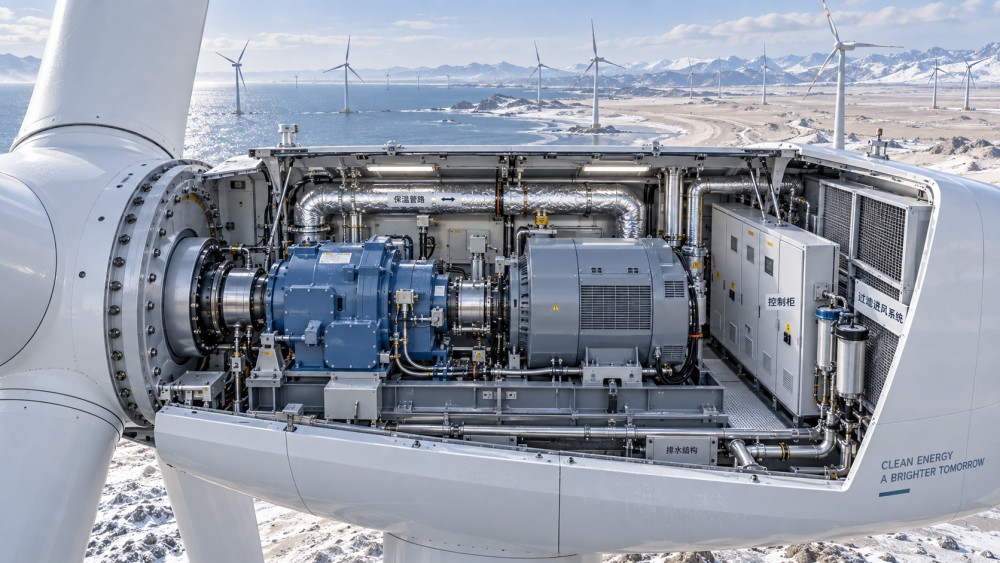
The nacelle houses more than a gearbox and generator. It is the operating environment for the main shaft area, braking equipment, yaw system, generator, transformer or converter arrangement where applicable, control cabinets, sensors, lubrication units, fire detection equipment, and auxiliary power systems. A weak environmental detail at any interface can create recurring faults that are misdiagnosed as isolated component failures.
Review the following points together:
- How incoming air is filtered, directed, monitored, and exhausted.
- How rain, meltwater, condensation, oil, and cleaning water are separated and drained.
- How cable entries, access doors, roof joints, and service hatches maintain their seal during vibration and repeated use.
- Whether bearings, gears, brakes, and yaw components have protection appropriate to moisture, particle, and temperature exposure.
- How cabinet cooling avoids drawing contaminated air directly across sensitive electrical equipment.
- Whether sensor placement remains reliable when dust accumulates or ice forms.
Do not accept a general statement that components are “protected.” The more useful question is what path a contaminant would take from outside the turbine to the component, and what physical barrier, monitoring method, or maintenance action interrupts that path.
Maintenance Accessibility Changes the Value of Every Feature
A nacelle configuration should be judged partly by the service work it creates. Extra filters, heaters, coatings, sealing features, and monitoring devices can be justified when they prevent major faults. They become less effective when access is poor, inspection points are hidden, or replacement parts require long shutdowns.
For remote or weather-limited locations, ask for the maintenance layout rather than relying only on component lists. Confirm access routes to filters, cooling units, grease points, oil sampling locations, electrical cabinets, and drainage points. Consider the space needed for a technician wearing cold-weather or protective equipment. Review whether doors can be opened safely in high winds and whether tools and replacement parts can be handled inside the nacelle without exposing critical systems to rain, salt, or dust.
Condition monitoring is particularly useful when it supports an actionable maintenance decision. Temperature, vibration, humidity, filter differential pressure, lubrication condition, and cabinet alarms can help identify deterioration before it leads to an extended outage. However, monitoring does not replace a robust physical design. A sensor that reports a blocked filter is valuable; a filtration system that clogs too quickly for the site remains a poor fit.
Use a Weighted Evaluation, Not a Generic “Harsh Environment” Label
Suppliers may offer a harsh-environment package, but that label can hide important differences. One package may emphasize corrosion protection, another cold-weather startup, and another dust filtration. Compare the actual design provisions against the site exposure statement and score them according to project consequence.
For example, a coastal site with reliable road access may tolerate a maintenance-intensive filtration arrangement if corrosion protection is strong and servicing can be performed frequently. A remote cold site may need simpler, highly reliable heating and lubrication arrangements because winter access is restricted. A desert location with very fine dust may place the greatest weight on filter serviceability, cooling resilience, and electrical enclosure protection.
The procurement review should request clear responses on component operating conditions, enclosure design, coating and material approach, environmental monitoring, alarm logic, scheduled maintenance tasks, spare-parts needs, and access requirements. This makes competing proposals comparable and reduces the risk that a critical protection feature is assumed rather than included.
A Practical Decision Sequence Before Award
- Describe the site by exposure mechanisms, including combined conditions and seasonal changes.
- Identify the components whose failure would cause the longest outage or the most difficult repair.
- Map each environmental risk to a specific nacelle feature, component rating, design control, or maintenance action.
- Review airflow, water management, and sealing as connected systems.
- Examine service access under realistic weather and personal protective equipment conditions.
- Compare lifecycle maintenance demands alongside initial supply scope.
- Make environmental protections visible in the technical schedule, drawings, and acceptance documentation.
The final selection should be specific enough that there is no uncertainty about what is being supplied. In demanding wind projects, the nacelle is not a passive shell around high-value equipment. Its design determines how effectively the turbine separates sensitive systems from the environment while still allowing heat removal, inspection, repair, and safe operation. That balance is what protects long-term energy production at cold, coastal, and dusty sites.
Questions about market trends? Contact Market Scope Live for deeper business insights.
We respect your privacy. Your information is strictly confidential.
Related News
 Wind Power ComponentsDistributed Wind Energy Systems: How They Work and Where They FitDistributed wind energy systems can power farms, businesses, and communities. Discover how they work, where they fit, and what makes a project viable.MORE+
 Wind Power ComponentsTroubleshooting Nacelle Wind Turbine Parts That Cause Unplanned DowntimeTroubleshoot nacelle wind turbine parts with proven checks for gearbox, generator, yaw, hydraulic, and wiring faults to reduce unplanned downtime.MORE+
 Wind Power ComponentsHow to Evaluate Wind Turbine Blades for Fatigue Life, Erosion, and Site LoadsWind turbine blades: learn how to assess fatigue life, leading-edge erosion, lightning exposure, and site-specific loads to improve reliability, energy yield, and lifecycle decisions.MORE+
 Wind Power ComponentsNacelle of Wind Turbine: Lifecycle Cost Drivers Buyers Should EvaluateNacelle of wind turbine lifecycle costs: evaluate drivetrain design, service access, warranty scope, spares, and availability risks before buying.MORE+
 Wind Power ComponentsSelecting a Nacelle in Wind Turbine Projects for Cold, Coastal, and Dusty SitesNacelle in wind turbine selection guide for cold, coastal, and dusty sites—compare sealing, corrosion control, thermal management, filtration, and maintenance access.MORE+
 Wind Power ComponentsNacelle and Hub Interfaces: Alignment Risks That Can Shorten Turbine LifeNacelle and hub alignment risks can accelerate turbine wear. Learn how precise interface control protects drivetrain life, uptime, and project value.MORE+
 Wind Power ComponentsInside a Wind Turbine Nacelle: Which Components Need the Most Maintenance?Inside nacelle wind turbine systems, discover which components demand the most maintenance—from gearboxes to cooling and controls—and protect uptime with smarter inspections.MORE+
 Wind Power ComponentsNacelle Wind Turbine Parts: An Inspection Checklist for Preventing DowntimeNacelle wind turbine parts inspection checklist: detect early faults in drivetrain, cooling, yaw, brakes, and controls to prevent costly downtime.MORE+
 Wind Power ComponentsWhat Is a Nacelle in a Wind Turbine? The Systems That Control Power GenerationWhat is a nacelle in a wind turbine? Explore the drivetrain, controls, pitch, yaw, cooling, and safety systems that shape power output, reliability, and lifecycle costs.MORE+
 Wind Power ComponentsWhat Is a Nacelle on a Wind Turbine? Safe Access Rules for Field OperatorsWhat is a nacelle on a wind turbine? Explore its vital systems, key hazards, and safe access rules that help field operators protect people and turbine uptime.MORE+
 Wind Power ComponentsWhat Is Nacelle in Wind Turbine Design and Why Does It Affect Energy Output?What is nacelle in wind turbine design? Discover how this vital housing supports alignment, cooling, controls, and reliable energy output.MORE+
 Wind Power ComponentsThe Nacelle of a Wind Turbine Explained: Functions, Layout, and Key SystemsNacelle of a wind turbine explained: explore its drivetrain, yaw, pitch, cooling, electrical, and control systems—and see how nacelle design impacts reliability, maintenance, and energy output.MORE+
 Wind Power ComponentsWind Turbine Hub and Nacelle: How Loads Travel from Blades to DrivetrainWind turbine hub and nacelle: discover how blade loads flow through bearings, shafts, gearboxes, and supports to improve drivetrain reliability and maintenance decisions.MORE+
 Wind Power ComponentsInside a Wind Turbine Nacelle: How Drivetrain Layout Affects Maintenance AccessExplore how drivetrain layout inside the nacelle of wind turbine shapes maintenance access, lifting routes, safety, and lifecycle service costs.MORE+
 Wind Power ComponentsWhat is shaping the wind turbine nacelle market today?Wind turbine nacelle market trends: explore turbine scaling, drivetrain choices, reliability, grid compliance, localization, and offshore supply risks shaping smarter investment decisions.MORE+
 Wind Power ComponentsHow to inspect a wind turbine nacelle before commissioningWind turbine nacelle inspection guide: verify mechanical, electrical, safety, fire-protection, and documentation readiness before commissioning.MORE+
 Wind Power ComponentsWhich nacelle of wind turbine design suits offshore projects?Nacelle of wind turbine design for offshore projects: explore drivetrain options, marine protection, maintenance access, and vessel logistics for reliable performance.MORE+
 Wind Power ComponentsWhat should operators check when a wind turbine nacelle overheats?Nacelle wind turbine overheating? Learn the essential checks for cooling, gearbox, generator, and electrical systems to prevent failures and protect uptime.MORE+
 Wind Power ComponentsHow does nacelle cooling protect wind energy turbines?Wind energy nacelle cooling protects turbines from overheating, derating, and costly failures. Discover practical maintenance insights to improve reliability and power availability.MORE+
 Wind Power ComponentsWhat drives wind power nacelle maintenance costs over time?Wind power nacelle maintenance costs evolve with age, failures, access, parts, and downtime. Discover key risks and smarter lifecycle cost controls.MORE+
 Wind Power ComponentsHow does turbine nacelle weight affect foundation design?Turbine nacelle weight affects foundation loads, dynamics, fatigue, soil response, and crane planning. Discover key design factors for reliable wind projects.MORE+
 Wind Power ComponentsWhich nacelle components affect wind turbine reliability most?Nacelle components wind turbine reliability depends on drivetrain, generator, bearings, yaw, cooling, and controls. Explore high-impact risks and smarter maintenance priorities.MORE+
 Wind Power ComponentsHow are the nacelle and hub different in a wind turbine?Nacelle and hub: discover how these vital wind turbine components differ, from blade control and power conversion to maintenance, reliability, and project performance.MORE+
 Wind Power ComponentsWhat does a nacelle in a wind turbine actually do?Discover what a nacelle in wind turbine does, from power conversion and controls to maintenance, reliability, and wind farm economics. Read the full guide.MORE+
 Wind Power ComponentsHow Grid-Connected Wind Energy Systems Work in Utility and Commercial ProjectsGrid connected wind energy systems explained for utility and commercial projects—learn how turbines, substations, controls, and grid compliance shape reliable, bankable performance.MORE+
 Wind Power ComponentsWhat Does a Wind Turbine Nacelle Include and Why Does It Matter in Turbine Design?Wind turbine nacelles include the drivetrain, generator, controls, cooling, and service systems. Learn why nacelle design directly impacts reliability, maintenance cost, and turbine performance.MORE+
 Wind Power ComponentsHow to Evaluate Wind Turbine Gearboxes for Reliability, Load Capacity, and Service LifeWind turbine gearboxes evaluation starts with real duty profiles. Learn how to assess reliability, load capacity, lubrication, and service life for smarter supplier decisions.MORE+
 Wind Power ComponentsHow to Evaluate a Wind Turbine Gearboxes Manufacturer for Quality, Lead Time, and OEM FitWind turbine gearboxes manufacturer selection made simple: learn how to assess quality, lead time, OEM fit, warranty, and total cost to reduce project risk and improve uptime.MORE+
 Wind Power ComponentsHow to Choose a Wind Turbine Gearboxes Supplier for Reliability and Service SupportWind turbine gearboxes supplier selection affects uptime, lifecycle cost, and project risk. Learn how to compare reliability, service support, and delivery strength.MORE+
 Wind Power ComponentsWind Turbine Blades Explained: Materials, Blade Length, and Performance Trade-OffsWind turbine blades explained: compare materials, blade length, and performance trade-offs to improve energy yield, durability, and project ROI in modern wind power.MORE+
 Wind Power ComponentsIndustrial Gearboxes Selection Guide: Torque, Ratio, Duty Cycle, and Mounting BasicsGearboxes selection made practical: learn how torque, ratio, duty cycle, and mounting affect reliability, efficiency, and lifecycle cost in industrial applications.MORE+


