How to Evaluate Wind Turbine Blades for Fatigue Life, Erosion, and Site Loads
How to Evaluate Wind Turbine Blades for Fatigue Life, Erosion, and Site Loads
Evaluating wind turbine blades is not a matter of checking blade length, rated turbine capacity, and a supplier’s general performance statement. A blade can be structurally sound on paper yet poorly suited to the turbulence, rainfall, temperature range, transport constraints, or operating strategy of a particular site. For technical assessors, the real question is whether the blade-turbine combination can retain acceptable reliability and energy production across its intended operating life.
That requires looking beyond visible blade condition and nameplate ratings. Fatigue accumulation, leading-edge erosion, lightning exposure, manufacturing consistency, aerodynamic sensitivity, and site-specific loads all interact. A small defect near the root may have very different consequences from coating loss near the outer third of the blade. Likewise, a design intended for a moderate inland wind regime should not automatically be assumed suitable for a highly turbulent ridge, a tropical coastal site, or a cold region with recurrent icing.
For developers, EPC teams, owners, lenders’ technical advisers, and procurement groups, the best blade selection process connects engineering evidence with practical asset-management reality. It should answer not only “Will this blade work?” but also “What will it require from inspection, repair access, spares planning, controls, and warranty management over time?”
Start With the Actual Load Environment, Not the Turbine Brochure
Every blade evaluation should begin with the site load environment. Wind resource studies often focus on mean wind speed and expected annual energy production, but blade loading depends on much more than the average. Turbulence intensity, wind shear, inflow angle, extreme gusts, wind direction variability, terrain complexity, wake exposure, and turbine control behavior can all increase cyclic loading.
A turbine operating in smooth, relatively uniform flow may experience a very different fatigue spectrum from the same model installed behind a steep escarpment or within a tightly spaced wind plant. Complex terrain can produce directional turbulence and rapid inflow changes. In wake-affected positions, blades repeatedly encounter disturbed air as they rotate through the rotor plane. Those conditions do not merely reduce energy yield; they can materially change the number and severity of load cycles seen by the blade, hub, pitch system, drivetrain, and tower.
Technical assessors should therefore request the turbine’s applicable design class and confirm how the proposed site has been assessed against that envelope. IEC 61400-1 is commonly used as a reference framework for wind turbine design requirements, but the relevant edition, project assumptions, and certification scope must be checked rather than inferred. A class designation alone is not a complete site-suitability assessment.
Questions worth putting directly to the turbine supplier include:
- Which site inputs were used in the load assessment, including turbulence, wind shear, air density, and extreme wind conditions?
- Are there limitations related to terrain complexity, wake losses, altitude, temperature, or atmospheric conditions?
- Has the specific turbine-blade configuration been assessed for the intended hub height and operating mode?
- Do planned curtailment rules, grid events, or noise-reduction modes alter fatigue loading or maintenance requirements?
- Are there approved mitigation measures if measured site conditions later exceed design assumptions?
This is an area where seemingly minor assumptions matter. A blade may be identical in geometry across multiple turbine variants, while pitch-control settings, rotor speed limits, software revisions, or hub-height changes alter its load history. Procurement documents should define the evaluated configuration clearly enough that no one is left comparing a generic blade concept with a site-specific operating asset.
Fatigue Life: Look for Evidence of Load Transfer and Damage Tolerance
Wind turbine blades are composite structures exposed to millions of variable-amplitude cycles. They bend flapwise under aerodynamic loading, edgewise under gravity and torque-related effects, and twist under combined loading. Fatigue damage does not always appear as an obvious surface crack. It may begin as bond-line separation, laminate cracking, adhesive degradation, core damage, spar-cap defects, or damage around inserts and root connections.
A credible fatigue-life review should examine the blade architecture, not just a declaration that the blade has passed testing. Assessors should understand where the primary load paths run, how spar caps are designed, how shear webs are bonded, how the root section transfers loads into the hub, and how the manufacturer controls variation in materials and curing. The aim is not to recreate the manufacturer’s design process; it is to identify whether the available evidence is proportionate to the project risk.
Blade test documentation can be valuable, especially full-scale static and fatigue testing, but it needs context. A test supports confidence in a specified design and manufacturing configuration. It does not automatically cover later changes in resin systems, fabrics, adhesive suppliers, lightning protection components, aerodynamic add-ons, or repair methods. If the blade design has evolved, ask what changed, why it changed, and whether the change was incorporated into the relevant validation and quality-control process.
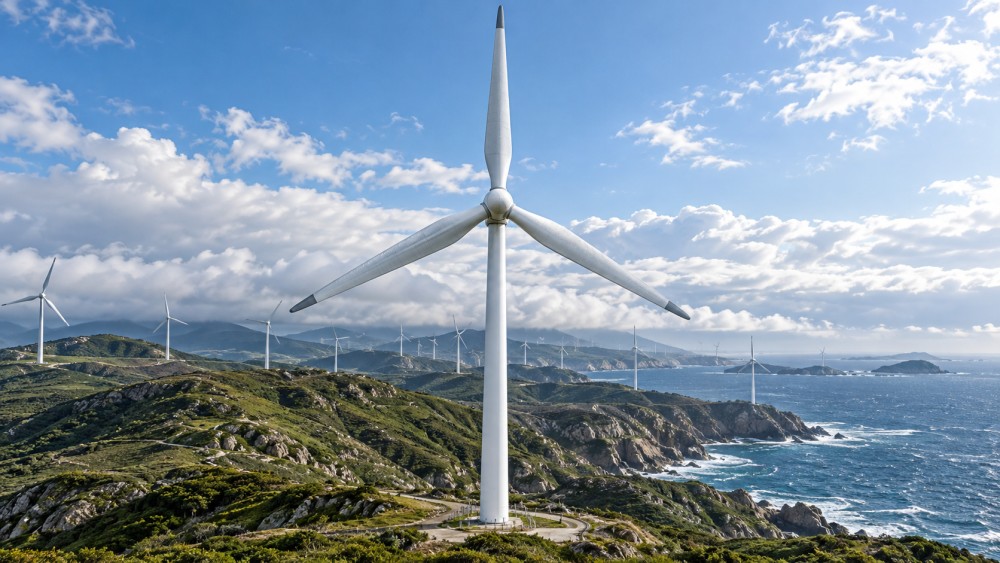
During factory due diligence or quality review, several details deserve close attention: traceability of composite materials; adhesive batch control; mold and cure-process records; non-destructive inspection practices; dimensional checks; root insert installation; and treatment of non-conformances. Long blades are particularly sensitive to manufacturing consistency because small deviations in mass, stiffness, or geometry can affect rotor balance and aerodynamic behavior. A supplier does not need to disclose every proprietary detail, but it should be able to demonstrate a disciplined method for controlling critical characteristics.
It is also worth separating structural fatigue life from operational availability. A blade may have adequate structural margins but still impose repeated inspection or repair burden if known weak points develop early-stage defects. From an owner’s perspective, that distinction affects crane planning, rope-access requirements, seasonal repair windows, and lost generation during outages.
Leading-Edge Erosion Is an Energy-Yield Issue Before It Becomes a Structural Issue
Leading-edge erosion is often treated as a cosmetic maintenance matter until it becomes expensive. In reality, erosion can change the airfoil surface at the portion of the blade where tip speeds are highest. Rain, hail, airborne sand, salt-laden moisture, and particulate matter gradually damage coatings and protective systems. Once the surface becomes rough, pitted, cracked, or locally delaminated, aerodynamic efficiency may deteriorate. The result can be reduced energy capture, altered noise behavior, and a growing repair scope.
The risk is highly site dependent. A dry inland project may face abrasive dust and sand. Offshore and coastal assets may contend with rain, salt, humidity, and difficult repair access. In colder climates, erosion may be compounded by ice-related events and repeated thermal cycling. It is not enough to ask whether a blade has a leading-edge protection system. The relevant question is whether the material, application method, thickness, adhesion performance, repair procedure, and inspection interval are appropriate for the exposure profile.
When comparing wind turbine blades, assessors should request a clear definition of the protection system: whether it is a factory-applied coating, tape, shell, or another solution; which blade zones it covers; how joints and transitions are managed; and what conditions can invalidate or limit the warranty. A repairable system may be attractive where erosion is expected, but field repair quality can vary sharply with temperature, moisture, surface preparation, and technician skill. A technically repairable coating is not necessarily easy to restore from a suspended platform in high humidity or a short weather window.
Inspection planning should be specified early. Drone imagery is useful for screening, but it may not reliably reveal shallow cracking, bond loss, or subtle surface deterioration. Close visual inspection, tactile checks where safe, and targeted non-destructive methods may be needed when images suggest a developing issue. The inspection method should match the decision being made: annual condition trending is different from accepting a blade after transport damage or deciding whether a repair can wait until the next low-wind season.
Evaluate Erosion, Lightning, and Transport as Connected Risks
Blades do not arrive at site in their final condition by default. Transport and installation can introduce edge damage, coating abrasion, local laminate damage, or root-area issues that later complicate warranty discussions. The acceptance process should document blade condition at factory release, delivery, storage, lifting, and installation. Photographic records alone are helpful but may be insufficient if there is no agreed damage classification and repair authorization process.
Lightning protection requires the same practical mindset. Blade lightning protection systems typically involve receptors, conductive paths, and grounding interfaces, but effectiveness depends on continuity, installation quality, inspection, and the local lightning environment. A lightning-related repair can be difficult to diagnose if post-event inspection is limited to the exterior surface. Procurement teams should clarify what event records are available from the turbine control system, what inspections are recommended after a suspected strike, and how hidden internal damage will be evaluated.
There is a tendency to evaluate each risk separately: erosion belongs to maintenance, lightning belongs to electrical scope, and transport belongs to logistics. That split is convenient administratively, but it can conceal interfaces. A damaged protective layer can permit moisture ingress; a poorly executed repair can become a local aerodynamic or structural concern; an undocumented transport defect can later be mistaken for in-service degradation.
Use the Right Evidence at Each Procurement Stage
At the early selection stage, the goal is to screen out obvious mismatches. Confirm the blade length, rotor diameter, turbine class, operational temperature range, site assumptions, erosion provisions, lightning design approach, and available certification or design documentation. This is also the point to identify unusual conditions: high rainfall, dust corridors, typhoon exposure, icing, marine access limits, constrained transport routes, or expected wake intensity.
During contract negotiation, convert broad technical claims into deliverable evidence. Define required documents, manufacturing change notification, inspection rights, acceptance criteria, repair approval authority, spare blade availability, and warranty exclusions. If the site is difficult to access, response time and repair logistics may be as commercially important as the initial blade price. A low-cost option can become costly if a single blade replacement requires a rare crane, a vessel campaign, or a prolonged shutdown.
After commissioning, the evaluation should continue through operational data and inspection findings. Repeated high-load alarms, unusual vibration patterns, pitch-system behavior, blade imbalance, recurring leading-edge repairs, or directional performance anomalies may point to issues that warrant deeper review. No single signal proves blade damage, but trends are more useful when engineering, operations, and maintenance teams compare them rather than working from separate records.
Avoid the Cheapest-Component View of Blade Selection
The most common evaluation mistake is treating the blade as an interchangeable component once it fits the nominated turbine. Blades influence output, loads, turbine availability, repair exposure, transport complexity, and long-term project risk. A technically strong assessment balances structural evidence with realistic maintenance conditions and verifies whether site assumptions are still valid as the project develops.
This broader view is increasingly relevant as wind projects interact with grid constraints, storage dispatch, hybrid renewable plants, and more demanding availability commitments. Global EcoPower & Energy Matrix Intelligence Network (EPEM) approaches renewable asset decisions in that wider system context: equipment performance is linked to project execution, grid behavior, operating strategy, and lifecycle economics. For blade selection, the useful outcome is not a generic “best” design. It is a documented choice that matches a defined wind regime, damage environment, service model, and risk allocation.
Before approving a final configuration, ask one practical question: if this blade develops erosion or a fatigue-related indication several years into operation, does the project have a clear path to detect it, determine its severity, authorize repair, obtain materials, access the turbine, and return it to service? If the answer is vague, the technical evaluation is not yet complete.
Questions about market trends? Contact Market Scope Live for deeper business insights.
We respect your privacy. Your information is strictly confidential.
Related News
 Wind Power ComponentsDistributed Wind Energy Systems: How They Work and Where They FitDistributed wind energy systems can power farms, businesses, and communities. Discover how they work, where they fit, and what makes a project viable.MORE+
 Wind Power ComponentsTroubleshooting Nacelle Wind Turbine Parts That Cause Unplanned DowntimeTroubleshoot nacelle wind turbine parts with proven checks for gearbox, generator, yaw, hydraulic, and wiring faults to reduce unplanned downtime.MORE+
 Wind Power ComponentsHow to Evaluate Wind Turbine Blades for Fatigue Life, Erosion, and Site LoadsWind turbine blades: learn how to assess fatigue life, leading-edge erosion, lightning exposure, and site-specific loads to improve reliability, energy yield, and lifecycle decisions.MORE+
 Wind Power ComponentsNacelle of Wind Turbine: Lifecycle Cost Drivers Buyers Should EvaluateNacelle of wind turbine lifecycle costs: evaluate drivetrain design, service access, warranty scope, spares, and availability risks before buying.MORE+
 Wind Power ComponentsSelecting a Nacelle in Wind Turbine Projects for Cold, Coastal, and Dusty SitesNacelle in wind turbine selection guide for cold, coastal, and dusty sites—compare sealing, corrosion control, thermal management, filtration, and maintenance access.MORE+
 Wind Power ComponentsNacelle and Hub Interfaces: Alignment Risks That Can Shorten Turbine LifeNacelle and hub alignment risks can accelerate turbine wear. Learn how precise interface control protects drivetrain life, uptime, and project value.MORE+
 Wind Power ComponentsInside a Wind Turbine Nacelle: Which Components Need the Most Maintenance?Inside nacelle wind turbine systems, discover which components demand the most maintenance—from gearboxes to cooling and controls—and protect uptime with smarter inspections.MORE+
 Wind Power ComponentsNacelle Wind Turbine Parts: An Inspection Checklist for Preventing DowntimeNacelle wind turbine parts inspection checklist: detect early faults in drivetrain, cooling, yaw, brakes, and controls to prevent costly downtime.MORE+
 Wind Power ComponentsWhat Is a Nacelle in a Wind Turbine? The Systems That Control Power GenerationWhat is a nacelle in a wind turbine? Explore the drivetrain, controls, pitch, yaw, cooling, and safety systems that shape power output, reliability, and lifecycle costs.MORE+
 Wind Power ComponentsWhat Is a Nacelle on a Wind Turbine? Safe Access Rules for Field OperatorsWhat is a nacelle on a wind turbine? Explore its vital systems, key hazards, and safe access rules that help field operators protect people and turbine uptime.MORE+
 Wind Power ComponentsWhat Is Nacelle in Wind Turbine Design and Why Does It Affect Energy Output?What is nacelle in wind turbine design? Discover how this vital housing supports alignment, cooling, controls, and reliable energy output.MORE+
 Wind Power ComponentsThe Nacelle of a Wind Turbine Explained: Functions, Layout, and Key SystemsNacelle of a wind turbine explained: explore its drivetrain, yaw, pitch, cooling, electrical, and control systems—and see how nacelle design impacts reliability, maintenance, and energy output.MORE+
 Wind Power ComponentsWind Turbine Hub and Nacelle: How Loads Travel from Blades to DrivetrainWind turbine hub and nacelle: discover how blade loads flow through bearings, shafts, gearboxes, and supports to improve drivetrain reliability and maintenance decisions.MORE+
 Wind Power ComponentsInside a Wind Turbine Nacelle: How Drivetrain Layout Affects Maintenance AccessExplore how drivetrain layout inside the nacelle of wind turbine shapes maintenance access, lifting routes, safety, and lifecycle service costs.MORE+
 Wind Power ComponentsWhat is shaping the wind turbine nacelle market today?Wind turbine nacelle market trends: explore turbine scaling, drivetrain choices, reliability, grid compliance, localization, and offshore supply risks shaping smarter investment decisions.MORE+
 Wind Power ComponentsHow to inspect a wind turbine nacelle before commissioningWind turbine nacelle inspection guide: verify mechanical, electrical, safety, fire-protection, and documentation readiness before commissioning.MORE+
 Wind Power ComponentsWhich nacelle of wind turbine design suits offshore projects?Nacelle of wind turbine design for offshore projects: explore drivetrain options, marine protection, maintenance access, and vessel logistics for reliable performance.MORE+
 Wind Power ComponentsWhat should operators check when a wind turbine nacelle overheats?Nacelle wind turbine overheating? Learn the essential checks for cooling, gearbox, generator, and electrical systems to prevent failures and protect uptime.MORE+
 Wind Power ComponentsHow does nacelle cooling protect wind energy turbines?Wind energy nacelle cooling protects turbines from overheating, derating, and costly failures. Discover practical maintenance insights to improve reliability and power availability.MORE+
 Wind Power ComponentsWhat drives wind power nacelle maintenance costs over time?Wind power nacelle maintenance costs evolve with age, failures, access, parts, and downtime. Discover key risks and smarter lifecycle cost controls.MORE+
 Wind Power ComponentsHow does turbine nacelle weight affect foundation design?Turbine nacelle weight affects foundation loads, dynamics, fatigue, soil response, and crane planning. Discover key design factors for reliable wind projects.MORE+
 Wind Power ComponentsWhich nacelle components affect wind turbine reliability most?Nacelle components wind turbine reliability depends on drivetrain, generator, bearings, yaw, cooling, and controls. Explore high-impact risks and smarter maintenance priorities.MORE+
 Wind Power ComponentsHow are the nacelle and hub different in a wind turbine?Nacelle and hub: discover how these vital wind turbine components differ, from blade control and power conversion to maintenance, reliability, and project performance.MORE+
 Wind Power ComponentsWhat does a nacelle in a wind turbine actually do?Discover what a nacelle in wind turbine does, from power conversion and controls to maintenance, reliability, and wind farm economics. Read the full guide.MORE+
 Wind Power ComponentsHow Grid-Connected Wind Energy Systems Work in Utility and Commercial ProjectsGrid connected wind energy systems explained for utility and commercial projects—learn how turbines, substations, controls, and grid compliance shape reliable, bankable performance.MORE+
 Wind Power ComponentsWhat Does a Wind Turbine Nacelle Include and Why Does It Matter in Turbine Design?Wind turbine nacelles include the drivetrain, generator, controls, cooling, and service systems. Learn why nacelle design directly impacts reliability, maintenance cost, and turbine performance.MORE+
 Wind Power ComponentsHow to Evaluate Wind Turbine Gearboxes for Reliability, Load Capacity, and Service LifeWind turbine gearboxes evaluation starts with real duty profiles. Learn how to assess reliability, load capacity, lubrication, and service life for smarter supplier decisions.MORE+
 Wind Power ComponentsHow to Evaluate a Wind Turbine Gearboxes Manufacturer for Quality, Lead Time, and OEM FitWind turbine gearboxes manufacturer selection made simple: learn how to assess quality, lead time, OEM fit, warranty, and total cost to reduce project risk and improve uptime.MORE+
 Wind Power ComponentsHow to Choose a Wind Turbine Gearboxes Supplier for Reliability and Service SupportWind turbine gearboxes supplier selection affects uptime, lifecycle cost, and project risk. Learn how to compare reliability, service support, and delivery strength.MORE+
 Wind Power ComponentsWind Turbine Blades Explained: Materials, Blade Length, and Performance Trade-OffsWind turbine blades explained: compare materials, blade length, and performance trade-offs to improve energy yield, durability, and project ROI in modern wind power.MORE+
 Wind Power ComponentsIndustrial Gearboxes Selection Guide: Torque, Ratio, Duty Cycle, and Mounting BasicsGearboxes selection made practical: learn how torque, ratio, duty cycle, and mounting affect reliability, efficiency, and lifecycle cost in industrial applications.MORE+