Which Solar Inverter Certifications Are Mandatory in North America?
The short answer: mandatory approval is local, but the baseline is clear
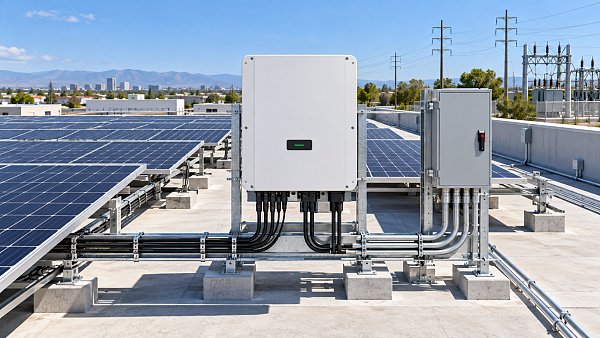
For a solar inverter to be installed and interconnected in North America, it generally needs more than a manufacturer declaration of compliance. In the United States, the practical baseline is a Nationally Recognized Testing Laboratory (NRTL) listing, most commonly to UL 1741, together with evidence that the inverter meets the grid-interconnection functions required by the serving utility. In Canada, the comparable requirement is normally certification by an accredited body to the applicable CSA standard, most often CSA C22.2 No. 107.1.
Those labels are not merely procurement preferences. Electrical inspectors, authorities having jurisdiction (AHJs), utilities, lenders, and insurers may each rely on them before allowing a system to be energized. An inverter can be technically capable, competitively priced, and widely used elsewhere, yet still be unusable on a North American project if its exact model, rating, firmware configuration, or product category lacks the required listing and utility acceptance.
The important qualification is that North America does not have one universal solar inverter certificate. The applicable set depends on whether the project is in the United States or Canada, whether it is grid-tied, off-grid, hybrid, or paired with storage, and which utility and local electrical code apply. Procurement teams should therefore treat certification as a project-entry requirement, not a specification item to be checked after equipment selection.
United States: UL listing is the usual starting point
For most grid-connected photovoltaic systems in the United States, an inverter must be listed by an OSHA-recognized NRTL. UL 1741, formally covering inverters, converters, controllers, and interconnection system equipment for use with distributed energy resources, is the principal product-safety standard associated with solar inverters.
In practice, the inverter nameplate, product documentation, and certification record should identify the listing body and the standard edition or certification scope. UL Solutions is the best-known testing organization, but “UL listed” is often used loosely in the market. The relevant point is not that a document mentions UL; it is that the exact product is listed by a recognized certification organization for the intended application. Other qualified NRTLs can issue equivalent listings.
UL 1741 addresses hazards such as electric shock, fire, abnormal operation, isolation, and construction safety. It supports installation under the National Electrical Code (NEC), which is adopted and enforced through state and local rules rather than as one federal permit regime. Because an AHJ normally expects listed equipment, a non-listed inverter may trigger a costly field evaluation, project delay, or outright rejection.
For many standard rooftop and commercial grid-tied projects, a valid UL 1741 listing is the first document an EPC contractor should request. It is still not the final answer for interconnection.
Grid support and IEEE 1547 compliance have become part of market access
A solar inverter connected to the public grid must do more than convert DC to AC safely. It must respond predictably when voltage, frequency, or grid conditions move outside normal operating limits. That requirement is governed in the United States largely through IEEE 1547, the interconnection standard for distributed energy resources.
IEEE 1547 is a grid-interconnection standard, not itself a product listing mark. It sets requirements for functions including voltage and frequency ride-through, anti-islanding behavior, reactive power capability, voltage regulation, communications, and responses to abnormal grid conditions. The associated test standard, IEEE 1547.1, defines how compliance is evaluated.
For inverter buyers, the practical implication is that a generic UL 1741 certificate may not be enough. Modern interconnection programs often expect testing under UL 1741 Supplement B (UL 1741 SB), which is used to evaluate advanced inverter functions aligned with IEEE 1547-2018. Older references to UL 1741 SA may still appear in product literature and utility documentation, particularly where earlier state requirements shaped the market, but that does not establish acceptance for a new application.
Utility rules can be more specific than the national framework. They may prescribe:
- Required voltage and frequency trip or ride-through settings;
- Volt-VAR, frequency-watt, watt-VAR, or fixed power-factor functions;
- Communications protocols, cybersecurity settings, or remote-control capability;
- Export limiting and power-control behavior;
- Approved firmware versions and commissioning records;
- Appearance on a utility-approved inverter list.
California provides a well-known example because Rule 21 has driven detailed smart-inverter requirements. However, the broader lesson applies across the country: IEEE 1547 alignment does not automatically mean that every utility will accept every configuration. Utilities often publish their own interconnection handbooks, approved-equipment lists, and application forms. A model accepted in one service territory may need a different firmware profile, additional documentation, or a separate approval in another.
Canada: certification must align with Canadian electrical approval
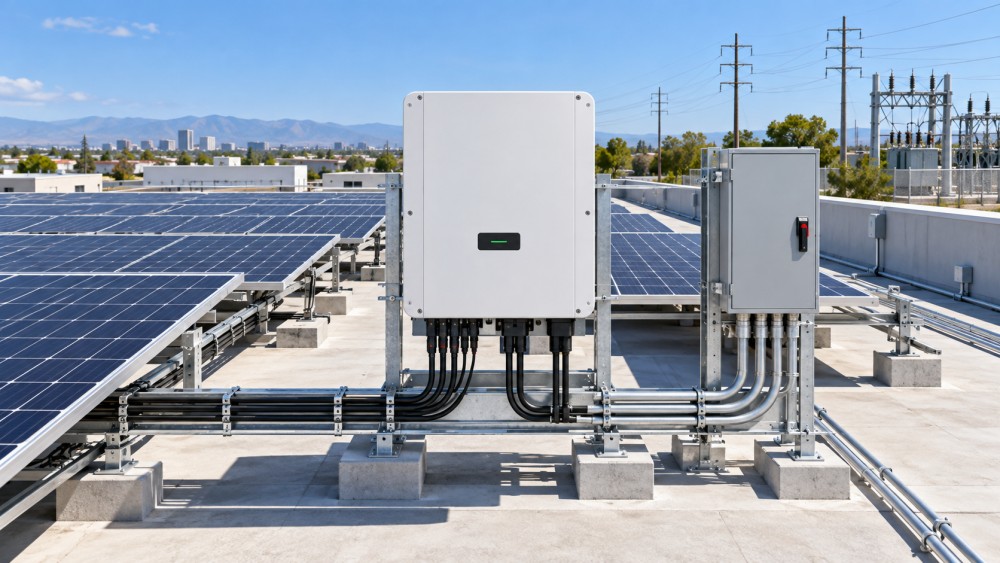
Canadian projects operate under a different certification pathway. For grid-connected photovoltaic inverters, CSA C22.2 No. 107.1 is commonly the core Canadian standard for power conversion equipment. Provincial and territorial electrical authorities generally require equipment to carry an approval mark from a certification body accredited for Canadian electrical product certification.
CSA Group is a familiar mark, but it is not the only possible certification body. The central procurement question is whether the product bears a valid Canadian certification mark and has been certified to the applicable Canadian requirements. An inverter listed only for the United States should not be assumed acceptable in Canada, even if its electrical architecture is identical.
Many manufacturers offer products carrying combined US and Canadian markings, often shown as cULus, CSA, ETL, or another recognized mark with a defined certification scope. That can simplify cross-border product planning, but the buyer should confirm the actual listing rather than relying on a brochure image or a family-level claim. Certification can differ by model number, AC voltage, enclosure type, power rating, integrated disconnect arrangement, and optional battery interface.
Canadian utilities also impose interconnection requirements. They may reference CSA requirements, IEEE 1547 principles, provincial rules, or utility-specific protection and operating settings. A Canadian approval mark establishes electrical acceptability; it does not remove the need to satisfy the local utility’s connection process.
What is mandatory, and what is often confused with mandatory
Confusion arises because several standards affect an inverter project at the same time. Some apply directly to the inverter as a certified product, while others govern the overall installation, the interconnection agreement, or a specific system feature.
The NEC and the Canadian Electrical Code are especially important, but they are not inverter certificates. They govern how the approved inverter is deployed. For example, DC and AC disconnecting means, conductor sizing, grounding, overcurrent protection, labeling, access, and emergency shutdown arrangements may affect permit approval even when the inverter itself is properly listed.
Rapid shutdown is another area where terminology can mislead buyers. Certain US rooftop PV installations must comply with NEC rapid-shutdown provisions. The inverter may support a compliant architecture, but compliance often depends on the combination of inverter, module-level devices, conductors, equipment layout, and the applicable code edition. A statement that an inverter is “rapid shutdown ready” is not proof that every proposed system design will pass inspection.
Similarly, hybrid inverters and energy-storage systems may introduce additional requirements. Where the inverter is part of an integrated energy-storage product, certification may need to address the complete storage system, batteries, and associated safety controls. UL 9540 is widely relevant to energy storage systems, while other standards can apply to batteries and fire-safety evaluation. A solar-only inverter listing does not automatically cover a bundled battery system, backup-power panel, or islanding microgrid configuration.
Three checks that prevent late-stage certification problems
First, verify the exact model rather than the product series. Certificate scope matters. A manufacturer may list a 208 V commercial version while the proposed project uses a 480 V unit, or certify one enclosure variant while the tendered configuration includes an accessory that changes the product category. Obtain the listing record, model number, ratings, and applicable standards before issuing a purchase order.
Second, ask the utility what it recognizes before locking the design. The interconnection application should identify the inverter model, operating mode, export-control approach, and any grid-support settings. This is particularly important for large commercial systems, community solar, agricultural loads, projects with transformer limitations, and sites using battery storage or backup generation.
Third, control the firmware and commissioning path. Advanced functions can depend on software settings. A product that was tested for a required profile can still create an approval issue if the delivered firmware cannot be configured to the utility’s requirements, if settings are password-protected without a clear process, or if field changes are not documented. EPC teams should make certification documentation, firmware revision, settings files, and commissioning responsibility part of the technical submittal package.
A practical way to read certification claims in tender documents
When a supplier states that an inverter is “North America certified,” treat that as the beginning of diligence. Ask for the certificate or public listing entry, the applicable standards, the certification body, the exact part number, and the intended country of installation. Then compare that evidence with the AHJ’s code requirements and the utility’s interconnection rules.
For US projects, the minimum working question is usually: Is this exact inverter NRTL listed to UL 1741, and does its tested configuration satisfy the serving utility’s IEEE 1547-based requirements? For Canadian projects: Does this exact unit carry a valid Canadian approval to the applicable CSA requirements, and has the local utility accepted its interconnection capability?
That approach avoids two expensive assumptions: that a safety listing automatically secures grid approval, and that a globally certified inverter is automatically eligible for North American installation. The mandatory certifications are foundational, but successful market access depends on the combined fit among the certified product, local electrical code, utility rules, and the final system design.
Questions about market trends? Contact Market Scope Live for deeper business insights.
We respect your privacy. Your information is strictly confidential.
Related News
 Solar PV SystemsSolar Mounting Structures Pricing: What Drives Costs for PV Projects?Solar mounting structures pricing depends on design, materials and site conditions. Learn how to compare bids, uncover hidden costs and make smarter PV project decisions.MORE+
 Solar PV SystemsIndustrial Parks in Vietnam: Comparing Locations, Costs and InfrastructureCompare industrial parks in Vietnam by location, costs, logistics and power infrastructure. Discover how to shortlist the right site for your business.MORE+
 Solar PV SystemsFloating Solar Systems: How to Assess Reservoir SuitabilityFloating solar systems need the right reservoir. Discover how to assess water levels, grid access, environmental risks, and costs before investing.MORE+
 Solar PV SystemsSmart Solar Tracking Systems: How to Evaluate Energy Gains and Site SuitabilityExplore how smart solar tracking systems can boost energy yield. Compare site suitability, lifecycle costs, and fixed-tilt alternatives to make a confident investment decision.MORE+
 Solar PV SystemsFloating Solar Projects on Industrial Ponds: How to Assess Site SuitabilityAssess floating solar projects on industrial ponds with a practical guide to water levels, mooring, electrical connections, and site risks.MORE+
 Solar PV SystemsTurkey Allocates 785 MW of Grid Capacity in YEKA Solar TenderTurkey's YEKA solar tender allocates 785 MW of grid capacity across 11 sites. Explore what the results could mean for developers and suppliers.MORE+
 Solar PV SystemsChoosing String Inverters for Solar PV: Sizing, MPPT and ShadingChoose string inverters with confidence. Compare DC-to-AC sizing, MPPT allocation and shading impacts to improve solar PV performance.MORE+
 Solar PV SystemsChoosing Solar Racking Systems for Rooftops: Roof Type and Load FactorsChoosing solar racking systems for rooftops? Compare roof types, load factors and mounting options to plan a safer, more reliable installation.MORE+
 Solar PV SystemsSolar Tracking System Pricing: What to Include in a Project BudgetUnderstand solar tracking systems pricing and build a reliable project budget. Compare supplier quotes, uncover hidden costs, and assess long-term value.MORE+
 Solar PV SystemsChina Adds 110.83 GW of Solar in First Nine Months of 2026, Down 53.9%China solar additions reportedly fell 53.9% to 110.83 GW in January–September 2026. Explore pricing reform impacts and practical insights for project planning and procurement.MORE+
 Solar PV SystemsHow to Vet Solar Equipment Manufacturers: Quality, Warranties, and Lead TimesSearching “renewable equipment manufacturers solar”? Learn how to verify quality, compare warranties, and validate lead times to shortlist reliable suppliers and reduce project risk.MORE+
 Solar PV SystemsCommercial Rooftop Solar in India: How to Calculate Costs and PaybackCommercial rooftop solar India guide: calculate installation costs, estimate realistic savings and payback, and compare EPC quotes to make a smarter business investment.MORE+
 Solar PV SystemsSolar EPC Contractor Pricing: How to Compare Quotes and Spot ExclusionsCompare solar EPC contractor pricing with confidence. Learn how to spot exclusions, assess allowances, and uncover hidden costs before choosing the right quote for your project.MORE+
 Solar PV SystemsHow to Assess Site and Grid Feasibility for Solar Power Generation ProjectsAssess solar power generation projects with practical guidance on site suitability, grid capacity, connection costs, and curtailment risks. Make smarter investment decisions before committing capital.MORE+
 Solar PV SystemsPepco Approves ConnectDER Meter Adapters for Solar, Storage and EV Charging in D.C.Pepco approves ConnectDER meter adapters in D.C. for solar, storage and EV charging. Discover how meter-level connections could simplify installation and reduce costs.MORE+
 Solar PV SystemsTOPCon Photovoltaic Modules: Selection Criteria for High-Temperature Utility ProjectsTOPCon photovoltaic modules for hot-climate utility projects: compare temperature performance, bifacial yield, reliability, and electrical compatibility for stronger lifetime returns.MORE+
 Solar PV SystemsHow to Verify PV Module Supplier Capability Before Utility-Scale ProcurementVerify PV module supplier capability before utility-scale procurement with a practical checklist for factory audits, certifications, traceability, capacity, warranties, and risk control.MORE+
 Solar PV SystemsHow to Size Solar Power Generation Systems for Commercial Sites and Peak LoadsSolar power generation systems for commercial sites: learn to size PV for load profiles, peak demand, grid limits, storage, and future growth.MORE+
 Solar PV SystemsSolar Farm Construction: How to Plan Site, Grid Access, and Build RiskSolar farm construction insights for smarter site planning, grid access, procurement, and build-risk control—helping projects reach energization with confidence.MORE+
 Solar PV SystemsWhich Solar Inverter Certifications Are Mandatory in North America?What certifications are mandatory for solar inverters in North American markets? Explore UL 1741, IEEE 1547, CSA rules, and utility approval essentials.MORE+
 Solar PV SystemsWhat Is the Typical Payback Period for Commercial Solar PV in 2026?What is the typical payback period for a commercial solar PV installation in 2026? Explore the key cost, tariff, incentive, and sizing factors that shape returns.MORE+
 Solar PV SystemsWhat Causes Voltage Fluctuations When Large PV Plants Connect to Weak Grids?What causes voltage fluctuation when large solar PV plants connect to weak grids? Explore root causes, diagnostics, and proven mitigation strategies.MORE+
 Solar PV SystemsWhat Determines Solar Power Generation Efficiency in Commercial PV Projects?Solar power generation efficiency in commercial PV projects depends on more than module ratings—explore site resource, design, grid, and O&M factors that maximize long-term energy yield.MORE+
 Solar PV SystemsCommercial Rooftop Solar Financing: Comparing Loans, Leases, and PPAsCommercial rooftop solar financing explained: compare loans, leases, and PPAs to choose the right balance of savings, ownership, flexibility, and risk.MORE+
 Solar PV SystemsPV Bid Evaluation: How to Compare EPC Proposals Beyond the Lowest PricePV bid evaluation helps procurement teams compare EPC proposals beyond price—assess scope, energy yield, schedule, supply chain, warranties, and contract risk to protect long-term solar asset value.MORE+
 Solar PV SystemsWhat Environmental Permits Are Needed for Floating Solar on Reservoirs?What environmental permits are needed for floating solar on reservoirs? Explore water-use, EIA, shoreline, biodiversity, and water-quality approvals for smarter FPV development.MORE+
 Solar PV SystemsHow Long Does Utility-Scale Solar Grid Approval Take in 2026?How long does utility scale solar grid approval typically take in 2026? Explore timelines, queue risks, upgrade costs, and strategies to accelerate project delivery.MORE+
 Solar PV SystemsDo Agrivoltaic Projects Significantly Reduce Crop Yields in Hot Climates?Do agrivoltaic projects reduce crop yield significantly in hot climates? Explore how smart shade, crop selection, irrigation, and solar design can protect yields, improve quality, and strengthen dual-use land value.MORE+
 Solar PV SystemsHow Predictive Solar Plant O&M Reduces Downtime and Protects Energy YieldPredictive solar plant O&M helps cut downtime, detect faults early, prioritize repairs, and protect long-term energy yield with actionable data insights.MORE+
 Solar PV SystemsWhat Grid Connection Requirements Apply to Solar-Powered EV Charging?Solar farm grid connection requirements for EV charging explained: explore import/export limits, protection, storage, grid codes, and smart design strategies.MORE+
 Solar PV SystemsHow Much Solar Farm Capacity Is Needed to Offset Charging Demand in 2026?How to plan solar farm capacity to offset charging station demand in 2026? Explore sizing formulas, grid limits, storage strategies, and scalable EV charging solutions.MORE+
 Solar PV SystemsWhat Are the Actual Maintenance Costs of Solar Canopy Inverters?What are the real maintenance costs of solar inverters on charging canopies? Explore service, monitoring, repairs, downtime, and smarter lifecycle budgeting.MORE+
 Solar PV SystemsWhat Should Building Owners Evaluate Before Installing Rooftop Solar Photovoltaic?Rooftop solar photovoltaic planning starts with the right questions. Learn how to assess roof strength, load profile, grid limits, permits, and ROI before investing.MORE+
 Solar PV SystemsChina’s First Compute-Power and Green Power Direct Supply Project Enters OperationChina’s first compute-power and green power direct supply project begins operation, linking 500 MW solar power with data center demand for higher efficiency and stronger green energy credibility.MORE+
 Solar PV SystemsWhat Should Be Included in Solar Plant Engineering Design for Utility-Scale Projects?Solar plant engineering design for utility-scale projects should cover site constraints, layout, electrical systems, grid compliance, safety, and O&M—see what a complete, bankable design package must include.MORE+
 Solar PV SystemsUSTR Opens CVD Review on Chinese PV ModulesUSTR opens a CVD review on Chinese PV modules, raising questions over tariffs, sourcing, and Southeast Asia supply chains. See what importers and developers should watch now.MORE+
 Solar PV SystemsHow to Evaluate Rooftop Solar EPC Contractors for Commercial PV ProjectsRooftop solar EPC contractors can make or break commercial PV success. Learn how to compare engineering, grid, safety, scope, and risk control before choosing the right partner.MORE+
 Solar PV SystemsFixed Tilt Solar Racking: How to Evaluate Wind Load, Site Layout, and ROIFixed tilt solar racking guide: learn how to assess wind load, site layout, grading, foundations, and ROI to avoid hidden costs and choose a smarter solar structure.MORE+
 Solar PV SystemsHow to Choose Solar Modules for Commercial and Industrial PV Projects?Solar modules for C&I PV projects: learn how to compare efficiency, temperature performance, site suitability, warranty, and bankability to choose the right solution with confidence.MORE+
 Solar PV SystemsUSTR Extends Tariff Relief for Chinese PV ModulesUSTR Extends Tariff Relief for Chinese PV Modules through Dec. 31, 2026. See how the update affects solar procurement costs, project timelines, compliance, and U.S. market planning.MORE+