
What Should Be Included in Solar Plant Engineering Design for Utility-Scale Projects?
It usually starts with a schedule problem, not a theory problem. A utility-scale solar project moves quickly through land control, interconnection discussion, procurement planning, and financing review, and then someone asks a basic question that should have been settled earlier: “What exactly needs to be included in the engineering design package?” At that point, teams often realize they have partial answers from different people. Civil has one view, electrical has another, procurement is focused on approved equipment, and finance wants confidence that the plant can actually be built and operated without design changes rippling through the budget.
This is where a lot of avoidable trouble begins. If solar plant engineering design is treated as a drawing exercise instead of a coordinated project definition process, the same issues keep appearing later: inverter locations that complicate cable routing, drainage that was not studied deeply enough, tracker rows that do not work well with terrain, substation space that feels adequate on paper but is awkward in practice, or O&M access that seems secondary until the plant enters operation. Many people run into this because utility-scale PV design sits at the intersection of performance modeling, constructability, grid compliance, safety, land use, and long-term asset management.
The practical answer is that a complete design should do more than show where equipment goes. It should explain why the arrangement works, how the systems interact, what assumptions were used, and where the project still carries open technical risks. If you are reviewing a design scope, tender package, owner’s requirements, or early engineering set, the most useful approach is to break the plant down into the decisions that affect yield, compliance, construction, and lifetime maintenance.
Start with the site, not the modules
One common mistake is jumping too quickly into module wattage, inverter brand, or DC/AC ratio before the site has been fully translated into engineering constraints. The land parcel may look straightforward in a map view, but utility-scale projects are shaped by slope, geotechnical conditions, flood risk, access roads, setbacks, environmental restrictions, drainage paths, and the location of the grid interconnection point.
A sound design package normally begins with the physical basis of the site: topographic survey inputs, boundary conditions, geotechnical assumptions, hydrology or drainage concept, access strategy, and areas excluded from construction. Without this foundation, layout optimization becomes misleading. A high-density arrangement may increase installed capacity on paper while creating pile refusal risk, excessive grading, stormwater complications, or maintenance bottlenecks.
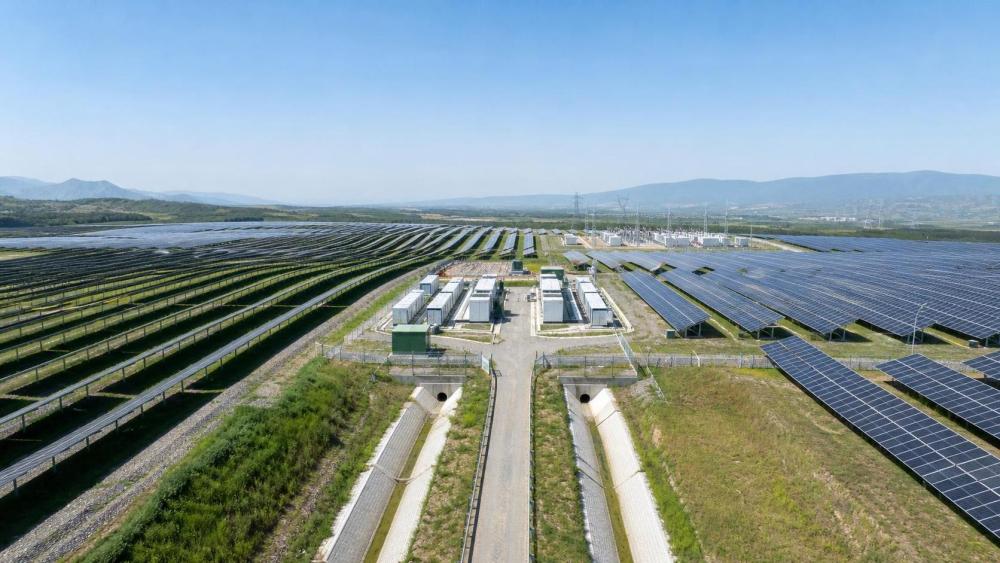
For that reason, the early layout should show more than row spacing. It should reveal whether the terrain supports the chosen mounting approach, whether tracker blocks or fixed-tilt tables fit the site geometry, and whether road placement allows safe delivery, installation, cleaning, vegetation control, and replacement work later on.
Layout decisions should connect energy yield to buildability
Developers often receive layouts that look efficient but are not easy to construct. A utility-scale site plan needs to balance installed capacity with practical spacing, internal roads, equipment pads, cable corridors, turning radii, drainage continuity, and emergency access. This is not glamorous work, but it is exactly where many late-stage revisions come from.
Row orientation, pitch, tilt angle, tracker configuration, shading assumptions, and block sizing all belong inside solar plant engineering design because they directly affect output and land utilization. But those decisions should also be checked against civil and electrical realities. For example, a layout that minimizes shading losses can still create long homeruns, congested trench paths, or maintenance routes that cut through energized areas.
Useful layouts usually make these relationships visible:
- module field arrangement by block or array zone
- inverter and MV station placement relative to DC collection lengths
- road and crane access logic
- drainage flow paths and grading intent
- fencing, gates, and perimeter clearances
- reserved areas for substation, switchyard, and communication systems
When these items are missing or only loosely coordinated, the design may still look complete to a non-technical reviewer, but it is not ready for serious procurement or construction planning.
Electrical design is more than string sizing
Another repeated misunderstanding is treating electrical scope as the DC side plus a substation drawing. In a utility-scale project, electrical engineering has to connect the module field, inverters, medium-voltage collection system, plant substation, protection, metering, SCADA, auxiliary power, grounding, and interconnection compliance into one coherent scheme.
At the array level, the design should define string configuration, combiner strategy if applicable, cable routing concept, voltage window assumptions, and expected operating conditions. This is where module selection and inverter selection become meaningful. They should not be chosen in isolation; they should be chosen in relation to site temperature profile, clipping expectations, cable losses, grid code behavior, maintenance philosophy, and spare parts strategy.
On the AC side, collection system design usually deserves closer review than it gets. Feeder grouping, trench routing, voltage drop, fault current considerations, sectionalization, and equipment accessibility all affect both capex and maintainability. A design that saves trench length but complicates troubleshooting may not be the better design once the plant is in service.
By the time the engineering package reaches a serious review stage, it should already clarify:
- single-line diagrams from PV strings to point of interconnection
- major equipment ratings and key operating assumptions
- MV collection topology and feeder organization
- protection and coordination concept
- station service and auxiliary loads
- metering, communications, and control interfaces
These are not just engineering deliverables for record. They are the basis for procurement alignment, grid review, and construction sequencing.
Grid interconnection needs to be embedded early
Many project teams discover too late that the plant design and the interconnection requirements were being developed on parallel tracks rather than as one integrated task. That creates friction around reactive power capability, ramp rate control, fault ride-through behavior, harmonic performance, plant controller logic, or substation equipment scope.
In practice, the plant cannot be considered fully designed if interconnection obligations are still floating outside the main engineering package. Even when some requirements remain subject to utility review, the design should show a clear compliance path. That includes the transformer concept, collector voltage selection, protection philosophy, reactive compensation approach if needed, communication architecture, and plant-level control behavior.
This is also where many teams benefit from using structured industry intelligence instead of relying only on fragmented vendor brochures or old project templates. When the project includes solar-plus-storage, distributed interconnection complexity, or evolving grid modernization requirements, comparing equipment and control strategies in a wider technical and market context can reduce rework in the design phase.
Civil and structural work often decides whether the schedule holds
Because energy yield modeling gets so much attention, civil and structural design is sometimes treated as support work. On real projects, it often becomes the schedule driver. If pile design assumptions do not match geotechnical findings, if grading quantities were underestimated, or if drainage provisions are weak, the project can lose time before the first modules are installed.
A robust engineering set should therefore include grading philosophy, stormwater concept, road cross-sections or access standards, equipment foundation assumptions, and structural basis for the mounting system. For trackers, terrain-following limits, row tolerances, and foundation interface details need to be understood early, not after procurement has advanced.
The structural scope should also consider local wind, snow, corrosion environment, and installation tolerances. Even when detailed calculations are developed by specialist suppliers later, the overall plant design needs a clear basis for selecting the mounting approach and understanding the implications for layout density, terrain adaptation, and maintenance clearance.
Safety design should not be left as a permit formality
In utility-scale PV, safety is often discussed in broad terms, but engineering design has to turn it into physical and operational measures. That includes grounding and bonding strategy, lightning protection approach where relevant, arc-flash considerations at applicable equipment, equipment clearances, emergency isolation logic, access control, signage, fire access routes, and maintenance-safe equipment positioning.
Projects that include battery storage or future storage readiness need even tighter coordination. The plant layout, auxiliary loads, communication pathways, and protection philosophy may need to account for later integration, even if the storage system is not installed in the first phase. Leaving no room for that option can force an expensive redesign.
Safety also overlaps with O&M in very practical ways. If inverter stations are hard to access during wet conditions, if cable routes are confusing to isolate, or if spare equipment replacement requires excessive disassembly, the plant is technically operable but poorly engineered for real life.
Monitoring, controls, and data pathways belong in the core design
Another area that gets underestimated is digital infrastructure. Plant monitoring is not something to bolt on after the electrical design is nearly finished. The communication network, SCADA structure, weather station inputs, controller interfaces, cybersecurity boundaries, and data collection points should be planned alongside the electrical architecture.
This matters for several reasons. First, lenders, owners, and operators usually want confidence that performance can be verified and faults can be traced. Second, grid operators may require telemetry and dispatch response. Third, a plant with poor data visibility becomes harder to maintain and optimize over time.
At minimum, the engineering scope should establish where data originates, how it is transmitted, what systems need to communicate with each other, and where control authority sits. If these questions are not addressed until late procurement, teams often end up with mismatched interfaces across inverters, meters, substation systems, and plant controllers.
Good design includes the people who will operate the plant
One of the clearest signs of mature solar plant engineering design is that it reflects operational reality. Not every project does this. Some design packages are technically dense but give little attention to routine inspection routes, vegetation management, spare parts storage, drainage maintenance, cleaning access, nighttime troubleshooting, or safe replacement of failed equipment.
If you are reviewing whether a design is “complete,” ask whether an operations team could walk the site and work efficiently for years. That question often reveals hidden weaknesses. A plant may meet electrical and structural requirements while still creating unnecessary operational cost because equipment clusters are hard to reach, trench crossings interrupt movement, or field segmentation is not intuitive for fault isolation.
This is also why lifecycle cost deserves a place in design review. The lowest first-cost arrangement is not automatically the most bankable or most sensible. Cable savings, tighter spacing, or reduced road length can be offset by harder maintenance, more outages during repair, or greater exposure to site wear.
Documents should make assumptions visible
A frequent source of conflict later is not that the original design was obviously wrong, but that key assumptions were buried or never stated clearly. Utility-scale projects move through many hands: owners, EPC teams, lenders’ engineers, utilities, suppliers, and O&M planners. A design package is easier to trust when it states its basis openly.
That usually means recording major assumptions around module and inverter operating ranges, weather basis, soil conditions used for preliminary design, clipping philosophy, equipment maintainability, curtailment expectations if known, control logic boundaries, and unresolved items that still require confirmation. Open items are not a failure if they are clearly identified. Hidden assumptions are the real problem.
When a design package is still too thin, this is usually what is missing
If you are trying to judge whether the project is ready to move from concept toward detailed execution, the gaps are often not exotic. They are usually ordinary but important: incomplete drainage coordination, unclear collection system segmentation, weak substation area planning, vague SCADA boundaries, no practical O&M access plan, or a layout that was optimized before geotechnical and grading implications were understood.
That is why the best review process is cross-functional. Electrical, civil, structural, controls, grid, procurement, construction, and operations should all be able to see themselves in the design. When one discipline dominates too early, the project may look advanced while carrying hidden redesign risk.
For utility-scale work, solar plant engineering design should include enough technical depth to support procurement and compliance, enough site realism to support construction, and enough operational thinking to support asset performance after handover. If a design package cannot explain those three layers together, it is probably incomplete, even if the drawing count looks impressive.
Questions about market trends? Contact Market Scope Live for deeper business insights.
We respect your privacy. Your information is strictly confidential.
Related News
 Solar PV SystemsIndustrial Parks in Vietnam: Comparing Locations, Costs and InfrastructureCompare industrial parks in Vietnam by location, costs, logistics and power infrastructure. Discover how to shortlist the right site for your business.MORE+
 Solar PV SystemsFloating Solar Systems: How to Assess Reservoir SuitabilityFloating solar systems need the right reservoir. Discover how to assess water levels, grid access, environmental risks, and costs before investing.MORE+
 Solar PV SystemsSmart Solar Tracking Systems: How to Evaluate Energy Gains and Site SuitabilityExplore how smart solar tracking systems can boost energy yield. Compare site suitability, lifecycle costs, and fixed-tilt alternatives to make a confident investment decision.MORE+
 Solar PV SystemsFloating Solar Projects on Industrial Ponds: How to Assess Site SuitabilityAssess floating solar projects on industrial ponds with a practical guide to water levels, mooring, electrical connections, and site risks.MORE+
 Solar PV SystemsTurkey Allocates 785 MW of Grid Capacity in YEKA Solar TenderTurkey's YEKA solar tender allocates 785 MW of grid capacity across 11 sites. Explore what the results could mean for developers and suppliers.MORE+
 Solar PV SystemsChoosing String Inverters for Solar PV: Sizing, MPPT and ShadingChoose string inverters with confidence. Compare DC-to-AC sizing, MPPT allocation and shading impacts to improve solar PV performance.MORE+
 Solar PV SystemsChoosing Solar Racking Systems for Rooftops: Roof Type and Load FactorsChoosing solar racking systems for rooftops? Compare roof types, load factors and mounting options to plan a safer, more reliable installation.MORE+
 Solar PV SystemsSolar Tracking System Pricing: What to Include in a Project BudgetUnderstand solar tracking systems pricing and build a reliable project budget. Compare supplier quotes, uncover hidden costs, and assess long-term value.MORE+
 Solar PV SystemsChina Adds 110.83 GW of Solar in First Nine Months of 2026, Down 53.9%China solar additions reportedly fell 53.9% to 110.83 GW in January–September 2026. Explore pricing reform impacts and practical insights for project planning and procurement.MORE+
 Solar PV SystemsHow to Vet Solar Equipment Manufacturers: Quality, Warranties, and Lead TimesSearching “renewable equipment manufacturers solar”? Learn how to verify quality, compare warranties, and validate lead times to shortlist reliable suppliers and reduce project risk.MORE+
 Solar PV SystemsCommercial Rooftop Solar in India: How to Calculate Costs and PaybackCommercial rooftop solar India guide: calculate installation costs, estimate realistic savings and payback, and compare EPC quotes to make a smarter business investment.MORE+
 Solar PV SystemsSolar EPC Contractor Pricing: How to Compare Quotes and Spot ExclusionsCompare solar EPC contractor pricing with confidence. Learn how to spot exclusions, assess allowances, and uncover hidden costs before choosing the right quote for your project.MORE+
 Solar PV SystemsHow to Assess Site and Grid Feasibility for Solar Power Generation ProjectsAssess solar power generation projects with practical guidance on site suitability, grid capacity, connection costs, and curtailment risks. Make smarter investment decisions before committing capital.MORE+
 Solar PV SystemsPepco Approves ConnectDER Meter Adapters for Solar, Storage and EV Charging in D.C.Pepco approves ConnectDER meter adapters in D.C. for solar, storage and EV charging. Discover how meter-level connections could simplify installation and reduce costs.MORE+
 Solar PV SystemsTOPCon Photovoltaic Modules: Selection Criteria for High-Temperature Utility ProjectsTOPCon photovoltaic modules for hot-climate utility projects: compare temperature performance, bifacial yield, reliability, and electrical compatibility for stronger lifetime returns.MORE+
 Solar PV SystemsHow to Verify PV Module Supplier Capability Before Utility-Scale ProcurementVerify PV module supplier capability before utility-scale procurement with a practical checklist for factory audits, certifications, traceability, capacity, warranties, and risk control.MORE+
 Solar PV SystemsHow to Size Solar Power Generation Systems for Commercial Sites and Peak LoadsSolar power generation systems for commercial sites: learn to size PV for load profiles, peak demand, grid limits, storage, and future growth.MORE+
 Solar PV SystemsSolar Farm Construction: How to Plan Site, Grid Access, and Build RiskSolar farm construction insights for smarter site planning, grid access, procurement, and build-risk control—helping projects reach energization with confidence.MORE+
 Solar PV SystemsWhich Solar Inverter Certifications Are Mandatory in North America?What certifications are mandatory for solar inverters in North American markets? Explore UL 1741, IEEE 1547, CSA rules, and utility approval essentials.MORE+
 Solar PV SystemsWhat Is the Typical Payback Period for Commercial Solar PV in 2026?What is the typical payback period for a commercial solar PV installation in 2026? Explore the key cost, tariff, incentive, and sizing factors that shape returns.MORE+
 Solar PV SystemsWhat Causes Voltage Fluctuations When Large PV Plants Connect to Weak Grids?What causes voltage fluctuation when large solar PV plants connect to weak grids? Explore root causes, diagnostics, and proven mitigation strategies.MORE+
 Solar PV SystemsWhat Determines Solar Power Generation Efficiency in Commercial PV Projects?Solar power generation efficiency in commercial PV projects depends on more than module ratings—explore site resource, design, grid, and O&M factors that maximize long-term energy yield.MORE+
 Solar PV SystemsCommercial Rooftop Solar Financing: Comparing Loans, Leases, and PPAsCommercial rooftop solar financing explained: compare loans, leases, and PPAs to choose the right balance of savings, ownership, flexibility, and risk.MORE+
 Solar PV SystemsPV Bid Evaluation: How to Compare EPC Proposals Beyond the Lowest PricePV bid evaluation helps procurement teams compare EPC proposals beyond price—assess scope, energy yield, schedule, supply chain, warranties, and contract risk to protect long-term solar asset value.MORE+
 Solar PV SystemsWhat Environmental Permits Are Needed for Floating Solar on Reservoirs?What environmental permits are needed for floating solar on reservoirs? Explore water-use, EIA, shoreline, biodiversity, and water-quality approvals for smarter FPV development.MORE+
 Solar PV SystemsHow Long Does Utility-Scale Solar Grid Approval Take in 2026?How long does utility scale solar grid approval typically take in 2026? Explore timelines, queue risks, upgrade costs, and strategies to accelerate project delivery.MORE+
 Solar PV SystemsDo Agrivoltaic Projects Significantly Reduce Crop Yields in Hot Climates?Do agrivoltaic projects reduce crop yield significantly in hot climates? Explore how smart shade, crop selection, irrigation, and solar design can protect yields, improve quality, and strengthen dual-use land value.MORE+
 Solar PV SystemsHow Predictive Solar Plant O&M Reduces Downtime and Protects Energy YieldPredictive solar plant O&M helps cut downtime, detect faults early, prioritize repairs, and protect long-term energy yield with actionable data insights.MORE+
 Solar PV SystemsWhat Grid Connection Requirements Apply to Solar-Powered EV Charging?Solar farm grid connection requirements for EV charging explained: explore import/export limits, protection, storage, grid codes, and smart design strategies.MORE+
 Solar PV SystemsHow Much Solar Farm Capacity Is Needed to Offset Charging Demand in 2026?How to plan solar farm capacity to offset charging station demand in 2026? Explore sizing formulas, grid limits, storage strategies, and scalable EV charging solutions.MORE+
 Solar PV SystemsWhat Are the Actual Maintenance Costs of Solar Canopy Inverters?What are the real maintenance costs of solar inverters on charging canopies? Explore service, monitoring, repairs, downtime, and smarter lifecycle budgeting.MORE+
 Solar PV SystemsWhat Should Building Owners Evaluate Before Installing Rooftop Solar Photovoltaic?Rooftop solar photovoltaic planning starts with the right questions. Learn how to assess roof strength, load profile, grid limits, permits, and ROI before investing.MORE+
 Solar PV SystemsChina’s First Compute-Power and Green Power Direct Supply Project Enters OperationChina’s first compute-power and green power direct supply project begins operation, linking 500 MW solar power with data center demand for higher efficiency and stronger green energy credibility.MORE+
 Solar PV SystemsWhat Should Be Included in Solar Plant Engineering Design for Utility-Scale Projects?Solar plant engineering design for utility-scale projects should cover site constraints, layout, electrical systems, grid compliance, safety, and O&M—see what a complete, bankable design package must include.MORE+
 Solar PV SystemsUSTR Opens CVD Review on Chinese PV ModulesUSTR opens a CVD review on Chinese PV modules, raising questions over tariffs, sourcing, and Southeast Asia supply chains. See what importers and developers should watch now.MORE+
 Solar PV SystemsHow to Evaluate Rooftop Solar EPC Contractors for Commercial PV ProjectsRooftop solar EPC contractors can make or break commercial PV success. Learn how to compare engineering, grid, safety, scope, and risk control before choosing the right partner.MORE+
 Solar PV SystemsFixed Tilt Solar Racking: How to Evaluate Wind Load, Site Layout, and ROIFixed tilt solar racking guide: learn how to assess wind load, site layout, grading, foundations, and ROI to avoid hidden costs and choose a smarter solar structure.MORE+
 Solar PV SystemsHow to Choose Solar Modules for Commercial and Industrial PV Projects?Solar modules for C&I PV projects: learn how to compare efficiency, temperature performance, site suitability, warranty, and bankability to choose the right solution with confidence.MORE+
 Solar PV SystemsUSTR Extends Tariff Relief for Chinese PV ModulesUSTR Extends Tariff Relief for Chinese PV Modules through Dec. 31, 2026. See how the update affects solar procurement costs, project timelines, compliance, and U.S. market planning.MORE+
 Solar PV SystemsHow to Evaluate Solar PV Equipment in USA for Commercial and Utility ProjectsSolar PV equipment in USA evaluation for commercial and utility projects: learn how to compare performance, compliance, reliability, and supplier strength for smarter project decisions.MORE+


