Solar Farm Construction: How to Plan Site, Grid Access, and Build Risk
Solar farm construction is not primarily a module-installation exercise. A project becomes difficult when the land, grid connection, civil design, permits, equipment package, and construction sequence are treated as separate workstreams. They are not. A change in one area, such as the approved point of interconnection or a newly identified drainage constraint, can alter the electrical layout, access roads, equipment quantities, schedule, and project economics.
The most reliable approach is to establish three things before major procurement or field mobilization: whether the site can physically support the planned plant, whether the grid can accept the export profile under realistic conditions, and whether the design has enough maturity to control construction risk. A large, sunny parcel alone is not a bankable site. Nor is a grid offer enough if the route to the substation, protection requirements, or upgrade responsibilities remain unclear.
Start with site suitability, not only available acreage
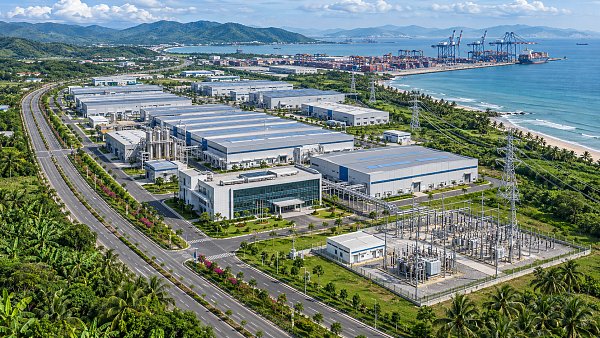
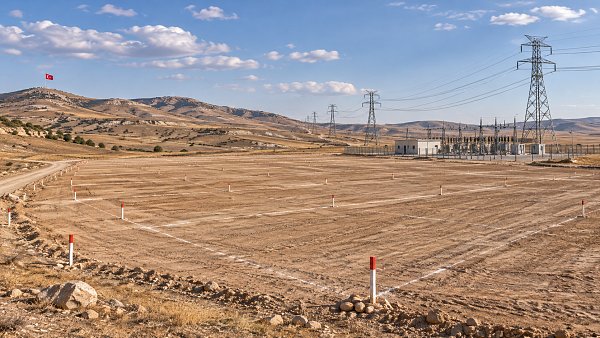
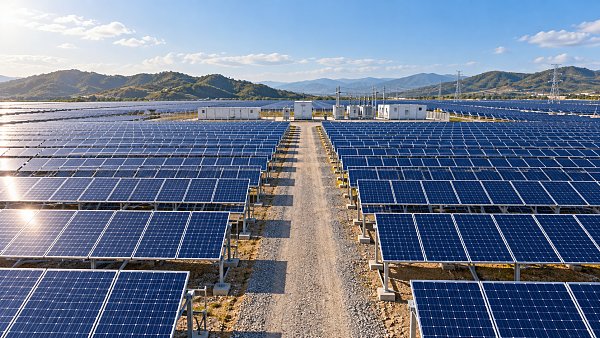
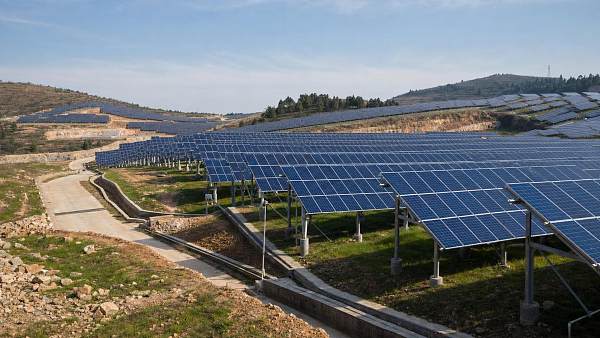
Land screening should go beyond area, solar resource, and proximity to a transmission line. The usable construction area is usually smaller than the legal parcel boundary. Setbacks, ecological buffers, watercourses, slopes, access corridors, drainage channels, easements, cultural constraints, and substation space can all reduce the practical layout.
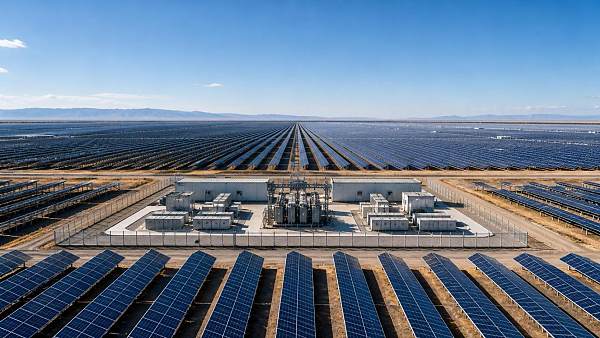
A productive solar site needs a layout that works in the field as well as on a drawing. The construction team needs room for internal roads, turning areas, temporary laydown zones, crane access where required, inverter stations, collection systems, security infrastructure, and safe maintenance access after commissioning. If these items are added late, the project may lose installed capacity or require redesign of tracker blocks and cable routes.
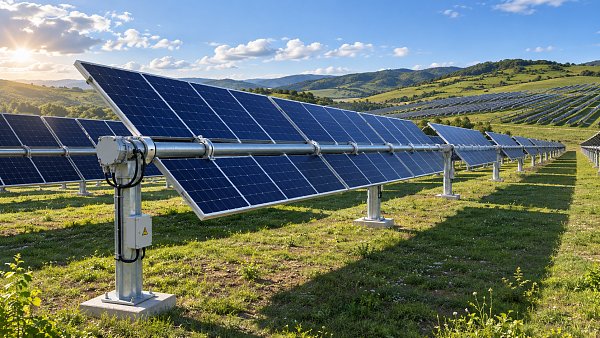
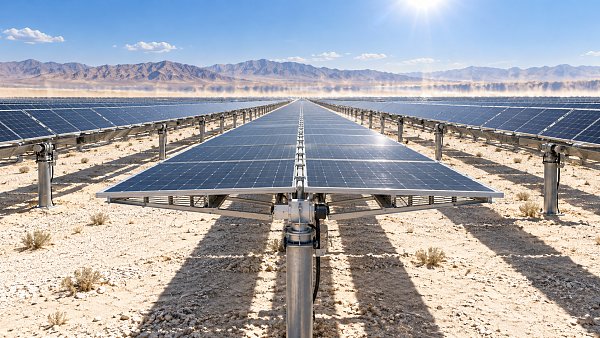
Topography deserves early attention. Gentle, consistent terrain can reduce earthworks and simplify drainage. Highly variable terrain may still be usable, but it creates decisions about grading, tracker tolerances, pile exposure, erosion control, and string design. Excessive grading can improve constructability in one area while creating runoff, permitting, or cost issues elsewhere. The goal is not always to make the site flat; it is to identify where the existing terrain can be accommodated and where targeted civil work is justified.
Geotechnical investigation is equally important. Pile foundations, driven posts, screw foundations, ballast systems, and ground-improvement measures each respond differently to soil strength, rock layers, corrosivity, groundwater, and refusal risk. A preliminary foundation assumption made before adequate testing can turn into a major variation once installation begins. The risk is especially high when a contractor prices piling based on limited information and later encounters refusal, obstructions, or unsuitable soil conditions.
Early site work should establish:
- Buildable area after all known exclusions and setbacks.
- Topographic conditions that affect grading, tracker geometry, road design, and drainage.
- Soil and groundwater conditions that influence foundation selection and cable trenching.
- Flood, erosion, and stormwater pathways across the proposed array blocks.
- Site access limitations for oversized transformers, trackers, containers, and construction vehicles.
- Third-party land rights, crossings, and easements needed for roads or export cables.
A common mistake is to treat drainage as a civil package that can be finalized after the array layout. In practice, drainage affects row spacing, road elevations, inverter locations, cable routes, and maintenance access. Water that concentrates along tracker rows or around electrical equipment can cause repeated operational problems long after the construction team has left.
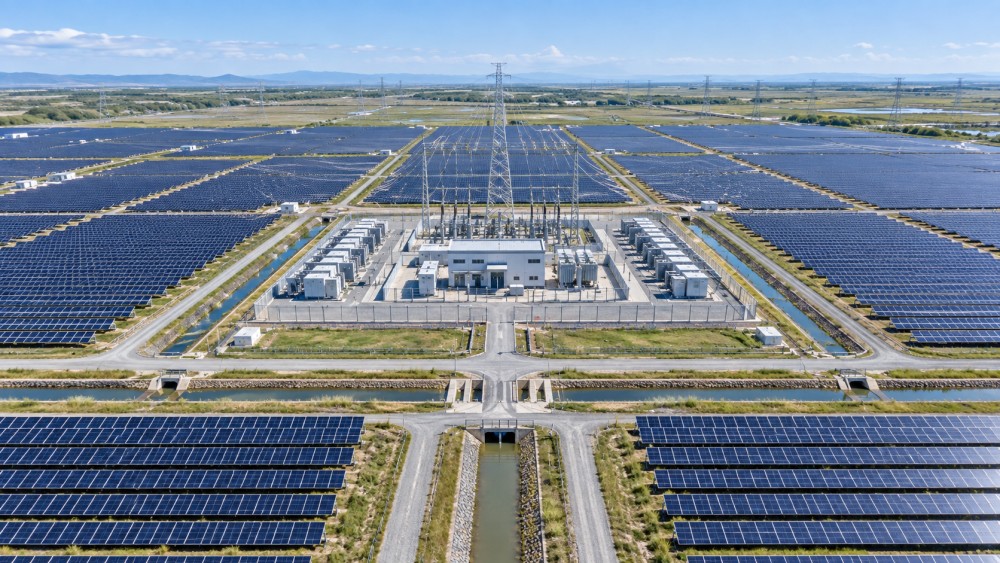
Grid access must be treated as a design input
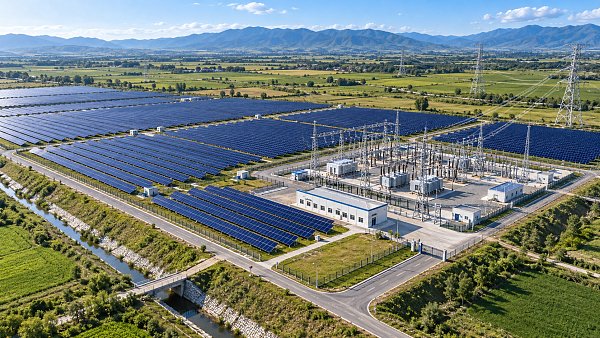
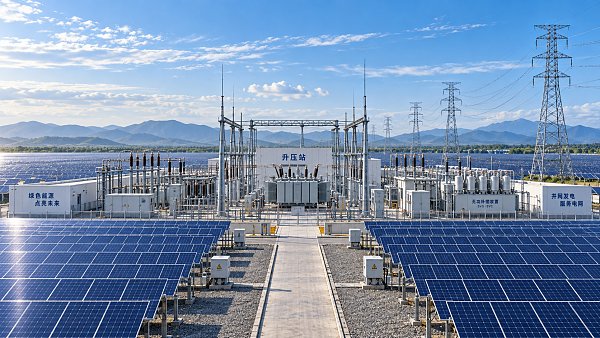
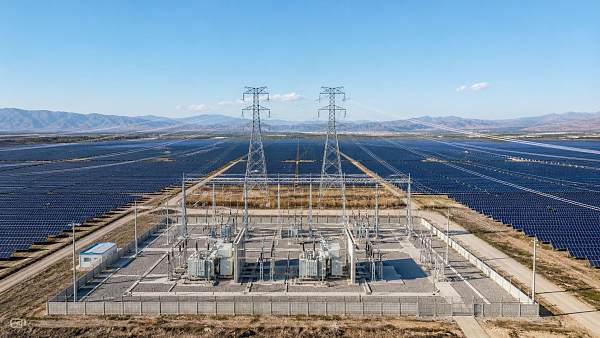
Grid interconnection is often the controlling factor in solar farm construction. The relevant question is not simply whether a nearby line exists. The project needs a defined connection point, an export capacity, technical requirements, a route for the collector system or transmission line, and a realistic understanding of any network upgrades required before energization.
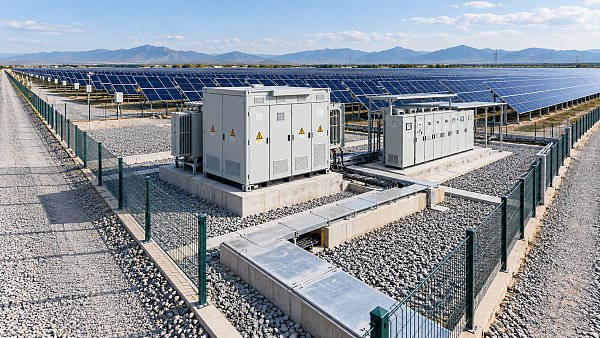
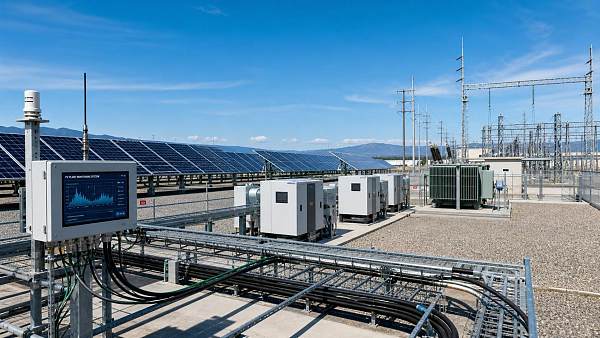
Grid operators assess more than peak generation. They may require studies related to voltage behavior, fault response, protection coordination, reactive power capability, communications, curtailment, and plant controls. These requirements influence inverter selection, medium-voltage collection design, substation equipment, supervisory control systems, and commissioning procedures.
For this reason, the grid study process should run alongside concept engineering, not after equipment selection. A project that selects inverters solely on nominal capacity or commercial availability may discover that additional controls, plant controller functions, transformer tap arrangements, harmonic mitigation, or protection changes are needed. Those additions can affect both procurement lead times and the physical space required at the substation.
Confirm the connection boundary
The connection boundary defines where the plant’s responsibility ends and the grid network begins. It should be clear who owns, designs, procures, installs, tests, and maintains each item around that boundary. Ambiguity is common around metering, communications, protection panels, transmission works, bay extensions, and remote-control interfaces.
This is not merely a contractual detail. A missing communication interface or unresolved protection scheme can prevent energization even when the solar arrays, inverters, and substation are physically complete. Construction schedules should therefore include grid-interface design reviews, operator witness requirements, communication testing, and staged energization activities.
Do not assume storage solves every interconnection constraint
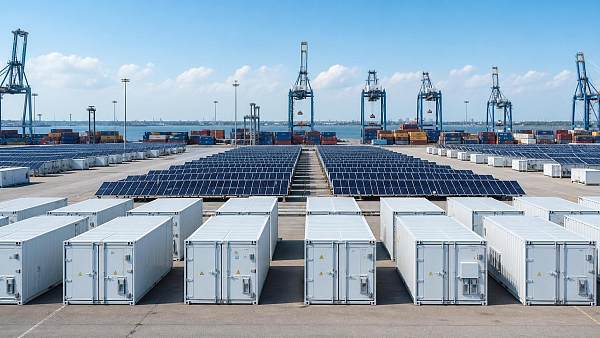
A battery energy storage system can support a solar project where export limits, curtailment exposure, dispatch requirements, or local congestion affect the operating strategy. It may allow energy to be shifted or the plant output to be managed more flexibly. However, it does not automatically increase the approved export capacity. Its value depends on the interconnection terms, control logic, commercial arrangement, safety design, and the actual constraint being addressed.
Adding storage late also changes more than the electrical single-line diagram. The site may need additional foundations, access space, fire protection provisions, auxiliary power, communications, thermal-management allowances, and operating procedures. If solar-plus-storage is a realistic option, reserve space and cable-routing flexibility during the initial layout even if the storage system is installed later.
Freeze the right decisions before procurement
Construction risk rises when long-lead equipment is purchased before the core interfaces are stable. Modules, trackers, inverters, transformers, switchgear, cables, and monitoring systems are interdependent. A change in module dimensions can affect tracker configuration. A change in inverter block size can alter DC cabling, AC collection routes, transformer sizing, civil pads, and SCADA architecture.
Not every detail needs to be complete before procurement, but the project should distinguish between decisions that are safe to defer and decisions that will create redesign if left open. The following areas generally require enough definition before major purchase orders are released:
Technical specifications should describe the operating duty, interfaces, testing obligations, documentation, spares, warranties, and acceptance criteria. A specification that only lists equipment ratings often leaves critical responsibilities undefined. For example, an inverter may meet its basic conversion function while the overall plant still lacks the controls or communications needed to follow grid instructions.
Build the schedule around constraints, not ideal production rates
A solar construction schedule is credible when it reflects physical dependencies. Site access and temporary facilities must support deliveries. Earthworks and drainage must reach a stable condition before large-scale mounting installation. Foundations need adequate quality control before tracker assembly. Underground collection works must be coordinated with roads, equipment pads, fencing, and drainage crossings. The substation and grid connection usually have their own approval, testing, and commissioning sequence.
Parallel work can shorten the program, but only where interfaces are controlled. Installing DC equipment before civil areas are released, or starting trenching before final cable routes are agreed, may appear fast in weekly reports while creating rework later. The more useful question is whether each workfront has a complete design package, material availability, access, quality criteria, and authority to proceed.
Weather planning should focus on how site conditions respond to rain, wind, heat, and seasonal access limitations. Rain can affect compaction, hauling, trench stability, and road use. High winds can restrict module handling and tracker work. Heat can influence working hours, material storage, and crew productivity. These are normal construction constraints, but they become schedule risk when contingency is absent and all activities rely on the same narrow access routes or staging areas.
Construction quality is tied to future energy yield
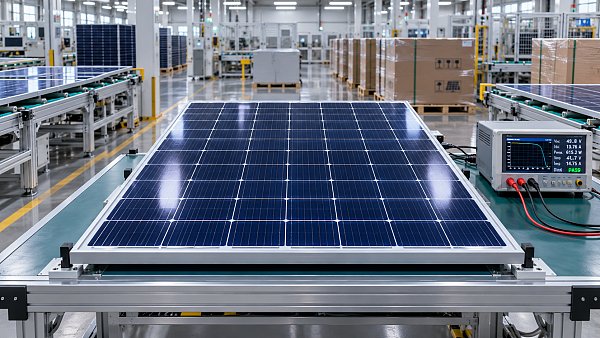
Quality control in solar farm construction should prioritize items that are difficult to inspect or repair after subsequent work covers them. Underground cable depth, trench bedding, jointing records, earthing continuity, pile alignment, torque control, module handling, connector compatibility, and water management all deserve documented checks at the point of installation.
Electrical quality is particularly sensitive to interface discipline. Mixing connector types without verified compatibility, allowing inconsistent cable identification, or leaving incomplete test records can create faults that are time-consuming to locate after energization. Similarly, poorly controlled tracker installation may not stop construction progress, yet it can contribute to alignment problems, mechanical stress, or maintenance burden over the asset life.
A practical quality plan connects inspection points to the construction sequence. It identifies what must be checked before a trench is backfilled, before modules are installed, before circuits are energized, and before a system is handed over. Hold points should concentrate on irreversible work, not create paperwork for routine activities that can be observed continuously.
Manage contractor risk through interfaces and evidence
The lowest EPC price is not automatically the lowest project cost. A bid should be evaluated against its assumptions about soil conditions, quantities, grid works, logistics, temporary facilities, testing, weather allowances, and scope boundaries. An unusually low price can indicate an efficient delivery model, but it can also indicate exclusions that return later as claims or schedule pressure.
Contract documents should make design responsibility explicit. When owners, engineers, equipment suppliers, and contractors all influence the design, gaps can emerge between individual packages. The project needs a controlled interface register covering civil, structural, electrical, communications, grid connection, and operational responsibilities. Each interface should have an owner, required input, due date, and acceptance outcome.
Progress reporting should also distinguish between materials delivered, work installed, work inspected, and work accepted. Counting module deliveries or completed tracker rows is useful, but it does not show whether the plant is ready for testing or whether critical electrical and grid interfaces are closing. A meaningful dashboard includes unresolved design changes, long-lead status, quality nonconformities, access constraints, permit conditions, and commissioning readiness.
Commissioning begins during design and construction
Commissioning is often compressed into the final weeks, even though its success depends on decisions made much earlier. The project needs a clear sequence for equipment checks, cable testing, protection testing, inverter commissioning, plant controller configuration, communications validation, grid witness tests, and operational handover.
Each system should have complete records before energization: approved drawings, test certificates, equipment settings, serial-number registers where needed, as-built cable information, inspection records, and outstanding-defect status. Missing documentation can delay acceptance because the issue is not only administrative. It makes it harder to prove that the installed system matches the approved design and can be maintained safely.
The final handover should include practical operating information rather than a collection of disconnected manuals. Operations teams need to understand alarm priorities, spare parts, access controls, maintenance constraints, vegetation and drainage responsibilities, grid-curtailment procedures, and the route for escalating equipment failures.
A more useful first-action sequence
Before committing major capital, establish the buildable site area and ground conditions, secure a sufficiently defined interconnection path, and test the preliminary layout against civil, electrical, and access constraints. Then align the equipment strategy with the grid requirements and freeze the decisions that affect foundations, collection design, substations, and long-lead procurement.
Structured market and technical intelligence can help compare equipment options, grid-modernization requirements, storage integration choices, and delivery risks across the project lifecycle. The purpose is not to collect more information than the project can use. It is to ensure that land, grid, procurement, construction, and operations decisions are based on the same project assumptions before those assumptions become expensive to change.
Questions about market trends? Contact Market Scope Live for deeper business insights.
We respect your privacy. Your information is strictly confidential.
Related News
 Solar PV SystemsIndustrial Parks in Vietnam: Comparing Locations, Costs and InfrastructureCompare industrial parks in Vietnam by location, costs, logistics and power infrastructure. Discover how to shortlist the right site for your business.MORE+
 Solar PV SystemsFloating Solar Systems: How to Assess Reservoir SuitabilityFloating solar systems need the right reservoir. Discover how to assess water levels, grid access, environmental risks, and costs before investing.MORE+
 Solar PV SystemsSmart Solar Tracking Systems: How to Evaluate Energy Gains and Site SuitabilityExplore how smart solar tracking systems can boost energy yield. Compare site suitability, lifecycle costs, and fixed-tilt alternatives to make a confident investment decision.MORE+
 Solar PV SystemsFloating Solar Projects on Industrial Ponds: How to Assess Site SuitabilityAssess floating solar projects on industrial ponds with a practical guide to water levels, mooring, electrical connections, and site risks.MORE+
 Solar PV SystemsTurkey Allocates 785 MW of Grid Capacity in YEKA Solar TenderTurkey's YEKA solar tender allocates 785 MW of grid capacity across 11 sites. Explore what the results could mean for developers and suppliers.MORE+
 Solar PV SystemsChoosing String Inverters for Solar PV: Sizing, MPPT and ShadingChoose string inverters with confidence. Compare DC-to-AC sizing, MPPT allocation and shading impacts to improve solar PV performance.MORE+
 Solar PV SystemsChoosing Solar Racking Systems for Rooftops: Roof Type and Load FactorsChoosing solar racking systems for rooftops? Compare roof types, load factors and mounting options to plan a safer, more reliable installation.MORE+
 Solar PV SystemsSolar Tracking System Pricing: What to Include in a Project BudgetUnderstand solar tracking systems pricing and build a reliable project budget. Compare supplier quotes, uncover hidden costs, and assess long-term value.MORE+
 Solar PV SystemsChina Adds 110.83 GW of Solar in First Nine Months of 2026, Down 53.9%China solar additions reportedly fell 53.9% to 110.83 GW in January–September 2026. Explore pricing reform impacts and practical insights for project planning and procurement.MORE+
 Solar PV SystemsHow to Vet Solar Equipment Manufacturers: Quality, Warranties, and Lead TimesSearching “renewable equipment manufacturers solar”? Learn how to verify quality, compare warranties, and validate lead times to shortlist reliable suppliers and reduce project risk.MORE+
 Solar PV SystemsCommercial Rooftop Solar in India: How to Calculate Costs and PaybackCommercial rooftop solar India guide: calculate installation costs, estimate realistic savings and payback, and compare EPC quotes to make a smarter business investment.MORE+
 Solar PV SystemsSolar EPC Contractor Pricing: How to Compare Quotes and Spot ExclusionsCompare solar EPC contractor pricing with confidence. Learn how to spot exclusions, assess allowances, and uncover hidden costs before choosing the right quote for your project.MORE+
 Solar PV SystemsHow to Assess Site and Grid Feasibility for Solar Power Generation ProjectsAssess solar power generation projects with practical guidance on site suitability, grid capacity, connection costs, and curtailment risks. Make smarter investment decisions before committing capital.MORE+
 Solar PV SystemsPepco Approves ConnectDER Meter Adapters for Solar, Storage and EV Charging in D.C.Pepco approves ConnectDER meter adapters in D.C. for solar, storage and EV charging. Discover how meter-level connections could simplify installation and reduce costs.MORE+
 Solar PV SystemsTOPCon Photovoltaic Modules: Selection Criteria for High-Temperature Utility ProjectsTOPCon photovoltaic modules for hot-climate utility projects: compare temperature performance, bifacial yield, reliability, and electrical compatibility for stronger lifetime returns.MORE+
 Solar PV SystemsHow to Verify PV Module Supplier Capability Before Utility-Scale ProcurementVerify PV module supplier capability before utility-scale procurement with a practical checklist for factory audits, certifications, traceability, capacity, warranties, and risk control.MORE+
 Solar PV SystemsHow to Size Solar Power Generation Systems for Commercial Sites and Peak LoadsSolar power generation systems for commercial sites: learn to size PV for load profiles, peak demand, grid limits, storage, and future growth.MORE+
 Solar PV SystemsSolar Farm Construction: How to Plan Site, Grid Access, and Build RiskSolar farm construction insights for smarter site planning, grid access, procurement, and build-risk control—helping projects reach energization with confidence.MORE+
 Solar PV SystemsWhich Solar Inverter Certifications Are Mandatory in North America?What certifications are mandatory for solar inverters in North American markets? Explore UL 1741, IEEE 1547, CSA rules, and utility approval essentials.MORE+
 Solar PV SystemsWhat Is the Typical Payback Period for Commercial Solar PV in 2026?What is the typical payback period for a commercial solar PV installation in 2026? Explore the key cost, tariff, incentive, and sizing factors that shape returns.MORE+
 Solar PV SystemsWhat Causes Voltage Fluctuations When Large PV Plants Connect to Weak Grids?What causes voltage fluctuation when large solar PV plants connect to weak grids? Explore root causes, diagnostics, and proven mitigation strategies.MORE+
 Solar PV SystemsWhat Determines Solar Power Generation Efficiency in Commercial PV Projects?Solar power generation efficiency in commercial PV projects depends on more than module ratings—explore site resource, design, grid, and O&M factors that maximize long-term energy yield.MORE+
 Solar PV SystemsCommercial Rooftop Solar Financing: Comparing Loans, Leases, and PPAsCommercial rooftop solar financing explained: compare loans, leases, and PPAs to choose the right balance of savings, ownership, flexibility, and risk.MORE+
 Solar PV SystemsPV Bid Evaluation: How to Compare EPC Proposals Beyond the Lowest PricePV bid evaluation helps procurement teams compare EPC proposals beyond price—assess scope, energy yield, schedule, supply chain, warranties, and contract risk to protect long-term solar asset value.MORE+
 Solar PV SystemsWhat Environmental Permits Are Needed for Floating Solar on Reservoirs?What environmental permits are needed for floating solar on reservoirs? Explore water-use, EIA, shoreline, biodiversity, and water-quality approvals for smarter FPV development.MORE+
 Solar PV SystemsHow Long Does Utility-Scale Solar Grid Approval Take in 2026?How long does utility scale solar grid approval typically take in 2026? Explore timelines, queue risks, upgrade costs, and strategies to accelerate project delivery.MORE+
 Solar PV SystemsDo Agrivoltaic Projects Significantly Reduce Crop Yields in Hot Climates?Do agrivoltaic projects reduce crop yield significantly in hot climates? Explore how smart shade, crop selection, irrigation, and solar design can protect yields, improve quality, and strengthen dual-use land value.MORE+
 Solar PV SystemsHow Predictive Solar Plant O&M Reduces Downtime and Protects Energy YieldPredictive solar plant O&M helps cut downtime, detect faults early, prioritize repairs, and protect long-term energy yield with actionable data insights.MORE+
 Solar PV SystemsWhat Grid Connection Requirements Apply to Solar-Powered EV Charging?Solar farm grid connection requirements for EV charging explained: explore import/export limits, protection, storage, grid codes, and smart design strategies.MORE+
 Solar PV SystemsHow Much Solar Farm Capacity Is Needed to Offset Charging Demand in 2026?How to plan solar farm capacity to offset charging station demand in 2026? Explore sizing formulas, grid limits, storage strategies, and scalable EV charging solutions.MORE+
 Solar PV SystemsWhat Are the Actual Maintenance Costs of Solar Canopy Inverters?What are the real maintenance costs of solar inverters on charging canopies? Explore service, monitoring, repairs, downtime, and smarter lifecycle budgeting.MORE+
 Solar PV SystemsWhat Should Building Owners Evaluate Before Installing Rooftop Solar Photovoltaic?Rooftop solar photovoltaic planning starts with the right questions. Learn how to assess roof strength, load profile, grid limits, permits, and ROI before investing.MORE+
 Solar PV SystemsChina’s First Compute-Power and Green Power Direct Supply Project Enters OperationChina’s first compute-power and green power direct supply project begins operation, linking 500 MW solar power with data center demand for higher efficiency and stronger green energy credibility.MORE+
 Solar PV SystemsWhat Should Be Included in Solar Plant Engineering Design for Utility-Scale Projects?Solar plant engineering design for utility-scale projects should cover site constraints, layout, electrical systems, grid compliance, safety, and O&M—see what a complete, bankable design package must include.MORE+
 Solar PV SystemsUSTR Opens CVD Review on Chinese PV ModulesUSTR opens a CVD review on Chinese PV modules, raising questions over tariffs, sourcing, and Southeast Asia supply chains. See what importers and developers should watch now.MORE+
 Solar PV SystemsHow to Evaluate Rooftop Solar EPC Contractors for Commercial PV ProjectsRooftop solar EPC contractors can make or break commercial PV success. Learn how to compare engineering, grid, safety, scope, and risk control before choosing the right partner.MORE+
 Solar PV SystemsFixed Tilt Solar Racking: How to Evaluate Wind Load, Site Layout, and ROIFixed tilt solar racking guide: learn how to assess wind load, site layout, grading, foundations, and ROI to avoid hidden costs and choose a smarter solar structure.MORE+
 Solar PV SystemsHow to Choose Solar Modules for Commercial and Industrial PV Projects?Solar modules for C&I PV projects: learn how to compare efficiency, temperature performance, site suitability, warranty, and bankability to choose the right solution with confidence.MORE+
 Solar PV SystemsUSTR Extends Tariff Relief for Chinese PV ModulesUSTR Extends Tariff Relief for Chinese PV Modules through Dec. 31, 2026. See how the update affects solar procurement costs, project timelines, compliance, and U.S. market planning.MORE+
 Solar PV SystemsHow to Evaluate Solar PV Equipment in USA for Commercial and Utility ProjectsSolar PV equipment in USA evaluation for commercial and utility projects: learn how to compare performance, compliance, reliability, and supplier strength for smarter project decisions.MORE+