India Enforces BIS Certification for PV Inverters and PCS
From July 1, 2026, India’s compliance requirements for imported power conversion equipment move from preparation to execution. According to a BIS announcement issued on June 29, mandatory BIS certification now applies to grid-connected photovoltaic inverters under IS 17298 and battery energy storage system power conversion systems under IS 17835, with uncertified products barred from customs clearance. For exporters, importers, procurement teams, and channel partners, this is not simply a standards update; it directly affects delivery timing, market access, document readiness, and supplier qualification checks.
The rule change now in force
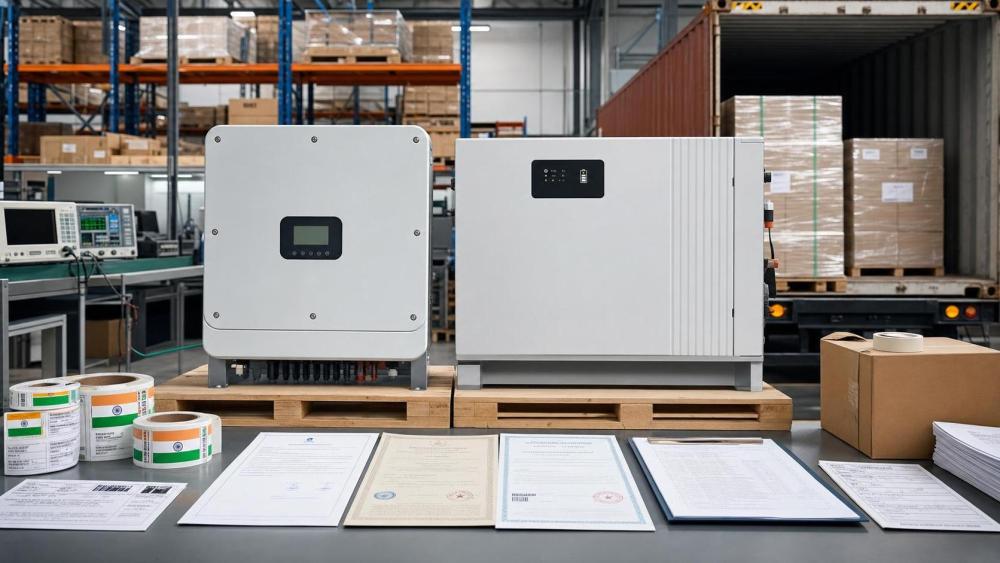
The confirmed facts are limited but commercially significant. The Bureau of Indian Standards announced on June 29, 2026 that mandatory BIS certification would apply from July 1, 2026 to two product categories: photovoltaic grid-connected inverters under IS 17298 and power conversion systems for battery energy storage systems under IS 17835. Products without certification will not be allowed to clear customs. The change directly affects Chinese exporters of inverters and PCS products to India, and importers are expected to verify both supplier BIS registration status and the validity of relevant test reports in advance.
Where the immediate pressure is likely to appear
Export shipments now face a stricter market-entry condition
From an industry perspective, exporters are likely to feel the impact first at the shipment and delivery stage. Once customs clearance is tied to mandatory certification, compliance status becomes a practical prerequisite for dispatch planning, not a parallel administrative task. What deserves closer attention is whether each shipment is aligned with the supplier’s BIS registration status and supporting test documentation before goods move into the import process.
Importers and distributors need earlier supplier screening
For importers and channel-side operators, the rule raises the importance of upstream qualification checks. The issue is no longer only product availability or commercial terms; supplier compliance status may directly affect whether goods can enter the market at all. In practical terms, procurement and distribution teams need to pay closer attention to certification readiness, the validity of test reports, and whether product documentation can support customs-facing compliance review.
Testing and certification-related service work may become part of delivery planning
Observably, the new requirement also shifts part of the commercial burden toward certification preparation and document coordination. For companies involved in testing support, compliance documentation, or product registration processes, the key impact is likely to be on timing and sequencing. Certification work, document validation, and shipment planning may need to be treated as linked steps rather than separate functions.
What companies should review now
Check whether affected product lines are within the mandatory scope
Companies supplying photovoltaic grid-connected inverters or battery storage PCS units into India should first confirm whether the products being quoted, ordered, or prepared for shipment fall within the standards named in the announcement: IS 17298 and IS 17835. This matters because the new requirement is tied to product category and standard scope, not only to commercial destination.
Reconfirm certification status and report validity before shipment
Analysis shows that document review should now move closer to the front of the order cycle. The event summary specifically points to BIS registration status and the validity of test reports as matters importers need to confirm in advance. That means exporters and buyers should treat these items as active shipment conditions rather than paperwork to be checked late in the process.
Watch for changes in procurement documents and channel access requirements
It is more appropriate to understand this as a rule change that can flow into commercial screening criteria. Even where execution details are not provided in the input, companies should monitor whether procurement documents, supplier onboarding requirements, and channel acceptance conditions begin to reference BIS compliance more explicitly for the affected categories.
Factor compliance timing into delivery commitments
Because uncertified products cannot clear customs, delivery schedules to India may become more sensitive to certification timing and document completeness. The current information does not establish how individual transactions will be handled in practice, but it is reasonable to treat lead-time management, order release timing, and contract delivery commitments as areas requiring closer internal review.
Why this should be read as an execution signal
Analysis shows that this update is better understood as an implemented market-access requirement than as a preliminary policy discussion. The effective date is immediate, and the customs consequence for uncertified products is explicit. At the same time, the input does not provide fuller detail on enforcement practice, transitional interpretation, or downstream commercial responses. For that reason, it should also be viewed as a live compliance development that still requires continued observation of execution language, procurement behavior, and industry feedback.
A practical reading of the change
The significance of this development lies in how certification has moved into the core path of trade execution for the affected inverter and PCS products. It does not, by itself, establish the full market outcome, but it clearly raises the compliance threshold for exporting into India in these categories. At this stage, it is more appropriate to understand the news as a confirmed rule now in effect, alongside an evolving implementation environment that businesses should keep reviewing closely.
Basis of this article and what still needs verification
This article is based on the user-provided news title, event date, and event summary. For developments of this kind, relevant source types commonly include official announcements, regulator releases, customs or trade authority notices, industry association updates, standards organization documents, and reporting by established trade media. A specific official source link was not provided in the input, so the original publication record and any subsequent clarification still need to be verified on an ongoing basis. What also merits continued attention are any further policy details, certification enforcement interpretations, procurement document changes, market feedback, and company-level execution responses.
Questions about market trends? Contact Market Scope Live for deeper business insights.
We respect your privacy. Your information is strictly confidential.
Related News
 Solar PV SystemsSolar Mounting Structures Pricing: What Drives Costs for PV Projects?Solar mounting structures pricing depends on design, materials and site conditions. Learn how to compare bids, uncover hidden costs and make smarter PV project decisions.MORE+
 Solar PV SystemsIndustrial Parks in Vietnam: Comparing Locations, Costs and InfrastructureCompare industrial parks in Vietnam by location, costs, logistics and power infrastructure. Discover how to shortlist the right site for your business.MORE+
 Solar PV SystemsFloating Solar Systems: How to Assess Reservoir SuitabilityFloating solar systems need the right reservoir. Discover how to assess water levels, grid access, environmental risks, and costs before investing.MORE+
 Solar PV SystemsSmart Solar Tracking Systems: How to Evaluate Energy Gains and Site SuitabilityExplore how smart solar tracking systems can boost energy yield. Compare site suitability, lifecycle costs, and fixed-tilt alternatives to make a confident investment decision.MORE+
 Solar PV SystemsFloating Solar Projects on Industrial Ponds: How to Assess Site SuitabilityAssess floating solar projects on industrial ponds with a practical guide to water levels, mooring, electrical connections, and site risks.MORE+
 Solar PV SystemsTurkey Allocates 785 MW of Grid Capacity in YEKA Solar TenderTurkey's YEKA solar tender allocates 785 MW of grid capacity across 11 sites. Explore what the results could mean for developers and suppliers.MORE+
 Solar PV SystemsChoosing String Inverters for Solar PV: Sizing, MPPT and ShadingChoose string inverters with confidence. Compare DC-to-AC sizing, MPPT allocation and shading impacts to improve solar PV performance.MORE+
 Solar PV SystemsChoosing Solar Racking Systems for Rooftops: Roof Type and Load FactorsChoosing solar racking systems for rooftops? Compare roof types, load factors and mounting options to plan a safer, more reliable installation.MORE+
 Solar PV SystemsSolar Tracking System Pricing: What to Include in a Project BudgetUnderstand solar tracking systems pricing and build a reliable project budget. Compare supplier quotes, uncover hidden costs, and assess long-term value.MORE+
 Solar PV SystemsChina Adds 110.83 GW of Solar in First Nine Months of 2026, Down 53.9%China solar additions reportedly fell 53.9% to 110.83 GW in January–September 2026. Explore pricing reform impacts and practical insights for project planning and procurement.MORE+
 Solar PV SystemsHow to Vet Solar Equipment Manufacturers: Quality, Warranties, and Lead TimesSearching “renewable equipment manufacturers solar”? Learn how to verify quality, compare warranties, and validate lead times to shortlist reliable suppliers and reduce project risk.MORE+
 Solar PV SystemsCommercial Rooftop Solar in India: How to Calculate Costs and PaybackCommercial rooftop solar India guide: calculate installation costs, estimate realistic savings and payback, and compare EPC quotes to make a smarter business investment.MORE+
 Solar PV SystemsSolar EPC Contractor Pricing: How to Compare Quotes and Spot ExclusionsCompare solar EPC contractor pricing with confidence. Learn how to spot exclusions, assess allowances, and uncover hidden costs before choosing the right quote for your project.MORE+
 Solar PV SystemsHow to Assess Site and Grid Feasibility for Solar Power Generation ProjectsAssess solar power generation projects with practical guidance on site suitability, grid capacity, connection costs, and curtailment risks. Make smarter investment decisions before committing capital.MORE+
 Solar PV SystemsPepco Approves ConnectDER Meter Adapters for Solar, Storage and EV Charging in D.C.Pepco approves ConnectDER meter adapters in D.C. for solar, storage and EV charging. Discover how meter-level connections could simplify installation and reduce costs.MORE+
 Solar PV SystemsTOPCon Photovoltaic Modules: Selection Criteria for High-Temperature Utility ProjectsTOPCon photovoltaic modules for hot-climate utility projects: compare temperature performance, bifacial yield, reliability, and electrical compatibility for stronger lifetime returns.MORE+
 Solar PV SystemsHow to Verify PV Module Supplier Capability Before Utility-Scale ProcurementVerify PV module supplier capability before utility-scale procurement with a practical checklist for factory audits, certifications, traceability, capacity, warranties, and risk control.MORE+
 Solar PV SystemsHow to Size Solar Power Generation Systems for Commercial Sites and Peak LoadsSolar power generation systems for commercial sites: learn to size PV for load profiles, peak demand, grid limits, storage, and future growth.MORE+
 Solar PV SystemsSolar Farm Construction: How to Plan Site, Grid Access, and Build RiskSolar farm construction insights for smarter site planning, grid access, procurement, and build-risk control—helping projects reach energization with confidence.MORE+
 Solar PV SystemsWhich Solar Inverter Certifications Are Mandatory in North America?What certifications are mandatory for solar inverters in North American markets? Explore UL 1741, IEEE 1547, CSA rules, and utility approval essentials.MORE+
 Solar PV SystemsWhat Is the Typical Payback Period for Commercial Solar PV in 2026?What is the typical payback period for a commercial solar PV installation in 2026? Explore the key cost, tariff, incentive, and sizing factors that shape returns.MORE+
 Solar PV SystemsWhat Causes Voltage Fluctuations When Large PV Plants Connect to Weak Grids?What causes voltage fluctuation when large solar PV plants connect to weak grids? Explore root causes, diagnostics, and proven mitigation strategies.MORE+
 Solar PV SystemsWhat Determines Solar Power Generation Efficiency in Commercial PV Projects?Solar power generation efficiency in commercial PV projects depends on more than module ratings—explore site resource, design, grid, and O&M factors that maximize long-term energy yield.MORE+
 Solar PV SystemsCommercial Rooftop Solar Financing: Comparing Loans, Leases, and PPAsCommercial rooftop solar financing explained: compare loans, leases, and PPAs to choose the right balance of savings, ownership, flexibility, and risk.MORE+
 Solar PV SystemsPV Bid Evaluation: How to Compare EPC Proposals Beyond the Lowest PricePV bid evaluation helps procurement teams compare EPC proposals beyond price—assess scope, energy yield, schedule, supply chain, warranties, and contract risk to protect long-term solar asset value.MORE+
 Solar PV SystemsWhat Environmental Permits Are Needed for Floating Solar on Reservoirs?What environmental permits are needed for floating solar on reservoirs? Explore water-use, EIA, shoreline, biodiversity, and water-quality approvals for smarter FPV development.MORE+
 Solar PV SystemsHow Long Does Utility-Scale Solar Grid Approval Take in 2026?How long does utility scale solar grid approval typically take in 2026? Explore timelines, queue risks, upgrade costs, and strategies to accelerate project delivery.MORE+
 Solar PV SystemsDo Agrivoltaic Projects Significantly Reduce Crop Yields in Hot Climates?Do agrivoltaic projects reduce crop yield significantly in hot climates? Explore how smart shade, crop selection, irrigation, and solar design can protect yields, improve quality, and strengthen dual-use land value.MORE+
 Solar PV SystemsHow Predictive Solar Plant O&M Reduces Downtime and Protects Energy YieldPredictive solar plant O&M helps cut downtime, detect faults early, prioritize repairs, and protect long-term energy yield with actionable data insights.MORE+
 Solar PV SystemsWhat Grid Connection Requirements Apply to Solar-Powered EV Charging?Solar farm grid connection requirements for EV charging explained: explore import/export limits, protection, storage, grid codes, and smart design strategies.MORE+
 Solar PV SystemsHow Much Solar Farm Capacity Is Needed to Offset Charging Demand in 2026?How to plan solar farm capacity to offset charging station demand in 2026? Explore sizing formulas, grid limits, storage strategies, and scalable EV charging solutions.MORE+
 Solar PV SystemsWhat Are the Actual Maintenance Costs of Solar Canopy Inverters?What are the real maintenance costs of solar inverters on charging canopies? Explore service, monitoring, repairs, downtime, and smarter lifecycle budgeting.MORE+
 Solar PV SystemsWhat Should Building Owners Evaluate Before Installing Rooftop Solar Photovoltaic?Rooftop solar photovoltaic planning starts with the right questions. Learn how to assess roof strength, load profile, grid limits, permits, and ROI before investing.MORE+
 Solar PV SystemsChina’s First Compute-Power and Green Power Direct Supply Project Enters OperationChina’s first compute-power and green power direct supply project begins operation, linking 500 MW solar power with data center demand for higher efficiency and stronger green energy credibility.MORE+
 Solar PV SystemsWhat Should Be Included in Solar Plant Engineering Design for Utility-Scale Projects?Solar plant engineering design for utility-scale projects should cover site constraints, layout, electrical systems, grid compliance, safety, and O&M—see what a complete, bankable design package must include.MORE+
 Solar PV SystemsUSTR Opens CVD Review on Chinese PV ModulesUSTR opens a CVD review on Chinese PV modules, raising questions over tariffs, sourcing, and Southeast Asia supply chains. See what importers and developers should watch now.MORE+
 Solar PV SystemsHow to Evaluate Rooftop Solar EPC Contractors for Commercial PV ProjectsRooftop solar EPC contractors can make or break commercial PV success. Learn how to compare engineering, grid, safety, scope, and risk control before choosing the right partner.MORE+
 Solar PV SystemsFixed Tilt Solar Racking: How to Evaluate Wind Load, Site Layout, and ROIFixed tilt solar racking guide: learn how to assess wind load, site layout, grading, foundations, and ROI to avoid hidden costs and choose a smarter solar structure.MORE+
 Solar PV SystemsHow to Choose Solar Modules for Commercial and Industrial PV Projects?Solar modules for C&I PV projects: learn how to compare efficiency, temperature performance, site suitability, warranty, and bankability to choose the right solution with confidence.MORE+
 Solar PV SystemsUSTR Extends Tariff Relief for Chinese PV ModulesUSTR Extends Tariff Relief for Chinese PV Modules through Dec. 31, 2026. See how the update affects solar procurement costs, project timelines, compliance, and U.S. market planning.MORE+