How to Vet Solar Equipment Manufacturers: Quality, Warranties, and Lead Times
How to Vet Solar Equipment Manufacturers: Quality, Warranties, and Lead Times
A competitive quote means little if solar equipment arrives late, underperforms, or carries a warranty that is difficult to enforce. If your search for “renewable equipment manufacturers solar” has produced a long supplier list, the next step is evidence-based screening—not another round of price negotiations.
For procurement teams, the challenge is separating a convincing sales proposal from a supply arrangement that will hold up through production, commissioning, and years of operation. That requires checking the exact product, the factory producing it, the company accepting liability, and the delivery assumptions behind the quotation.
The objective is not to eliminate every risk. It is to identify which risks are acceptable, which need contractual protection, and which should remove a supplier from consideration.
Start with a project-specific purchasing baseline
Supplier comparisons become unreliable when bidders price different scopes. Before requesting quotations, establish a common technical and commercial baseline. A module price per watt is not directly comparable if one offer excludes freight, uses a different power bin, or permits component substitutions without approval.
Define the installation environment, destination market, equipment interfaces, required documentation, and delivery point. For modules, this includes dimensions, electrical characteristics, mounting compatibility, connector requirements, and relevant environmental exposure. For inverters, include grid-code requirements, operating voltage, thermal derating, communications, and service access.
Keep mandatory requirements separate from preferences. Missing a required grid approval is a rejection issue; a less convenient monitoring interface may be a commercial trade-off. This distinction prevents an attractive price from compensating for a fundamental compliance gap.
Verify the manufacturer behind the offer
A brand name, manufacturing company, exporter, and warranty provider may be different legal entities. Contract manufacturing is not automatically a problem, but undisclosed responsibility is. Ask who builds the equipment, which factory will fulfill the order, and which entity is legally responsible for defects.
Request company registration details, factory addresses, the proposed contracting entity, and the warranty issuer. Establish whether the seller is a manufacturer, authorized distributor, or trading company. If the warranty comes from another entity, confirm that purchasing through this sales channel preserves coverage.
References are more useful when they involve comparable equipment, climates, and project sizes. With permission, ask previous buyers about delivery accuracy, commissioning problems, spare-parts availability, and actual claims handling. A reference that only confirms the equipment was shipped tells you little about long-term support.
Also review financial continuity using available filings, credit information, or lender due diligence. A long warranty is only one part of bankability; the ability to fund repairs and maintain service capability matters just as much.
Check quality at three levels: design, factory, and shipment
Certification is a starting point, not proof that every delivered unit is defect-free. For PV modules, IEC 61215 addresses design qualification and type approval, while IEC 61730 addresses safety qualification. Neither should be interpreted as a guarantee of a particular service life or project yield.
Verify certificates with the issuing organization where possible. Match the model designation, covered construction, manufacturing location where specified, and applicable standard edition to the proposed supply. For inverters, safety standards such as IEC 62109 may be relevant, but destination-market grid requirements need separate verification. Applicable requirements depend on jurisdiction and project design.
Look beyond the certificate folder
A factory review should establish whether quality controls are repeatable. Ask how incoming materials are approved, how production changes are controlled, how equipment is calibrated, and how nonconforming products are contained. An ISO 9001 certificate can support this review, but it does not certify the performance of the solar product itself.
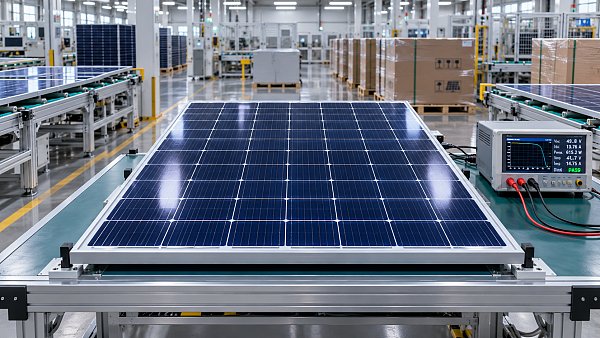
For modules, useful evidence includes serial-number traceability, flash-test records, electroluminescence images, and documented handling of defects. Confirm whether electrical measurements are traceable to appropriate reference devices and whether records can be linked to the shipped units. For inverters, review routine electrical tests, firmware control, thermal testing, and failure-analysis procedures.
Pay particular attention to bill-of-materials changes. A sample approved during tendering is less reassuring if the production order can use different cells, encapsulants, connectors, or other critical components without review. Require an agreed change-notification and approval process, including confirmation that substitutions remain within applicable certification coverage.
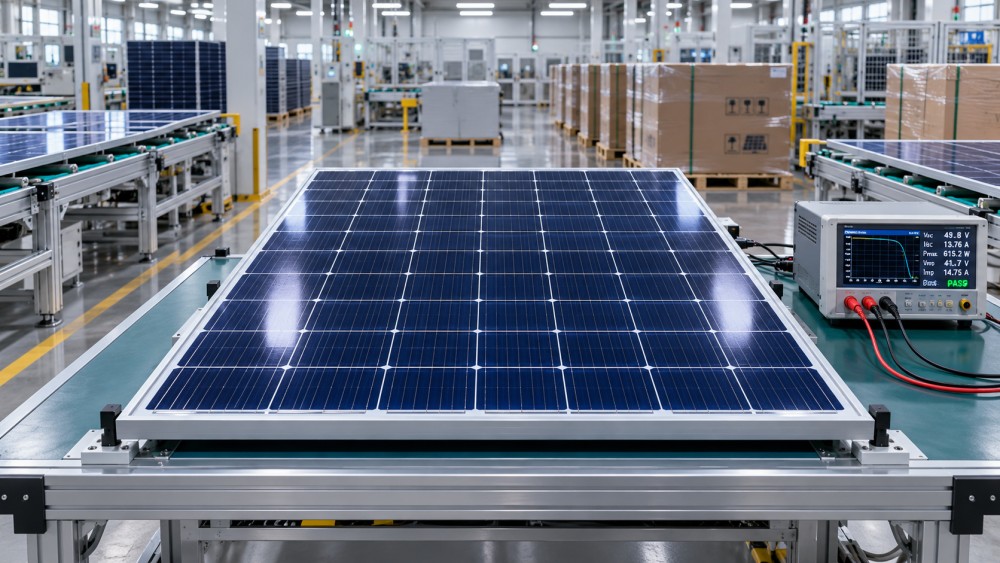
Before shipment, agree on inspection access, sampling methods, defect definitions, acceptance criteria, and corrective action. These should be settled before production—not negotiated after an inspector finds a problem. Reserve the right to verify packaging, labels, quantities, and serial-number records as well as product condition.
Read the warranty as a recovery process
The headline warranty period rarely explains what a failed component will cost the owner. Separate the product warranty, which addresses covered defects, from a module performance warranty, which specifies output commitments under defined conditions. Neither necessarily compensates for lost generation or all replacement expenses.
Ask the supplier to walk through a hypothetical claim: a module shows suspected degradation, or an inverter fails after commissioning. Who diagnoses it? What evidence is required? Who pays for testing, removal, freight, customs, reinstallation, and recommissioning? The answers reveal whether coverage is operationally useful.
- Coverage start: Check whether the warranty begins at shipment, delivery, installation, or another defined event, and whether there is a maximum delay before coverage starts.
- Exclusions: Review installation conditions, environmental limits, maintenance obligations, unauthorized repairs, and incompatible components.
- Remedies: Identify whether the manufacturer may repair, replace, supplement equipment, or issue a depreciated refund.
- Claims administration: Confirm notification deadlines, required records, testing arrangements, escalation contacts, and dispute procedures.
- Ownership changes: Check transferability if the project may be sold or refinanced.
For performance claims, examine measurement uncertainty and the agreed test method. Field output is affected by temperature, irradiance, soiling, shading, and system losses; a low plant yield does not by itself establish a module warranty breach.
Service terms deserve their own negotiation. A commitment to acknowledge a fault is not a commitment to restore operation. For critical equipment, define diagnostic support, replacement dispatch arrangements, local spare stock, and responsibility for keeping compatible parts available. Warranty insurance, if offered, needs a separate review of its insured parties, triggers, exclusions, and limits.
Validate lead times against production and logistics evidence
“Available in eight weeks” is incomplete unless the supplier defines when the clock starts and what happens at the end. It may mean production completion rather than arrival at the project site. Deposit receipt, drawing approval, component availability, or credit clearance may all be prerequisites.
Request a schedule covering engineering approval, material allocation, production, inspection, shipment release, transport, customs clearance, and site delivery. Ask which activities are confirmed and which remain assumptions. A claimed annual factory capacity does not establish that your order has an allocated production slot.
For larger commitments, seek evidence of order-specific material availability and a realistic production window. Inverters may depend on long-lead electronic components; mounting structures may require project-specific fabrication or coating. Check these constraints with the relevant supplier rather than applying a single lead time to the entire solar package.
Specify the Incoterms rule, named place, and version, but do not assume this resolves every commercial issue. Payment, title transfer, acceptance, delay remedies, and warranty obligations require separate wording. Coordinate shipment batches with installation sequencing so that early arrivals do not create unnecessary storage, security, or handling costs.
Warning signs include repeatedly changing factory locations, refusal to identify schedule dependencies, and delivery promises that exclude inspection or export documentation. Where delay damages are negotiated, legal review should address enforceability, caps, exclusions, and how delays are established.
Compare evaluated cost, not just the purchase price
Build the cost comparison around the same delivery scope and operating assumptions. Include freight, duties where applicable, inspections, installation differences, commissioning support, spares, monitoring fees, and expected maintenance. Keep uncertain costs visible rather than hiding them inside a single contingency percentage.
Consider a lower-priced inverter with no nearby replacement stock. Its discount may be outweighed by extended downtime, expedited transport, and additional site visits. That is a scenario to calculate using the project’s own energy value and service assumptions—not a reason to presume every locally supported product is cheaper overall.
Use pass/fail gates for mandatory compliance, traceability, and enforceable contractual responsibility. Then score qualified suppliers on quality evidence, delivery confidence, service capability, and evaluated cost. Record unresolved assumptions beside each score. Otherwise, a polished presentation can receive the same credit as verified documentation.
Make the shortlist conditional on closing evidence gaps
Before placing an order, assemble a controlled procurement file: approved specifications, certificate verification, manufacturing details, inspection arrangements, warranty terms, delivery milestones, and the agreed deviations register. Link payment milestones to objective evidence where commercially feasible, while preserving remedies for defects discovered later.
Global EcoPower & Energy Matrix Intelligence Network (EPEM) connects solar equipment selection with grid requirements, project execution, and lifecycle performance. Its industry intelligence can help frame comparisons and identify questions for technical and commercial review; supplier-specific claims still require direct verification.
A defensible shortlist should show not simply who quoted the lowest price, but what each supplier has proved. If the factory, warranty responsibility, or delivery commitment remains unclear, make approval conditional on resolving it. Those uncertainties are easier to negotiate before the purchase order than after equipment is needed on site.
Questions about market trends? Contact Market Scope Live for deeper business insights.
We respect your privacy. Your information is strictly confidential.
Related News
 Solar PV SystemsSolar Mounting Structures Pricing: What Drives Costs for PV Projects?Solar mounting structures pricing depends on design, materials and site conditions. Learn how to compare bids, uncover hidden costs and make smarter PV project decisions.MORE+
 Solar PV SystemsIndustrial Parks in Vietnam: Comparing Locations, Costs and InfrastructureCompare industrial parks in Vietnam by location, costs, logistics and power infrastructure. Discover how to shortlist the right site for your business.MORE+
 Solar PV SystemsFloating Solar Systems: How to Assess Reservoir SuitabilityFloating solar systems need the right reservoir. Discover how to assess water levels, grid access, environmental risks, and costs before investing.MORE+
 Solar PV SystemsSmart Solar Tracking Systems: How to Evaluate Energy Gains and Site SuitabilityExplore how smart solar tracking systems can boost energy yield. Compare site suitability, lifecycle costs, and fixed-tilt alternatives to make a confident investment decision.MORE+
 Solar PV SystemsFloating Solar Projects on Industrial Ponds: How to Assess Site SuitabilityAssess floating solar projects on industrial ponds with a practical guide to water levels, mooring, electrical connections, and site risks.MORE+
 Solar PV SystemsTurkey Allocates 785 MW of Grid Capacity in YEKA Solar TenderTurkey's YEKA solar tender allocates 785 MW of grid capacity across 11 sites. Explore what the results could mean for developers and suppliers.MORE+
 Solar PV SystemsChoosing String Inverters for Solar PV: Sizing, MPPT and ShadingChoose string inverters with confidence. Compare DC-to-AC sizing, MPPT allocation and shading impacts to improve solar PV performance.MORE+
 Solar PV SystemsChoosing Solar Racking Systems for Rooftops: Roof Type and Load FactorsChoosing solar racking systems for rooftops? Compare roof types, load factors and mounting options to plan a safer, more reliable installation.MORE+
 Solar PV SystemsSolar Tracking System Pricing: What to Include in a Project BudgetUnderstand solar tracking systems pricing and build a reliable project budget. Compare supplier quotes, uncover hidden costs, and assess long-term value.MORE+
 Solar PV SystemsChina Adds 110.83 GW of Solar in First Nine Months of 2026, Down 53.9%China solar additions reportedly fell 53.9% to 110.83 GW in January–September 2026. Explore pricing reform impacts and practical insights for project planning and procurement.MORE+
 Solar PV SystemsHow to Vet Solar Equipment Manufacturers: Quality, Warranties, and Lead TimesSearching “renewable equipment manufacturers solar”? Learn how to verify quality, compare warranties, and validate lead times to shortlist reliable suppliers and reduce project risk.MORE+
 Solar PV SystemsCommercial Rooftop Solar in India: How to Calculate Costs and PaybackCommercial rooftop solar India guide: calculate installation costs, estimate realistic savings and payback, and compare EPC quotes to make a smarter business investment.MORE+
 Solar PV SystemsSolar EPC Contractor Pricing: How to Compare Quotes and Spot ExclusionsCompare solar EPC contractor pricing with confidence. Learn how to spot exclusions, assess allowances, and uncover hidden costs before choosing the right quote for your project.MORE+
 Solar PV SystemsHow to Assess Site and Grid Feasibility for Solar Power Generation ProjectsAssess solar power generation projects with practical guidance on site suitability, grid capacity, connection costs, and curtailment risks. Make smarter investment decisions before committing capital.MORE+
 Solar PV SystemsPepco Approves ConnectDER Meter Adapters for Solar, Storage and EV Charging in D.C.Pepco approves ConnectDER meter adapters in D.C. for solar, storage and EV charging. Discover how meter-level connections could simplify installation and reduce costs.MORE+
 Solar PV SystemsTOPCon Photovoltaic Modules: Selection Criteria for High-Temperature Utility ProjectsTOPCon photovoltaic modules for hot-climate utility projects: compare temperature performance, bifacial yield, reliability, and electrical compatibility for stronger lifetime returns.MORE+
 Solar PV SystemsHow to Verify PV Module Supplier Capability Before Utility-Scale ProcurementVerify PV module supplier capability before utility-scale procurement with a practical checklist for factory audits, certifications, traceability, capacity, warranties, and risk control.MORE+
 Solar PV SystemsHow to Size Solar Power Generation Systems for Commercial Sites and Peak LoadsSolar power generation systems for commercial sites: learn to size PV for load profiles, peak demand, grid limits, storage, and future growth.MORE+
 Solar PV SystemsSolar Farm Construction: How to Plan Site, Grid Access, and Build RiskSolar farm construction insights for smarter site planning, grid access, procurement, and build-risk control—helping projects reach energization with confidence.MORE+
 Solar PV SystemsWhich Solar Inverter Certifications Are Mandatory in North America?What certifications are mandatory for solar inverters in North American markets? Explore UL 1741, IEEE 1547, CSA rules, and utility approval essentials.MORE+
 Solar PV SystemsWhat Is the Typical Payback Period for Commercial Solar PV in 2026?What is the typical payback period for a commercial solar PV installation in 2026? Explore the key cost, tariff, incentive, and sizing factors that shape returns.MORE+
 Solar PV SystemsWhat Causes Voltage Fluctuations When Large PV Plants Connect to Weak Grids?What causes voltage fluctuation when large solar PV plants connect to weak grids? Explore root causes, diagnostics, and proven mitigation strategies.MORE+
 Solar PV SystemsWhat Determines Solar Power Generation Efficiency in Commercial PV Projects?Solar power generation efficiency in commercial PV projects depends on more than module ratings—explore site resource, design, grid, and O&M factors that maximize long-term energy yield.MORE+
 Solar PV SystemsCommercial Rooftop Solar Financing: Comparing Loans, Leases, and PPAsCommercial rooftop solar financing explained: compare loans, leases, and PPAs to choose the right balance of savings, ownership, flexibility, and risk.MORE+
 Solar PV SystemsPV Bid Evaluation: How to Compare EPC Proposals Beyond the Lowest PricePV bid evaluation helps procurement teams compare EPC proposals beyond price—assess scope, energy yield, schedule, supply chain, warranties, and contract risk to protect long-term solar asset value.MORE+
 Solar PV SystemsWhat Environmental Permits Are Needed for Floating Solar on Reservoirs?What environmental permits are needed for floating solar on reservoirs? Explore water-use, EIA, shoreline, biodiversity, and water-quality approvals for smarter FPV development.MORE+
 Solar PV SystemsHow Long Does Utility-Scale Solar Grid Approval Take in 2026?How long does utility scale solar grid approval typically take in 2026? Explore timelines, queue risks, upgrade costs, and strategies to accelerate project delivery.MORE+
 Solar PV SystemsDo Agrivoltaic Projects Significantly Reduce Crop Yields in Hot Climates?Do agrivoltaic projects reduce crop yield significantly in hot climates? Explore how smart shade, crop selection, irrigation, and solar design can protect yields, improve quality, and strengthen dual-use land value.MORE+
 Solar PV SystemsHow Predictive Solar Plant O&M Reduces Downtime and Protects Energy YieldPredictive solar plant O&M helps cut downtime, detect faults early, prioritize repairs, and protect long-term energy yield with actionable data insights.MORE+
 Solar PV SystemsWhat Grid Connection Requirements Apply to Solar-Powered EV Charging?Solar farm grid connection requirements for EV charging explained: explore import/export limits, protection, storage, grid codes, and smart design strategies.MORE+
 Solar PV SystemsHow Much Solar Farm Capacity Is Needed to Offset Charging Demand in 2026?How to plan solar farm capacity to offset charging station demand in 2026? Explore sizing formulas, grid limits, storage strategies, and scalable EV charging solutions.MORE+
 Solar PV SystemsWhat Are the Actual Maintenance Costs of Solar Canopy Inverters?What are the real maintenance costs of solar inverters on charging canopies? Explore service, monitoring, repairs, downtime, and smarter lifecycle budgeting.MORE+
 Solar PV SystemsWhat Should Building Owners Evaluate Before Installing Rooftop Solar Photovoltaic?Rooftop solar photovoltaic planning starts with the right questions. Learn how to assess roof strength, load profile, grid limits, permits, and ROI before investing.MORE+
 Solar PV SystemsChina’s First Compute-Power and Green Power Direct Supply Project Enters OperationChina’s first compute-power and green power direct supply project begins operation, linking 500 MW solar power with data center demand for higher efficiency and stronger green energy credibility.MORE+
 Solar PV SystemsWhat Should Be Included in Solar Plant Engineering Design for Utility-Scale Projects?Solar plant engineering design for utility-scale projects should cover site constraints, layout, electrical systems, grid compliance, safety, and O&M—see what a complete, bankable design package must include.MORE+
 Solar PV SystemsUSTR Opens CVD Review on Chinese PV ModulesUSTR opens a CVD review on Chinese PV modules, raising questions over tariffs, sourcing, and Southeast Asia supply chains. See what importers and developers should watch now.MORE+
 Solar PV SystemsHow to Evaluate Rooftop Solar EPC Contractors for Commercial PV ProjectsRooftop solar EPC contractors can make or break commercial PV success. Learn how to compare engineering, grid, safety, scope, and risk control before choosing the right partner.MORE+
 Solar PV SystemsFixed Tilt Solar Racking: How to Evaluate Wind Load, Site Layout, and ROIFixed tilt solar racking guide: learn how to assess wind load, site layout, grading, foundations, and ROI to avoid hidden costs and choose a smarter solar structure.MORE+
 Solar PV SystemsHow to Choose Solar Modules for Commercial and Industrial PV Projects?Solar modules for C&I PV projects: learn how to compare efficiency, temperature performance, site suitability, warranty, and bankability to choose the right solution with confidence.MORE+
 Solar PV SystemsUSTR Extends Tariff Relief for Chinese PV ModulesUSTR Extends Tariff Relief for Chinese PV Modules through Dec. 31, 2026. See how the update affects solar procurement costs, project timelines, compliance, and U.S. market planning.MORE+