Commercial Rooftop Solar in India: How to Calculate Costs and Payback
Two proposals for the same factory roof can promise very different returns. One may show a low installation price but assume every solar unit offsets the full retail tariff. Another may cost more yet account for weekend shutdowns, roof repairs, and realistic maintenance. The cheaper quotation is not necessarily the better investment.
For business leaders evaluating commercial rooftop solar in India, the useful question is: how much cash will this system save, under our operating conditions, after all relevant costs? This guide explains how to build that calculation, compare EPC proposals, and distinguish a credible payback estimate from an optimistic sales projection.
Start with the electricity bill—not the roof area
A large roof tells you how much solar might fit. Your electricity consumption tells you how much solar is likely to make financial sense.
Collect at least 12 months of electricity bills, along with interval consumption data where available. Monthly totals alone can hide the mismatch between solar generation and business demand. A facility operating six days a week may consume most of its solar output directly; a warehouse with limited daytime activity may export a substantial share.
Before requesting a final system size, establish:
- Daytime base load: the electricity your site consistently uses during solar-generating hours.
- Operating calendar: weekends, seasonal closures, maintenance shutdowns, and production changes.
- Tariff structure: energy charges, time-of-day rates, demand charges, duties, and other bill components.
- Connection constraints: sanctioned load or contract demand, transformer capacity, and applicable interconnection rules.
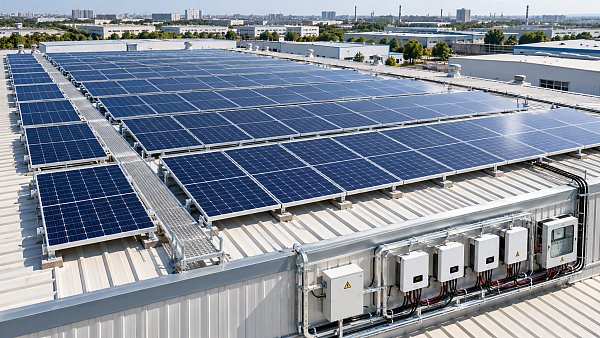
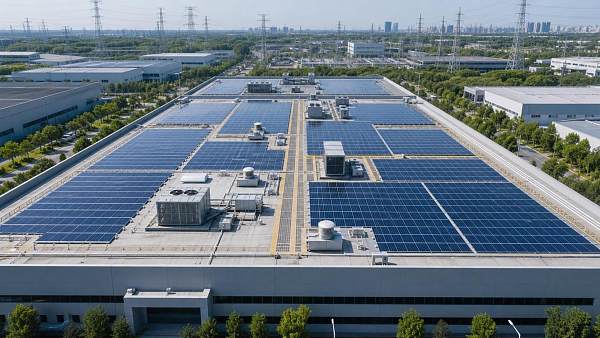
- Roof readiness: structural condition, shading, usable space, waterproofing, and remaining service life.
Do not assume rooftop solar removes the entire electricity bill. Fixed charges generally remain, and demand-charge savings require evidence that solar reduces the demand measured under your tariff. Cloud cover or an evening peak can limit that benefit.
What belongs in the installed cost?
A meaningful commercial rooftop solar cost comparison needs a common scope. A module-and-inverter quotation is not equivalent to a commissioned, compliant system connected to your electrical infrastructure.
Compare quotations on both ₹ per kWp of DC module capacity and total project cost. Confirm that bidders use the same capacity basis: a proposal stated in inverter AC capacity cannot be compared directly with one stated in module DC capacity.
Tax treatment also changes the effective investment. Ask your finance adviser to confirm applicable GST treatment, input tax credit eligibility, capitalization, and depreciation. Keep gross cash outlay separate from any recoverable tax benefit, including the timing of recovery.
Turn estimated generation into bankable savings
Generation is not the same as savings. Each solar unit has a financial value determined by when it is generated, whether the business consumes it, and how any surplus is settled.
1. Estimate realistic annual generation
A practical starting formula is:
Annual solar generation = installed DC capacity × annual specific yield
Specific yield is expressed in kWh per kWp per year. It should come from a site-specific assessment covering local irradiation, roof orientation, shading, module temperature, soiling, inverter losses, wiring losses, and availability. Do not accept a national average as a substitute for a roof-level model.
Ask whether the quoted yield represents first-year AC energy at the relevant meter, and whether all expected losses are included. For later years, apply the proposed degradation assumption rather than holding output constant throughout the asset’s life.
2. Split generation between self-consumption and export
Annual energy value = self-consumed solar × avoided import rate + exported solar × applicable export value
The avoided import rate is the portion of the electricity tariff genuinely displaced by solar—not automatically the total bill divided by total units. With time-of-day tariffs, match generation and consumption to the relevant time blocks.
Export valuation needs particular care in India. Net metering, net billing, gross metering, capacity eligibility, settlement periods, and surplus treatment depend on the applicable state framework and distribution licensee. A credit may not be equivalent to an immediate cash payment, and unused credits may face settlement restrictions.
Verify current rules with the relevant State Electricity Regulatory Commission and DISCOM before approving the financial model. Where export is prohibited or constrained, include export-limiting controls and model curtailed energy rather than assigning revenue to it.
A worked payback calculation
The following example is illustrative arithmetic, not a market quotation or a forecast. Its purpose is to show which assumptions drive the result. Replace every input with site data, comparable EPC bids, and verified tariff rules.
Self-consumed generation is 1,30,500 kWh, producing ₹11,74,500 in avoided electricity purchases. Exported generation is 14,500 kWh, worth ₹43,500 under the example’s settlement assumption.
Total first-year energy value is therefore ₹12,18,000. Subtracting the ₹90,000 operating allowance leaves ₹11,28,000 in first-year net operating savings.
Simple payback = initial investment ÷ annual net operating savings
For this example: ₹45,00,000 ÷ ₹11,28,000 = approximately 4.0 years.
This shortcut assumes annual savings remain constant. It excludes financing, income-tax effects, degradation, future tariff changes, and major replacements. A more reliable payback calculation identifies the year when cumulative modeled cash flows recover the initial investment.
Test the assumptions that can change the answer
A single payback figure looks reassuring, but it conceals risk. Procurement teams should ask for a base case and a downside case using the same transparent calculation.
The lesson is not that any particular payback is typical. It is that project economics depend on the value of usable generation, not simply installed capacity. A slightly smaller system with high self-consumption can sometimes outperform a larger system whose surplus receives a lower value.
Also test commissioning delays, higher roof-work costs, and a change in operating hours. For a leased property, the secure roof-access period should comfortably support the investment case, with contractual provisions for early termination or relocation.
Do not let operating costs disappear from the model
Commercial rooftops need ongoing attention, even when there are no moving parts. Cleaning frequency depends on local dust, rainfall, water availability, and safe access. Monitoring is useful only if someone responds to faults and verifies lost generation.
Include routine maintenance, cleaning, inspections, monitoring fees, insurance, and any roof rent or access charges. Establish who pays for replacement parts, callouts, and damage arising from roof work. An equipment warranty does not necessarily cover labor, transport, or lost energy.
Model major replacements separately, using supplier-supported assumptions for timing and cost. Inverter warranty length is not a guarantee that no replacement spending will occur outside that period. Avoid counting a replacement both as an annual reserve and as a separate future outflow.
Grid outages matter too. A conventional grid-connected solar system generally shuts down during an outage because of anti-islanding protection. Do not claim diesel displacement or backup value unless the proposed electrical design actually supports operation with a generator, storage, or an approved islanded system.
CAPEX, financing, or a RESCO agreement?
Under a CAPEX model, the business owns the system and receives the associated savings while carrying investment, performance, and lifecycle responsibilities. This approach suits companies willing to allocate capital and manage the asset directly or through a service contract.
With borrowing, distinguish project returns from shareholder cash flows. Debt service affects cash available to the business; financing should not be inserted into an unlevered project calculation and then counted again through the discount rate.
Under a RESCO or on-site PPA model, a third party typically finances and operates the plant, and the business purchases solar electricity under contract. The decision shifts from asset payback to contractual savings and risk allocation.
Check the PPA tariff, escalation, minimum purchase or deemed-generation obligations, roof rights, buyout terms, termination payments, and responsibility for approvals. A low starting tariff may be less attractive if escalation or inflexible obligations erode savings later.
For either route, compare discounted cash flows over a consistent evaluation period. Net present value and internal rate of return add useful context because simple payback ignores savings after recovery and the time value of money. Treat storage as a separate investment case unless its costs and incremental benefits are explicitly modeled.
What to require before signing an EPC contract
A procurement-ready proposal should let your engineering and finance teams trace every major number. Request the generation model, shading assessment, structural review, electrical single-line diagram, equipment schedule, exclusions, approval responsibilities, and commissioning timetable.
Performance commitments deserve close reading. Specify how generation or availability is measured, which weather adjustments apply, what exclusions are allowed, and what remedy follows underperformance. An attractive guarantee with broad exclusions may offer little practical protection.
Finally, reconcile the proposal with your own electricity bills. Confirm that the savings calculation uses achievable self-consumption, current settlement rules, realistic maintenance costs, and a roof you can use for the intended period. Keep unconfirmed subsidies and incentives outside the base case; residential support should not be assumed available to a commercial project.
The best commercial rooftop solar investment is not necessarily the lowest-cost installation. It is the project whose engineering, operating profile, contract terms, and financial assumptions withstand scrutiny together. When those elements align, payback becomes a decision tool rather than a sales headline.
Questions about market trends? Contact Market Scope Live for deeper business insights.
We respect your privacy. Your information is strictly confidential.
Related News
 Solar PV SystemsSolar Mounting Structures Pricing: What Drives Costs for PV Projects?Solar mounting structures pricing depends on design, materials and site conditions. Learn how to compare bids, uncover hidden costs and make smarter PV project decisions.MORE+
 Solar PV SystemsIndustrial Parks in Vietnam: Comparing Locations, Costs and InfrastructureCompare industrial parks in Vietnam by location, costs, logistics and power infrastructure. Discover how to shortlist the right site for your business.MORE+
 Solar PV SystemsFloating Solar Systems: How to Assess Reservoir SuitabilityFloating solar systems need the right reservoir. Discover how to assess water levels, grid access, environmental risks, and costs before investing.MORE+
 Solar PV SystemsSmart Solar Tracking Systems: How to Evaluate Energy Gains and Site SuitabilityExplore how smart solar tracking systems can boost energy yield. Compare site suitability, lifecycle costs, and fixed-tilt alternatives to make a confident investment decision.MORE+
 Solar PV SystemsFloating Solar Projects on Industrial Ponds: How to Assess Site SuitabilityAssess floating solar projects on industrial ponds with a practical guide to water levels, mooring, electrical connections, and site risks.MORE+
 Solar PV SystemsTurkey Allocates 785 MW of Grid Capacity in YEKA Solar TenderTurkey's YEKA solar tender allocates 785 MW of grid capacity across 11 sites. Explore what the results could mean for developers and suppliers.MORE+
 Solar PV SystemsChoosing String Inverters for Solar PV: Sizing, MPPT and ShadingChoose string inverters with confidence. Compare DC-to-AC sizing, MPPT allocation and shading impacts to improve solar PV performance.MORE+
 Solar PV SystemsChoosing Solar Racking Systems for Rooftops: Roof Type and Load FactorsChoosing solar racking systems for rooftops? Compare roof types, load factors and mounting options to plan a safer, more reliable installation.MORE+
 Solar PV SystemsSolar Tracking System Pricing: What to Include in a Project BudgetUnderstand solar tracking systems pricing and build a reliable project budget. Compare supplier quotes, uncover hidden costs, and assess long-term value.MORE+
 Solar PV SystemsChina Adds 110.83 GW of Solar in First Nine Months of 2026, Down 53.9%China solar additions reportedly fell 53.9% to 110.83 GW in January–September 2026. Explore pricing reform impacts and practical insights for project planning and procurement.MORE+
 Solar PV SystemsHow to Vet Solar Equipment Manufacturers: Quality, Warranties, and Lead TimesSearching “renewable equipment manufacturers solar”? Learn how to verify quality, compare warranties, and validate lead times to shortlist reliable suppliers and reduce project risk.MORE+
 Solar PV SystemsCommercial Rooftop Solar in India: How to Calculate Costs and PaybackCommercial rooftop solar India guide: calculate installation costs, estimate realistic savings and payback, and compare EPC quotes to make a smarter business investment.MORE+
 Solar PV SystemsSolar EPC Contractor Pricing: How to Compare Quotes and Spot ExclusionsCompare solar EPC contractor pricing with confidence. Learn how to spot exclusions, assess allowances, and uncover hidden costs before choosing the right quote for your project.MORE+
 Solar PV SystemsHow to Assess Site and Grid Feasibility for Solar Power Generation ProjectsAssess solar power generation projects with practical guidance on site suitability, grid capacity, connection costs, and curtailment risks. Make smarter investment decisions before committing capital.MORE+
 Solar PV SystemsPepco Approves ConnectDER Meter Adapters for Solar, Storage and EV Charging in D.C.Pepco approves ConnectDER meter adapters in D.C. for solar, storage and EV charging. Discover how meter-level connections could simplify installation and reduce costs.MORE+
 Solar PV SystemsTOPCon Photovoltaic Modules: Selection Criteria for High-Temperature Utility ProjectsTOPCon photovoltaic modules for hot-climate utility projects: compare temperature performance, bifacial yield, reliability, and electrical compatibility for stronger lifetime returns.MORE+
 Solar PV SystemsHow to Verify PV Module Supplier Capability Before Utility-Scale ProcurementVerify PV module supplier capability before utility-scale procurement with a practical checklist for factory audits, certifications, traceability, capacity, warranties, and risk control.MORE+
 Solar PV SystemsHow to Size Solar Power Generation Systems for Commercial Sites and Peak LoadsSolar power generation systems for commercial sites: learn to size PV for load profiles, peak demand, grid limits, storage, and future growth.MORE+
 Solar PV SystemsSolar Farm Construction: How to Plan Site, Grid Access, and Build RiskSolar farm construction insights for smarter site planning, grid access, procurement, and build-risk control—helping projects reach energization with confidence.MORE+
 Solar PV SystemsWhich Solar Inverter Certifications Are Mandatory in North America?What certifications are mandatory for solar inverters in North American markets? Explore UL 1741, IEEE 1547, CSA rules, and utility approval essentials.MORE+
 Solar PV SystemsWhat Is the Typical Payback Period for Commercial Solar PV in 2026?What is the typical payback period for a commercial solar PV installation in 2026? Explore the key cost, tariff, incentive, and sizing factors that shape returns.MORE+
 Solar PV SystemsWhat Causes Voltage Fluctuations When Large PV Plants Connect to Weak Grids?What causes voltage fluctuation when large solar PV plants connect to weak grids? Explore root causes, diagnostics, and proven mitigation strategies.MORE+
 Solar PV SystemsWhat Determines Solar Power Generation Efficiency in Commercial PV Projects?Solar power generation efficiency in commercial PV projects depends on more than module ratings—explore site resource, design, grid, and O&M factors that maximize long-term energy yield.MORE+
 Solar PV SystemsCommercial Rooftop Solar Financing: Comparing Loans, Leases, and PPAsCommercial rooftop solar financing explained: compare loans, leases, and PPAs to choose the right balance of savings, ownership, flexibility, and risk.MORE+
 Solar PV SystemsPV Bid Evaluation: How to Compare EPC Proposals Beyond the Lowest PricePV bid evaluation helps procurement teams compare EPC proposals beyond price—assess scope, energy yield, schedule, supply chain, warranties, and contract risk to protect long-term solar asset value.MORE+
 Solar PV SystemsWhat Environmental Permits Are Needed for Floating Solar on Reservoirs?What environmental permits are needed for floating solar on reservoirs? Explore water-use, EIA, shoreline, biodiversity, and water-quality approvals for smarter FPV development.MORE+
 Solar PV SystemsHow Long Does Utility-Scale Solar Grid Approval Take in 2026?How long does utility scale solar grid approval typically take in 2026? Explore timelines, queue risks, upgrade costs, and strategies to accelerate project delivery.MORE+
 Solar PV SystemsDo Agrivoltaic Projects Significantly Reduce Crop Yields in Hot Climates?Do agrivoltaic projects reduce crop yield significantly in hot climates? Explore how smart shade, crop selection, irrigation, and solar design can protect yields, improve quality, and strengthen dual-use land value.MORE+
 Solar PV SystemsHow Predictive Solar Plant O&M Reduces Downtime and Protects Energy YieldPredictive solar plant O&M helps cut downtime, detect faults early, prioritize repairs, and protect long-term energy yield with actionable data insights.MORE+
 Solar PV SystemsWhat Grid Connection Requirements Apply to Solar-Powered EV Charging?Solar farm grid connection requirements for EV charging explained: explore import/export limits, protection, storage, grid codes, and smart design strategies.MORE+
 Solar PV SystemsHow Much Solar Farm Capacity Is Needed to Offset Charging Demand in 2026?How to plan solar farm capacity to offset charging station demand in 2026? Explore sizing formulas, grid limits, storage strategies, and scalable EV charging solutions.MORE+
 Solar PV SystemsWhat Are the Actual Maintenance Costs of Solar Canopy Inverters?What are the real maintenance costs of solar inverters on charging canopies? Explore service, monitoring, repairs, downtime, and smarter lifecycle budgeting.MORE+
 Solar PV SystemsWhat Should Building Owners Evaluate Before Installing Rooftop Solar Photovoltaic?Rooftop solar photovoltaic planning starts with the right questions. Learn how to assess roof strength, load profile, grid limits, permits, and ROI before investing.MORE+
 Solar PV SystemsChina’s First Compute-Power and Green Power Direct Supply Project Enters OperationChina’s first compute-power and green power direct supply project begins operation, linking 500 MW solar power with data center demand for higher efficiency and stronger green energy credibility.MORE+
 Solar PV SystemsWhat Should Be Included in Solar Plant Engineering Design for Utility-Scale Projects?Solar plant engineering design for utility-scale projects should cover site constraints, layout, electrical systems, grid compliance, safety, and O&M—see what a complete, bankable design package must include.MORE+
 Solar PV SystemsUSTR Opens CVD Review on Chinese PV ModulesUSTR opens a CVD review on Chinese PV modules, raising questions over tariffs, sourcing, and Southeast Asia supply chains. See what importers and developers should watch now.MORE+
 Solar PV SystemsHow to Evaluate Rooftop Solar EPC Contractors for Commercial PV ProjectsRooftop solar EPC contractors can make or break commercial PV success. Learn how to compare engineering, grid, safety, scope, and risk control before choosing the right partner.MORE+
 Solar PV SystemsFixed Tilt Solar Racking: How to Evaluate Wind Load, Site Layout, and ROIFixed tilt solar racking guide: learn how to assess wind load, site layout, grading, foundations, and ROI to avoid hidden costs and choose a smarter solar structure.MORE+
 Solar PV SystemsHow to Choose Solar Modules for Commercial and Industrial PV Projects?Solar modules for C&I PV projects: learn how to compare efficiency, temperature performance, site suitability, warranty, and bankability to choose the right solution with confidence.MORE+
 Solar PV SystemsUSTR Extends Tariff Relief for Chinese PV ModulesUSTR Extends Tariff Relief for Chinese PV Modules through Dec. 31, 2026. See how the update affects solar procurement costs, project timelines, compliance, and U.S. market planning.MORE+