Should Fleet Charging Depots Use On-Site Solar or Buy Green Power?
For fleet operators, the question is rarely whether renewable electricity matters. It is whether the depot should become an energy asset in its own right.
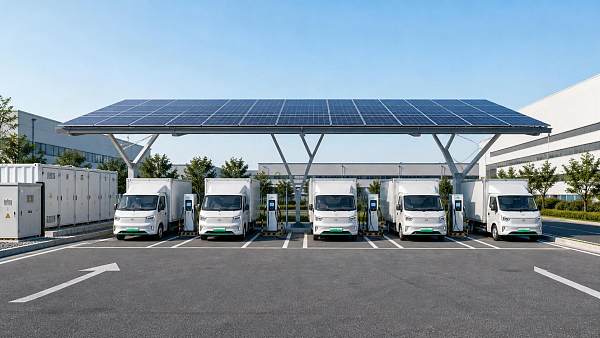
As delivery vans, buses, service vehicles, refuse trucks, and corporate fleets electrify, charging depots are becoming large and increasingly visible electricity users. A depot that once bought fuel through a conventional operating budget may now face demand charges, connection constraints, power-quality requirements, carbon reporting pressure, and uncertainty around the timing of vehicle charging. That changes the decision behind a familiar question: should the business install solar generation at the depot, or buy green power from the grid?
The short answer is that on-site solar and green-power procurement solve different problems. Solar can reduce exposure to daytime grid purchases, improve long-term cost control, and support a more resilient depot energy system. Green power can be deployed faster, requires little physical space, and can match renewable procurement with a fleet footprint that may be spread across many sites. Neither choice is automatically lower cost or more credible from a decarbonization perspective.
The right approach starts with the charging profile, not with a preference for solar panels or renewable electricity contracts.
Start with the depot's actual load shape
A fleet depot does not consume electricity in the same way as a typical office, warehouse, or retail site. Its charging demand is driven by vehicle return times, route schedules, battery sizes, charger ratings, operational buffers, and exceptions such as missed charging windows or emergency dispatches. These factors determine whether locally generated solar electricity will align with the load that matters.
Consider two broad examples. A last-mile delivery depot may have vehicles parked through the middle of the day, with staggered charging and some opportunity charging between routes. That profile can use a meaningful share of on-site solar generation directly. By contrast, a municipal bus depot may bring most vehicles back in the late afternoon and charge heavily overnight. Solar generation is still valuable, but much of its output may occur before the main charging period unless the site adds battery storage, flexible charging controls, or other daytime demand.
This is why annual electricity consumption is an incomplete starting point. A developer can show that a depot uses enough electricity to justify a large solar system on paper, while the operational value of that solar output remains limited because generation and charging occur at different hours.
Before choosing a procurement route, operators should assemble at least one year of interval data where it is available, then overlay the expected charging schedule as fleet electrification expands. The key questions are practical:
- When are vehicles physically available to charge?
- Which chargers must operate at full power, and which can be managed?
- How much daytime load exists outside vehicle charging?
- Will the depot's peak demand occur during solar production hours or after sunset?
- Can charging be shifted without affecting route reliability?
- Does the grid connection have enough import capacity for the future fleet?
A depot with high daytime charging and constrained grid capacity may have a strong operational case for solar. A site with almost entirely overnight charging may still benefit, but solar should be evaluated as part of a wider solar-plus-storage and energy-management strategy rather than as a stand-alone answer.
What on-site solar actually delivers
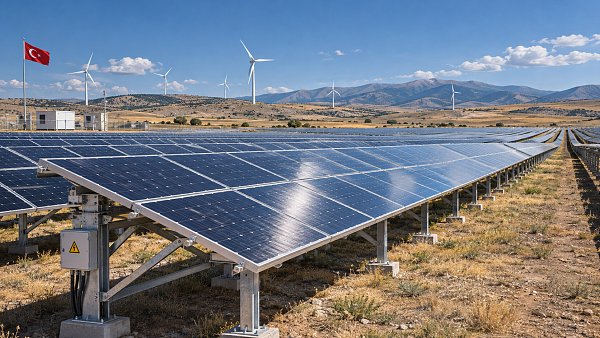
Integrating solar generation at a fleet charging depot is often presented as a direct path to cheaper charging. It can be, but the economics depend on what electricity the solar system displaces and when.
Solar has its strongest financial effect when it offsets electricity that would otherwise be purchased at a high retail tariff during production hours. This may include daytime vehicle charging, building loads, workshop equipment, refrigeration, lighting, or auxiliary systems. In markets with high demand charges, solar may also help reduce peak imports, although it should not be assumed to do so. If the depot's monthly peak occurs after solar output falls, solar alone may have little impact on the charge that matters most.
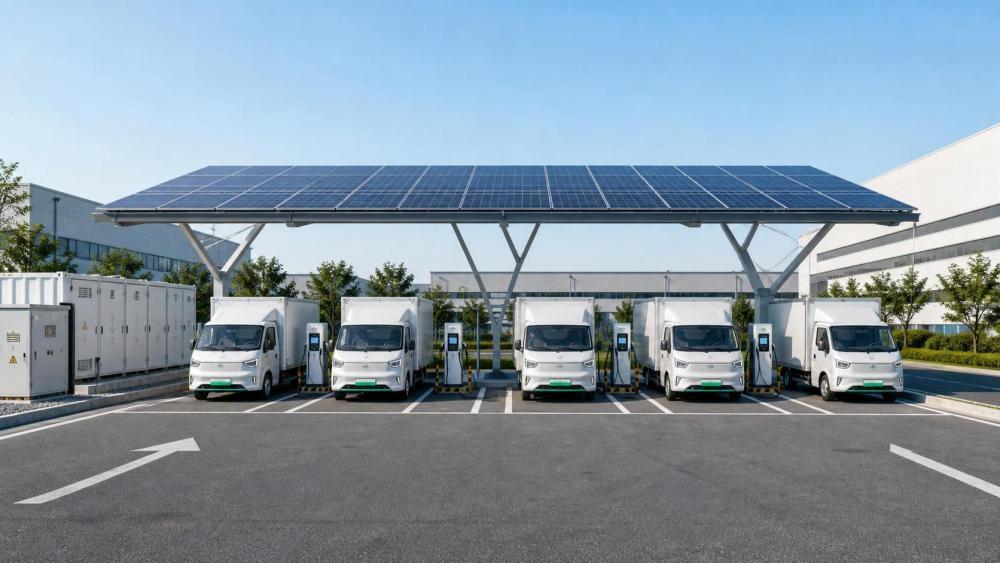
Its value also extends beyond the utility bill. A well-designed system can provide a predictable portion of energy supply over a long operating period, reduce dependence on tariff volatility, and demonstrate a visible commitment to electrification and emissions reduction. For property owners with underused roof area, parking canopies, or adjacent land, solar may turn a passive asset into productive infrastructure.
However, solar does not create dispatchable power by itself. Generation varies by season, weather, orientation, shading, equipment performance, and local conditions. It cannot guarantee that a vehicle needing a rapid turnaround at 9 p.m. will have renewable electricity available on site. Grid supply, storage, or both remain essential for most commercial fleet applications.
There are also physical and project-delivery constraints that are easy to underestimate. Roof loading, structural surveys, waterproofing condition, fire access, landlord consent, planning requirements, grid-export rules, cable routing, drainage, canopy engineering, and site access during construction can materially affect cost and schedule. A depot with ample apparent roof space may still have limited usable area after setbacks, rooftop equipment, shading, structural constraints, and safety clearances are considered.
For leased facilities, lease duration is especially important. A solar project may have an investment horizon much longer than the remaining property commitment. That does not rule the project out, but it changes the preferred commercial structure. The operator may need landlord participation, transferable rights, a third-party ownership arrangement, or a portfolio-level procurement model rather than direct capital investment.
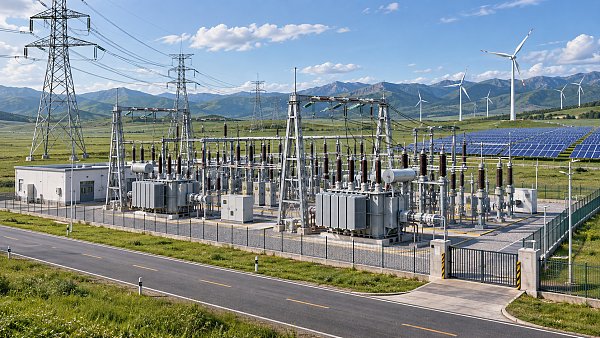
Solar also has a subtle interaction with grid connection planning. If the site needs a major electricity-service upgrade to support high-power charging, the solar system should be evaluated alongside that upgrade early. It may reduce net energy imports, but it does not necessarily eliminate the need for import capacity. Charging infrastructure is sized for the moments when many vehicles require power, including periods with low or no solar generation.
What buying green power solves, and what it does not
Buying green power can mean several different things. It may involve a utility renewable tariff, renewable energy certificates, guarantees of origin, a retail supply contract linked to renewable generation, or a corporate power purchase agreement. The commercial and environmental implications differ considerably, so the term should not be treated as a single product category.
For a fleet operator, the main attraction is speed and flexibility. A green-power supply arrangement can often cover electricity use across multiple depots without waiting for engineering studies, construction permits, roof works, or local generation interconnection. It can also be more suitable for urban sites with limited space, temporary locations, heavily shaded roofs, or charging demand concentrated at night.
It offers a clearer path for companies that need to align electricity procurement with enterprise-wide emissions reporting. A multi-site fleet may be able to implement a consistent renewable procurement policy even though only a small share of locations can host solar economically.
But buying green power does not improve the local electrical capacity of a depot. It does not reduce the immediate risk of transformer overload, feeder constraints, or a utility delay in upgrading the connection. It does not provide backup power during an outage unless it is paired with physical resilience infrastructure. And it does not automatically lower the retail cost of electricity.
Green-power claims also require care. A procurement instrument may support renewable generation in a broad market while doing little to match the depot's hourly consumption with local clean generation. That may be acceptable for a company pursuing annual market-based emissions targets, but it is not the same as directly charging vehicles from on-site solar at the time energy is produced.
Procurement teams should therefore ask for clarity on certificate ownership, retirement process, geographic market, generation technology, contract duration, pricing formula, volume commitments, and treatment of shortfalls. Claims about “100% renewable charging” should be reviewed with sustainability, legal, and finance teams before they appear in public reporting. Relevant accounting methods and regional disclosure rules should be checked for the applicable market 【待核实】.
The comparison changes when storage enters the project
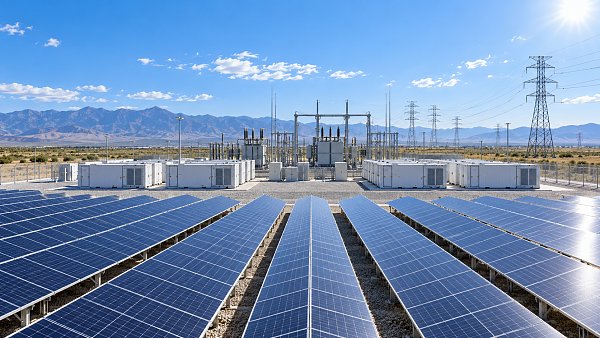
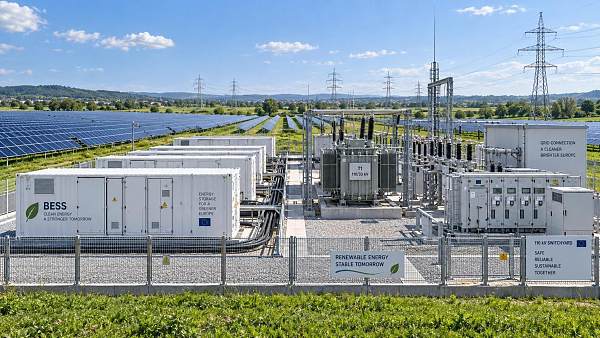
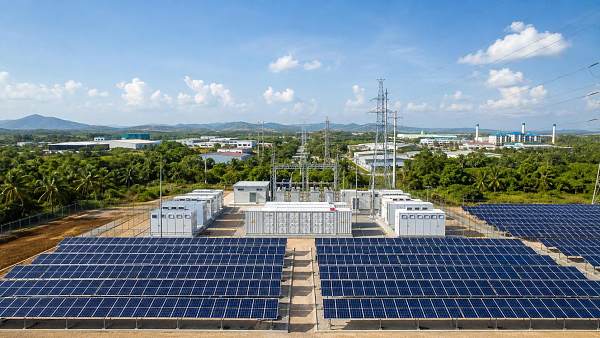
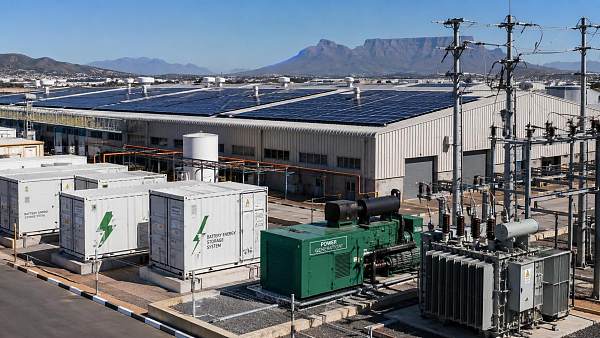
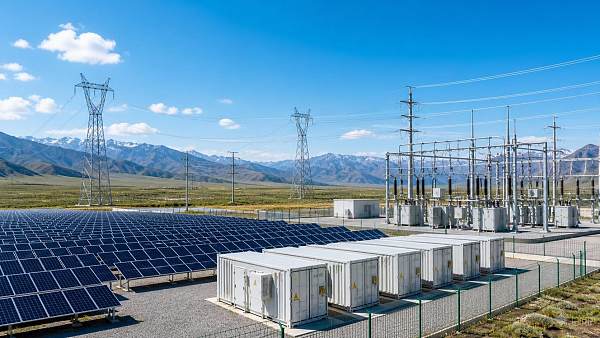
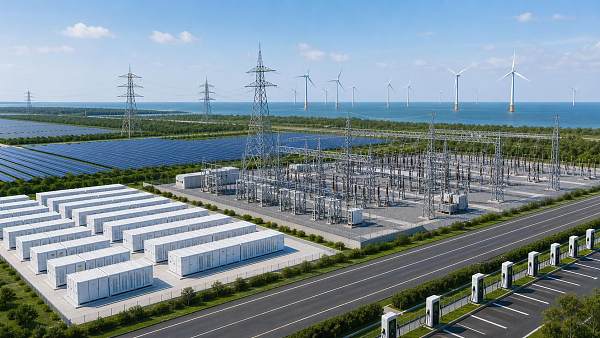
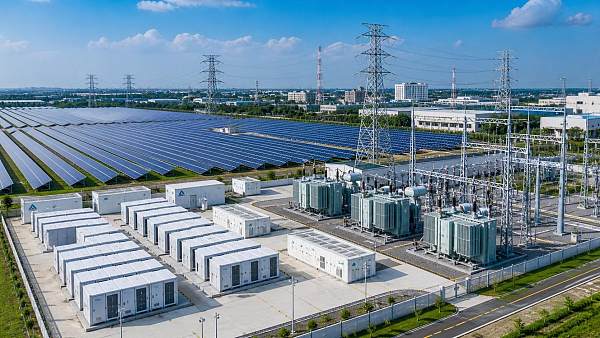
Battery energy storage can make solar more useful at a fleet depot, but it should not be added simply because it sounds like a complete clean-energy solution. Storage has a specific role: it can shift some daytime solar production into evening charging, limit grid imports during peaks, support managed fast charging, and potentially provide resilience for selected loads.
For an overnight-charging fleet, storage may be the difference between solar being mainly an annual energy-offset project and being a tool that supports actual charging operations. Yet storage introduces its own investment case. The system must be sized around power as well as energy capacity. A battery intended to reduce a short but severe charging peak may need high discharge power; one intended to move solar energy over several hours needs sufficient usable energy capacity. Thermal management, fire protection, controls integration, warranty conditions, degradation, replacement planning, insurance requirements, and local permitting all matter.
The strongest projects usually treat solar, storage, chargers, and the grid connection as one controlled system. An energy-management system can schedule charging based on departure deadlines, battery state of charge, tariff periods, solar forecasts, site demand, and grid limits. Without that control layer, a depot can invest in several useful assets and still operate them inefficiently.
That said, a battery does not always outperform a simpler green-power contract. Where electricity tariffs have limited time variation, demand charges are low, charging is predictable, and the grid connection is adequate, storage economics may be weak. The disciplined decision is to model it against the site's actual conditions rather than assume that every solar depot needs a battery.
Common assumptions that can lead to the wrong decision
One common assumption is that any unused roof should receive solar. In reality, roof solar should compete for capital against charging equipment, grid upgrades, operational technology, vehicle investment, and other decarbonization measures. The question is not whether solar is generally attractive. It is whether it produces sufficient operational, financial, and strategic value at this specific site.
Another is that green power is merely a reporting tool. It can be much more than that when structured well, particularly for a geographically dispersed fleet. It may provide price certainty, simplify renewable procurement, and allow operators to move quickly while physical infrastructure projects are developed. But it remains a supply strategy, not a substitute for local electrical engineering.
There is also a tendency to evaluate solar only through a simple payback calculation. Payback is useful, but it can miss important issues: the value of long-term tariff hedging, avoided curtailment of charging operations, potential export revenues, roof renewal timing, the effect of financing costs, and the cost of maintaining operational continuity if grid expansion is delayed. Conversely, a favorable payback can hide degradation risk, restrictive lease terms, underperforming assumptions, or an export tariff that is lower than expected.
Finally, fleet teams should avoid treating “renewable electricity” as separate from charging reliability. A depot cannot prioritize carbon attributes over vehicle availability. The energy strategy must preserve route readiness under poor weather, seasonal production changes, grid interruptions, and unexpected demand. Renewable procurement should strengthen operations, not create a fragile operating model.
A practical decision path for operators
The most useful first step is to separate immediate charging readiness from longer-term energy optimization. If vehicles must begin charging within months and the grid connection is available, green-power procurement may be the fastest route to a lower-carbon electricity position. On-site solar can then proceed through design, approvals, and financing without delaying fleet deployment.
Where a depot has usable space, high daytime loads, stable occupancy, and expensive daytime electricity, solar deserves early feasibility work. The study should include a site survey, load analysis, preliminary layout, interconnection review, structural assessment, tariff model, and sensitivity analysis for production and charging growth. It should not rely solely on a panel count multiplied by an assumed annual yield.
Where charging is predominantly overnight, operators should compare at least three cases: green power only; solar plus managed charging; and solar plus storage plus managed charging. The comparison should assess total cost of ownership, operational risk, carbon-accounting treatment, construction disruption, and flexibility under fleet expansion. An apparently higher-cost option may be preferable if it avoids a long grid-upgrade lead time or supports a critical resilience requirement.
For larger networks, the answer may be deliberately mixed. A company can install solar at high-value depots, procure renewable electricity for constrained urban locations, use storage selectively where demand charges or capacity limits justify it, and apply a common energy-management standard across the portfolio. This is often more credible than forcing one energy model on every site.
What to watch as fleet charging scales
The decision will become more dynamic as fleets grow. Charging loads are likely to become less predictable as vehicle types diversify, public charging is used as a contingency, depot operations change, and dispatch systems become more sophisticated. Electricity tariffs may evolve as utilities respond to new peak-demand patterns. Grid operators may impose connection conditions, flexible-service requirements, or export limits that change the business case after the initial design.
Operators should also watch the move toward time-matched and location-aware clean-energy procurement. Annual renewable matching remains useful, but some buyers are beginning to ask whether clean generation is available in the same market and at the same time as electricity consumption. That shift could increase the value of solar, storage, flexible charging, and more detailed energy data, while making broad annual procurement claims harder to interpret.
The decision is therefore not simply “build solar” or “buy green power.” It is a choice about how much of the depot's energy system the operator wants to own, control, finance, and maintain. Green power is often the quicker way to improve the renewable profile of charging. On-site solar is often the stronger long-term asset strategy where load, space, tariffs, and occupancy align. The best fleet energy plans recognize that both can have a role, while keeping vehicle availability and grid reality at the center of the investment case.
Questions about market trends? Contact Market Scope Live for deeper business insights.
We respect your privacy. Your information is strictly confidential.
Related News
 Global Energy Policy & SourcingEBRD Plans $6 Billion for Turkish Clean Energy Projects Over Five YearsEBRD plans $6 billion for Turkish clean energy projects over five years. Explore potential supply chain opportunities and what businesses should watch.MORE+
 Global Energy Policy & SourcingCOP31 Focuses on Grid Upgrades as Aging Networks Hinder Clean Energy TransitionCOP31 grid upgrades could reshape the clean energy transition. Explore how aging networks and cross-border connections may affect renewable energy projects and suppliers.MORE+
 Global Energy Policy & SourcingIndia Approves 145 Billion Rupee Plan to Support 92 GWh of Energy StorageIndia's energy storage plan commits 145 billion rupees to support 92 GWh by 2030–31. Explore the funding and what it could mean for projects.MORE+
 Global Energy Policy & SourcingChina's Wind and Solar Capacity Reaches 2 Billion kW; 170 Million kW AddedChina's wind and solar capacity reportedly reached 2 billion kW. Explore what the milestone could mean for project procurement, grid integration and suppliers.MORE+
 Global Energy Policy & SourcingSolarPower Europe Urges EU Ministers to Address Root Causes of High Energy PricesSolarPower Europe urges EU ministers to tackle high energy prices through consumer relief, electrification and renewables. Explore its call for action.MORE+
 Global Energy Policy & SourcingAustralia’s Clean Energy Investment Surges as H1 2026 Storage and Generation Hit RecordsAustralia’s clean energy investment hits H1 2026 records in generation financing and battery storage operations. Explore what this means for procurement, project delivery and suppliers.MORE+
 Global Energy Policy & SourcingHow Variable Steam Demand Affects Turbine Sizing in Process PlantsChoosing a steam turbine supplier? Learn how variable steam demand, pressure limits, and part-load efficiency affect turbine sizing—and avoid costly oversizing in your process plant.MORE+
 Global Energy Policy & SourcingSteam Turbine Lifecycle Costs: What to Include Beyond Purchase PriceCompare steam turbine supplier offers beyond purchase price. Explore installation, energy, maintenance and downtime costs to make a smarter lifecycle investment.MORE+
 Global Energy Policy & SourcingGrid Operators in South Africa: Who Runs Transmission and Distribution?Discover the grid operators South Africa relies on, from NTCSA to Eskom and municipalities. Find the right connection route and avoid costly project delays with this practical guide.MORE+
 Global Energy Policy & SourcingChoosing a Medium Voltage Switchgear Factory: Quality Checks Before OrderingChoosing a medium voltage switchgear factory? Discover essential quality checks, test evidence, and acceptance terms to reduce procurement risks before you order.MORE+
 Global Energy Policy & SourcingK9 Ductile Iron Pipe Specifications: Pressure Class and Buyer ChecksBuying K9 ductile iron pipe? Learn how thickness differs from pressure class and which standards, joints, and quality checks to verify before ordering. Avoid costly procurement mistakes.MORE+
 Global Energy Policy & SourcingRenewable Energy Project Procurement: A Practical Bid Evaluation ChecklistRenewable energy project procurement: use this practical bid evaluation checklist to compare compliance, grid readiness, delivery risk, lifecycle cost, and warranties before award.MORE+
 Global Energy Policy & SourcingStrategic Energy Procurement: Which Contract Terms Reduce Price Volatility?Strategic energy procurement insights on contract terms that reduce price volatility, protect budgets, and strengthen financial control. Explore practical risk-management strategies.MORE+
 Global Energy Policy & SourcingEnergy Strategic Sourcing Frameworks for Cost Control and Supply SecurityEnergy strategic sourcing frameworks help control lifetime costs, strengthen supply security, qualify resilient suppliers, and protect energy projects from delays and operational risk.MORE+
 Global Energy Policy & SourcingIOU Strategic Sourcing: Managing Supplier Risk in Utility Energy ContractsIOU strategic sourcing helps investor-owned utilities manage supplier risk, strengthen energy contracts, and protect long-term grid reliability.MORE+
 Global Energy Policy & SourcingPublic Power Strategic Sourcing: Building Transparent Energy Procurement ProgramsPublic power strategic sourcing guide for transparent, resilient energy procurement—improve lifecycle value, supplier accountability, and grid-ready decisions.MORE+
 Global Energy Policy & SourcingU.S. Infrastructure Investors in Clean Energy: Who Funds What Projects?Infrastructure investors in USA are reshaping clean energy funding. Discover who finances solar, storage, grid modernization, and EV charging—and what makes projects investable.MORE+
 Global Energy Policy & SourcingDistribution Transformer Efficiency Regulation Updates: Compliance Steps for UtilitiesDistribution transformer energy efficiency regulation update: learn practical compliance steps, loss-test requirements, and procurement controls for utilities.MORE+
 Global Energy Policy & SourcingEU Grid Code Compliance for Solar and BESS Projects: Key Tests and RequirementsGrid code compliance Europe for solar and BESS projects: discover essential voltage, frequency, ride-through, protection, telemetry and testing requirements for faster connection approval.MORE+
 Global Energy Policy & SourcingKey Technical Parameters That Determine Steam Turbine Suitability for Industrial Cogeneration Projectssteam turbine supplier? Discover the 5 critical technical parameters—exhaust pressure, steam quality tolerance, part-load efficiency & more—that truly determine suitability for industrial cogeneration projects.MORE+
 Global Energy Policy & SourcingSoutheast Asia Energy Project Pipeline: Key Markets, Timelines, and Investment SignalsExplore the energy project pipeline Southeast Asia: key markets, project timelines, grid risks, and investment signals for smarter renewable energy decisions.MORE+
 Global Energy Policy & SourcingIndustrial Energy Users in South Africa: Costs, Supply Risks and TrendsIndustrial energy users in South Africa: explore cost pressures, supply risks, solar, storage and practical strategies to improve resilience and control energy spend.MORE+
 Global Energy Policy & SourcingSteam Turbine Maintenance Checks to Confirm Before Finalizing a PurchaseSteam turbine supplier checklist: confirm maintenance access, spares, oil systems, controls, and service support before purchase to reduce outage risk.MORE+
 Global Energy Policy & SourcingDoes EPEM Provide Regional Data on Clean Energy Project Financing?Does EPEM cover clean energy project financing data by region? Explore regional market, grid, policy, and risk insights to support smarter clean energy investment screening.MORE+
 Global Energy Policy & SourcingDuctile Iron Pipe Acceptance Testing for Water Infrastructure ProjectsDuctile iron pipe acceptance testing guide for water projects: verify standards, traceability, coatings, joints, and hydrostatic tests for reliable compliance.MORE+
 Global Energy Policy & SourcingShould Fleet Charging Depots Use On-Site Solar or Buy Green Power?Should I integrate solar generation directly at a fleet charging depot or buy green power? Explore costs, reliability, storage, and smarter charging strategies.MORE+
 Global Energy Policy & SourcingGlobal Energy Project Pipeline: Where Investment Is Moving Across Solar, Wind, BESS, and EV ChargingGlobal energy project pipeline insights: see where investment is shifting across solar, wind, BESS, and EV charging, and what makes projects bankable, grid-ready, and worth backing.MORE+
 Global Energy Policy & SourcingWhat Does Grid Decarbonization Consulting Cover for Utility-Scale Power Projects?Grid decarbonization consulting helps utility-scale power projects cut emissions, stay grid-compliant, and improve long-term returns. Discover how it supports planning, flexibility, and execution.MORE+
 Global Energy Policy & SourcingWhich Decarbonization Technologies for Industry Deliver the Best ROI by Process Type?Decarbonization technologies for industry deliver the best ROI when matched to process type. Explore electrification, waste heat recovery, fuel switching, and digital upgrades.MORE+
 Global Energy Policy & SourcingChina Launches Green Certificate Price IndexChina Launches Green Certificate Price Index: learn how the new benchmark affects CBAM, ESG compliance, green electricity tracing, and carbon reporting for exporters and global buyers.MORE+
 Global Energy Policy & SourcingHow to Evaluate Renewable Equipment Tenders for Risk, Compliance, and Total CostRenewable equipment tenders require more than price checks. Learn how to assess risk, compliance, and total cost to avoid hidden project issues and choose smarter bids.MORE+
 Global Energy Policy & SourcingCommon Water Waste and Hygiene Issues in Poultry Nipple Drinking SystemsNipple drinking system poultry issues often start with leaks, pressure errors, and hidden biofilm. Learn how to cut water waste, improve hygiene, and protect flock performance.MORE+
 Global Energy Policy & SourcingRenewable Energy Infrastructure Development: Key Policy, Grid, and Financing TrendsRenewable energy infrastructure development is being reshaped by policy reform, grid constraints, and smarter financing—discover the trends driving bankable, future-ready projects.MORE+
 Global Energy Policy & SourcingEquipment Bankability Supplier Review: What Buyers Should Check Before ShortlistingEquipment bankability supplier review: learn what buyers should check before shortlisting, from financial strength and certifications to service support, warranty risk, and real project performance.MORE+
 Global Energy Policy & SourcingPower Project Permitting in Saudi Arabia: Key Approvals, Timelines, and Common DelaysPower project permitting Saudi Arabia explained: key approvals, realistic timelines, and the most common delay risks—plus practical steps to keep energy projects bankable and on schedule.MORE+
 Global Energy Policy & SourcingHow to Evaluate Clean Energy Investment Utility Scale Projects Before Committing CapitalClean energy investment utility scale decisions require more than headline capacity. Discover how to assess grid access, revenue quality, execution risk, and long-term returns before committing capital.MORE+
 Global Energy Policy & SourcingUtility Renewable Energy Infrastructure Explained: Key Assets, Risks, and Build-Out PrioritiesUtility renewable energy infrastructure explained: explore key assets, grid and storage risks, and build-out priorities to improve project bankability, resilience, and long-term value.MORE+
 Global Energy Policy & SourcingAgrivoltaic Systems in France: Land Use Rules, Crop Fit, and Project Planning BasicsAgrivoltaic systems France explained: learn land use rules, crop fit, permitting, and grid basics to assess smarter, more bankable solar-agriculture projects.MORE+
![]() Global Energy Policy & SourcingMicrogrid Project Permitting Checklist: Key Approvals, Studies, and Common DelaysMicrogrid project permitting made practical: explore key approvals, required studies, and the most common delays to keep projects bankable, compliant, and on schedule.MORE+
 Global Energy Policy & SourcingProject Owners Financing Options for Energy Projects: Loans, Leasing, or EPC Credit?Project owners financing options explained: compare loans, leasing, and EPC credit for energy projects to reduce risk, protect cash flow, and choose the smartest funding path.MORE+