EU Grid Code Compliance for Solar and BESS Projects: Key Tests and Requirements
For solar and battery energy storage system projects, grid code compliance Europe determines whether a plant can connect, export power, and operate without costly remedial work.
For project managers, compliance is not a final commissioning document. It is a design, procurement, controls, protection, and stakeholder-management workstream that must begin before equipment orders.
The practical objective is straightforward: translate the relevant transmission or distribution operator requirements into testable obligations, then prove every obligation through coordinated evidence and site testing.
EU requirements provide an important framework, but project teams should never assume that a single European rulebook applies unchanged across every country, voltage level, or connection point.
National implementation rules, connection agreements, operator specifications, and project-specific studies often define the actual pass criteria, test sequence, reporting format, and witnessing requirements.
What Project Managers Must Control First
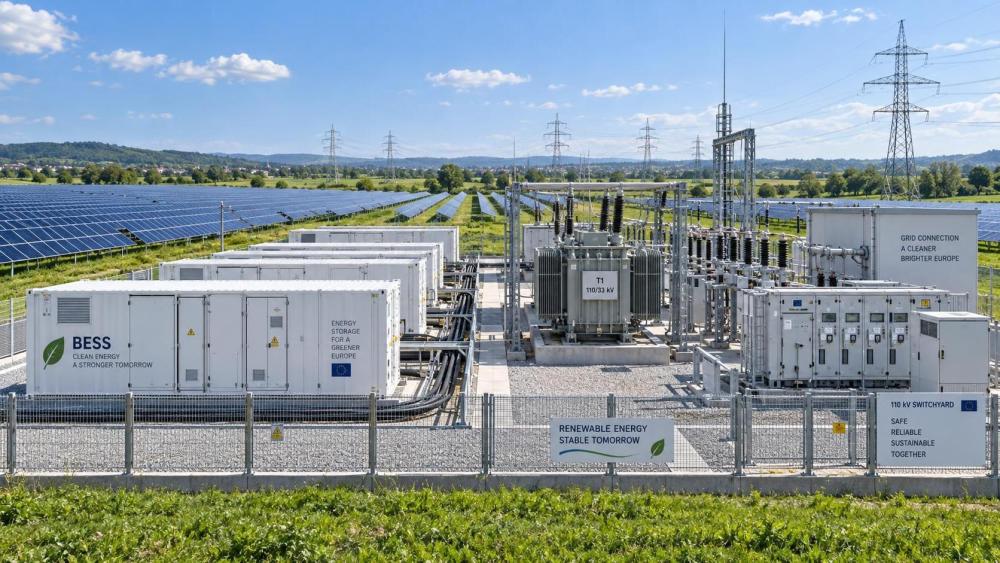
The most valuable early decision is identifying the governing documents. This includes EU network codes, national regulations, the grid operator connection offer, and approved design studies.
For generation assets, the Requirements for Generators regulation provides a common European basis. However, type classification and detailed technical parameters remain subject to local implementation.
A BESS may be assessed as generation, demand, storage, or a combined resource. Its treatment depends on operating modes, connection capacity, export rights, and local rules.
Project teams should create a requirements matrix before detailed engineering begins. Each row should state the requirement, responsible party, evidence type, test method, and approval status.
This matrix prevents a common failure: discovering during commissioning that an inverter capability exists, but its controller settings, protection scheme, or measured performance do not comply.
Assign one accountable compliance lead with authority across EPC, inverter suppliers, BESS integrators, SCADA providers, protection engineers, and grid operator interfaces.
Connection approval usually depends on an integrated plant response. Grid operators assess the power plant controller, transformers, protection relays, communication systems, and conversion equipment together.
Accordingly, equipment certificates are necessary but insufficient. A certified inverter does not prove that the completed solar-plus-storage plant will meet its connection agreement at the point of connection.
Start With the Correct Connection Classification
Classification drives the technical burden. Larger plants and higher-voltage connections normally face more extensive obligations for voltage support, frequency response, fault ride-through, and operational telemetry.
Under the European framework, generating modules are generally categorized from Type A through Type D. Thresholds vary by country and voltage level.
Developers should confirm the applicable category directly with the relevant system operator. Relying on an earlier project or supplier assumption can create an incorrect basis of design.
For BESS projects, clarify whether charging import capacity is separately constrained. A storage system may pass export tests while still creating noncompliance during charging or auxiliary demand conditions.
The connection agreement should specify active power limits, reactive power range, ramp rates, permitted operating modes, fault levels, and the precise point where compliance is measured.
That measurement point matters. Performance at an inverter terminal can differ materially from performance at the point of connection because of cables, transformers, collector systems, and plant losses.
Confirm whether requirements apply under normal grid conditions, abnormal voltage conditions, islanding scenarios, outage restoration, or remote dispatch. These cases can demand different control settings.
A written classification and scope note should be approved before procurement. It gives vendors a stable technical baseline and allows contracts to allocate compliance obligations clearly.
Voltage and Reactive Power Tests Often Determine Acceptance
Voltage-control performance is a central concern in grid code compliance Europe because solar output, BESS dispatch, transformer tap positions, and network conditions can all influence voltage.
Grid operators commonly require a defined reactive power capability at the point of connection. This may be expressed through power factor limits, Q limits, or a capability diagram.
Tests normally verify that the plant can operate at requested reactive setpoints across relevant active-power levels. Teams must consider inverter limits, cable losses, and transformer magnetizing demand.
Voltage-control tests may assess fixed power factor, fixed reactive power, voltage-reactive power droop, or closed-loop voltage regulation. The required mode must be configured and demonstrated correctly.
For hybrid plants, test solar-only, BESS-only, combined export, low-output, and charging modes where relevant. Reactive capability can change significantly between these operating states.
The plant controller must coordinate individual inverters or power conversion systems without unstable hunting. Poor tuning may cause oscillation, delayed response, or repeated limit breaches.
Before site testing, complete reactive power flow studies using realistic grid voltage ranges. These studies identify whether additional compensation equipment or revised transformer settings are needed.
Record voltage, active power, reactive power, command values, controller status, and timestamps at sufficient resolution. Incomplete data capture is a frequent reason for rejected test evidence.
Frequency Response Requires Controls and Operational Discipline
Frequency requirements are intended to support system stability when generation and demand become unbalanced. Both solar and BESS assets may need to change active power automatically.
Typical requirements include frequency-sensitive power reduction at high frequency, reconnection conditions, deadbands, droop settings, response times, and restrictions on rapid recovery after an event.
BESS projects may also be contracted for frequency containment or balancing services. Market-service settings must remain compatible with mandatory grid-code behavior and connection limits.
Project managers should require a clear hierarchy of controls. The system must define how grid protection, mandatory frequency functions, operator commands, market dispatch, and battery constraints interact.
A battery cannot sustain upward frequency response when its state of charge is too low. Likewise, it cannot absorb power during over-frequency events when it is already full.
State-of-charge management is therefore a compliance issue, not only an optimization issue. Operating procedures should reserve sufficient energy and headroom for contracted or mandatory services.
During tests, verify actual response at the point of connection rather than relying only on controller logs. Communication delays and plant losses can affect delivered performance.
Test reports should state the initial operating point, simulated or induced frequency input, expected response, actual response time, maximum deviation, and any control-mode limitations.
Fault Ride-Through Is a Plant-Level Engineering Challenge
Fault ride-through requirements specify how a plant behaves during short voltage disturbances. Instead of disconnecting immediately, qualifying assets must remain connected for defined voltage-time profiles.
Low-voltage ride-through is particularly important for inverter-based generation. The plant may need to stay connected while injecting reactive current to help support network voltage.
High-voltage ride-through may also apply. Teams must confirm required envelopes, current-priority logic, recovery behavior, and protection settings for the applicable grid operator standard.
Compliance cannot be demonstrated by assuming an inverter firmware feature is enabled. The protection relay, plant controller, transformer protection, and inverter settings must all allow the intended response.
Incorrect undervoltage, overvoltage, vector-shift, rate-of-change-of-frequency, or anti-islanding settings can trip a plant before its ride-through obligation has been fulfilled.
Most projects use validated simulations, manufacturer type-test evidence, and site verification rather than intentionally applying severe faults to a live utility-scale plant.
Dynamic models must accurately represent inverter controls, BESS power conversion systems, collector network impedances, transformer saturation assumptions, and the grid strength at the connection point.
Require model validation early. A late mismatch between modelled and installed controller behavior can delay energization, especially where the operator requires independent study review.
Protection Coordination Must Match the Grid Code
Protection settings are where electrical safety, asset protection, and grid compliance meet. The protection scheme must isolate genuine faults without unnecessarily disconnecting the entire project.
Coordinate plant protection with the grid operator’s upstream devices. This normally involves protection studies, relay-setting files, grading checks, single-line diagrams, and approved interface specifications.
Key functions may include overcurrent, earth fault, differential protection, voltage protection, frequency protection, synch-check, breaker-failure logic, and communication-assisted trip schemes.
For solar and BESS plants, anti-islanding protection deserves particular attention. Its logic must satisfy local distribution requirements while avoiding conflict with required ride-through behavior.
Test both primary protection operation and secondary injection where appropriate. Functional tests should also cover trip circuits, interlocks, breaker status signals, alarms, and reset procedures.
Protection changes after commissioning can unintentionally invalidate previous evidence. Establish configuration control so that every relay, controller, and inverter setting is traceable to an approved version.
Use a formal change process for firmware upgrades as well. Updated inverter or BESS software can alter response curves, fault behavior, communication mapping, or available operating modes.
The final compliance dossier should contain signed settings records and as-built drawings. These documents support operator acceptance, future maintenance, refinancing diligence, and incident investigation.
SCADA, Telemetry, and Remote Control Are Not Secondary Tasks
Grid operators increasingly require real-time visibility and remote dispatch capability. A compliant power plant must communicate operating status reliably, securely, and in the required protocol.
Required points often include active and reactive power, voltage, frequency, breaker state, transformer tap position, availability, alarms, curtailment status, and energy-storage state of charge.
Remote controls may include active-power setpoints, reactive-power setpoints, voltage targets, power-factor commands, operational enable signals, and emergency disconnection instructions.
Project managers should validate the complete signal path. A correct SCADA screen does not prove that data reaches the operator control room with accurate scaling and acceptable latency.
Conduct point-to-point checks using the operator’s interface, including command acknowledgement, fail-safe behavior, timestamp consistency, and restoration after a communications outage.
Cybersecurity requirements must be defined early because they affect network architecture, gateway selection, remote access, account management, logging, and the commissioning sequence.
Do not leave telecoms and operator integration until mechanical completion. Delayed fibre availability, protocol disputes, or missing telemetry often become the critical path to commercial operation.
Maintain a clear responsibility matrix between EPC, SCADA vendor, telecommunications provider, asset owner, and grid operator. Interface ownership must be explicit during fault resolution.
Build a Test Programme Before Construction Is Complete
The best commissioning programmes are evidence-driven from the start. They connect each grid-code requirement to a planned factory test, model study, site test, or witnessed demonstration.
Begin with document review: approved studies, manufacturer certificates, control narratives, protection philosophies, equipment data sheets, drawings, and settings schedules should be internally consistent.
Factory acceptance testing should cover controls and communication functions that can be verified before shipment. This is especially useful for plant controllers, BESS controls, and SCADA gateways.
Site acceptance testing should then confirm installed behavior under actual network conditions. Schedule tests only after all relevant equipment, measurement systems, and communications interfaces are ready.
Pre-commissioning checks should verify wiring, polarity, metering accuracy, transformer ratios, breaker operation, protection inputs, controller signals, and equipment configuration backups.
Functional commissioning verifies normal active-power control, reactive-power control, ramping, curtailment, local and remote modes, BESS charge-discharge transitions, and interlocks.
Performance testing proves the required dynamic and steady-state response. The grid operator may witness tests, review test procedures in advance, or require a specific independent engineer.
Allow time for retesting. A failed test may require parameter changes, model updates, formal approvals, and a new operator witness slot rather than a quick same-day correction.
Commercial Risks and Procurement Decisions
Grid-code noncompliance can delay energization, reduce permitted export capacity, trigger liquidated damages, postpone revenue, and require costly retrofits after construction has already advanced.
Contracts should define compliance responsibilities by system boundary. Inverter vendors, BESS integrators, EPC contractors, and SCADA suppliers must provide compatible guarantees rather than isolated promises.
Specify the required grid code version, national application rule, operator documents, connection voltage, performance parameters, test standards, model formats, and acceptance evidence in procurement packages.
Ask vendors whether guaranteed capability applies at equipment terminals or at the point of connection. The latter is more meaningful but requires clear assumptions about external plant equipment.
Include obligations for model delivery, model updates, software support, parameter disclosure, and engineering assistance during operator review. These items are often omitted from equipment-focused contracts.
For BESS procurement, confirm performance across state-of-charge, ambient temperature, degradation state, and auxiliary load conditions. Nameplate megawatts alone do not establish usable compliance capability.
Retain payment milestones linked to accepted compliance deliverables, not merely equipment delivery. This aligns supplier incentives with the project’s actual connection and commercial-operation objectives.
Independent technical review is often justified for complex hybrid plants. It can identify conflicting specifications before they become construction changes or disputed commissioning failures.
A Practical Compliance Roadmap for Solar and BESS Projects
First, secure written confirmation of the applicable connection category, grid operator requirements, and point-of-connection performance criteria. Treat this as a controlled project input.
Second, translate requirements into a compliance matrix with named owners and objective evidence. Review it at design gateways, procurement approvals, factory testing, and commissioning readiness meetings.
Third, complete load flow, short-circuit, harmonic, protection coordination, and dynamic studies using vendor models that match the intended plant controls and network configuration.
Fourth, freeze critical control and protection philosophies before final equipment procurement. Late changes to reactive capability, ride-through logic, or telemetry can affect several package contracts.
Fifth, submit test procedures and models early enough for grid operator comments. Approval cycles can be longer than physical construction activities, particularly for high-capacity connections.
Sixth, execute site tests with calibrated instruments and disciplined data collection. Preserve raw files, signed witness records, screenshots, settings backups, and a traceable test log.
Finally, hand over a living compliance file to operations. Grid code obligations continue after commercial operation because settings, software, dispatch practices, and network conditions can change.
Conclusion
Effective grid code compliance Europe is achieved through early scope definition, integrated engineering, enforceable supplier obligations, and a test programme that measures performance at the connection point.
For project managers, the key lesson is that compliance belongs in project controls from feasibility through operations. It is not an isolated commissioning task.
Solar and BESS projects that manage voltage support, frequency response, ride-through, protection, communications, and evidence systematically are better positioned to achieve timely connection approval.
The strongest decision framework is simple: confirm the local rules, define measurable responsibilities, validate the whole plant, and retain evidence that remains useful throughout the asset lifecycle.
Questions about market trends? Contact Market Scope Live for deeper business insights.
We respect your privacy. Your information is strictly confidential.
Related News
 Global Energy Policy & SourcingEBRD Plans $6 Billion for Turkish Clean Energy Projects Over Five YearsEBRD plans $6 billion for Turkish clean energy projects over five years. Explore potential supply chain opportunities and what businesses should watch.MORE+
 Global Energy Policy & SourcingCOP31 Focuses on Grid Upgrades as Aging Networks Hinder Clean Energy TransitionCOP31 grid upgrades could reshape the clean energy transition. Explore how aging networks and cross-border connections may affect renewable energy projects and suppliers.MORE+
 Global Energy Policy & SourcingIndia Approves 145 Billion Rupee Plan to Support 92 GWh of Energy StorageIndia's energy storage plan commits 145 billion rupees to support 92 GWh by 2030–31. Explore the funding and what it could mean for projects.MORE+
 Global Energy Policy & SourcingChina's Wind and Solar Capacity Reaches 2 Billion kW; 170 Million kW AddedChina's wind and solar capacity reportedly reached 2 billion kW. Explore what the milestone could mean for project procurement, grid integration and suppliers.MORE+
 Global Energy Policy & SourcingSolarPower Europe Urges EU Ministers to Address Root Causes of High Energy PricesSolarPower Europe urges EU ministers to tackle high energy prices through consumer relief, electrification and renewables. Explore its call for action.MORE+
 Global Energy Policy & SourcingAustralia’s Clean Energy Investment Surges as H1 2026 Storage and Generation Hit RecordsAustralia’s clean energy investment hits H1 2026 records in generation financing and battery storage operations. Explore what this means for procurement, project delivery and suppliers.MORE+
 Global Energy Policy & SourcingHow Variable Steam Demand Affects Turbine Sizing in Process PlantsChoosing a steam turbine supplier? Learn how variable steam demand, pressure limits, and part-load efficiency affect turbine sizing—and avoid costly oversizing in your process plant.MORE+
 Global Energy Policy & SourcingSteam Turbine Lifecycle Costs: What to Include Beyond Purchase PriceCompare steam turbine supplier offers beyond purchase price. Explore installation, energy, maintenance and downtime costs to make a smarter lifecycle investment.MORE+
 Global Energy Policy & SourcingGrid Operators in South Africa: Who Runs Transmission and Distribution?Discover the grid operators South Africa relies on, from NTCSA to Eskom and municipalities. Find the right connection route and avoid costly project delays with this practical guide.MORE+
 Global Energy Policy & SourcingChoosing a Medium Voltage Switchgear Factory: Quality Checks Before OrderingChoosing a medium voltage switchgear factory? Discover essential quality checks, test evidence, and acceptance terms to reduce procurement risks before you order.MORE+
 Global Energy Policy & SourcingK9 Ductile Iron Pipe Specifications: Pressure Class and Buyer ChecksBuying K9 ductile iron pipe? Learn how thickness differs from pressure class and which standards, joints, and quality checks to verify before ordering. Avoid costly procurement mistakes.MORE+
 Global Energy Policy & SourcingRenewable Energy Project Procurement: A Practical Bid Evaluation ChecklistRenewable energy project procurement: use this practical bid evaluation checklist to compare compliance, grid readiness, delivery risk, lifecycle cost, and warranties before award.MORE+
 Global Energy Policy & SourcingStrategic Energy Procurement: Which Contract Terms Reduce Price Volatility?Strategic energy procurement insights on contract terms that reduce price volatility, protect budgets, and strengthen financial control. Explore practical risk-management strategies.MORE+
 Global Energy Policy & SourcingEnergy Strategic Sourcing Frameworks for Cost Control and Supply SecurityEnergy strategic sourcing frameworks help control lifetime costs, strengthen supply security, qualify resilient suppliers, and protect energy projects from delays and operational risk.MORE+
 Global Energy Policy & SourcingIOU Strategic Sourcing: Managing Supplier Risk in Utility Energy ContractsIOU strategic sourcing helps investor-owned utilities manage supplier risk, strengthen energy contracts, and protect long-term grid reliability.MORE+
 Global Energy Policy & SourcingPublic Power Strategic Sourcing: Building Transparent Energy Procurement ProgramsPublic power strategic sourcing guide for transparent, resilient energy procurement—improve lifecycle value, supplier accountability, and grid-ready decisions.MORE+
 Global Energy Policy & SourcingU.S. Infrastructure Investors in Clean Energy: Who Funds What Projects?Infrastructure investors in USA are reshaping clean energy funding. Discover who finances solar, storage, grid modernization, and EV charging—and what makes projects investable.MORE+
 Global Energy Policy & SourcingDistribution Transformer Efficiency Regulation Updates: Compliance Steps for UtilitiesDistribution transformer energy efficiency regulation update: learn practical compliance steps, loss-test requirements, and procurement controls for utilities.MORE+
 Global Energy Policy & SourcingEU Grid Code Compliance for Solar and BESS Projects: Key Tests and RequirementsGrid code compliance Europe for solar and BESS projects: discover essential voltage, frequency, ride-through, protection, telemetry and testing requirements for faster connection approval.MORE+
 Global Energy Policy & SourcingKey Technical Parameters That Determine Steam Turbine Suitability for Industrial Cogeneration Projectssteam turbine supplier? Discover the 5 critical technical parameters—exhaust pressure, steam quality tolerance, part-load efficiency & more—that truly determine suitability for industrial cogeneration projects.MORE+
 Global Energy Policy & SourcingSoutheast Asia Energy Project Pipeline: Key Markets, Timelines, and Investment SignalsExplore the energy project pipeline Southeast Asia: key markets, project timelines, grid risks, and investment signals for smarter renewable energy decisions.MORE+
 Global Energy Policy & SourcingIndustrial Energy Users in South Africa: Costs, Supply Risks and TrendsIndustrial energy users in South Africa: explore cost pressures, supply risks, solar, storage and practical strategies to improve resilience and control energy spend.MORE+
 Global Energy Policy & SourcingSteam Turbine Maintenance Checks to Confirm Before Finalizing a PurchaseSteam turbine supplier checklist: confirm maintenance access, spares, oil systems, controls, and service support before purchase to reduce outage risk.MORE+
 Global Energy Policy & SourcingDoes EPEM Provide Regional Data on Clean Energy Project Financing?Does EPEM cover clean energy project financing data by region? Explore regional market, grid, policy, and risk insights to support smarter clean energy investment screening.MORE+
 Global Energy Policy & SourcingDuctile Iron Pipe Acceptance Testing for Water Infrastructure ProjectsDuctile iron pipe acceptance testing guide for water projects: verify standards, traceability, coatings, joints, and hydrostatic tests for reliable compliance.MORE+
 Global Energy Policy & SourcingShould Fleet Charging Depots Use On-Site Solar or Buy Green Power?Should I integrate solar generation directly at a fleet charging depot or buy green power? Explore costs, reliability, storage, and smarter charging strategies.MORE+
 Global Energy Policy & SourcingGlobal Energy Project Pipeline: Where Investment Is Moving Across Solar, Wind, BESS, and EV ChargingGlobal energy project pipeline insights: see where investment is shifting across solar, wind, BESS, and EV charging, and what makes projects bankable, grid-ready, and worth backing.MORE+
 Global Energy Policy & SourcingWhat Does Grid Decarbonization Consulting Cover for Utility-Scale Power Projects?Grid decarbonization consulting helps utility-scale power projects cut emissions, stay grid-compliant, and improve long-term returns. Discover how it supports planning, flexibility, and execution.MORE+
 Global Energy Policy & SourcingWhich Decarbonization Technologies for Industry Deliver the Best ROI by Process Type?Decarbonization technologies for industry deliver the best ROI when matched to process type. Explore electrification, waste heat recovery, fuel switching, and digital upgrades.MORE+
 Global Energy Policy & SourcingChina Launches Green Certificate Price IndexChina Launches Green Certificate Price Index: learn how the new benchmark affects CBAM, ESG compliance, green electricity tracing, and carbon reporting for exporters and global buyers.MORE+
 Global Energy Policy & SourcingHow to Evaluate Renewable Equipment Tenders for Risk, Compliance, and Total CostRenewable equipment tenders require more than price checks. Learn how to assess risk, compliance, and total cost to avoid hidden project issues and choose smarter bids.MORE+
 Global Energy Policy & SourcingCommon Water Waste and Hygiene Issues in Poultry Nipple Drinking SystemsNipple drinking system poultry issues often start with leaks, pressure errors, and hidden biofilm. Learn how to cut water waste, improve hygiene, and protect flock performance.MORE+
 Global Energy Policy & SourcingRenewable Energy Infrastructure Development: Key Policy, Grid, and Financing TrendsRenewable energy infrastructure development is being reshaped by policy reform, grid constraints, and smarter financing—discover the trends driving bankable, future-ready projects.MORE+
 Global Energy Policy & SourcingEquipment Bankability Supplier Review: What Buyers Should Check Before ShortlistingEquipment bankability supplier review: learn what buyers should check before shortlisting, from financial strength and certifications to service support, warranty risk, and real project performance.MORE+
 Global Energy Policy & SourcingPower Project Permitting in Saudi Arabia: Key Approvals, Timelines, and Common DelaysPower project permitting Saudi Arabia explained: key approvals, realistic timelines, and the most common delay risks—plus practical steps to keep energy projects bankable and on schedule.MORE+
 Global Energy Policy & SourcingHow to Evaluate Clean Energy Investment Utility Scale Projects Before Committing CapitalClean energy investment utility scale decisions require more than headline capacity. Discover how to assess grid access, revenue quality, execution risk, and long-term returns before committing capital.MORE+
 Global Energy Policy & SourcingUtility Renewable Energy Infrastructure Explained: Key Assets, Risks, and Build-Out PrioritiesUtility renewable energy infrastructure explained: explore key assets, grid and storage risks, and build-out priorities to improve project bankability, resilience, and long-term value.MORE+
 Global Energy Policy & SourcingAgrivoltaic Systems in France: Land Use Rules, Crop Fit, and Project Planning BasicsAgrivoltaic systems France explained: learn land use rules, crop fit, permitting, and grid basics to assess smarter, more bankable solar-agriculture projects.MORE+
![]() Global Energy Policy & SourcingMicrogrid Project Permitting Checklist: Key Approvals, Studies, and Common DelaysMicrogrid project permitting made practical: explore key approvals, required studies, and the most common delays to keep projects bankable, compliant, and on schedule.MORE+
 Global Energy Policy & SourcingProject Owners Financing Options for Energy Projects: Loans, Leasing, or EPC Credit?Project owners financing options explained: compare loans, leasing, and EPC credit for energy projects to reduce risk, protect cash flow, and choose the smartest funding path.MORE+