Distribution Transformer Efficiency Regulation Updates: Compliance Steps for Utilities
A distribution transformer energy efficiency regulation update should be treated as a specification-control issue, not as a simple request for a higher efficiency percentage. Compliance can depend on the transformer’s rated kVA, voltage class, liquid- or dry-type construction, frequency, intended market, date of manufacture or import, and the prescribed method used to calculate losses.
For utilities, the most consequential mistake is to approve a technically sound transformer against the wrong regulatory basis. A unit designed around an IEC loss-cap framework may not satisfy a U.S. Department of Energy efficiency determination requirement; conversely, a transformer meeting a U.S. minimum efficiency level is not automatically suitable for an EU Ecodesign procurement. The electrical design may be adaptable, but compliance evidence, loss evaluation points, and documentation requirements are not interchangeable.
Regulatory updates change the procurement baseline, not just the product label
In the United States, distribution transformers are regulated under the U.S. Department of Energy’s energy conservation standards in 10 CFR Part 431, Subpart K. DOE issued a final rule in April 2024 updating energy conservation standards for distribution transformers. The amended standards have a compliance date of April 14, 2027. This date is operationally important: utility framework agreements, approved-vendor lists, prototype reviews, and factory qualification programs must account for equipment manufactured for delivery after the applicable compliance date.
DOE requirements are expressed through minimum efficiency levels for defined transformer categories, with efficiency evaluated using the prescribed test procedure. The calculation is based on losses at 50% of rated load. It is therefore insufficient to compare supplier catalogues using an unqualified statement such as “99% efficiency.” A valid comparison must establish the applicable DOE equipment class, the rated capacity, and the calculation and test basis behind the declared figure.
Within the European Union, the central framework remains Commission Regulation (EU) No 548/2014 on Ecodesign requirements for small, medium, and large power transformers. Its Tier 2 requirements have applied since July 1, 2021. For many distribution-transformer applications, the regulation controls maximum no-load losses and load losses rather than setting one universal efficiency percentage. This creates a different design and evaluation logic: a compliant product must meet the relevant loss caps for its assigned category, while the utility still needs to assess whether that loss profile is suitable for the expected duty cycle.
Other markets may reference IEC standards, national energy-performance requirements, regional grid codes, or local procurement rules. IEC 60076 is a major technical reference for power transformers, including distribution transformer design, testing, and loss measurement, but it is not itself a universal energy-efficiency regulation. A request for IEC compliance should never be treated as proof of compliance with a jurisdiction-specific minimum efficiency rule.
Identify the regulated equipment before reviewing losses
Transformer classification is where many compliance reviews begin to fail. The same nominal distribution duty can be described differently across tenders and supplier data sheets: pole-mounted unit, pad-mounted unit, ground-mounted unit, compact substation transformer, dry-type distribution transformer, or renewable plant auxiliary transformer. Those commercial descriptions do not by themselves establish the regulatory category.
The technical review should lock down the following information before comparing offers:
- Rated power, primary and secondary voltage, number of phases, and rated frequency;
- Liquid-immersed or dry-type construction, including insulation and cooling designation where relevant;
- Applicable market and point of legal placement: manufacture, import, sale, or installation;
- Whether the unit falls within a regulated distribution transformer class or a stated exemption;
- Tap arrangement, vector group, impedance, insulation level, and other utility-specific electrical requirements;
- Whether the transformer is part of a packaged assembly whose individual transformer still requires separate conformity assessment.
Exemptions deserve particular caution. A supplier may indicate that a specialized design is outside a regulation’s scope because of its application or construction. That statement should be tied to the exact wording of the applicable regulation, not accepted as a catalogue note. Utility procurement teams should retain the classification rationale in the technical evaluation record, especially where the design is non-standard.
Cross-border procurement adds another layer. The legal entity placing equipment on a market may have obligations separate from the factory’s obligations. A manufacturer’s declaration may be necessary, but it may not resolve import documentation, local marking, technical-file retention, or market-surveillance exposure. Contract language should identify which party provides conformity documentation and which party bears responsibility if the supplied configuration differs from the approved compliant design.
Efficiency is a loss model, and the duty cycle determines its value
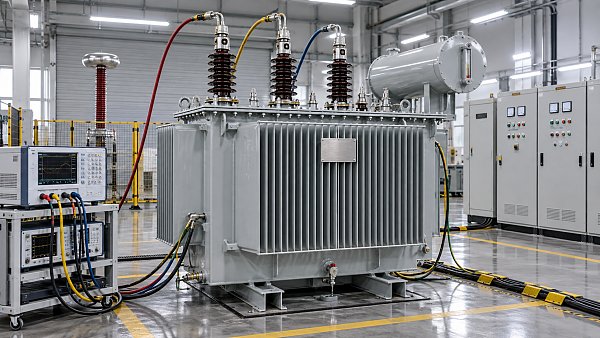
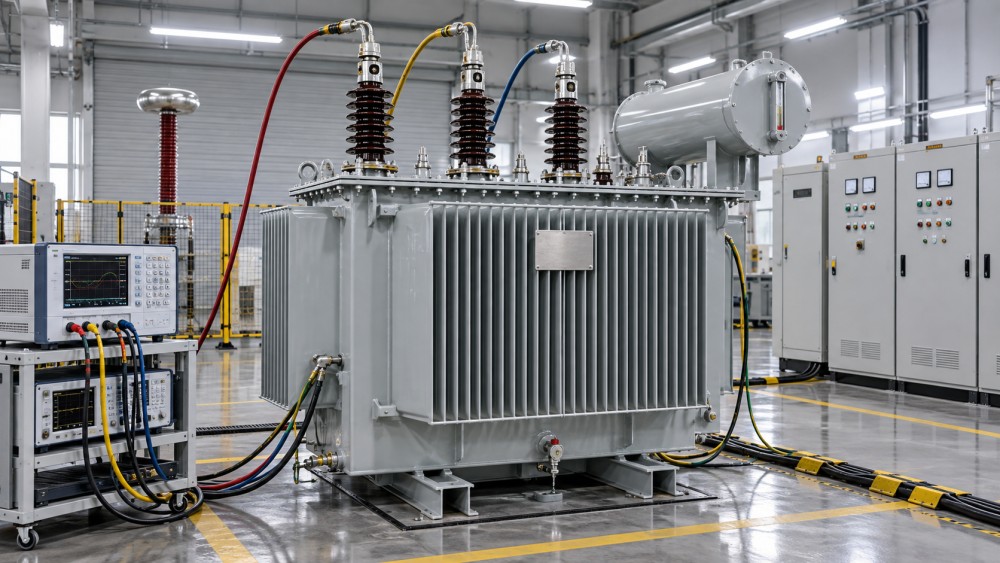
Transformer losses consist principally of no-load loss and load loss. No-load loss, often called core loss, occurs whenever the transformer is energized. It is influenced by core material, flux density, joint design, manufacturing quality, and excitation voltage. Load loss rises approximately with the square of current and includes winding losses, stray losses, and related components measured under the applicable test method.
A useful technical expression for total operating loss is:
Ploss = P0 + x²Pk
where P0 is no-load loss, Pk is load loss at rated current, and x is the actual load as a fraction of rated load. The equation is simplified, but it explains why regulatory compliance and operational optimization are related without being identical.
A lightly loaded rural feeder transformer may remain energized for long periods at modest loading. In that situation, no-load loss can have a strong influence on lifetime energy cost. A heavily used urban network transformer, EV charging supply transformer, or renewable interconnection transformer may experience higher and more variable current. Its load-loss performance, impedance, thermal capability, and overload profile can become equally significant.
Regulatory minimums establish a floor. They do not automatically identify the least-cost transformer for a particular location. An offer with lower no-load loss may have higher load loss, or the reverse. The preferred loss balance depends on the forecast load curve, expected energization hours, local loss valuation method, electricity cost assumptions, and required service life.
Do not compare declared efficiency figures without the test basis
A nameplate efficiency value is meaningful only when the conditions behind it are visible. Two transformers can both be described as efficient while being assessed at different load points, winding temperatures, reference standards, or voltage conditions. This is particularly important when evaluating suppliers serving multiple export markets.
For IEEE-based procurements, IEEE C57.12.90 is commonly used for test-code requirements for liquid-immersed distribution, power, and regulating transformers, while related IEEE C57 standards define product requirements for particular transformer types. IEC-based projects may use the IEC 60076 series and associated national adoptions. The correct standard depends on the contract and applicable regulation; it should be named explicitly in the specification rather than inferred from the supplier’s country of origin.
Loss reports also require temperature discipline. Winding resistance and load loss change with temperature. A report that states only “load loss” without the applicable reference temperature, correction method, rated current, and test conditions does not provide a sound basis for technical comparison. No-load loss likewise must be associated with the stated excitation voltage and frequency.
Translate the regulation into a controlled utility specification
An effective specification separates three requirements that are often merged into one vague clause: mandatory legal compliance, utility technical performance, and economic loss evaluation.
The legal clause should identify the governing regulation and the date by which the delivered equipment must comply. This should be linked to the relevant market, not merely to the project location. For U.S. procurements spanning the 2027 DOE compliance transition, the purchase order should clarify whether the delivery schedule permits pre-compliance production and whether utility policy requires the future standard earlier than the legal date.
The technical clause should state guaranteed no-load loss and load loss values, tolerances if applicable under the governing specification, test standard, temperature reference, rated voltages, tap position for testing, impedance, sound limits, dielectric requirements, accessories, and monitoring interfaces. Efficiency must not be allowed to displace reliability requirements. A low-loss design that fails to meet fault-duty, insulation coordination, harmonic, thermal, or maintainability requirements is not a compliant utility solution in the practical sense.
The economic clause should define the loss capitalization method used for bid evaluation. Utilities commonly assign values to no-load and load losses, but the valuation must reflect the organization’s own network assumptions. Applying a single generic loss factor to lightly loaded pole-mounted transformers and high-utilization substation units can distort the award decision. The loss model should use expected loading, energization duration, planning horizon, and the utility’s treatment of marginal energy and capacity costs.
Supplier documentation needs configuration control
Energy-performance compliance cannot be protected if the approved transformer is only a commercial description. Core steel grade, core geometry, conductor size, winding arrangement, magnetic flux density, and manufacturing process all influence losses. A post-award substitution intended to solve material availability or cost pressure can alter the loss result even where rated kVA and voltage remain unchanged.
Technical documentation should therefore connect the offered loss guarantees to a defined design. At a minimum, the submission should include a completed data sheet, dimensional drawing, guaranteed loss schedule, routine test records for the supplied unit, conformity declaration where required, and a controlled statement of the applicable regulation or standard. For high-volume framework supply, the utility should also require formal notification and re-approval of any design change that could affect losses, impedance, temperature rise, insulation system, sound level, or regulatory classification.
Factory acceptance testing should not be mistaken for a substitute for regulation-specific compliance. Routine tests confirm characteristics of the manufactured unit. Regulatory declarations establish that the product class meets the applicable legal requirements. Both are needed, but they answer different questions.
Grid modernization makes loss selection more location-specific
Distribution networks with rooftop solar, battery systems, heat-pump loads, EV charging, and bidirectional power flow may see loading profiles that differ substantially from historic planning assumptions. A transformer can operate at low net load for parts of the day, face steep evening charging demand, or experience reverse power flow from distributed generation. These conditions do not remove energy-efficiency obligations, but they make a static “average load” assumption less reliable for selecting the best loss balance.
Planning studies should distinguish between transformer thermal loading and energy-loss exposure. Reverse flow changes current direction but does not eliminate copper losses, because those losses remain linked to current magnitude. Harmonic currents from power electronic equipment can also increase heating and may require separate consideration under the utility’s harmonic and derating practices. A regulation-compliant transformer is not automatically validated for every inverter-rich or charging-intensive location.
The practical response is to use feeder-specific load data where it is available, test the proposed transformer against credible loading scenarios, and preserve required margins for future connections. This avoids overvaluing a marginal improvement in one loss component while overlooking overload resilience, voltage regulation, impedance coordination, or power-quality performance.
A defensible compliance record starts before the purchase order
The most reliable compliance process begins with a regulatory applicability statement and ends with delivered-unit documentation that can be traced back to the approved design. Between those points, technical evaluation should verify the governing market rule, equipment category, loss limits or efficiency threshold, test procedure, calculation basis, and manufacturing timeline.
For the current U.S. transition, the April 2027 DOE compliance date should be treated as a program milestone rather than a distant legal event. Lead times for cores, conductors, tooling, prototype tests, and supplier qualification can extend well beyond the date on which a tender is issued. In the EU and other IEC-oriented markets, the corresponding discipline is to verify the precise Ecodesign or national requirement and assess losses on the required category basis.
That approach keeps the distribution transformer energy efficiency regulation update in its proper context: compliance establishes the minimum acceptable design, while disciplined loss analysis determines whether that design supports the utility’s actual network, reliability obligations, and long-term asset performance.
Questions about market trends? Contact Market Scope Live for deeper business insights.
We respect your privacy. Your information is strictly confidential.
Related News
 Global Energy Policy & SourcingEBRD Plans $6 Billion for Turkish Clean Energy Projects Over Five YearsEBRD plans $6 billion for Turkish clean energy projects over five years. Explore potential supply chain opportunities and what businesses should watch.MORE+
 Global Energy Policy & SourcingCOP31 Focuses on Grid Upgrades as Aging Networks Hinder Clean Energy TransitionCOP31 grid upgrades could reshape the clean energy transition. Explore how aging networks and cross-border connections may affect renewable energy projects and suppliers.MORE+
 Global Energy Policy & SourcingIndia Approves 145 Billion Rupee Plan to Support 92 GWh of Energy StorageIndia's energy storage plan commits 145 billion rupees to support 92 GWh by 2030–31. Explore the funding and what it could mean for projects.MORE+
 Global Energy Policy & SourcingChina's Wind and Solar Capacity Reaches 2 Billion kW; 170 Million kW AddedChina's wind and solar capacity reportedly reached 2 billion kW. Explore what the milestone could mean for project procurement, grid integration and suppliers.MORE+
 Global Energy Policy & SourcingSolarPower Europe Urges EU Ministers to Address Root Causes of High Energy PricesSolarPower Europe urges EU ministers to tackle high energy prices through consumer relief, electrification and renewables. Explore its call for action.MORE+
 Global Energy Policy & SourcingAustralia’s Clean Energy Investment Surges as H1 2026 Storage and Generation Hit RecordsAustralia’s clean energy investment hits H1 2026 records in generation financing and battery storage operations. Explore what this means for procurement, project delivery and suppliers.MORE+
 Global Energy Policy & SourcingHow Variable Steam Demand Affects Turbine Sizing in Process PlantsChoosing a steam turbine supplier? Learn how variable steam demand, pressure limits, and part-load efficiency affect turbine sizing—and avoid costly oversizing in your process plant.MORE+
 Global Energy Policy & SourcingSteam Turbine Lifecycle Costs: What to Include Beyond Purchase PriceCompare steam turbine supplier offers beyond purchase price. Explore installation, energy, maintenance and downtime costs to make a smarter lifecycle investment.MORE+
 Global Energy Policy & SourcingGrid Operators in South Africa: Who Runs Transmission and Distribution?Discover the grid operators South Africa relies on, from NTCSA to Eskom and municipalities. Find the right connection route and avoid costly project delays with this practical guide.MORE+
 Global Energy Policy & SourcingChoosing a Medium Voltage Switchgear Factory: Quality Checks Before OrderingChoosing a medium voltage switchgear factory? Discover essential quality checks, test evidence, and acceptance terms to reduce procurement risks before you order.MORE+
 Global Energy Policy & SourcingK9 Ductile Iron Pipe Specifications: Pressure Class and Buyer ChecksBuying K9 ductile iron pipe? Learn how thickness differs from pressure class and which standards, joints, and quality checks to verify before ordering. Avoid costly procurement mistakes.MORE+
 Global Energy Policy & SourcingRenewable Energy Project Procurement: A Practical Bid Evaluation ChecklistRenewable energy project procurement: use this practical bid evaluation checklist to compare compliance, grid readiness, delivery risk, lifecycle cost, and warranties before award.MORE+
 Global Energy Policy & SourcingStrategic Energy Procurement: Which Contract Terms Reduce Price Volatility?Strategic energy procurement insights on contract terms that reduce price volatility, protect budgets, and strengthen financial control. Explore practical risk-management strategies.MORE+
 Global Energy Policy & SourcingEnergy Strategic Sourcing Frameworks for Cost Control and Supply SecurityEnergy strategic sourcing frameworks help control lifetime costs, strengthen supply security, qualify resilient suppliers, and protect energy projects from delays and operational risk.MORE+
 Global Energy Policy & SourcingIOU Strategic Sourcing: Managing Supplier Risk in Utility Energy ContractsIOU strategic sourcing helps investor-owned utilities manage supplier risk, strengthen energy contracts, and protect long-term grid reliability.MORE+
 Global Energy Policy & SourcingPublic Power Strategic Sourcing: Building Transparent Energy Procurement ProgramsPublic power strategic sourcing guide for transparent, resilient energy procurement—improve lifecycle value, supplier accountability, and grid-ready decisions.MORE+
 Global Energy Policy & SourcingU.S. Infrastructure Investors in Clean Energy: Who Funds What Projects?Infrastructure investors in USA are reshaping clean energy funding. Discover who finances solar, storage, grid modernization, and EV charging—and what makes projects investable.MORE+
 Global Energy Policy & SourcingDistribution Transformer Efficiency Regulation Updates: Compliance Steps for UtilitiesDistribution transformer energy efficiency regulation update: learn practical compliance steps, loss-test requirements, and procurement controls for utilities.MORE+
 Global Energy Policy & SourcingEU Grid Code Compliance for Solar and BESS Projects: Key Tests and RequirementsGrid code compliance Europe for solar and BESS projects: discover essential voltage, frequency, ride-through, protection, telemetry and testing requirements for faster connection approval.MORE+
 Global Energy Policy & SourcingKey Technical Parameters That Determine Steam Turbine Suitability for Industrial Cogeneration Projectssteam turbine supplier? Discover the 5 critical technical parameters—exhaust pressure, steam quality tolerance, part-load efficiency & more—that truly determine suitability for industrial cogeneration projects.MORE+
 Global Energy Policy & SourcingSoutheast Asia Energy Project Pipeline: Key Markets, Timelines, and Investment SignalsExplore the energy project pipeline Southeast Asia: key markets, project timelines, grid risks, and investment signals for smarter renewable energy decisions.MORE+
 Global Energy Policy & SourcingIndustrial Energy Users in South Africa: Costs, Supply Risks and TrendsIndustrial energy users in South Africa: explore cost pressures, supply risks, solar, storage and practical strategies to improve resilience and control energy spend.MORE+
 Global Energy Policy & SourcingSteam Turbine Maintenance Checks to Confirm Before Finalizing a PurchaseSteam turbine supplier checklist: confirm maintenance access, spares, oil systems, controls, and service support before purchase to reduce outage risk.MORE+
 Global Energy Policy & SourcingDoes EPEM Provide Regional Data on Clean Energy Project Financing?Does EPEM cover clean energy project financing data by region? Explore regional market, grid, policy, and risk insights to support smarter clean energy investment screening.MORE+
 Global Energy Policy & SourcingDuctile Iron Pipe Acceptance Testing for Water Infrastructure ProjectsDuctile iron pipe acceptance testing guide for water projects: verify standards, traceability, coatings, joints, and hydrostatic tests for reliable compliance.MORE+
 Global Energy Policy & SourcingShould Fleet Charging Depots Use On-Site Solar or Buy Green Power?Should I integrate solar generation directly at a fleet charging depot or buy green power? Explore costs, reliability, storage, and smarter charging strategies.MORE+
 Global Energy Policy & SourcingGlobal Energy Project Pipeline: Where Investment Is Moving Across Solar, Wind, BESS, and EV ChargingGlobal energy project pipeline insights: see where investment is shifting across solar, wind, BESS, and EV charging, and what makes projects bankable, grid-ready, and worth backing.MORE+
 Global Energy Policy & SourcingWhat Does Grid Decarbonization Consulting Cover for Utility-Scale Power Projects?Grid decarbonization consulting helps utility-scale power projects cut emissions, stay grid-compliant, and improve long-term returns. Discover how it supports planning, flexibility, and execution.MORE+
 Global Energy Policy & SourcingWhich Decarbonization Technologies for Industry Deliver the Best ROI by Process Type?Decarbonization technologies for industry deliver the best ROI when matched to process type. Explore electrification, waste heat recovery, fuel switching, and digital upgrades.MORE+
 Global Energy Policy & SourcingChina Launches Green Certificate Price IndexChina Launches Green Certificate Price Index: learn how the new benchmark affects CBAM, ESG compliance, green electricity tracing, and carbon reporting for exporters and global buyers.MORE+
 Global Energy Policy & SourcingHow to Evaluate Renewable Equipment Tenders for Risk, Compliance, and Total CostRenewable equipment tenders require more than price checks. Learn how to assess risk, compliance, and total cost to avoid hidden project issues and choose smarter bids.MORE+
 Global Energy Policy & SourcingCommon Water Waste and Hygiene Issues in Poultry Nipple Drinking SystemsNipple drinking system poultry issues often start with leaks, pressure errors, and hidden biofilm. Learn how to cut water waste, improve hygiene, and protect flock performance.MORE+
 Global Energy Policy & SourcingRenewable Energy Infrastructure Development: Key Policy, Grid, and Financing TrendsRenewable energy infrastructure development is being reshaped by policy reform, grid constraints, and smarter financing—discover the trends driving bankable, future-ready projects.MORE+
 Global Energy Policy & SourcingEquipment Bankability Supplier Review: What Buyers Should Check Before ShortlistingEquipment bankability supplier review: learn what buyers should check before shortlisting, from financial strength and certifications to service support, warranty risk, and real project performance.MORE+
 Global Energy Policy & SourcingPower Project Permitting in Saudi Arabia: Key Approvals, Timelines, and Common DelaysPower project permitting Saudi Arabia explained: key approvals, realistic timelines, and the most common delay risks—plus practical steps to keep energy projects bankable and on schedule.MORE+
 Global Energy Policy & SourcingHow to Evaluate Clean Energy Investment Utility Scale Projects Before Committing CapitalClean energy investment utility scale decisions require more than headline capacity. Discover how to assess grid access, revenue quality, execution risk, and long-term returns before committing capital.MORE+
 Global Energy Policy & SourcingUtility Renewable Energy Infrastructure Explained: Key Assets, Risks, and Build-Out PrioritiesUtility renewable energy infrastructure explained: explore key assets, grid and storage risks, and build-out priorities to improve project bankability, resilience, and long-term value.MORE+
 Global Energy Policy & SourcingAgrivoltaic Systems in France: Land Use Rules, Crop Fit, and Project Planning BasicsAgrivoltaic systems France explained: learn land use rules, crop fit, permitting, and grid basics to assess smarter, more bankable solar-agriculture projects.MORE+
![]() Global Energy Policy & SourcingMicrogrid Project Permitting Checklist: Key Approvals, Studies, and Common DelaysMicrogrid project permitting made practical: explore key approvals, required studies, and the most common delays to keep projects bankable, compliant, and on schedule.MORE+
 Global Energy Policy & SourcingProject Owners Financing Options for Energy Projects: Loans, Leasing, or EPC Credit?Project owners financing options explained: compare loans, leasing, and EPC credit for energy projects to reduce risk, protect cash flow, and choose the smartest funding path.MORE+