What to Evaluate When Choosing a Solar Storage Integration Company?
What to Evaluate When Choosing a Solar Storage Integration Company?
Choosing a solar storage integration company is rarely just a procurement exercise. On paper, many suppliers can assemble PV, battery storage, inverters, controls, and balance-of-system components into one offer. In practice, projects succeed or fail on the quality of integration between those pieces and the team’s ability to manage grid requirements, site realities, commissioning, and long-term operations.
For project managers and engineering leads, the real question is not simply who can supply equipment. It is who can turn a solar-plus-storage concept into an operating asset that performs safely, dispatches as intended, and does not create avoidable trouble during grid interconnection or O&M.
That distinction matters even more now. Solar, storage, EV charging, distributed energy systems, and digital control platforms are increasingly converging. A contractor that looks strong in module sourcing or containerized battery supply may still be weak in EMS logic, protection coordination, fire safety integration, or utility communication. This is exactly why structured market and technical intelligence platforms such as Global EcoPower & Energy Matrix Intelligence Network (EPEM) are useful to decision-makers: the value is not only in knowing what technologies exist, but in understanding how they affect execution risk, grid compliance, and lifecycle performance.
Start with the integration scope, not the product list
A common mistake is evaluating bidders mainly by battery brand, inverter rating, or EPC price. Those matter, but they are not the integration scope. A serious solar storage integration company should be able to define, in clear terms, which interfaces it controls and which risks remain with others.
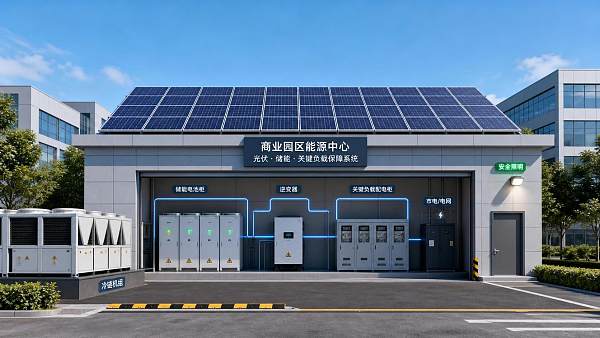
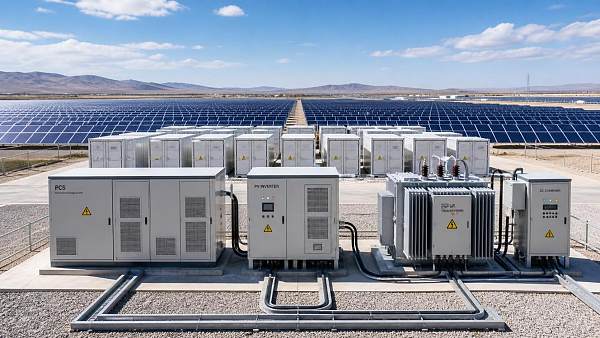
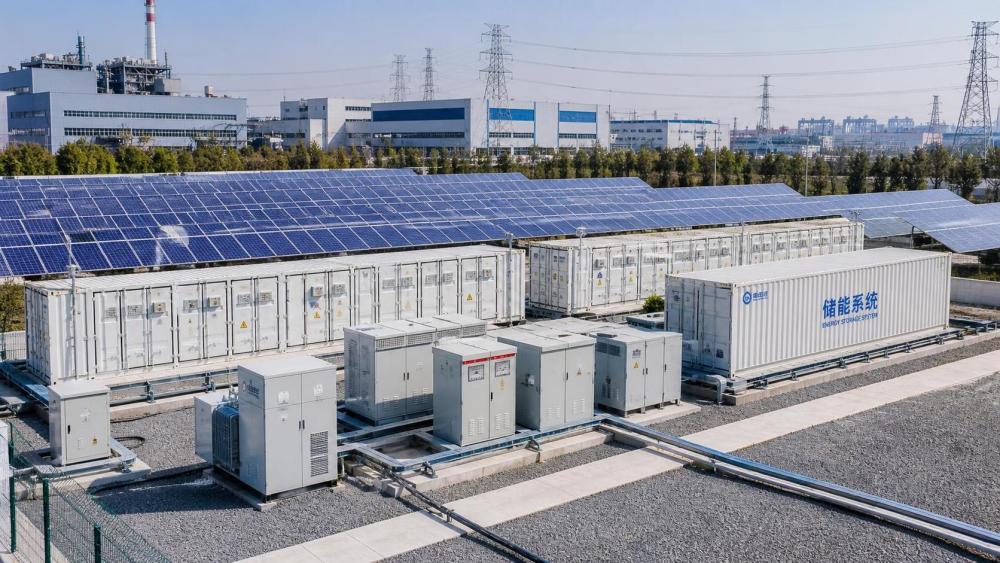
Ask whether the company is responsible for DC coupling or AC coupling design, PCS selection, transformer and switchgear coordination, SCADA and EMS architecture, BMS communications, site networking, protection studies, fire suppression integration, and utility-facing controls. If several of these functions are left to separate parties without a clear lead integrator, the project can enter commissioning with gaps that were invisible during tender review.
This is especially relevant in projects where storage must do more than time-shift solar output. Peak shaving, backup support, frequency response, ramp-rate control, black start support, or EV charging load management all place different demands on controls and operating logic. The right integration partner should be able to explain those tradeoffs without hiding behind general claims.
Technical compatibility is deeper than “components can connect”
Interoperability problems usually do not appear in a brochure. They show up when the battery system, inverter, EMS, and utility control requirements must work together under live operating conditions.
A capable integrator should be ready to discuss:
- Battery chemistry implications for thermal management, degradation profile, and safety strategy
- PCS and inverter operating windows, efficiency curves, and reactive power capability
- Communications protocols between BMS, PCS, EMS, SCADA, and plant controller
- Protection coordination with transformers, relays, breakers, and grid interconnection point
- Control hierarchy during normal operation, fault response, and islanding scenarios where applicable
If a company cannot clearly map those interfaces, that is a warning sign. Integration problems are often blamed on “third-party equipment,” but in a well-managed project, that risk should be identified before procurement closes.
Grid compliance experience should be project-specific
Not every solar storage integration company understands utility behavior, local grid codes, and interconnection studies to the same depth. Yet this is where schedules often slip. A storage system may be technically sound and still face delays because the control model, fault response, metering arrangement, or power quality behavior does not satisfy the grid operator.
The right questions are practical. Has the integrator supported projects with similar interconnection voltage levels? Can it coordinate model submissions and plant controller settings? Does it understand active and reactive power control, ramp limits, frequency ride-through, voltage support, and site-level communications expected by the utility or ISO?
This is not only a utility-scale issue. Commercial and industrial projects with behind-the-meter storage also face local rules around export limits, anti-islanding, demand management, and backup transfer logic. The standards and approval path vary by market, so confident generic answers are less useful than evidence of method: how the integrator reviews grid requirements, documents settings, and manages compliance testing.
Safety engineering deserves its own review
Battery energy storage is not a bolt-on accessory to a PV plant. It introduces thermal, electrical, software, and emergency-response considerations that need disciplined engineering. Project teams sometimes focus heavily on cell supplier reputation while spending too little time on the safety architecture of the full integrated system.
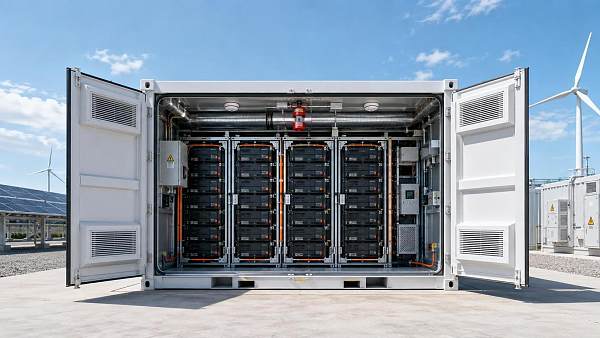
A credible integrator should be able to explain how it handles enclosure design, thermal management, gas detection where applicable, fire suppression interfaces, fault isolation, emergency shutdown logic, ventilation, spacing, cable routing, and operating procedures. Depending on project geography and authority having jurisdiction, the specific code and test requirements may differ, so this should always be checked against local project documentation rather than assumed.
What matters in selection is whether the company treats safety as an engineered system or as a compliance checkbox added late in the process.
Look closely at controls, EMS, and dispatch logic
Hardware usually gets more attention than software during vendor evaluation, but controls are where project economics are often won or lost. A battery that cannot charge and discharge at the right times, respond properly to tariff signals, or coordinate with solar output and site load is an underperforming asset even if all major equipment is technically functional.
Ask how the company designs the energy management layer. Is the EMS rule-based, optimization-based, or dependent on a third-party platform? How are setpoints updated? Can the system prioritize multiple use cases, such as self-consumption, peak shaving, backup reserve, and export control? What happens when communications are interrupted? What level of local autonomy exists if a cloud platform is unavailable?
This is an area where EPEM’s broader perspective on grid modernization and digital energy systems becomes relevant. Solar-plus-storage projects increasingly sit inside a wider operational environment that may include smart metering, microgrids, flexible distribution networks, EV charging, and virtual power plant participation. The integration company does not need to do everything in-house, but it should understand how its control architecture fits into that larger energy system.
Evaluate delivery discipline, not just engineering claims
Some firms are strong in front-end design but weak in execution. Others can build quickly yet struggle when documentation, FAT/SAT procedures, commissioning records, and punch-list closure become demanding. For project managers, that difference is not theoretical. It affects schedule certainty, lender confidence, and handover quality.
Useful evaluation points include document control, interface matrices, procurement lead-time visibility, factory acceptance planning, on-site commissioning method statements, spare parts strategy, and escalation paths for defects. If the company has no disciplined answer for who owns technical decisions once the project reaches site, expect friction later.
Lifecycle support is part of the original selection decision
The project does not end at COD. Over time, storage performance depends on controls tuning, environmental conditions, maintenance quality, firmware management, and how warranties are administered across multiple equipment vendors. One of the hardest post-handover issues is fragmented accountability: the battery supplier points to the PCS vendor, the PCS vendor points to the EMS, and the EPC points to operations.
That is why the service model should be reviewed before award. Who owns remote diagnostics? Who interprets alarms? How are degradation, usable capacity, and operating restrictions tracked over time? Are spare parts local, regional, or factory-order only? What data access rights does the asset owner receive?
For developers and owners building portfolios across different markets, consistency in these answers may be more valuable than a small upfront saving.
Commercial evaluation should reflect operational reality
Price comparison is necessary, but a low bid can hide missing studies, excluded interfaces, limited controls functionality, or narrow warranty responsibility. A better commercial review links cost to scope clarity, performance assumptions, and delivery obligations.
It helps to test proposals against a few real operating scenarios: curtailed solar output, communication failure, utility dispatch request, extended high-temperature conditions, and partial equipment outage. A strong integrator can explain how the system behaves and what contractual boundaries apply. A weak one stays at the level of nominal power ratings and generic guarantees.
This is where market intelligence also supports procurement. EPEM’s coverage of storage technologies, grid infrastructure, distributed energy, and project execution issues is useful because vendor selection now depends on more than one technology silo. Project economics, policy direction, grid constraints, and supply-chain exposure all affect what “best fit” really means for a specific solar-plus-storage project.
A practical way to narrow the shortlist
Before choosing a solar storage integration company, it is worth building a short evaluation framework around your own project rather than around vendor marketing. Define the intended operating modes, interconnection complexity, required standards or local approvals, O&M model, and any future expansion path such as EV charging or microgrid functionality. Then test bidders against those conditions.
The strongest partner is usually not the one with the broadest brochure. It is the one that can show disciplined integration responsibility, understands the local grid and safety context, and is transparent about what must still be confirmed through studies, standards review, or site-specific engineering.
If a proposal leaves you with more unanswered interface questions than when you started, keep looking. In solar-plus-storage, unresolved interfaces are often the earliest sign of later cost, delay, or performance trouble.
- grid modernization
- microgrids
- distributed energy systems
- energy storage
- peak shaving
- grid compliance
- smart metering
- load management
- grid interconnection
- grid integration
- power quality
- switchgear
- charging load management
- grid infrastructure
- distributed energy
- digital energy systems
- solar storage integration company
Questions about market trends? Contact Market Scope Live for deeper business insights.
We respect your privacy. Your information is strictly confidential.
Related News
 Energy Storage Systems / BESSNYSERDA Opens Second 2026 Bulk Storage Solicitation Targeting 1 GWNYSERDA’s second 2026 bulk energy storage solicitation targets 1 GW. Explore the opportunity for developers, investors and New York’s grid.MORE+
 Energy Storage Systems / BESSCroatia’s First Transmission-Connected Standalone Battery Project Enters OperationCroatia’s first transmission-connected standalone battery project is operational. Discover how the 60 MW Šibenik facility could support grid flexibility.MORE+
 Energy Storage Systems / BESSAustralia's NEM Battery Storage Hits Record 20.17 GWh, Up 203% Year on YearAustralia's NEM battery storage reportedly hits 20.17 GWh, up 203% year on year. Explore what the record could mean for grid-scale projects and procurement.MORE+
 Energy Storage Systems / BESSC&I Energy Storage in Germany: What Drives Project ROI?C&I energy storage in Germany: discover what drives project ROI, from peak shaving and solar savings to costs, tariffs and smarter battery sizing.MORE+
 Energy Storage Systems / BESSChoosing Energy Storage Containers: Capacity, Power and Safety CriteriaCompare energy storage containers by usable capacity, power, safety and grid integration. Learn what to ask suppliers before choosing a system.MORE+
 Energy Storage Systems / BESSNeoen, Frontier Energy and Lightyears Secure Funding for Renewable ProjectsNeoen, Frontier Energy and Lightyears secure renewable energy financing. Explore what the funding means for solar, wind and battery storage projects.MORE+
 Energy Storage Systems / BESSChoosing a Battery Energy Storage Container Manufacturer: Key Supplier ChecksChoosing a battery energy storage containers manufacturer? Learn how to assess safety, integration, warranties and total costs before you buy.MORE+
 Energy Storage Systems / BESSCATL Introduces Grid Connection and Financing Commitments in AustraliaCATL introduces energy storage with 25-year grid connection and financing commitments in Australia. Explore what the proposed model means for projects.MORE+
 Energy Storage Systems / BESSPortugal Mandates Grid-Forming Capability for Large Storage and Launches 1 GW TenderPortugal grid-forming rules target large standalone energy storage projects as a 1 GW tender launches. Explore the implications for developers and suppliers.MORE+
 Energy Storage Systems / BESSAdding Battery Storage to Rooftop Solar: When to Use AC vs. DC CouplingExplore rooftop solar storage integration: compare AC vs. DC coupling, inverter compatibility, backup power, and lifecycle costs to choose the right battery setup.MORE+
 Energy Storage Systems / BESSHeron Power and NiSource Announce US Data Center Deals Involving BESSHeron Power and NiSource announce US data center deals involving BESS. Explore how transformer integration and long-term power supply are shaping data center energy plans.MORE+
 Energy Storage Systems / BESSPeak Energy Raises $108 Million as GM Ventures Leads Sodium-Ion Storage RoundPeak Energy raises $108 million in a GM Ventures-led round to scale sodium-ion storage for grids and AI data centers. Explore what buyers should assess before committing.MORE+
 Energy Storage Systems / BESSRondo Energy and Rio Tinto Begin Design of Australia's Largest Thermal Storage ProjectRondo Energy and Rio Tinto begin design of a 30 MW/360 MWh thermal storage project at Yarwun. Explore its potential for industrial decarbonization and future procurement.MORE+
 Energy Storage Systems / BESSCATL Nine-Month Net Profit Rises 31.6% as Energy Storage Emerges as a Growth DriverCATL’s reported nine-month net profit rose 31.6% as energy storage gains momentum. Explore what this shift could mean for battery buyers, overseas orders and procurement planning.MORE+
 Energy Storage Systems / BESSScalable Power Solutions for Commercial Facilities with Uneven Site DemandScalable power solutions for multi-site commercial facilities: optimize uneven demand, resilience, storage, solar, and controls with a repeatable portfolio strategy.MORE+
 Energy Storage Systems / BESSWhen Do Commercial Property Owners Face Peak Demand for On-Site Energy?Commercial property owners peak demand often occurs when HVAC, occupancy, EV charging, and equipment loads coincide. Discover practical strategies to manage costs, capacity, and on-site energy resilience.MORE+
 Energy Storage Systems / BESSWhen Does a Containerized Hybrid Solar-Storage System Make Sense for Remote Sites?containerized hybrid solar storage for remote sites: discover when it cuts diesel costs, improves reliability, and simplifies deployment with smarter sizing and design.MORE+
 Energy Storage Systems / BESSHow to Specify Steel Battery Enclosures for Outdoor BESS Fire and Corrosion RisksSteel battery enclosures: learn how to specify corrosion protection, fire-ready interfaces, drainage, and durable outdoor BESS performance.MORE+
 Energy Storage Systems / BESSBattery Energy Storage Cost: What Drives $/kWh and Project ROI?Battery energy storage cost explained: compare usable $/kWh, system scope, grid connection, warranty, and lifecycle factors to build a stronger storage ROI.MORE+
 Energy Storage Systems / BESSWhat Drives BESS Fire Protection Costs in Utility-Scale Storage Projects?Energy storage fire protection cost drivers explained: compare BESS safety systems, site design, compliance, and integration to budget smarter.MORE+
 Energy Storage Systems / BESSHow to Size Grid-Scale Energy Storage for Peak Shaving and Renewable FirmingGrid scale energy storage sizing guide for peak shaving and renewable firming—learn how to model MW, MWh, dispatch, degradation, and grid limits.MORE+
 Energy Storage Systems / BESSWhat Drives Battery Energy Management System Costs in BESS Projects?Battery energy management systems cost depends on controls, integration, grid compliance, cybersecurity, and lifecycle support. Learn how to evaluate BESS EMS proposals wisely.MORE+
 Energy Storage Systems / BESSHow to Size a Commercial Microgrid Battery System for Peak Shaving and Backup PowerCommercial microgrid battery system sizing guide for peak shaving and backup power—optimize kW, kWh, reserve SOC, controls, and resilience.MORE+
 Energy Storage Systems / BESSHow to Select a Battery Storage EPC Partner for Utility-Scale Projects in EuropeBattery storage EPC Europe: choose the right utility-scale partner with proven grid expertise, safety leadership, supply-chain control, and reliable commissioning.MORE+
 Energy Storage Systems / BESSHow to Evaluate a Stationary Battery Storage Manufacturer for Critical Backup PowerStationary battery storage manufacturer evaluation guide: compare safety, usable capacity, integration, warranties, lifecycle cost, and service support for reliable critical backup power.MORE+
 Energy Storage Systems / BESSDo Utilities Prefer Centralized or Distributed Energy Storage Models?Do utility companies prefer centralized or distributed energy storage models? Explore how grid constraints, costs, resilience, and control shape the best storage strategy.MORE+
 Energy Storage Systems / BESSWhat Fire Safety Requirements Apply to Containerized Battery Storage?What are the fire safety requirements for containerized battery storage systems? Explore codes, detection, suppression, ventilation, shutdown, and site design essentials.MORE+
 Energy Storage Systems / BESSIs EPEM Useful for Benchmarking Energy Storage Project Performance?Is EPEM useful for benchmarking energy storage project performance data? Explore how it helps normalize efficiency, availability, degradation, dispatch, and lifecycle risks.MORE+
 Energy Storage Systems / BESSBehind-the-Meter Energy Systems for Industrial Parks: Sizing Solar, Storage, and LoadsBehind the meter energy systems for industrial parks: learn how to size solar, storage, and loads for lower costs, resilient operations, and scalable growth.MORE+
 Energy Storage Systems / BESSAerosol Fire Protection for Energy Storage: Key Design Factors for BESS SafetyAerosol fire protection for energy storage: explore key BESS design factors for detection, ventilation, thermal runaway risk, and safer system integration.MORE+
 Energy Storage Systems / BESSHow to Size Solar Backup Energy Systems for Critical Commercial LoadsBackup energy systems with solar: learn how to size critical commercial loads, balance battery power and runtime, and build resilient operations.MORE+
 Energy Storage Systems / BESSWhat Criteria Should You Use to Shortlist Battery Storage EPC Contractors?What criteria should be used to shortlist battery storage EPC contractors? Explore essential checks for engineering, safety, grid integration, delivery, and lifecycle value.MORE+
 Energy Storage Systems / BESSCan Battery Storage Be Added to Existing Solar Farms Without Replacing Inverters?Can battery storage be integrated into existing solar farms without replacing inverters? Explore AC-coupled retrofits, grid limits, controls, costs, and value.MORE+
 Energy Storage Systems / BESSAre Containerized Battery Storage Systems Safe for Urban Deployment?Are containerized battery storage systems safe for urban deployment? Explore key safety factors, fire planning, standards, and site design for reliable urban BESS projects.MORE+
 Energy Storage Systems / BESSSodium-Ion vs Lithium-Ion: Which Is Better for Long-Duration Storage?Is sodium-ion battery better than lithium-ion for long duration storage? Explore cost, safety, energy density, warranties, and the best fit for your storage project.MORE+
 Energy Storage Systems / BESSHow to Size Grid-Scale Battery Energy Storage for Peak Shaving and Grid SupportGrid scale battery energy storage sizing made practical: learn how to match MW, MWh, dispatch, degradation, and grid constraints for reliable peak shaving and grid support.MORE+
 Energy Storage Systems / BESSHow to Integrate Solar and Battery Storage for Reliable Commercial Power ProjectsSolar storage project integration for commercial sites: learn to align load analysis, battery sizing, controls, safety, and grid compliance for reliable power.MORE+
 Energy Storage Systems / BESSHow Does Battery Thermal Management Affect Charger Uptime in Hot Climates?How does battery thermal management affect charger uptime in hot climates? Explore cooling strategies that reduce derating, protect assets, and keep EV charging reliable.MORE+
 Energy Storage Systems / BESSAre Sodium-Ion Batteries Ready for Commercial Charging Storage in 2026?Are sodium-ion batteries ready for commercial charging station storage in 2026? Explore costs, safety, footprint trade-offs, and project-fit insights.MORE+
 Energy Storage Systems / BESSHow to Size Energy Storage Containers for Reliable Microgrid PerformanceEnergy storage containers for microgrids: learn how to size capacity, power, backup duration, and reserve margins to improve reliability, cut costs, and support smarter project decisions.MORE+