What Matters Most in Solar Plus Storage System Integration for C&I Projects?
In C&I projects, solar plus storage system integration succeeds or fails long before equipment arrives on site. The real work starts with matching the PV system, battery, controls, and grid connection to the facility’s load profile and operating goals. If that alignment is wrong, the project may still get built, but it often underperforms, trips against interconnection limits, or misses the financial case it was supposed to support. For project managers, the priority is not choosing “good” components in isolation. It is building one coordinated system that can deliver measurable value under real operating conditions.
A simple way to frame it is this: the best integrated system is the one that knows when to generate, when to store, when to discharge, when to protect itself, and when to stay within site and grid constraints. That sounds obvious, but many projects still treat solar, battery storage, and controls as separate procurement packages. In practice, that separation creates most of the avoidable problems.
Start with the site objective, not the equipment list
One of the most common mistakes in C&I energy planning is starting from available products instead of the site’s actual business need. A battery can support peak shaving, backup power, tariff arbitrage, demand charge reduction, solar self-consumption, power quality improvement, or EV charging load management. A PV system can offset daytime consumption and reduce exposure to retail power prices. But not every project needs all of these functions, and trying to force too many goals into one design usually weakens the result.
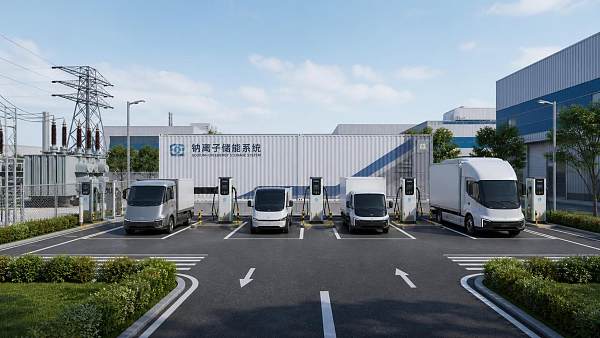
If the site is a factory with a stable daytime load, the integration logic may focus on maximizing self-consumption of solar output and clipping demand peaks. If it is a logistics hub with growing fleet charging, the battery may need to protect the grid connection from fast-rising evening demand. If the site has critical processes that cannot tolerate outages, backup strategy and transfer logic matter as much as simple energy savings.
Before sizing anything, project teams should lock down five basics:
- What problem is the project solving first: cost, reliability, capacity constraint, decarbonization, or a mix?
- Which loads are critical, flexible, or deferrable?
- What are the grid import and export limits?
- How does the site consume power by hour, season, and operating mode?
- What financial metric will define success: payback, IRR, bill reduction, resilience value, or avoided upgrade cost?
If these answers are still vague, system integration is being asked to solve a strategy problem that has not been defined yet.
Load profile is the backbone of solar plus storage system integration
Many people talk about PV capacity and battery duration first. That is backward. For a C&I project, the load profile tells you whether the battery will be useful every day, only during short peaks, or mainly during grid events and outages. It also tells you whether the solar generation shape is naturally aligned with consumption or whether curtailment and export restrictions will become a problem.
A short, direct answer: in most C&I cases, the value of solar plus storage system integration comes from how accurately the system is matched to the site’s load timing and grid limits, not from installing the largest possible PV array or battery.
Experienced teams look beyond monthly electricity bills. They want interval data, ideally 15-minute or finer. They check startup peaks, weekend load behavior, seasonal cooling demand, overnight baseload, and any operational changes already planned for the site. A battery sized for today’s profile may be undersized in 18 months if EV chargers, new production lines, or refrigeration loads are coming.
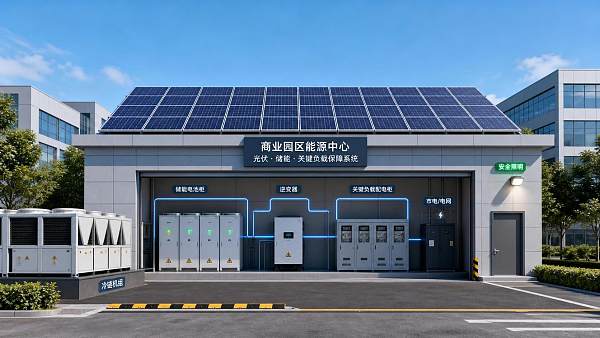
[图片占位符1:C&I facility energy flow diagram showing rooftop solar, battery storage, site loads, and grid connection control logic, alt="solar plus storage system integration for a commercial and industrial facility"]
This is also where some projects discover that solar is not the main driver at all. In a site with high late-afternoon peaks and limited export permission, storage may carry more financial weight than additional PV. In another site with broad daytime consumption and expensive daytime tariffs, more solar may outperform a larger battery. Integration decisions should follow operating data, not market hype.
Grid connection limits usually decide more than people expect
Project managers often focus on internal ROI models and leave grid constraints to a late engineering check. That is risky. Interconnection rules, transformer capacity, protection requirements, export caps, and utility approval timelines can reshape the entire scheme.
A technically sound solar-plus-storage concept can still fail if the point of interconnection cannot support reverse power flow, if protection coordination is incomplete, or if export control accuracy does not meet utility requirements. In some regions, the battery is expected to help stabilize site import/export behavior. In others, storage dispatch may be restricted by market rules or interconnection terms. These are not minor legal details; they influence one-line design, inverter selection, EMS logic, and business case assumptions.
For that reason, one of the most practical moves early in development is to bring grid, controls, and protection thinking into the same conversation as commercial modeling. This is where structured industry intelligence platforms such as EPEM can be useful: not as a substitute for engineering, but as a way to compare technology pathways, track grid modernization trends, and frame procurement and project risk with more context.
Controls and EMS strategy are where integration becomes real
On paper, a PV system and a battery look easy to combine. In operation, the energy management system decides whether the asset behaves intelligently or expensively.
The EMS should answer questions like these in real time:
- Should the battery charge from solar only, or also from the grid when tariffs are low?
- What has priority: peak shaving, backup reserve, export limiting, or demand response participation?
- How much battery capacity must remain available for outage protection?
- How should EV charging or flexible loads respond when solar output falls?
A frequent misunderstanding is that controls can “fix” poor sizing later. They cannot. Good controls improve a sound design; they do not rescue a project built on unrealistic operating assumptions. At the same time, weak controls can waste a well-designed system by cycling the battery too hard, missing demand peaks, or discharging at the wrong time.
For project leads, the practical question is not simply whether an EMS is included. It is whether the control strategy has been clearly written into the design basis, commissioning scope, and performance acceptance criteria.
Battery safety and thermal design should not be treated as secondary packages
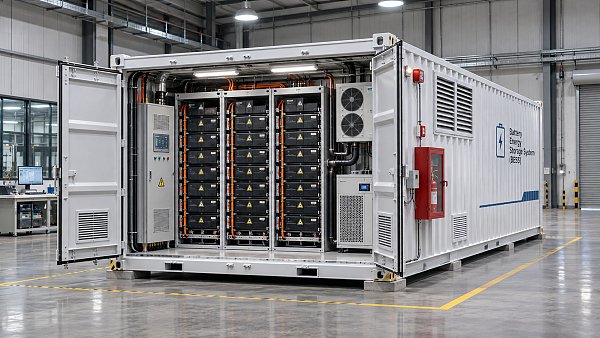
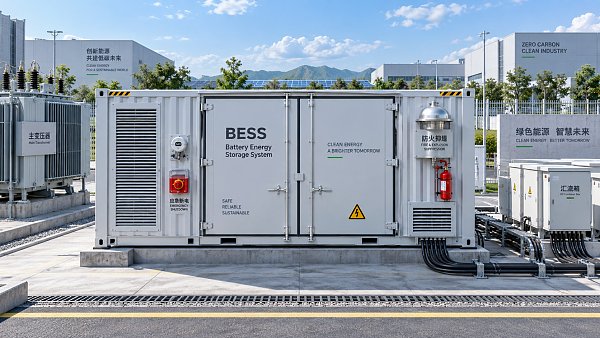
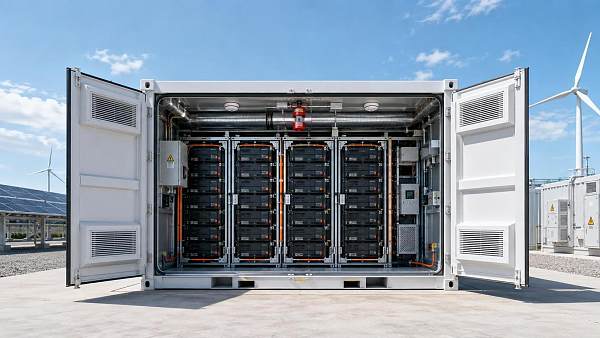
In C&I discussions, battery economics gets a lot of attention. Safety design often gets reviewed later, after the commercial structure is already set. That is a mistake. Fire protection, ventilation, thermal management, spacing, shutdown logic, and emergency response planning affect layout, permitting, civil works, and insurer acceptance.
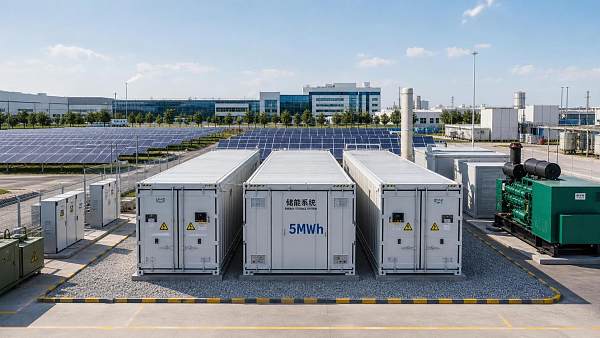
Not all sites are equally suited to the same storage architecture. Indoor installation, outdoor containers, rooftop placement, and proximity to occupied buildings all change the risk review. Climate matters too. High ambient temperature, dust, humidity, and corrosive industrial environments can materially affect system reliability and maintenance needs.
This is one area where project teams should be careful with assumptions. There is no universal “best battery setup” for every C&I site. The right choice depends on local code, available footprint, operational criticality, insurer requirements, and the service model available after commissioning.
Procurement should reflect integration risk, not just equipment price
When procurement is fragmented, integration risk usually lands back on the project manager. One vendor supplies modules, another supplies inverters, another supplies battery containers, another owns controls, and the EPC is left to make the whole system behave as one plant. That can work, but only with unusually strong interface management.
The low-price offer is not always the low-risk offer. A cheaper battery package can become expensive if it comes with unclear communication protocols, limited local service, narrow warranty coverage, or a weak commissioning team. The same applies to inverters and PCS units. A product that looks competitive on datasheet value may create months of delay if utility compliance documents, cybersecurity requirements, or spare parts support are weak.
Good procurement questions are usually practical:
- Who is responsible for plant-level controls integration?
- Who owns performance issues when PV, battery, and EMS interactions are the root cause?
- What operating data will be visible to the owner?
- What battery degradation assumptions are built into the commercial model?
- How fast can failed critical components be replaced?
Those questions matter more than polished marketing claims.
Commissioning is where many hidden problems finally appear
Teams sometimes treat commissioning as a final checklist. In integrated energy systems, it is closer to a controlled proof of behavior. The project is not really ready because devices turn on. It is ready when the plant responds correctly across realistic operating scenarios.
That means testing more than nameplate output. It means confirming export limiting under variable solar conditions, verifying battery dispatch under tariff-based logic, checking transition behavior during grid disturbances, proving alarm handling, and validating communications across devices and supervisory platforms.
For backup-capable systems, outage simulation is especially important. Plenty of systems look fine in normal mode and then fail to support critical loads cleanly when the grid actually drops. Project managers should insist that functional testing reflects the site’s real operating priorities, not only the easiest test cases.
What often gets overlooked after handover
Solar plus storage is a long-life asset, but integration quality shows up over time, not just at startup. Battery degradation, control drift, tariff changes, production changes at the site, and utility rule updates can all change project performance. A system that was well matched on day one may need operating strategy adjustments two years later.
That is why monitoring should not stop at basic dashboard visibility. Owners need enough granularity to understand why savings did or did not happen: battery cycling depth, clipped solar recovery, demand peak events, curtailment hours, round-trip efficiency trends, and fault patterns. If the reporting layer cannot explain operational outcomes, the owner is managing blind.
For teams that handle multiple projects or evaluate suppliers across regions, a platform like EPEM can help connect those asset-level lessons to broader market and technology shifts, especially where grid modernization, storage technologies, and distributed energy business models are changing quickly.
When solar plus storage is a poor fit
Not every C&I site should move forward immediately. If the load profile is too small or too erratic, if the facility may relocate, if the roof condition is uncertain, if grid rules are unresolved, or if the main expected value depends on assumptions nobody can verify, pausing is often the smarter decision.
The same applies when stakeholders want one project to deliver every possible benefit at once. If resilience, bill savings, export revenue, and EV charging support are all demanded from a tight budget and limited footprint, the project may need phased deployment instead of a single oversized promise.
The strongest projects are usually disciplined. They know which objective comes first, what the grid allows, how the site really consumes energy, and which control strategy will govern daily operation. That is the core of effective solar plus storage system integration: not assembling hardware, but aligning technical design, operating logic, and commercial purpose from the beginning.
FAQ
Should the battery always be charged only by solar?
No. In some C&I projects, grid charging during low-tariff periods supports stronger peak shaving or backup readiness. The right approach depends on tariff structure, interconnection rules, and the project objective.
Is a bigger battery usually better for C&I sites?
Not necessarily. Oversizing can reduce financial efficiency if the battery is underused. The useful size depends on load peaks, dispatch strategy, outage needs, and expected cycling pattern.
Can solar plus storage solve a weak grid connection on its own?
Sometimes it can help defer upgrades or smooth import demand, but it does not automatically remove interconnection constraints. Utility requirements and protection design still need to be checked early.
What should be confirmed before issuing tenders?
Site load data, grid limits, operating priorities, preliminary control philosophy, space and safety constraints, and performance metrics. If these are still open, bid comparisons will be unreliable.
Image Placeholder List
- Position suggestion: After the section discussing load profile and system behavior
Image content: A simplified energy flow diagram for a commercial or industrial site showing solar PV, battery storage, critical loads, non-critical loads, EV charging, and grid connection controls
Alt text: solar plus storage system integration for a commercial and industrial facility
Internal Link Anchor Text Suggestions
- commercial and industrial battery energy storage system design: link to a solution page or technical guide
- grid connection planning for distributed energy projects: link to an interconnection or grid modernization article
- energy management system selection for C&I sites: link to an EMS comparison or application page
- peak shaving strategies for industrial facilities: link to a use-case article
- solar PV and EV charging integration: link to a related project planning topic
External Authority Source Suggestions
- government or utility interconnection guideline pages
- industry association reports on battery storage safety and C&I deployment practices
- official technical documentation from inverter, PCS, or battery system manufacturers
- solar PV
- grid modernization
- demand response
- grid connection
- rooftop solar
- energy storage
- battery containers
- fleet charging
- peak shaving
- solar plus storage
- load management
- power quality
- battery storage safety
- charging load management
- distributed energy
- industrial battery energy storage
- solar plus storage system integration
Questions about market trends? Contact Market Scope Live for deeper business insights.
We respect your privacy. Your information is strictly confidential.
Related News
 Energy Storage Systems / BESSCroatia’s First Transmission-Connected Standalone Battery Project Enters OperationCroatia’s first transmission-connected standalone battery project is operational. Discover how the 60 MW Šibenik facility could support grid flexibility.MORE+
 Energy Storage Systems / BESSAustralia's NEM Battery Storage Hits Record 20.17 GWh, Up 203% Year on YearAustralia's NEM battery storage reportedly hits 20.17 GWh, up 203% year on year. Explore what the record could mean for grid-scale projects and procurement.MORE+
 Energy Storage Systems / BESSC&I Energy Storage in Germany: What Drives Project ROI?C&I energy storage in Germany: discover what drives project ROI, from peak shaving and solar savings to costs, tariffs and smarter battery sizing.MORE+
 Energy Storage Systems / BESSChoosing Energy Storage Containers: Capacity, Power and Safety CriteriaCompare energy storage containers by usable capacity, power, safety and grid integration. Learn what to ask suppliers before choosing a system.MORE+
 Energy Storage Systems / BESSNeoen, Frontier Energy and Lightyears Secure Funding for Renewable ProjectsNeoen, Frontier Energy and Lightyears secure renewable energy financing. Explore what the funding means for solar, wind and battery storage projects.MORE+
 Energy Storage Systems / BESSChoosing a Battery Energy Storage Container Manufacturer: Key Supplier ChecksChoosing a battery energy storage containers manufacturer? Learn how to assess safety, integration, warranties and total costs before you buy.MORE+
 Energy Storage Systems / BESSCATL Introduces Grid Connection and Financing Commitments in AustraliaCATL introduces energy storage with 25-year grid connection and financing commitments in Australia. Explore what the proposed model means for projects.MORE+
 Energy Storage Systems / BESSPortugal Mandates Grid-Forming Capability for Large Storage and Launches 1 GW TenderPortugal grid-forming rules target large standalone energy storage projects as a 1 GW tender launches. Explore the implications for developers and suppliers.MORE+
 Energy Storage Systems / BESSAdding Battery Storage to Rooftop Solar: When to Use AC vs. DC CouplingExplore rooftop solar storage integration: compare AC vs. DC coupling, inverter compatibility, backup power, and lifecycle costs to choose the right battery setup.MORE+
 Energy Storage Systems / BESSHeron Power and NiSource Announce US Data Center Deals Involving BESSHeron Power and NiSource announce US data center deals involving BESS. Explore how transformer integration and long-term power supply are shaping data center energy plans.MORE+
 Energy Storage Systems / BESSPeak Energy Raises $108 Million as GM Ventures Leads Sodium-Ion Storage RoundPeak Energy raises $108 million in a GM Ventures-led round to scale sodium-ion storage for grids and AI data centers. Explore what buyers should assess before committing.MORE+
 Energy Storage Systems / BESSRondo Energy and Rio Tinto Begin Design of Australia's Largest Thermal Storage ProjectRondo Energy and Rio Tinto begin design of a 30 MW/360 MWh thermal storage project at Yarwun. Explore its potential for industrial decarbonization and future procurement.MORE+
 Energy Storage Systems / BESSCATL Nine-Month Net Profit Rises 31.6% as Energy Storage Emerges as a Growth DriverCATL’s reported nine-month net profit rose 31.6% as energy storage gains momentum. Explore what this shift could mean for battery buyers, overseas orders and procurement planning.MORE+
 Energy Storage Systems / BESSScalable Power Solutions for Commercial Facilities with Uneven Site DemandScalable power solutions for multi-site commercial facilities: optimize uneven demand, resilience, storage, solar, and controls with a repeatable portfolio strategy.MORE+
 Energy Storage Systems / BESSWhen Do Commercial Property Owners Face Peak Demand for On-Site Energy?Commercial property owners peak demand often occurs when HVAC, occupancy, EV charging, and equipment loads coincide. Discover practical strategies to manage costs, capacity, and on-site energy resilience.MORE+
 Energy Storage Systems / BESSWhen Does a Containerized Hybrid Solar-Storage System Make Sense for Remote Sites?containerized hybrid solar storage for remote sites: discover when it cuts diesel costs, improves reliability, and simplifies deployment with smarter sizing and design.MORE+
 Energy Storage Systems / BESSHow to Specify Steel Battery Enclosures for Outdoor BESS Fire and Corrosion RisksSteel battery enclosures: learn how to specify corrosion protection, fire-ready interfaces, drainage, and durable outdoor BESS performance.MORE+
 Energy Storage Systems / BESSBattery Energy Storage Cost: What Drives $/kWh and Project ROI?Battery energy storage cost explained: compare usable $/kWh, system scope, grid connection, warranty, and lifecycle factors to build a stronger storage ROI.MORE+
 Energy Storage Systems / BESSWhat Drives BESS Fire Protection Costs in Utility-Scale Storage Projects?Energy storage fire protection cost drivers explained: compare BESS safety systems, site design, compliance, and integration to budget smarter.MORE+
 Energy Storage Systems / BESSHow to Size Grid-Scale Energy Storage for Peak Shaving and Renewable FirmingGrid scale energy storage sizing guide for peak shaving and renewable firming—learn how to model MW, MWh, dispatch, degradation, and grid limits.MORE+
 Energy Storage Systems / BESSWhat Drives Battery Energy Management System Costs in BESS Projects?Battery energy management systems cost depends on controls, integration, grid compliance, cybersecurity, and lifecycle support. Learn how to evaluate BESS EMS proposals wisely.MORE+
 Energy Storage Systems / BESSHow to Size a Commercial Microgrid Battery System for Peak Shaving and Backup PowerCommercial microgrid battery system sizing guide for peak shaving and backup power—optimize kW, kWh, reserve SOC, controls, and resilience.MORE+
 Energy Storage Systems / BESSHow to Select a Battery Storage EPC Partner for Utility-Scale Projects in EuropeBattery storage EPC Europe: choose the right utility-scale partner with proven grid expertise, safety leadership, supply-chain control, and reliable commissioning.MORE+
 Energy Storage Systems / BESSHow to Evaluate a Stationary Battery Storage Manufacturer for Critical Backup PowerStationary battery storage manufacturer evaluation guide: compare safety, usable capacity, integration, warranties, lifecycle cost, and service support for reliable critical backup power.MORE+
 Energy Storage Systems / BESSDo Utilities Prefer Centralized or Distributed Energy Storage Models?Do utility companies prefer centralized or distributed energy storage models? Explore how grid constraints, costs, resilience, and control shape the best storage strategy.MORE+
 Energy Storage Systems / BESSWhat Fire Safety Requirements Apply to Containerized Battery Storage?What are the fire safety requirements for containerized battery storage systems? Explore codes, detection, suppression, ventilation, shutdown, and site design essentials.MORE+
 Energy Storage Systems / BESSIs EPEM Useful for Benchmarking Energy Storage Project Performance?Is EPEM useful for benchmarking energy storage project performance data? Explore how it helps normalize efficiency, availability, degradation, dispatch, and lifecycle risks.MORE+
 Energy Storage Systems / BESSBehind-the-Meter Energy Systems for Industrial Parks: Sizing Solar, Storage, and LoadsBehind the meter energy systems for industrial parks: learn how to size solar, storage, and loads for lower costs, resilient operations, and scalable growth.MORE+
 Energy Storage Systems / BESSAerosol Fire Protection for Energy Storage: Key Design Factors for BESS SafetyAerosol fire protection for energy storage: explore key BESS design factors for detection, ventilation, thermal runaway risk, and safer system integration.MORE+
 Energy Storage Systems / BESSHow to Size Solar Backup Energy Systems for Critical Commercial LoadsBackup energy systems with solar: learn how to size critical commercial loads, balance battery power and runtime, and build resilient operations.MORE+
 Energy Storage Systems / BESSWhat Criteria Should You Use to Shortlist Battery Storage EPC Contractors?What criteria should be used to shortlist battery storage EPC contractors? Explore essential checks for engineering, safety, grid integration, delivery, and lifecycle value.MORE+
 Energy Storage Systems / BESSCan Battery Storage Be Added to Existing Solar Farms Without Replacing Inverters?Can battery storage be integrated into existing solar farms without replacing inverters? Explore AC-coupled retrofits, grid limits, controls, costs, and value.MORE+
 Energy Storage Systems / BESSAre Containerized Battery Storage Systems Safe for Urban Deployment?Are containerized battery storage systems safe for urban deployment? Explore key safety factors, fire planning, standards, and site design for reliable urban BESS projects.MORE+
 Energy Storage Systems / BESSSodium-Ion vs Lithium-Ion: Which Is Better for Long-Duration Storage?Is sodium-ion battery better than lithium-ion for long duration storage? Explore cost, safety, energy density, warranties, and the best fit for your storage project.MORE+
 Energy Storage Systems / BESSHow to Size Grid-Scale Battery Energy Storage for Peak Shaving and Grid SupportGrid scale battery energy storage sizing made practical: learn how to match MW, MWh, dispatch, degradation, and grid constraints for reliable peak shaving and grid support.MORE+
 Energy Storage Systems / BESSHow to Integrate Solar and Battery Storage for Reliable Commercial Power ProjectsSolar storage project integration for commercial sites: learn to align load analysis, battery sizing, controls, safety, and grid compliance for reliable power.MORE+
 Energy Storage Systems / BESSHow Does Battery Thermal Management Affect Charger Uptime in Hot Climates?How does battery thermal management affect charger uptime in hot climates? Explore cooling strategies that reduce derating, protect assets, and keep EV charging reliable.MORE+
 Energy Storage Systems / BESSAre Sodium-Ion Batteries Ready for Commercial Charging Storage in 2026?Are sodium-ion batteries ready for commercial charging station storage in 2026? Explore costs, safety, footprint trade-offs, and project-fit insights.MORE+
 Energy Storage Systems / BESSHow to Size Energy Storage Containers for Reliable Microgrid PerformanceEnergy storage containers for microgrids: learn how to size capacity, power, backup duration, and reserve margins to improve reliability, cut costs, and support smarter project decisions.MORE+
 Energy Storage Systems / BESSHow to Evaluate a Fast Frequency Response Inverter for Grid-Scale BESS?Fast frequency response inverter evaluation for grid-scale BESS: learn how to assess control speed, thermal stability, grid-code behavior, and procurement-critical performance before you buy.MORE+