What Drives Battery Energy Management System Costs in BESS Projects?
The cost of a battery energy management system (EMS) in a BESS project is not determined by software licensing alone. It reflects the level of control, data visibility, integration work, compliance responsibility, and long-term operational support required for the storage asset. A low initial EMS price can therefore be misleading if it excludes site controls, third-party interfaces, cybersecurity hardening, commissioning support, or future software maintenance.
The central commercial question is not simply “How much does the EMS cost?” It is whether the proposed system can reliably execute the revenue, grid-support, resilience, or energy-saving strategy on which the BESS investment case depends. Where battery storage is intended only for basic backup operation, the control architecture can be relatively limited. Where it must participate in wholesale markets, comply with utility dispatch signals, coordinate solar generation, manage demand charges, or support a microgrid, EMS scope and cost rise materially.
What is included in battery energy management systems cost?
In procurement discussions, “EMS” is often used to describe several different layers of control. Treating them as one line item creates budget uncertainty and gaps in contractual responsibility.
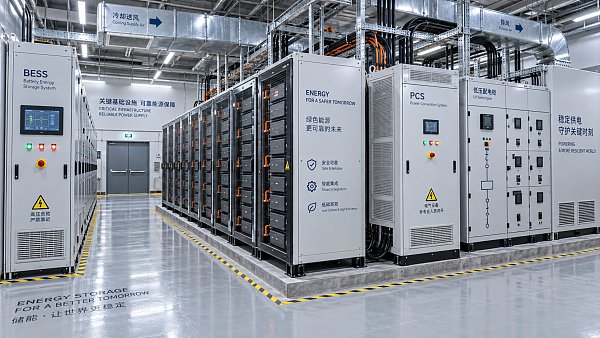
At the battery level, the battery management system (BMS) monitors cell or module voltage, temperature, current, state of charge, state of health, and protective limits. It is normally supplied as part of the battery system. Above it, the power conversion system (PCS) controls charging and discharging power, reactive power, voltage or frequency response, and operating modes permitted by the inverter design. The site EMS coordinates those assets according to commercial schedules, grid requirements, operating constraints, and external commands.
A project may also need a plant controller, SCADA interface, gateway hardware, revenue optimization engine, local historian, remote monitoring portal, and interfaces to solar inverters, building loads, diesel generators, substations, or utility control rooms. Each may be described commercially as part of “the EMS,” yet may be supplied by different parties.
For budget purposes, the relevant cost boundary should distinguish:
- EMS application software and user licences;
- industrial servers, edge controllers, networking equipment, and backup power for the control system;
- site-level plant controller and control-panel hardware;
- protocol mapping and communication interfaces to BMS, PCS, meters, relays, SCADA, and third-party equipment;
- engineering, configuration, factory acceptance testing, site acceptance testing, and commissioning;
- cybersecurity controls, remote access arrangements, and software patching;
- annual support, cloud services, hosting, updates, and performance reporting; and
- future modifications resulting from tariff changes, market-rule changes, grid-code revisions, or plant expansion.
Without this boundary definition, quotations cannot be compared on an equivalent basis. One supplier may include a basic local controller and commissioning, while another may quote only an annual software subscription that assumes the EPC contractor will provide all field hardware and integration.
Control complexity is the strongest cost driver
The number of functions required from the EMS affects cost more directly than battery capacity alone. A larger BESS does not automatically need a more expensive management platform if its duty is simple and its architecture is standardized. Conversely, a modest behind-the-meter system can require substantial engineering when it must coordinate variable loads, onsite generation, standby generators, tariff periods, and power-quality restrictions.
A basic system may need to maintain a reserve state of charge and discharge during a defined peak period. Its logic can be scheduled and relatively stable. A more sophisticated system may need to forecast load and solar output, manage demand limits in real time, preserve battery availability for backup, respond to electricity price signals, and avoid violating interconnection export limits. These objectives can conflict. For example, full discharge to reduce a monthly demand peak may leave insufficient energy for a contractual backup commitment or a later high-value dispatch event.
Utility-scale projects add further layers. The EMS may need to accept commands from a grid operator or market operator, coordinate active and reactive power at the point of interconnection, enforce ramp-rate limits, manage auxiliary loads, and maintain operating records. If the storage plant is co-located with solar or wind generation, the controller must determine how to allocate interconnection capacity between generation export, battery charging, and battery discharge. This is a dispatch problem with financial implications, not merely a communications task.
More control logic means more engineering, testing, exception handling, and support. It also means that the supplier’s claimed functionality should be assessed against specific operating scenarios, rather than accepted as a generic feature list.
Integration can cost more than the software licence
Integration effort is frequently underestimated because the EMS is purchased late in the project, after electrical design and equipment selection have already progressed. The result can be additional interfaces, duplicated control functions, or field changes that could have been avoided through earlier architecture decisions.
Every asset connected to the EMS must exchange usable data and commands. That includes PCS units, battery racks, meters, protection relays, HVAC systems, fire-safety equipment, transformers, solar inverters, generators, and external SCADA platforms where applicable. Protocols such as Modbus, DNP3, IEC 61850, OPC UA, and vendor-specific interfaces may coexist. Supporting a named protocol does not by itself prove interoperability: the data model, command priority, update rate, time synchronization, alarm handling, and fail-safe behavior must also be defined.
Integration costs increase when equipment is sourced from multiple vendors, when legacy assets must be retained, or when a project requires connections to utility systems with prescribed communications and cybersecurity requirements. A single-vendor BESS package may reduce interface risk, but it can also limit flexibility and make later replacement or expansion dependent on one supplier. A multi-vendor design can offer commercial and technical choice, but only if an accountable party owns system-level integration.
The budget should therefore include a clear integration responsibility matrix. It should identify who provides interface documents, who configures each endpoint, who conducts end-to-end testing, who resolves failed commands, and who bears the cost of changes discovered during commissioning. “Compatible with third-party systems” is not a substitute for these commitments.
Grid compliance changes the economics of the control layer
Grid-connected BESS projects must operate within the requirements imposed by the interconnection agreement, local grid code, protection scheme, and utility operating procedures. The EMS or plant controller may need to support active-power limits, reactive-power control, power-factor targets, frequency response, voltage response, ramp-rate control, curtailment, and remote dispatch. The exact obligations are site-specific, and the necessary functionality should be budgeted only after the interconnection requirements are sufficiently defined.
Cost pressure often arises when grid compliance is treated as a late-stage configuration item. A controller may technically support a requested function, yet site commissioning can still require control tuning, relay coordination, meter validation, communication testing, witnessed tests, and documentary evidence. These activities consume engineering time and can affect the project schedule.
There is also an important distinction between functionality delivered by the PCS and functionality delivered by the site EMS. The inverter may execute fast local responses, while the EMS issues slower supervisory commands and sets operating limits. Procurement documents should avoid vague requirements such as “provide frequency regulation capability” unless they specify response responsibility, measurement location, control resolution, operating boundaries, and testing criteria.
Where revenues depend on grid services or market participation, the commercial model must recognize that an unproven control capability has a different value from a capability demonstrated through contractual acceptance tests. The cost of those tests is part of obtaining an operational asset, not an optional technical add-on.
Cybersecurity and data ownership are recurring lifecycle costs
An EMS is an operational technology system connected to valuable physical infrastructure. Remote monitoring, cloud analytics, vendor support access, and data exchange with utilities can improve asset management, but they also introduce cyber and governance obligations. The cost is not limited to installing a firewall or adding encrypted communications during construction.
Long-term spending can include user-access management, network segmentation, security monitoring, vulnerability remediation, operating-system support, certificate renewal, backup procedures, incident-response obligations, and controlled remote access. The commercial effect depends heavily on whether the system is hosted locally, supplied as a cloud service, or built around a hybrid architecture.
Data rights require similar scrutiny. Operating data can be essential for warranty management, degradation analysis, revenue settlement, fault investigation, and refinancing due diligence. Contracts should state who owns raw operational data, who can export it in usable formats, how long it is retained, whether there are charges for data access, and what happens when the service contract ends. A low-cost proprietary platform may become expensive if the owner cannot retrieve data or change service providers without a major migration project.
Do not compare capital cost without the service model
Battery energy management systems cost should be assessed over the anticipated operating period, not only at notice to proceed. Two proposals with similar initial prices can create very different lifecycle exposures.
One supplier may include software updates, remote diagnostics, and a defined response time in the base price. Another may price these as annual services, while retaining the right to charge separately for functional changes, cybersecurity patches, new reports, API access, or support beyond a limited warranty period. Neither model is inherently preferable. The relevant question is whether the financial model reflects the full obligation and whether the service scope matches the asset’s operating strategy.
Particular attention is needed for EMS platforms that depend on cloud connectivity or proprietary optimization services. If the system requires a recurring licence to perform core dispatch functions, that licence is an operating dependency. If the platform is intended to optimize market revenues, the contract should identify the assumptions, data inputs, override rights, liability boundaries, and treatment of unavailable communications. An optimization engine may add value, but it should not be valued as guaranteed revenue without a transparent operating basis.
Lifecycle comparison is also affected by change management. Storage assets may be expanded, paired later with solar generation, connected to new meters, or moved into a different tariff or market regime. The cost of adding capacity, modifying dispatch logic, integrating equipment from another manufacturer, and retesting compliance can be material. Requesting a rate card for foreseeable modifications is more informative than accepting an undefined “future upgrade available” statement.
The hidden cost of unavailable or poorly defined controls
Under-scoping the EMS can impair BESS economics in ways that do not appear in the initial equipment budget. If control logic cannot maintain the required state-of-charge reserve, the project may fail to deliver backup performance. If metering and time synchronization are inadequate, settlement or performance verification may be disputed. If dispatch priorities are not correctly configured, the battery may cycle for a low-value purpose when its capacity should be reserved for a higher-value event.
There are physical consequences as well. The EMS does not determine battery degradation alone, but its charge and discharge commands influence cycling intensity, depth of discharge, temperature-management demands, and time spent at high state of charge. Poorly aligned operating logic can conflict with the battery warranty assumptions used in the investment model. The contract should make clear which operational limits are enforced by the BMS, PCS, and EMS, and how changes to those limits are recorded and approved.
Availability should be defined at the right level. An EMS server may be online while the storage plant cannot dispatch because an interface, meter, communication link, or controller function has failed. For commercially important applications, performance obligations should focus on the availability of required control functions, including degraded-mode behavior, rather than on software uptime alone.
A more reliable way to evaluate proposals
Cost evaluation becomes more defensible when the requested operating outcomes are translated into testable control requirements before bids are compared. This does not require prescribing a supplier’s internal software design. It requires enough operational clarity to determine whether the quoted scope is complete.
A procurement package should define the intended operating modes, priority rules, reserved energy requirements, point-of-interconnection controls, required external interfaces, reporting outputs, cybersecurity obligations, and acceptance tests. It should also specify the conditions under which the BESS must continue operating locally if external communications or cloud services are unavailable.
Commercial review should then separate one-time costs from recurring costs and distinguish mandatory functions from optional optimization features. A useful comparison includes the supplied hardware, licences, configuration, integration, commissioning, training, support period, renewal terms, upgrade rights, and exit provisions. Any exclusions should be priced or assigned to a responsible party rather than left as assumptions.
The most economical EMS is not necessarily the system with the lowest quoted price or the broadest list of advertised functions. It is the system whose scope matches the BESS operating model, whose integration responsibility is contractually clear, and whose lifecycle commitments preserve control of the asset after commissioning. In storage projects, the EMS is the layer that converts installed battery capacity into an operating capability. Its cost should be evaluated accordingly.
Questions about market trends? Contact Market Scope Live for deeper business insights.
We respect your privacy. Your information is strictly confidential.
Related News
 Energy Storage Systems / BESSCroatia’s First Transmission-Connected Standalone Battery Project Enters OperationCroatia’s first transmission-connected standalone battery project is operational. Discover how the 60 MW Šibenik facility could support grid flexibility.MORE+
 Energy Storage Systems / BESSAustralia's NEM Battery Storage Hits Record 20.17 GWh, Up 203% Year on YearAustralia's NEM battery storage reportedly hits 20.17 GWh, up 203% year on year. Explore what the record could mean for grid-scale projects and procurement.MORE+
 Energy Storage Systems / BESSC&I Energy Storage in Germany: What Drives Project ROI?C&I energy storage in Germany: discover what drives project ROI, from peak shaving and solar savings to costs, tariffs and smarter battery sizing.MORE+
 Energy Storage Systems / BESSChoosing Energy Storage Containers: Capacity, Power and Safety CriteriaCompare energy storage containers by usable capacity, power, safety and grid integration. Learn what to ask suppliers before choosing a system.MORE+
 Energy Storage Systems / BESSNeoen, Frontier Energy and Lightyears Secure Funding for Renewable ProjectsNeoen, Frontier Energy and Lightyears secure renewable energy financing. Explore what the funding means for solar, wind and battery storage projects.MORE+
 Energy Storage Systems / BESSChoosing a Battery Energy Storage Container Manufacturer: Key Supplier ChecksChoosing a battery energy storage containers manufacturer? Learn how to assess safety, integration, warranties and total costs before you buy.MORE+
 Energy Storage Systems / BESSCATL Introduces Grid Connection and Financing Commitments in AustraliaCATL introduces energy storage with 25-year grid connection and financing commitments in Australia. Explore what the proposed model means for projects.MORE+
 Energy Storage Systems / BESSPortugal Mandates Grid-Forming Capability for Large Storage and Launches 1 GW TenderPortugal grid-forming rules target large standalone energy storage projects as a 1 GW tender launches. Explore the implications for developers and suppliers.MORE+
 Energy Storage Systems / BESSAdding Battery Storage to Rooftop Solar: When to Use AC vs. DC CouplingExplore rooftop solar storage integration: compare AC vs. DC coupling, inverter compatibility, backup power, and lifecycle costs to choose the right battery setup.MORE+
 Energy Storage Systems / BESSHeron Power and NiSource Announce US Data Center Deals Involving BESSHeron Power and NiSource announce US data center deals involving BESS. Explore how transformer integration and long-term power supply are shaping data center energy plans.MORE+
 Energy Storage Systems / BESSPeak Energy Raises $108 Million as GM Ventures Leads Sodium-Ion Storage RoundPeak Energy raises $108 million in a GM Ventures-led round to scale sodium-ion storage for grids and AI data centers. Explore what buyers should assess before committing.MORE+
 Energy Storage Systems / BESSRondo Energy and Rio Tinto Begin Design of Australia's Largest Thermal Storage ProjectRondo Energy and Rio Tinto begin design of a 30 MW/360 MWh thermal storage project at Yarwun. Explore its potential for industrial decarbonization and future procurement.MORE+
 Energy Storage Systems / BESSCATL Nine-Month Net Profit Rises 31.6% as Energy Storage Emerges as a Growth DriverCATL’s reported nine-month net profit rose 31.6% as energy storage gains momentum. Explore what this shift could mean for battery buyers, overseas orders and procurement planning.MORE+
 Energy Storage Systems / BESSScalable Power Solutions for Commercial Facilities with Uneven Site DemandScalable power solutions for multi-site commercial facilities: optimize uneven demand, resilience, storage, solar, and controls with a repeatable portfolio strategy.MORE+
 Energy Storage Systems / BESSWhen Do Commercial Property Owners Face Peak Demand for On-Site Energy?Commercial property owners peak demand often occurs when HVAC, occupancy, EV charging, and equipment loads coincide. Discover practical strategies to manage costs, capacity, and on-site energy resilience.MORE+
 Energy Storage Systems / BESSWhen Does a Containerized Hybrid Solar-Storage System Make Sense for Remote Sites?containerized hybrid solar storage for remote sites: discover when it cuts diesel costs, improves reliability, and simplifies deployment with smarter sizing and design.MORE+
 Energy Storage Systems / BESSHow to Specify Steel Battery Enclosures for Outdoor BESS Fire and Corrosion RisksSteel battery enclosures: learn how to specify corrosion protection, fire-ready interfaces, drainage, and durable outdoor BESS performance.MORE+
 Energy Storage Systems / BESSBattery Energy Storage Cost: What Drives $/kWh and Project ROI?Battery energy storage cost explained: compare usable $/kWh, system scope, grid connection, warranty, and lifecycle factors to build a stronger storage ROI.MORE+
 Energy Storage Systems / BESSWhat Drives BESS Fire Protection Costs in Utility-Scale Storage Projects?Energy storage fire protection cost drivers explained: compare BESS safety systems, site design, compliance, and integration to budget smarter.MORE+
 Energy Storage Systems / BESSHow to Size Grid-Scale Energy Storage for Peak Shaving and Renewable FirmingGrid scale energy storage sizing guide for peak shaving and renewable firming—learn how to model MW, MWh, dispatch, degradation, and grid limits.MORE+
 Energy Storage Systems / BESSWhat Drives Battery Energy Management System Costs in BESS Projects?Battery energy management systems cost depends on controls, integration, grid compliance, cybersecurity, and lifecycle support. Learn how to evaluate BESS EMS proposals wisely.MORE+
 Energy Storage Systems / BESSHow to Size a Commercial Microgrid Battery System for Peak Shaving and Backup PowerCommercial microgrid battery system sizing guide for peak shaving and backup power—optimize kW, kWh, reserve SOC, controls, and resilience.MORE+
 Energy Storage Systems / BESSHow to Select a Battery Storage EPC Partner for Utility-Scale Projects in EuropeBattery storage EPC Europe: choose the right utility-scale partner with proven grid expertise, safety leadership, supply-chain control, and reliable commissioning.MORE+
 Energy Storage Systems / BESSHow to Evaluate a Stationary Battery Storage Manufacturer for Critical Backup PowerStationary battery storage manufacturer evaluation guide: compare safety, usable capacity, integration, warranties, lifecycle cost, and service support for reliable critical backup power.MORE+
 Energy Storage Systems / BESSDo Utilities Prefer Centralized or Distributed Energy Storage Models?Do utility companies prefer centralized or distributed energy storage models? Explore how grid constraints, costs, resilience, and control shape the best storage strategy.MORE+
 Energy Storage Systems / BESSWhat Fire Safety Requirements Apply to Containerized Battery Storage?What are the fire safety requirements for containerized battery storage systems? Explore codes, detection, suppression, ventilation, shutdown, and site design essentials.MORE+
 Energy Storage Systems / BESSIs EPEM Useful for Benchmarking Energy Storage Project Performance?Is EPEM useful for benchmarking energy storage project performance data? Explore how it helps normalize efficiency, availability, degradation, dispatch, and lifecycle risks.MORE+
 Energy Storage Systems / BESSBehind-the-Meter Energy Systems for Industrial Parks: Sizing Solar, Storage, and LoadsBehind the meter energy systems for industrial parks: learn how to size solar, storage, and loads for lower costs, resilient operations, and scalable growth.MORE+
 Energy Storage Systems / BESSAerosol Fire Protection for Energy Storage: Key Design Factors for BESS SafetyAerosol fire protection for energy storage: explore key BESS design factors for detection, ventilation, thermal runaway risk, and safer system integration.MORE+
 Energy Storage Systems / BESSHow to Size Solar Backup Energy Systems for Critical Commercial LoadsBackup energy systems with solar: learn how to size critical commercial loads, balance battery power and runtime, and build resilient operations.MORE+
 Energy Storage Systems / BESSWhat Criteria Should You Use to Shortlist Battery Storage EPC Contractors?What criteria should be used to shortlist battery storage EPC contractors? Explore essential checks for engineering, safety, grid integration, delivery, and lifecycle value.MORE+
 Energy Storage Systems / BESSCan Battery Storage Be Added to Existing Solar Farms Without Replacing Inverters?Can battery storage be integrated into existing solar farms without replacing inverters? Explore AC-coupled retrofits, grid limits, controls, costs, and value.MORE+
 Energy Storage Systems / BESSAre Containerized Battery Storage Systems Safe for Urban Deployment?Are containerized battery storage systems safe for urban deployment? Explore key safety factors, fire planning, standards, and site design for reliable urban BESS projects.MORE+
 Energy Storage Systems / BESSSodium-Ion vs Lithium-Ion: Which Is Better for Long-Duration Storage?Is sodium-ion battery better than lithium-ion for long duration storage? Explore cost, safety, energy density, warranties, and the best fit for your storage project.MORE+
 Energy Storage Systems / BESSHow to Size Grid-Scale Battery Energy Storage for Peak Shaving and Grid SupportGrid scale battery energy storage sizing made practical: learn how to match MW, MWh, dispatch, degradation, and grid constraints for reliable peak shaving and grid support.MORE+
 Energy Storage Systems / BESSHow to Integrate Solar and Battery Storage for Reliable Commercial Power ProjectsSolar storage project integration for commercial sites: learn to align load analysis, battery sizing, controls, safety, and grid compliance for reliable power.MORE+
 Energy Storage Systems / BESSHow Does Battery Thermal Management Affect Charger Uptime in Hot Climates?How does battery thermal management affect charger uptime in hot climates? Explore cooling strategies that reduce derating, protect assets, and keep EV charging reliable.MORE+
 Energy Storage Systems / BESSAre Sodium-Ion Batteries Ready for Commercial Charging Storage in 2026?Are sodium-ion batteries ready for commercial charging station storage in 2026? Explore costs, safety, footprint trade-offs, and project-fit insights.MORE+
 Energy Storage Systems / BESSHow to Size Energy Storage Containers for Reliable Microgrid PerformanceEnergy storage containers for microgrids: learn how to size capacity, power, backup duration, and reserve margins to improve reliability, cut costs, and support smarter project decisions.MORE+
 Energy Storage Systems / BESSHow to Evaluate a Fast Frequency Response Inverter for Grid-Scale BESS?Fast frequency response inverter evaluation for grid-scale BESS: learn how to assess control speed, thermal stability, grid-code behavior, and procurement-critical performance before you buy.MORE+