
India Makes BEE Certification Mandatory for BESS
On July 15, 2026, India’s Bureau of Energy Efficiency (BEE) put a new compliance threshold into effect for battery energy storage systems (BESS): products imported into India or sold domestically must now obtain BEE energy labeling certification under IS 17294:2025. Because the requirement extends across cells, PCS, BMS, and complete systems, the development deserves close attention from exporters, manufacturers, channel partners, and supply-chain teams, especially where customs clearance, sales readiness, and delivery timing are tightly linked to documentation and testing schedules.
What the Rule Now Requires
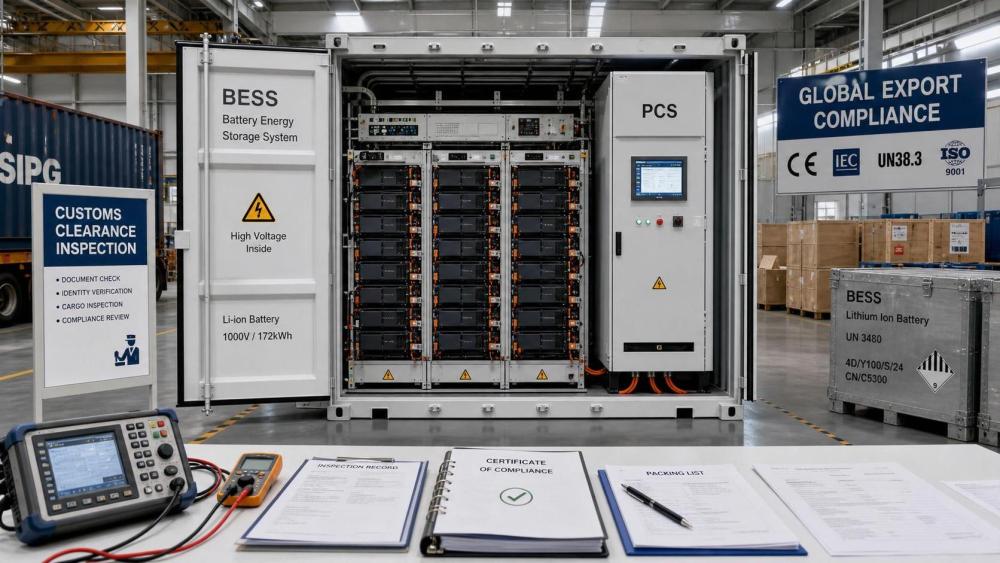
The confirmed change is that, from July 15, 2026, all BESS products imported into India and all BESS products sold in the local market must pass BEE energy labeling certification in line with IS 17294:2025. The scope covers battery cells, PCS, BMS, and full system assemblies. Products that do not obtain the required certification cannot be cleared through customs or placed on the market for sale. The information provided also indicates that the rule directly affects delivery schedules, testing costs, and compliance document preparation cycles for Chinese BESS exporters serving India.
Where the Immediate Pressure Falls
Export deliveries face a tighter compliance gate
From an industry perspective, exporters shipping BESS into India are likely to feel the most direct impact because certification is now tied to whether products can enter the market at all. The main pressure points are shipment planning, pre-delivery testing, and the readiness of supporting compliance files before goods move.
Manufacturing coordination becomes more document-sensitive
For manufacturers supplying cells, PCS, BMS, or integrated systems, the new requirement may affect how product configurations are prepared for the Indian market. The impact is not only technical but procedural, since certification coverage spans multiple components and the complete system. What deserves closer attention is whether internal product documentation, component traceability, and submission materials are aligned early enough to avoid delays.
Channel and market-entry teams may see sales timing shift
For distributors, local sales teams, and other channel participants, the rule matters because uncertified products cannot be put on sale. That means market-entry timing may increasingly depend on certification completion rather than only on commercial readiness. Teams involved in inventory planning, launch timing, and customer commitments need to watch how compliance milestones affect actual sell-through availability.
Supply-chain service providers need to watch clearance risk
For logistics and supply-chain service providers, the requirement raises a practical checkpoint at customs. Observably, the operational issue is not demand-side speculation but whether shipments are backed by the certification and documents needed for clearance. This makes document accuracy and timing more relevant in cross-border execution.
What Companies Should Track Now
Watch for any further official wording around implementation
Analysis shows that the rule is already in effect, but companies still need to track how official language around implementation is presented or clarified over time. In practice, the difference between a high-level requirement and its day-to-day enforcement can shape lead times, submission sequencing, and shipment release planning.
Prioritize product scope mapping before shipment decisions
Because the rule explicitly covers cells, PCS, BMS, and complete systems, companies should pay close attention to how each product category is classified within their India-facing business. This is especially relevant for suppliers with multiple configurations or modular delivery structures, where the compliance boundary may affect what can move, when, and with which supporting paperwork.
Bring testing and document preparation into delivery planning
The information provided already points to testing cost and compliance document preparation cycles as direct issues. That makes timing a practical concern, not just a regulatory one. Exporters and project teams should therefore treat certification-related preparation as part of delivery scheduling rather than as a final administrative step.
Set customer communication around timing and readiness
For companies already serving the Indian market, customer-facing teams should pay attention to how certification status is communicated in quotations, order discussions, and delivery expectations. Where projects depend on imported systems, the ability to explain readiness, documentation status, and possible timing changes may become a necessary part of contract execution and account management.
How This Development Is Best Understood
This section is analysis. It is more appropriate to understand the BEE requirement as an immediate market-access condition rather than a distant policy signal. The rule is not framed as a future consultation point in the information provided; it is already effective as of July 15, 2026, and directly linked to customs clearance and sales eligibility. At the same time, this should not automatically be overstated as a full-market conclusion. Observably, the more relevant industry question now is how quickly affected companies can adapt their testing, documentation, and delivery processes to the new threshold.
A Compliance Change With Near-Term Business Consequences
Based on the confirmed information, this development matters because it converts energy labeling certification into a practical entry requirement for BESS in India. The immediate significance lies in execution: whether exporters, manufacturers, and channel participants can align product scope, certification work, and delivery schedules quickly enough. Current analysis suggests this is best viewed as a near-term operational compliance change with broader strategic importance still worth monitoring, rather than as a standalone signal from which broad market outcomes can already be concluded.
Basis of This Article
This article is based on the user-provided news title, event date, and event summary concerning India’s BEE requirement for mandatory BESS energy certification from July 15, 2026. For developments of this kind, commonly relevant source types may include official notices, company statements, industry association updates, authoritative media coverage, and standard-setting documents. A specific official source link was not provided in the input, so the underlying wording and any follow-up implementation details still require ongoing verification. Continued attention should focus on any further official clarification related to certification execution, documentation expectations, and practical enforcement at customs and in domestic sales channels.
Questions about market trends? Contact Market Scope Live for deeper business insights.
We respect your privacy. Your information is strictly confidential.
Related News
 Energy Storage Systems / BESSAustralia's NEM Battery Storage Hits Record 20.17 GWh, Up 203% Year on YearAustralia's NEM battery storage reportedly hits 20.17 GWh, up 203% year on year. Explore what the record could mean for grid-scale projects and procurement.MORE+
 Energy Storage Systems / BESSC&I Energy Storage in Germany: What Drives Project ROI?C&I energy storage in Germany: discover what drives project ROI, from peak shaving and solar savings to costs, tariffs and smarter battery sizing.MORE+
 Energy Storage Systems / BESSChoosing Energy Storage Containers: Capacity, Power and Safety CriteriaCompare energy storage containers by usable capacity, power, safety and grid integration. Learn what to ask suppliers before choosing a system.MORE+
 Energy Storage Systems / BESSNeoen, Frontier Energy and Lightyears Secure Funding for Renewable ProjectsNeoen, Frontier Energy and Lightyears secure renewable energy financing. Explore what the funding means for solar, wind and battery storage projects.MORE+
 Energy Storage Systems / BESSChoosing a Battery Energy Storage Container Manufacturer: Key Supplier ChecksChoosing a battery energy storage containers manufacturer? Learn how to assess safety, integration, warranties and total costs before you buy.MORE+
 Energy Storage Systems / BESSCATL Introduces Grid Connection and Financing Commitments in AustraliaCATL introduces energy storage with 25-year grid connection and financing commitments in Australia. Explore what the proposed model means for projects.MORE+
 Energy Storage Systems / BESSPortugal Mandates Grid-Forming Capability for Large Storage and Launches 1 GW TenderPortugal grid-forming rules target large standalone energy storage projects as a 1 GW tender launches. Explore the implications for developers and suppliers.MORE+
 Energy Storage Systems / BESSAdding Battery Storage to Rooftop Solar: When to Use AC vs. DC CouplingExplore rooftop solar storage integration: compare AC vs. DC coupling, inverter compatibility, backup power, and lifecycle costs to choose the right battery setup.MORE+
 Energy Storage Systems / BESSHeron Power and NiSource Announce US Data Center Deals Involving BESSHeron Power and NiSource announce US data center deals involving BESS. Explore how transformer integration and long-term power supply are shaping data center energy plans.MORE+
 Energy Storage Systems / BESSPeak Energy Raises $108 Million as GM Ventures Leads Sodium-Ion Storage RoundPeak Energy raises $108 million in a GM Ventures-led round to scale sodium-ion storage for grids and AI data centers. Explore what buyers should assess before committing.MORE+
 Energy Storage Systems / BESSRondo Energy and Rio Tinto Begin Design of Australia's Largest Thermal Storage ProjectRondo Energy and Rio Tinto begin design of a 30 MW/360 MWh thermal storage project at Yarwun. Explore its potential for industrial decarbonization and future procurement.MORE+
 Energy Storage Systems / BESSCATL Nine-Month Net Profit Rises 31.6% as Energy Storage Emerges as a Growth DriverCATL’s reported nine-month net profit rose 31.6% as energy storage gains momentum. Explore what this shift could mean for battery buyers, overseas orders and procurement planning.MORE+
 Energy Storage Systems / BESSScalable Power Solutions for Commercial Facilities with Uneven Site DemandScalable power solutions for multi-site commercial facilities: optimize uneven demand, resilience, storage, solar, and controls with a repeatable portfolio strategy.MORE+
 Energy Storage Systems / BESSWhen Do Commercial Property Owners Face Peak Demand for On-Site Energy?Commercial property owners peak demand often occurs when HVAC, occupancy, EV charging, and equipment loads coincide. Discover practical strategies to manage costs, capacity, and on-site energy resilience.MORE+
 Energy Storage Systems / BESSWhen Does a Containerized Hybrid Solar-Storage System Make Sense for Remote Sites?containerized hybrid solar storage for remote sites: discover when it cuts diesel costs, improves reliability, and simplifies deployment with smarter sizing and design.MORE+
 Energy Storage Systems / BESSHow to Specify Steel Battery Enclosures for Outdoor BESS Fire and Corrosion RisksSteel battery enclosures: learn how to specify corrosion protection, fire-ready interfaces, drainage, and durable outdoor BESS performance.MORE+
 Energy Storage Systems / BESSBattery Energy Storage Cost: What Drives $/kWh and Project ROI?Battery energy storage cost explained: compare usable $/kWh, system scope, grid connection, warranty, and lifecycle factors to build a stronger storage ROI.MORE+
 Energy Storage Systems / BESSWhat Drives BESS Fire Protection Costs in Utility-Scale Storage Projects?Energy storage fire protection cost drivers explained: compare BESS safety systems, site design, compliance, and integration to budget smarter.MORE+
 Energy Storage Systems / BESSHow to Size Grid-Scale Energy Storage for Peak Shaving and Renewable FirmingGrid scale energy storage sizing guide for peak shaving and renewable firming—learn how to model MW, MWh, dispatch, degradation, and grid limits.MORE+
 Energy Storage Systems / BESSWhat Drives Battery Energy Management System Costs in BESS Projects?Battery energy management systems cost depends on controls, integration, grid compliance, cybersecurity, and lifecycle support. Learn how to evaluate BESS EMS proposals wisely.MORE+
 Energy Storage Systems / BESSHow to Size a Commercial Microgrid Battery System for Peak Shaving and Backup PowerCommercial microgrid battery system sizing guide for peak shaving and backup power—optimize kW, kWh, reserve SOC, controls, and resilience.MORE+
 Energy Storage Systems / BESSHow to Select a Battery Storage EPC Partner for Utility-Scale Projects in EuropeBattery storage EPC Europe: choose the right utility-scale partner with proven grid expertise, safety leadership, supply-chain control, and reliable commissioning.MORE+
 Energy Storage Systems / BESSHow to Evaluate a Stationary Battery Storage Manufacturer for Critical Backup PowerStationary battery storage manufacturer evaluation guide: compare safety, usable capacity, integration, warranties, lifecycle cost, and service support for reliable critical backup power.MORE+
 Energy Storage Systems / BESSDo Utilities Prefer Centralized or Distributed Energy Storage Models?Do utility companies prefer centralized or distributed energy storage models? Explore how grid constraints, costs, resilience, and control shape the best storage strategy.MORE+
 Energy Storage Systems / BESSWhat Fire Safety Requirements Apply to Containerized Battery Storage?What are the fire safety requirements for containerized battery storage systems? Explore codes, detection, suppression, ventilation, shutdown, and site design essentials.MORE+
 Energy Storage Systems / BESSIs EPEM Useful for Benchmarking Energy Storage Project Performance?Is EPEM useful for benchmarking energy storage project performance data? Explore how it helps normalize efficiency, availability, degradation, dispatch, and lifecycle risks.MORE+
 Energy Storage Systems / BESSBehind-the-Meter Energy Systems for Industrial Parks: Sizing Solar, Storage, and LoadsBehind the meter energy systems for industrial parks: learn how to size solar, storage, and loads for lower costs, resilient operations, and scalable growth.MORE+
 Energy Storage Systems / BESSAerosol Fire Protection for Energy Storage: Key Design Factors for BESS SafetyAerosol fire protection for energy storage: explore key BESS design factors for detection, ventilation, thermal runaway risk, and safer system integration.MORE+
 Energy Storage Systems / BESSHow to Size Solar Backup Energy Systems for Critical Commercial LoadsBackup energy systems with solar: learn how to size critical commercial loads, balance battery power and runtime, and build resilient operations.MORE+
 Energy Storage Systems / BESSWhat Criteria Should You Use to Shortlist Battery Storage EPC Contractors?What criteria should be used to shortlist battery storage EPC contractors? Explore essential checks for engineering, safety, grid integration, delivery, and lifecycle value.MORE+
 Energy Storage Systems / BESSCan Battery Storage Be Added to Existing Solar Farms Without Replacing Inverters?Can battery storage be integrated into existing solar farms without replacing inverters? Explore AC-coupled retrofits, grid limits, controls, costs, and value.MORE+
 Energy Storage Systems / BESSAre Containerized Battery Storage Systems Safe for Urban Deployment?Are containerized battery storage systems safe for urban deployment? Explore key safety factors, fire planning, standards, and site design for reliable urban BESS projects.MORE+
 Energy Storage Systems / BESSSodium-Ion vs Lithium-Ion: Which Is Better for Long-Duration Storage?Is sodium-ion battery better than lithium-ion for long duration storage? Explore cost, safety, energy density, warranties, and the best fit for your storage project.MORE+
 Energy Storage Systems / BESSHow to Size Grid-Scale Battery Energy Storage for Peak Shaving and Grid SupportGrid scale battery energy storage sizing made practical: learn how to match MW, MWh, dispatch, degradation, and grid constraints for reliable peak shaving and grid support.MORE+
 Energy Storage Systems / BESSHow to Integrate Solar and Battery Storage for Reliable Commercial Power ProjectsSolar storage project integration for commercial sites: learn to align load analysis, battery sizing, controls, safety, and grid compliance for reliable power.MORE+
 Energy Storage Systems / BESSHow Does Battery Thermal Management Affect Charger Uptime in Hot Climates?How does battery thermal management affect charger uptime in hot climates? Explore cooling strategies that reduce derating, protect assets, and keep EV charging reliable.MORE+
 Energy Storage Systems / BESSAre Sodium-Ion Batteries Ready for Commercial Charging Storage in 2026?Are sodium-ion batteries ready for commercial charging station storage in 2026? Explore costs, safety, footprint trade-offs, and project-fit insights.MORE+
 Energy Storage Systems / BESSHow to Size Energy Storage Containers for Reliable Microgrid PerformanceEnergy storage containers for microgrids: learn how to size capacity, power, backup duration, and reserve margins to improve reliability, cut costs, and support smarter project decisions.MORE+
 Energy Storage Systems / BESSHow to Evaluate a Fast Frequency Response Inverter for Grid-Scale BESS?Fast frequency response inverter evaluation for grid-scale BESS: learn how to assess control speed, thermal stability, grid-code behavior, and procurement-critical performance before you buy.MORE+
 Energy Storage Systems / BESSChina Expands Cross-Border RMB and FX Cash Pooling, Easing BESS and PV Export SettlementsChina expands cross-border RMB and FX cash pooling nationwide, easing BESS and PV export settlements with faster multi-currency payments, lower FX costs, and smoother buyer-supplier coordination.MORE+


