How to Size Grid-Scale Energy Storage for Peak Shaving and Renewable Firming
A grid-scale energy storage system should be sized from the operating obligation it must meet, not from a preferred battery duration or a supplier’s standard container configuration. For peak shaving, the system must deliver enough power at the right hours to reduce a defined grid or plant peak. For renewable firming, it must absorb and release energy according to the variability of solar or wind output. One project may need high power for a short interval; another may need sustained delivery across several hours. Treating both as the same sizing problem often creates an asset that is either oversized in energy, short of power, or unable to meet its contractual dispatch profile.
The practical starting point is to define the service first, then model the battery plant around the worst credible operating periods. This means separating power capacity, measured in MW, from usable energy capacity, measured in MWh. It also means accounting for interconnection limits, charging opportunities, state-of-charge restrictions, auxiliary consumption, degradation, and the control strategy that will decide when the system charges or discharges.
Start with the event the storage system must solve
Peak shaving and renewable firming can coexist, but they should not be combined into a single vague requirement such as “reduce peaks and support renewables.” Each service creates a different dispatch pattern and a different risk of running out of available energy.
For peak shaving, begin with an agreed demand threshold. This may be an interconnection export or import limit, a transformer loading constraint, a contracted capacity target, or a target designed to avoid expensive network upgrades. The required discharge power is the difference between the actual load and that threshold during the relevant peak intervals.
For renewable firming, the first question is more specific: what exactly must be firmed? A project may be required to limit output ramps, maintain a scheduled export block, cap the plant’s export at the point of interconnection, or shift renewable energy into a later delivery period. These are different control objectives. A battery sized to smooth five-minute solar volatility is not automatically sized to provide a reliable evening delivery profile.
Write the operating requirement in dispatch terms before selecting equipment. For example: maintain net export below an interconnection cap; deliver a nominated block during a defined period; reduce site import below a limit; or limit changes in export power over a control interval. The clearer this statement is, the more defensible the MW and MWh calculation becomes.
Build the sizing model from time-series data
A single peak demand figure and an annual renewable production estimate are not enough. Storage is a time-dependent asset. It needs chronological data that shows when load occurs, when generation occurs, how often constrained conditions arise, and whether the battery can recharge before the next dispatch event.
Use the most granular reliable interval data available for the project stage. The data set should cover at least:
- Site load or grid import/export profiles, including operational peaks rather than only monthly billing demand;
- Solar or wind generation profiles at the proposed plant configuration;
- Interconnection limits, transformer ratings, and any curtailment or export-control rules;
- Planned operating hours, seasonal changes, maintenance periods, and foreseeable load growth;
- Charging restrictions, including whether charging may occur from the grid, from renewable generation only, or under defined tariff or market conditions;
- Expected battery availability and the operating reserve required for reliability or grid support.
The model should simulate every interval in sequence. At each interval, it should calculate net load or net export, determine the battery command, update state of charge, apply charge and discharge efficiency, and prevent dispatch outside operating limits. This reveals a problem that simplified calculations miss: a battery can have adequate nameplate energy for one event but insufficient state of charge because it was used earlier in the day or lacked a recharge window.
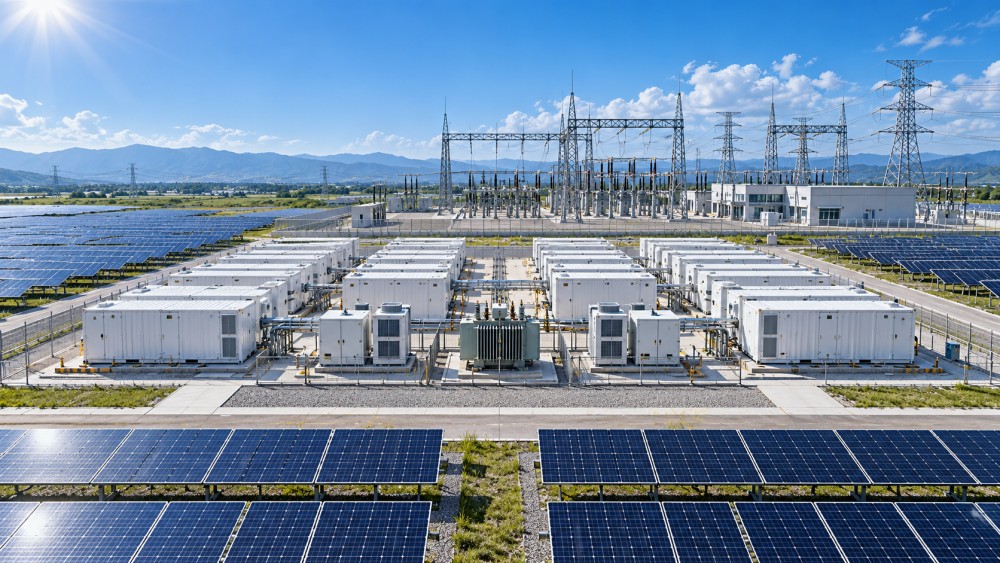
For early development, a representative-year simulation can establish a preliminary range. Before final investment decisions, teams should test multiple weather and load conditions, including periods with unfavorable renewable output, sustained high demand, and closely spaced peak events. The purpose is not to predict every future hour perfectly. It is to identify the conditions under which the proposed storage plant fails to deliver its required service.
Calculate power and energy separately
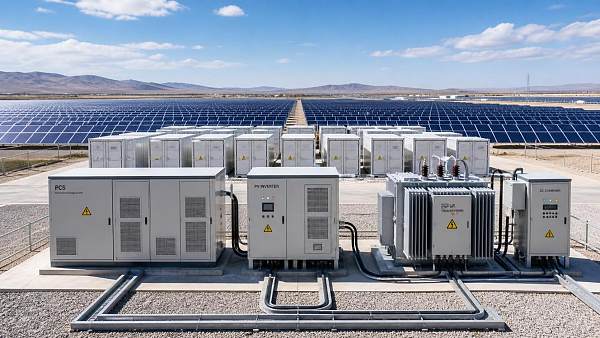
The required power rating is driven by the largest charge or discharge command the system must execute. A peak-shaving plant that must cut a 20 MW exceedance requires at least that much deliverable discharge power at the point where the obligation is measured. The battery-side power, PCS rating, transformer capacity, collection system, and interconnection losses must all be considered. A nominal AC rating alone does not prove that the required power reaches the grid connection point under all relevant conditions.
Energy capacity comes from the area under the dispatch requirement over time. If the load stays above the peak threshold for several intervals, sum the required discharge energy across those intervals. For renewable firming, sum the energy needed to cover the difference between actual renewable output and the target export profile. The duration result should come from the simulated dispatch profile, not from choosing a conventional one-, two-, or four-hour configuration first.
A useful relationship is:
Required usable energy = cumulative dispatch energy + operating reserve + losses allowance
“Usable” matters. A battery cannot normally operate from full charge to zero charge on every cycle. The energy management system maintains an operating state-of-charge window to preserve controllability and protect the battery. The plant also consumes energy for cooling, controls, communications, and other auxiliary loads. Conversion losses occur through the battery, PCS, transformer, and associated equipment. These effects should be represented in the model rather than treated as a minor procurement detail.
Do not size on the average peak
Average peak duration is useful for an initial screen, but it is a weak basis for a project commitment. A system built around average conditions may perform well most days and still miss the few events that define its value. The relevant design case depends on the commercial and technical consequence of failure.
If the storage plant protects a constrained substation or supports a firm delivery obligation, the sizing case should focus on severe but plausible events. If the plant is optimized mainly for discretionary energy shifting, the economic model may accept occasional missed opportunities. The correct margin is therefore a project decision, not a universal percentage added to every battery.
Renewable firming requires a defined delivery philosophy
“Firming renewable output” can mean several different things. A project team should select one operating philosophy before sizing the battery, because each one changes cycling, reserve requirements, and degradation exposure.
- Ramp-rate control: The battery absorbs or supplies short power deviations so export changes gradually. This can require responsive MW capacity but may use relatively little energy unless variability persists.
- Scheduled delivery: The plant follows a committed export schedule. The storage system must cover forecast error and preserve sufficient energy for later intervals.
- Block shaping: Renewable energy is stored and delivered during a defined time block, such as an evening period. Energy duration becomes central, while charging availability may limit performance on low-resource days.
- Export limiting: The battery captures generation that would otherwise exceed the interconnection limit. Charging power and the frequency of clipping events may matter more than discharge duration.
Trying to provide all four services with one battery is possible only when the operating hierarchy is explicit. For example, export-limit control may be mandatory because of the grid connection agreement, while scheduled delivery is optional when sufficient state of charge remains. Without this hierarchy, the dispatch controller can use energy for short-term value and leave the project exposed during its most important obligation.
Account for degradation as a design condition, not an O&M issue
Battery capacity changes over its operating life. The system must therefore be evaluated at the point in life when it is still expected to meet the contracted or planned service, not only at commissioning. A project that just meets its MWh requirement on day one may lose operational flexibility well before the intended service period ends.
Degradation is influenced by cycle frequency, depth of discharge, temperature, charge and discharge rates, time at high state of charge, and the selected battery technology. The appropriate approach is to define the required end-of-service usable capacity, then size the initial installed capacity and augmentation strategy around that requirement. This is also where an apparently cheaper configuration can become less economical: it may require earlier augmentation, accept more missed dispatches, or impose tighter operating restrictions.
Project managers should require a transparent distinction between installed DC battery energy, usable DC energy, AC-delivered energy, and guaranteed capacity conditions. These are not interchangeable figures. The same discipline applies to power: clarify whether the quoted MW is continuous AC output, temporary overload capability, battery-side DC power, or power available at the point of interconnection.
The interconnection can set the real system size
Grid-scale energy storage is often discussed as a battery selection exercise, but the connection architecture can be the controlling constraint. A plant may have sufficient battery containers and PCS capacity yet be unable to charge at the desired rate, export at the desired rate, or operate simultaneously with renewable generation because of transformer, feeder, or interconnection limitations.
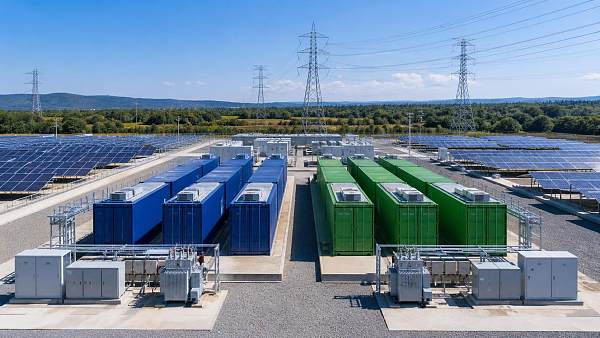
For an AC-coupled renewable-plus-storage project, the solar or wind plant and battery may each have separate conversion equipment while sharing the grid connection. This can simplify retrofit arrangements and allow flexible operation, but export coordination is essential. For DC-coupled solar-plus-storage, the battery shares part of the solar-side conversion path. This can be effective where capturing clipped solar output is a priority, but it changes the charging and dispatch constraints. Neither architecture is inherently the correct answer; the decision should follow the interconnection, curtailment pattern, operating objective, and construction sequence.
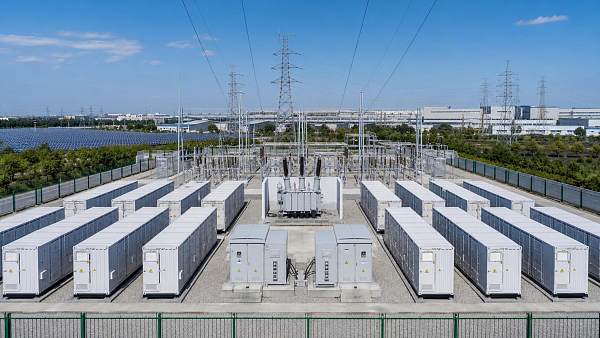
Check the full electrical path early: battery, PCS, medium-voltage transformer, collection system, protection scheme, substation equipment, and point of interconnection. A late discovery in this path can change both the storage rating and the project schedule.
Use a dispatch hierarchy before committing to a revenue model
Peak shaving, renewable firming, congestion management, energy shifting, and ancillary grid services can compete for the same MW, MWh, and state of charge. The storage plant needs a dispatch hierarchy that states which obligation has priority, what reserve must be held back, and when the battery may pursue secondary value.
A practical hierarchy might reserve energy for a defined peak window, then use remaining capability for renewable shaping, and only then make capacity available for lower-priority opportunities. The exact order depends on the project’s contracts and grid role. What matters is that the financial model, control logic, and technical sizing use the same priorities. A revenue stack that assumes full availability for several overlapping services can overstate usable capacity.
Control integration deserves the same attention. The EMS must receive reliable load, renewable, meter, weather, and grid-status data; apply operating limits; and coordinate the PCS, battery management system, and plant controller. A well-sized battery with incomplete controls can still miss a peak or breach an export limit.
A procurement brief that produces comparable proposals
When EPC contractors and suppliers receive only a headline requirement such as “100 MW storage for solar firming,” proposals can look comparable while relying on different assumptions. The procurement brief should instead state the dispatch duty, point of measurement, required availability window, charge-source rules, state-of-charge reserve, degradation basis, grid-code functions, site conditions, and expected operating life.
Ask bidders to provide time-series dispatch results for the defined use cases, rather than only a nameplate MW/MWh configuration. The output should show unmet events, curtailed renewable energy, state-of-charge behavior, losses, expected cycling, and the capacity margin through the planned operating period. This makes it easier to compare containerized battery systems, PCS configurations, thermal management approaches, augmentation assumptions, and control strategies on the same basis.
For project teams evaluating technology, market conditions, and grid integration together, EPEM’s energy storage and grid modernization coverage can help frame the questions that sit outside the battery enclosure: interconnection planning, control architecture, renewable integration, equipment interfaces, and lifecycle project risk.
Questions to resolve before fixing the MW/MWh configuration
- What grid, commercial, or operational event is the battery required to prevent or support?
- At which meter or electrical point is performance measured?
- How long can the critical event persist, and can it occur more than once before recharge?
- Which service has priority when peak shaving and renewable firming call for the battery at the same time?
- What state-of-charge reserve is required for reliable dispatch?
- How will usable capacity, auxiliary demand, losses, and degradation be represented over the asset life?
- Can the existing or planned interconnection support the intended charge and discharge profile?
- What controller and data interfaces are needed to execute the dispatch strategy reliably?
The most reliable sizing decision is usually not a single MW/MWh answer at the beginning of development. It is a documented operating envelope: a defined set of dispatch obligations, a modeled range of credible conditions, and a configuration that maintains required performance as the battery ages. Once that envelope is clear, equipment selection and commercial evaluation become substantially more disciplined.
Questions about market trends? Contact Market Scope Live for deeper business insights.
We respect your privacy. Your information is strictly confidential.
Related News
 Energy Storage Systems / BESSNYSERDA Opens Second 2026 Bulk Storage Solicitation Targeting 1 GWNYSERDA’s second 2026 bulk energy storage solicitation targets 1 GW. Explore the opportunity for developers, investors and New York’s grid.MORE+
 Energy Storage Systems / BESSCroatia’s First Transmission-Connected Standalone Battery Project Enters OperationCroatia’s first transmission-connected standalone battery project is operational. Discover how the 60 MW Šibenik facility could support grid flexibility.MORE+
 Energy Storage Systems / BESSAustralia's NEM Battery Storage Hits Record 20.17 GWh, Up 203% Year on YearAustralia's NEM battery storage reportedly hits 20.17 GWh, up 203% year on year. Explore what the record could mean for grid-scale projects and procurement.MORE+
 Energy Storage Systems / BESSC&I Energy Storage in Germany: What Drives Project ROI?C&I energy storage in Germany: discover what drives project ROI, from peak shaving and solar savings to costs, tariffs and smarter battery sizing.MORE+
 Energy Storage Systems / BESSChoosing Energy Storage Containers: Capacity, Power and Safety CriteriaCompare energy storage containers by usable capacity, power, safety and grid integration. Learn what to ask suppliers before choosing a system.MORE+
 Energy Storage Systems / BESSNeoen, Frontier Energy and Lightyears Secure Funding for Renewable ProjectsNeoen, Frontier Energy and Lightyears secure renewable energy financing. Explore what the funding means for solar, wind and battery storage projects.MORE+
 Energy Storage Systems / BESSChoosing a Battery Energy Storage Container Manufacturer: Key Supplier ChecksChoosing a battery energy storage containers manufacturer? Learn how to assess safety, integration, warranties and total costs before you buy.MORE+
 Energy Storage Systems / BESSCATL Introduces Grid Connection and Financing Commitments in AustraliaCATL introduces energy storage with 25-year grid connection and financing commitments in Australia. Explore what the proposed model means for projects.MORE+
 Energy Storage Systems / BESSPortugal Mandates Grid-Forming Capability for Large Storage and Launches 1 GW TenderPortugal grid-forming rules target large standalone energy storage projects as a 1 GW tender launches. Explore the implications for developers and suppliers.MORE+
 Energy Storage Systems / BESSAdding Battery Storage to Rooftop Solar: When to Use AC vs. DC CouplingExplore rooftop solar storage integration: compare AC vs. DC coupling, inverter compatibility, backup power, and lifecycle costs to choose the right battery setup.MORE+
 Energy Storage Systems / BESSHeron Power and NiSource Announce US Data Center Deals Involving BESSHeron Power and NiSource announce US data center deals involving BESS. Explore how transformer integration and long-term power supply are shaping data center energy plans.MORE+
 Energy Storage Systems / BESSPeak Energy Raises $108 Million as GM Ventures Leads Sodium-Ion Storage RoundPeak Energy raises $108 million in a GM Ventures-led round to scale sodium-ion storage for grids and AI data centers. Explore what buyers should assess before committing.MORE+
 Energy Storage Systems / BESSRondo Energy and Rio Tinto Begin Design of Australia's Largest Thermal Storage ProjectRondo Energy and Rio Tinto begin design of a 30 MW/360 MWh thermal storage project at Yarwun. Explore its potential for industrial decarbonization and future procurement.MORE+
 Energy Storage Systems / BESSCATL Nine-Month Net Profit Rises 31.6% as Energy Storage Emerges as a Growth DriverCATL’s reported nine-month net profit rose 31.6% as energy storage gains momentum. Explore what this shift could mean for battery buyers, overseas orders and procurement planning.MORE+
 Energy Storage Systems / BESSScalable Power Solutions for Commercial Facilities with Uneven Site DemandScalable power solutions for multi-site commercial facilities: optimize uneven demand, resilience, storage, solar, and controls with a repeatable portfolio strategy.MORE+
 Energy Storage Systems / BESSWhen Do Commercial Property Owners Face Peak Demand for On-Site Energy?Commercial property owners peak demand often occurs when HVAC, occupancy, EV charging, and equipment loads coincide. Discover practical strategies to manage costs, capacity, and on-site energy resilience.MORE+
 Energy Storage Systems / BESSWhen Does a Containerized Hybrid Solar-Storage System Make Sense for Remote Sites?containerized hybrid solar storage for remote sites: discover when it cuts diesel costs, improves reliability, and simplifies deployment with smarter sizing and design.MORE+
 Energy Storage Systems / BESSHow to Specify Steel Battery Enclosures for Outdoor BESS Fire and Corrosion RisksSteel battery enclosures: learn how to specify corrosion protection, fire-ready interfaces, drainage, and durable outdoor BESS performance.MORE+
 Energy Storage Systems / BESSBattery Energy Storage Cost: What Drives $/kWh and Project ROI?Battery energy storage cost explained: compare usable $/kWh, system scope, grid connection, warranty, and lifecycle factors to build a stronger storage ROI.MORE+
 Energy Storage Systems / BESSWhat Drives BESS Fire Protection Costs in Utility-Scale Storage Projects?Energy storage fire protection cost drivers explained: compare BESS safety systems, site design, compliance, and integration to budget smarter.MORE+
 Energy Storage Systems / BESSHow to Size Grid-Scale Energy Storage for Peak Shaving and Renewable FirmingGrid scale energy storage sizing guide for peak shaving and renewable firming—learn how to model MW, MWh, dispatch, degradation, and grid limits.MORE+
 Energy Storage Systems / BESSWhat Drives Battery Energy Management System Costs in BESS Projects?Battery energy management systems cost depends on controls, integration, grid compliance, cybersecurity, and lifecycle support. Learn how to evaluate BESS EMS proposals wisely.MORE+
 Energy Storage Systems / BESSHow to Size a Commercial Microgrid Battery System for Peak Shaving and Backup PowerCommercial microgrid battery system sizing guide for peak shaving and backup power—optimize kW, kWh, reserve SOC, controls, and resilience.MORE+
 Energy Storage Systems / BESSHow to Select a Battery Storage EPC Partner for Utility-Scale Projects in EuropeBattery storage EPC Europe: choose the right utility-scale partner with proven grid expertise, safety leadership, supply-chain control, and reliable commissioning.MORE+
 Energy Storage Systems / BESSHow to Evaluate a Stationary Battery Storage Manufacturer for Critical Backup PowerStationary battery storage manufacturer evaluation guide: compare safety, usable capacity, integration, warranties, lifecycle cost, and service support for reliable critical backup power.MORE+
 Energy Storage Systems / BESSDo Utilities Prefer Centralized or Distributed Energy Storage Models?Do utility companies prefer centralized or distributed energy storage models? Explore how grid constraints, costs, resilience, and control shape the best storage strategy.MORE+
 Energy Storage Systems / BESSWhat Fire Safety Requirements Apply to Containerized Battery Storage?What are the fire safety requirements for containerized battery storage systems? Explore codes, detection, suppression, ventilation, shutdown, and site design essentials.MORE+
 Energy Storage Systems / BESSIs EPEM Useful for Benchmarking Energy Storage Project Performance?Is EPEM useful for benchmarking energy storage project performance data? Explore how it helps normalize efficiency, availability, degradation, dispatch, and lifecycle risks.MORE+
 Energy Storage Systems / BESSBehind-the-Meter Energy Systems for Industrial Parks: Sizing Solar, Storage, and LoadsBehind the meter energy systems for industrial parks: learn how to size solar, storage, and loads for lower costs, resilient operations, and scalable growth.MORE+
 Energy Storage Systems / BESSAerosol Fire Protection for Energy Storage: Key Design Factors for BESS SafetyAerosol fire protection for energy storage: explore key BESS design factors for detection, ventilation, thermal runaway risk, and safer system integration.MORE+
 Energy Storage Systems / BESSHow to Size Solar Backup Energy Systems for Critical Commercial LoadsBackup energy systems with solar: learn how to size critical commercial loads, balance battery power and runtime, and build resilient operations.MORE+
 Energy Storage Systems / BESSWhat Criteria Should You Use to Shortlist Battery Storage EPC Contractors?What criteria should be used to shortlist battery storage EPC contractors? Explore essential checks for engineering, safety, grid integration, delivery, and lifecycle value.MORE+
 Energy Storage Systems / BESSCan Battery Storage Be Added to Existing Solar Farms Without Replacing Inverters?Can battery storage be integrated into existing solar farms without replacing inverters? Explore AC-coupled retrofits, grid limits, controls, costs, and value.MORE+
 Energy Storage Systems / BESSAre Containerized Battery Storage Systems Safe for Urban Deployment?Are containerized battery storage systems safe for urban deployment? Explore key safety factors, fire planning, standards, and site design for reliable urban BESS projects.MORE+
 Energy Storage Systems / BESSSodium-Ion vs Lithium-Ion: Which Is Better for Long-Duration Storage?Is sodium-ion battery better than lithium-ion for long duration storage? Explore cost, safety, energy density, warranties, and the best fit for your storage project.MORE+
 Energy Storage Systems / BESSHow to Size Grid-Scale Battery Energy Storage for Peak Shaving and Grid SupportGrid scale battery energy storage sizing made practical: learn how to match MW, MWh, dispatch, degradation, and grid constraints for reliable peak shaving and grid support.MORE+
 Energy Storage Systems / BESSHow to Integrate Solar and Battery Storage for Reliable Commercial Power ProjectsSolar storage project integration for commercial sites: learn to align load analysis, battery sizing, controls, safety, and grid compliance for reliable power.MORE+
 Energy Storage Systems / BESSHow Does Battery Thermal Management Affect Charger Uptime in Hot Climates?How does battery thermal management affect charger uptime in hot climates? Explore cooling strategies that reduce derating, protect assets, and keep EV charging reliable.MORE+
 Energy Storage Systems / BESSAre Sodium-Ion Batteries Ready for Commercial Charging Storage in 2026?Are sodium-ion batteries ready for commercial charging station storage in 2026? Explore costs, safety, footprint trade-offs, and project-fit insights.MORE+
 Energy Storage Systems / BESSHow to Size Energy Storage Containers for Reliable Microgrid PerformanceEnergy storage containers for microgrids: learn how to size capacity, power, backup duration, and reserve margins to improve reliability, cut costs, and support smarter project decisions.MORE+