How to Size Grid-Scale Battery Energy Storage for Peak Shaving and Grid Support
Sizing grid scale battery energy storage for peak shaving and grid support is not a matter of choosing a megawatt-hour figure from a catalogue. The battery plant must respond to a defined grid problem, at a defined point of connection, under operating conditions that will change over its life. A project designed around an attractive headline duration but without a realistic dispatch model can be technically compliant and still fail to deliver the expected reduction in peak demand, network congestion, or balancing cost.
The central design question is simple: what service must the storage asset provide, how often, and for how long? The answer determines its power rating, usable energy capacity, augmentation plan, controls, interconnection design, and commercial structure. It also determines whether one asset can credibly stack several services or whether competing obligations will erode the value of each.
For project delivery, the most reliable approach is to work from measured grid and load behaviour toward the battery specification—not in reverse.
Start with the grid constraint, not the battery duration
Peak shaving and grid support are often discussed as if they were one application. In practice, they can impose very different operating requirements.
Peak shaving aims to reduce demand at a metering point or limit power flowing through a constrained transformer, feeder, or grid connection. The relevant question is usually how much load must be displaced during the highest-demand intervals. A commercial tariff may define those intervals through monthly maximum demand, fixed peak windows, or time-of-use charges. A distribution network application may instead be driven by transformer loading, cable thermal limits, or a non-firm grid connection.
Grid support is a broader category. It may include frequency response, voltage and reactive-power control, ramp-rate management, renewable output smoothing, congestion relief, reserve provision, black-start support, or scheduled energy shifting. Some services require very high power for seconds or minutes. Others require sustained delivery for two, four, or more hours. A battery configured only around a four-hour energy-shifting profile may have insufficient inverter headroom or state-of-charge availability for a fast-response ancillary service.
Before selecting a power-to-energy ratio, define the operational problem in measurable terms:
- What import, export, transformer, or feeder limit must not be exceeded?
- How many kilowatts or megawatts must be reduced at the point of interconnection?
- How long do critical events actually persist?
- How many events can occur in one day, week, or season?
- Is the requirement firm, contractual, tariff-driven, or an operational preference?
- What response time, dispatch accuracy, and availability are required?
- Can the battery recharge between events without creating a new peak or violating import constraints?
These questions should be answered using interval data, network studies, and applicable market rules. Generalized load curves are useful for early screening but should not become the design basis for investment approval.
Translate load data into a defendable peak-shaving requirement
The most common sizing error is to use average demand or annual peak demand without examining the shape of the load above the target threshold. A 10 MW annual peak does not automatically justify a 10 MW battery. If the desired grid import limit is 8 MW, the initial discharge power requirement is 2 MW. Yet the energy requirement depends entirely on the duration and recurrence of load above 8 MW.
For a single event, the idealized energy requirement is:
Required discharged energy = the area between actual load and the selected demand cap over time.
If demand remains 2 MW above the cap for two hours, the battery must supply approximately 4 MWh to the site or grid boundary. Real projects require more than this arithmetic result. The installed battery energy must account for conversion losses, auxiliary consumption, usable state-of-charge limits, degradation, temperature effects, reserve obligations, and the need to retain operational margin.
A simplified preliminary relationship is:
Installed DC energy ≈ required AC delivered energy ÷ (round-trip or discharge-path efficiency × usable state-of-charge window × end-of-life capacity factor).
This is not a substitute for an hourly or sub-hourly simulation. It does, however, expose why a nominal 4 MWh system is not equivalent to 4 MWh of guaranteed delivered energy at the AC point of connection. The energy available after years of cycling, at high ambient temperatures, or with a required state-of-charge reserve can be materially lower than the nameplate figure.
Load data should ideally cover at least a full year at the same interval used for settlement or operational control. Fifteen-minute data may be adequate for some tariff analyses, but it can conceal short spikes that matter where the meter, transformer protection, or grid operator evaluates demand at shorter intervals. For industrial facilities with large motors, arc furnaces, crushers, or fast-changing process loads, higher-resolution data is often essential.
It is also important to separate abnormal one-off peaks from repeatable operating peaks. Designing the battery to cover every rare excursion can produce an uneconomic asset. Conversely, ignoring predictable seasonal peaks may leave the project unable to satisfy its primary business case.
Power rating sets the response capability; energy rating sets the endurance
A useful way to frame the design is through three related parameters: MW, MWh, and duration. The battery power rating, expressed in MW, defines the maximum charge or discharge rate at the AC connection. The usable energy rating, expressed in MWh, defines how much energy can be delivered. Duration is the usable energy divided by rated discharge power.
For example, a 20 MW / 80 MWh system is commonly described as a four-hour asset. That label is incomplete. It may deliver 20 MW for four hours only under stated assumptions about state of charge, temperature, degradation, auxiliary loads, and inverter capability. If part of the plant must hold reserve for frequency response or reactive power support, the effective peak-shaving duration may be lower.
Peak shaving often favours a power rating closely matched to the amount of demand reduction required, with energy duration determined by the upper portion of the load profile. Grid congestion relief may call for a similar approach, but the required duration can be concentrated in particular seasons. Renewable shifting generally demands more energy relative to power because the dispatch window is broader. Frequency-related services may require a high MW rating with comparatively limited MWh, but only if market rules, telemetry, controls, and state-of-charge management support participation.
The power conversion system (PCS) rating deserves separate attention. Battery DC power, inverter AC output, transformer rating, medium-voltage equipment, and grid connection capacity are not interchangeable values. Losses, reactive-power obligations, harmonic limits, and site export/import restrictions affect the net active power that can be delivered where it matters.
Where the battery must provide both active and reactive power, verify the inverter’s capability curve. At certain operating points, reactive-power provision can constrain active-power output. A project whose financial model assumes full MW peak shaving while also committing to voltage support must model this interaction explicitly.
Dispatch strategy is part of the sizing calculation
Battery capacity has little meaning without a dispatch policy. A simple threshold controller may discharge whenever site load exceeds a predefined import limit. This can work for stable, predictable loads, but it can exhaust the battery early during long peak periods. The site may then experience its highest monthly demand after the battery has depleted.
More robust peak-shaving applications use forecast-informed dispatch. The energy management system forecasts load, renewable generation, prices, and expected constraints, then allocates available energy across the likely peak window. The objective is often not to eliminate every short spike, but to minimize the maximum measured demand or keep import below a contractual limit throughout the critical period.
Control design must reflect the exact measurement point. A battery behind a facility meter may appear to shave load locally but fail to manage the import value recorded at the utility meter because of transformer losses, auxiliary loads, or other feeders. In a grid-scale project, the relevant reference may be the high-voltage side of the main transformer, not the inverter terminals.
For grid support, dispatch requirements should be converted into a state-of-charge operating envelope. If an asset must be ready to discharge during evening peaks and also absorb renewable curtailment at midday, the control system needs a credible recharge plan. The conflict becomes sharper when the battery is expected to provide merchant arbitrage, balancing services, and network support simultaneously.
Revenue stacking is possible, but not automatic. Each contracted service should be tested against the same time series. If frequency response requires the battery to maintain energy headroom, and peak shaving requires the same headroom during high-load hours, the project cannot claim the full value of both services without accounting for overlap, non-delivery risk, and control priorities.
Model degradation at the service level, not as a generic percentage
Lithium-ion battery degradation is driven by more than calendar age. Cycle depth, charge and discharge rate, temperature, average state of charge, cell chemistry, and operating environment all influence capacity retention and power capability. A storage plant that performs one shallow cycle per day behaves differently from one that delivers repeated deep cycles, frequent high-power response, and extended operation at high state of charge.
Project models should distinguish between beginning-of-life and end-of-life capability. The operational requirement normally applies throughout the contracted or planned life of the asset. If the plant must guarantee 50 MW and 200 MWh of usable delivery in year ten, it may need to be oversized at commissioning, augmented later, or operated with lower utilization earlier in life.
Augmentation should be treated as an engineering and procurement issue, not merely a financial allowance. Future battery modules may differ in cell format, voltage range, communications architecture, fire-safety design, or availability. Mixing old and new battery blocks can create integration and warranty complications. The EPC scope, battery management system architecture, container layout, transformer capacity, and control platform should be reviewed for augmentation readiness before construction.
Performance guarantees also need careful reading. A capacity retention statement does not necessarily guarantee usable AC energy at the point of connection under the project’s actual dispatch profile. Clarify test conditions, ambient temperature range, allowable downtime, degradation assumptions, auxiliary consumption, and the treatment of unavailable containers or PCS units.
Interconnection constraints can reshape the entire battery configuration
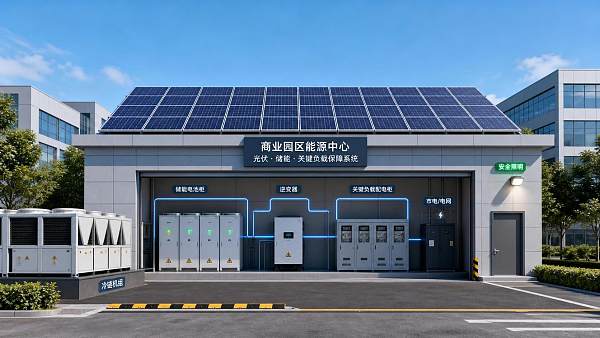
Many storage projects are sized around a grid connection limit rather than the battery itself. A solar-plus-storage plant may have 150 MW of generation, a 100 MW export limit, and a battery intended to capture energy that would otherwise be curtailed. In that case, the charging strategy, inverter topology, and export-control logic determine whether the battery creates real additional value.
For standalone systems, the connection agreement may define maximum import as well as export. Charging the battery from the grid can trigger a demand charge, exceed a contracted import limit, or worsen a local network constraint. A design that assumes overnight recharging at full power should therefore be tested against actual network capacity and tariff periods.
Interconnection studies should address fault levels, protection coordination, voltage rise or drop, flicker, harmonics, transformer impedance, reactive-power requirements, and the plant’s behaviour during grid disturbances. Grid-forming capability may be valuable in weak-grid applications, but it is not a generic substitute for a grid-following inverter. Its value depends on the network operator’s requirements, protection philosophy, short-circuit characteristics, and the intended islanding or restoration function.
In many jurisdictions, grid codes and interconnection requirements are evolving as inverter-based resources become more significant. The project team should avoid assuming that a compliance package accepted in an earlier project will meet current requirements. Confirm the governing connection rules, testing obligations, telemetry protocols, and model-validation requirements with the relevant network operator.
Safety, layout, and auxiliary loads affect usable project capacity
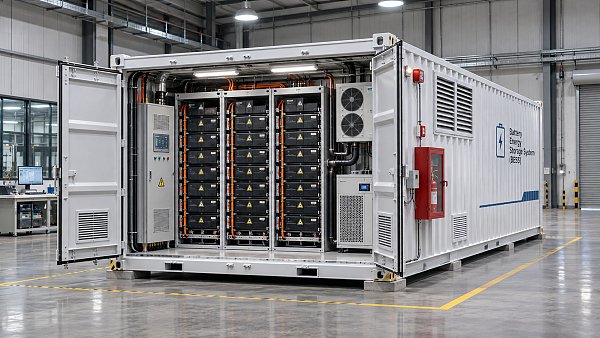
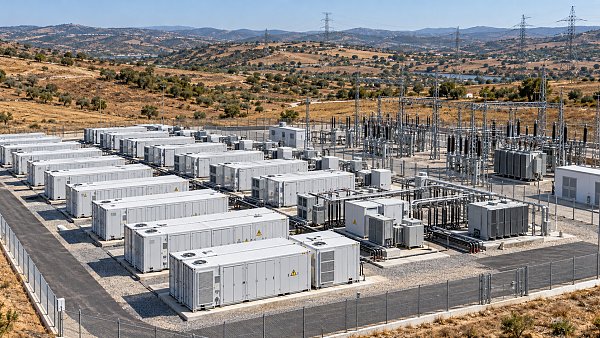
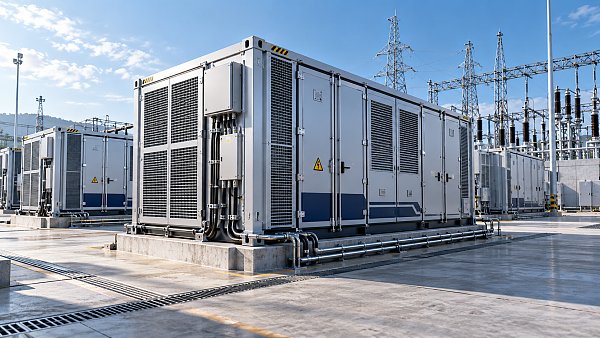
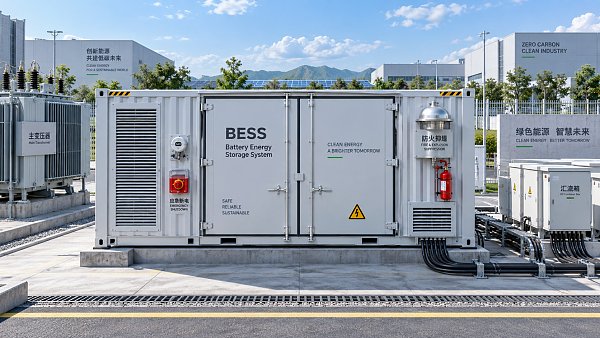
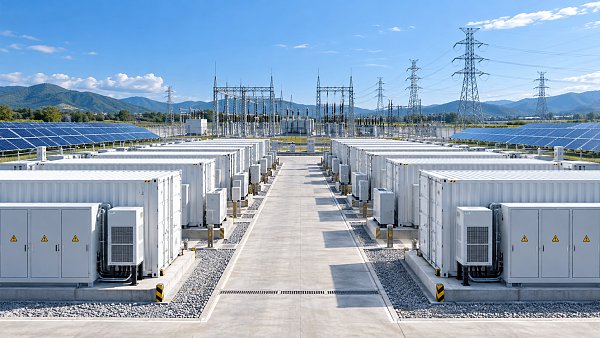
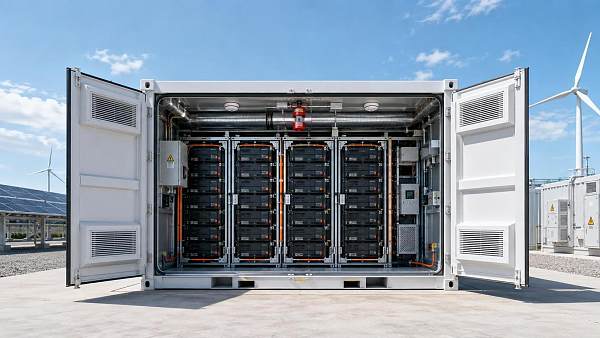
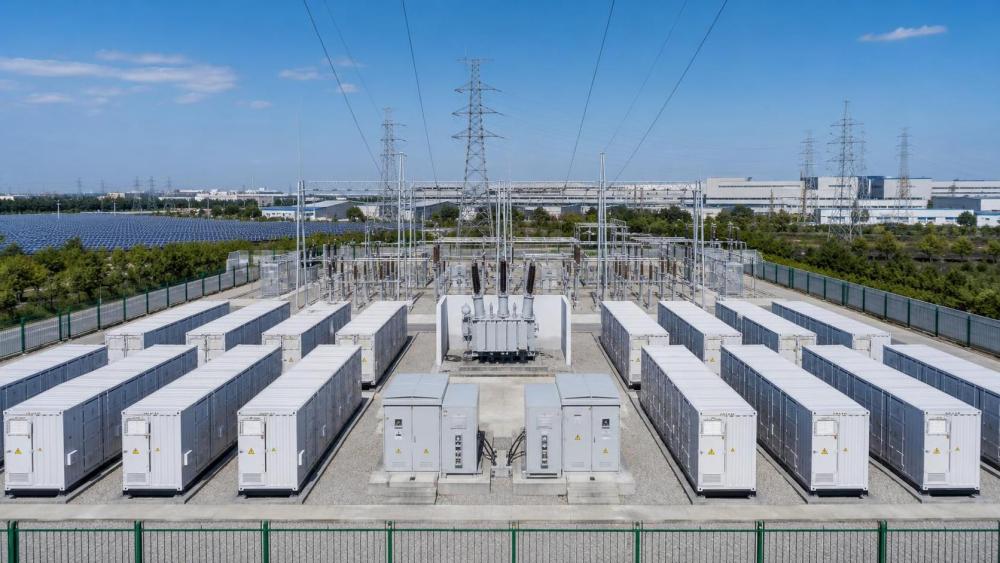
Container count and nominal battery capacity can obscure practical site constraints. Thermal management, fire detection and suppression arrangements, separation distances, access roads, crane access, drainage, emergency response routes, and equipment clearances may determine the final layout. Local fire authorities, insurers, lenders, and grid operators can impose additional requirements beyond the battery supplier’s standard arrangement.
Internationally recognized references such as UL 9540 for energy storage systems and equipment, UL 9540A as a test method used to evaluate thermal runaway fire propagation characteristics, and NFPA 855 in the United States are frequently relevant to project discussions. Their applicability depends on jurisdiction and authority requirements. They should not be treated as a universal approval pathway, particularly for projects outside the United States. IEC-based equipment standards, local electrical codes, building regulations, and utility-specific requirements may be equally important.
Auxiliary consumption is often underestimated in early models. HVAC or liquid cooling systems, battery management systems, PCS standby losses, transformers, communications, lighting, and fire-safety equipment consume energy. In hot climates, cooling demand can reduce net delivered energy exactly when afternoon peak events are most severe. The design model should use location-specific assumptions and identify whether auxiliary power is drawn from the battery, the grid, or a separate supply.
A practical sizing workflow for investment and execution decisions
A disciplined storage-sizing process normally begins with data validation rather than supplier comparison. Assemble interval load and generation data, tariff terms, grid constraints, outage records, renewable curtailment history, and anticipated changes in facility operation or network demand. Then establish a small number of dispatch cases: base case, high-load case, low-renewable case, extreme-temperature case, and credible future expansion case.
For each case, simulate battery operation at the intended control interval. The model should calculate grid import and export, state of charge, charge and discharge power, losses, unmet peak-shaving events, curtailment captured, and service conflicts. It should also distinguish between nominal battery capacity and net AC energy delivered at the designated boundary.
The preferred design is rarely the largest system. It is the configuration that meets the required reliability threshold with acceptable lifecycle cost and manageable execution risk. In some cases, a smaller battery combined with demand response, transformer upgrades, solar controls, or revised operating schedules provides a stronger outcome than storage alone.
During procurement, require bidders to state assumptions consistently: usable energy at commissioning and end of life, AC power at the point of connection, degradation curve, augmentation scope, ambient operating range, availability definition, auxiliary load treatment, warranty exclusions, and guaranteed dispatch cycles. Comparing headline MWh values without these conditions invites false equivalence.
A well-sized battery is therefore not defined by its container quantity or advertised duration. It is defined by its ability to deliver a specified service at the grid boundary, during the hours that matter, over the period that the project must perform. For peak shaving and grid support, that discipline is what turns grid-scale battery energy storage from a hardware purchase into a dependable power-system asset.
Questions about market trends? Contact Market Scope Live for deeper business insights.
We respect your privacy. Your information is strictly confidential.
Related News
 Energy Storage Systems / BESSNYSERDA Opens Second 2026 Bulk Storage Solicitation Targeting 1 GWNYSERDA’s second 2026 bulk energy storage solicitation targets 1 GW. Explore the opportunity for developers, investors and New York’s grid.MORE+
 Energy Storage Systems / BESSCroatia’s First Transmission-Connected Standalone Battery Project Enters OperationCroatia’s first transmission-connected standalone battery project is operational. Discover how the 60 MW Šibenik facility could support grid flexibility.MORE+
 Energy Storage Systems / BESSAustralia's NEM Battery Storage Hits Record 20.17 GWh, Up 203% Year on YearAustralia's NEM battery storage reportedly hits 20.17 GWh, up 203% year on year. Explore what the record could mean for grid-scale projects and procurement.MORE+
 Energy Storage Systems / BESSC&I Energy Storage in Germany: What Drives Project ROI?C&I energy storage in Germany: discover what drives project ROI, from peak shaving and solar savings to costs, tariffs and smarter battery sizing.MORE+
 Energy Storage Systems / BESSChoosing Energy Storage Containers: Capacity, Power and Safety CriteriaCompare energy storage containers by usable capacity, power, safety and grid integration. Learn what to ask suppliers before choosing a system.MORE+
 Energy Storage Systems / BESSNeoen, Frontier Energy and Lightyears Secure Funding for Renewable ProjectsNeoen, Frontier Energy and Lightyears secure renewable energy financing. Explore what the funding means for solar, wind and battery storage projects.MORE+
 Energy Storage Systems / BESSChoosing a Battery Energy Storage Container Manufacturer: Key Supplier ChecksChoosing a battery energy storage containers manufacturer? Learn how to assess safety, integration, warranties and total costs before you buy.MORE+
 Energy Storage Systems / BESSCATL Introduces Grid Connection and Financing Commitments in AustraliaCATL introduces energy storage with 25-year grid connection and financing commitments in Australia. Explore what the proposed model means for projects.MORE+
 Energy Storage Systems / BESSPortugal Mandates Grid-Forming Capability for Large Storage and Launches 1 GW TenderPortugal grid-forming rules target large standalone energy storage projects as a 1 GW tender launches. Explore the implications for developers and suppliers.MORE+
 Energy Storage Systems / BESSAdding Battery Storage to Rooftop Solar: When to Use AC vs. DC CouplingExplore rooftop solar storage integration: compare AC vs. DC coupling, inverter compatibility, backup power, and lifecycle costs to choose the right battery setup.MORE+
 Energy Storage Systems / BESSHeron Power and NiSource Announce US Data Center Deals Involving BESSHeron Power and NiSource announce US data center deals involving BESS. Explore how transformer integration and long-term power supply are shaping data center energy plans.MORE+
 Energy Storage Systems / BESSPeak Energy Raises $108 Million as GM Ventures Leads Sodium-Ion Storage RoundPeak Energy raises $108 million in a GM Ventures-led round to scale sodium-ion storage for grids and AI data centers. Explore what buyers should assess before committing.MORE+
 Energy Storage Systems / BESSRondo Energy and Rio Tinto Begin Design of Australia's Largest Thermal Storage ProjectRondo Energy and Rio Tinto begin design of a 30 MW/360 MWh thermal storage project at Yarwun. Explore its potential for industrial decarbonization and future procurement.MORE+
 Energy Storage Systems / BESSCATL Nine-Month Net Profit Rises 31.6% as Energy Storage Emerges as a Growth DriverCATL’s reported nine-month net profit rose 31.6% as energy storage gains momentum. Explore what this shift could mean for battery buyers, overseas orders and procurement planning.MORE+
 Energy Storage Systems / BESSScalable Power Solutions for Commercial Facilities with Uneven Site DemandScalable power solutions for multi-site commercial facilities: optimize uneven demand, resilience, storage, solar, and controls with a repeatable portfolio strategy.MORE+
 Energy Storage Systems / BESSWhen Do Commercial Property Owners Face Peak Demand for On-Site Energy?Commercial property owners peak demand often occurs when HVAC, occupancy, EV charging, and equipment loads coincide. Discover practical strategies to manage costs, capacity, and on-site energy resilience.MORE+
 Energy Storage Systems / BESSWhen Does a Containerized Hybrid Solar-Storage System Make Sense for Remote Sites?containerized hybrid solar storage for remote sites: discover when it cuts diesel costs, improves reliability, and simplifies deployment with smarter sizing and design.MORE+
 Energy Storage Systems / BESSHow to Specify Steel Battery Enclosures for Outdoor BESS Fire and Corrosion RisksSteel battery enclosures: learn how to specify corrosion protection, fire-ready interfaces, drainage, and durable outdoor BESS performance.MORE+
 Energy Storage Systems / BESSBattery Energy Storage Cost: What Drives $/kWh and Project ROI?Battery energy storage cost explained: compare usable $/kWh, system scope, grid connection, warranty, and lifecycle factors to build a stronger storage ROI.MORE+
 Energy Storage Systems / BESSWhat Drives BESS Fire Protection Costs in Utility-Scale Storage Projects?Energy storage fire protection cost drivers explained: compare BESS safety systems, site design, compliance, and integration to budget smarter.MORE+
 Energy Storage Systems / BESSHow to Size Grid-Scale Energy Storage for Peak Shaving and Renewable FirmingGrid scale energy storage sizing guide for peak shaving and renewable firming—learn how to model MW, MWh, dispatch, degradation, and grid limits.MORE+
 Energy Storage Systems / BESSWhat Drives Battery Energy Management System Costs in BESS Projects?Battery energy management systems cost depends on controls, integration, grid compliance, cybersecurity, and lifecycle support. Learn how to evaluate BESS EMS proposals wisely.MORE+
 Energy Storage Systems / BESSHow to Size a Commercial Microgrid Battery System for Peak Shaving and Backup PowerCommercial microgrid battery system sizing guide for peak shaving and backup power—optimize kW, kWh, reserve SOC, controls, and resilience.MORE+
 Energy Storage Systems / BESSHow to Select a Battery Storage EPC Partner for Utility-Scale Projects in EuropeBattery storage EPC Europe: choose the right utility-scale partner with proven grid expertise, safety leadership, supply-chain control, and reliable commissioning.MORE+
 Energy Storage Systems / BESSHow to Evaluate a Stationary Battery Storage Manufacturer for Critical Backup PowerStationary battery storage manufacturer evaluation guide: compare safety, usable capacity, integration, warranties, lifecycle cost, and service support for reliable critical backup power.MORE+
 Energy Storage Systems / BESSDo Utilities Prefer Centralized or Distributed Energy Storage Models?Do utility companies prefer centralized or distributed energy storage models? Explore how grid constraints, costs, resilience, and control shape the best storage strategy.MORE+
 Energy Storage Systems / BESSWhat Fire Safety Requirements Apply to Containerized Battery Storage?What are the fire safety requirements for containerized battery storage systems? Explore codes, detection, suppression, ventilation, shutdown, and site design essentials.MORE+
 Energy Storage Systems / BESSIs EPEM Useful for Benchmarking Energy Storage Project Performance?Is EPEM useful for benchmarking energy storage project performance data? Explore how it helps normalize efficiency, availability, degradation, dispatch, and lifecycle risks.MORE+
 Energy Storage Systems / BESSBehind-the-Meter Energy Systems for Industrial Parks: Sizing Solar, Storage, and LoadsBehind the meter energy systems for industrial parks: learn how to size solar, storage, and loads for lower costs, resilient operations, and scalable growth.MORE+
 Energy Storage Systems / BESSAerosol Fire Protection for Energy Storage: Key Design Factors for BESS SafetyAerosol fire protection for energy storage: explore key BESS design factors for detection, ventilation, thermal runaway risk, and safer system integration.MORE+
 Energy Storage Systems / BESSHow to Size Solar Backup Energy Systems for Critical Commercial LoadsBackup energy systems with solar: learn how to size critical commercial loads, balance battery power and runtime, and build resilient operations.MORE+
 Energy Storage Systems / BESSWhat Criteria Should You Use to Shortlist Battery Storage EPC Contractors?What criteria should be used to shortlist battery storage EPC contractors? Explore essential checks for engineering, safety, grid integration, delivery, and lifecycle value.MORE+
 Energy Storage Systems / BESSCan Battery Storage Be Added to Existing Solar Farms Without Replacing Inverters?Can battery storage be integrated into existing solar farms without replacing inverters? Explore AC-coupled retrofits, grid limits, controls, costs, and value.MORE+
 Energy Storage Systems / BESSAre Containerized Battery Storage Systems Safe for Urban Deployment?Are containerized battery storage systems safe for urban deployment? Explore key safety factors, fire planning, standards, and site design for reliable urban BESS projects.MORE+
 Energy Storage Systems / BESSSodium-Ion vs Lithium-Ion: Which Is Better for Long-Duration Storage?Is sodium-ion battery better than lithium-ion for long duration storage? Explore cost, safety, energy density, warranties, and the best fit for your storage project.MORE+
 Energy Storage Systems / BESSHow to Size Grid-Scale Battery Energy Storage for Peak Shaving and Grid SupportGrid scale battery energy storage sizing made practical: learn how to match MW, MWh, dispatch, degradation, and grid constraints for reliable peak shaving and grid support.MORE+
 Energy Storage Systems / BESSHow to Integrate Solar and Battery Storage for Reliable Commercial Power ProjectsSolar storage project integration for commercial sites: learn to align load analysis, battery sizing, controls, safety, and grid compliance for reliable power.MORE+
 Energy Storage Systems / BESSHow Does Battery Thermal Management Affect Charger Uptime in Hot Climates?How does battery thermal management affect charger uptime in hot climates? Explore cooling strategies that reduce derating, protect assets, and keep EV charging reliable.MORE+
 Energy Storage Systems / BESSAre Sodium-Ion Batteries Ready for Commercial Charging Storage in 2026?Are sodium-ion batteries ready for commercial charging station storage in 2026? Explore costs, safety, footprint trade-offs, and project-fit insights.MORE+
 Energy Storage Systems / BESSHow to Size Energy Storage Containers for Reliable Microgrid PerformanceEnergy storage containers for microgrids: learn how to size capacity, power, backup duration, and reserve margins to improve reliability, cut costs, and support smarter project decisions.MORE+