
How to Size Energy Storage Containers for Reliable Microgrid Performance
A microgrid can look perfectly balanced on paper and still underperform in the field because the storage system was sized around a headline number rather than an operating reality. That is why selecting energy storage containers for microgrids is rarely a simple exercise in matching kilowatt-hours to a load estimate. For project managers and engineering leads, the real question is broader: how much storage is needed, at what power level, under which dispatch logic, and with what operational margin to keep the microgrid stable when conditions become less predictable than the original model assumed.
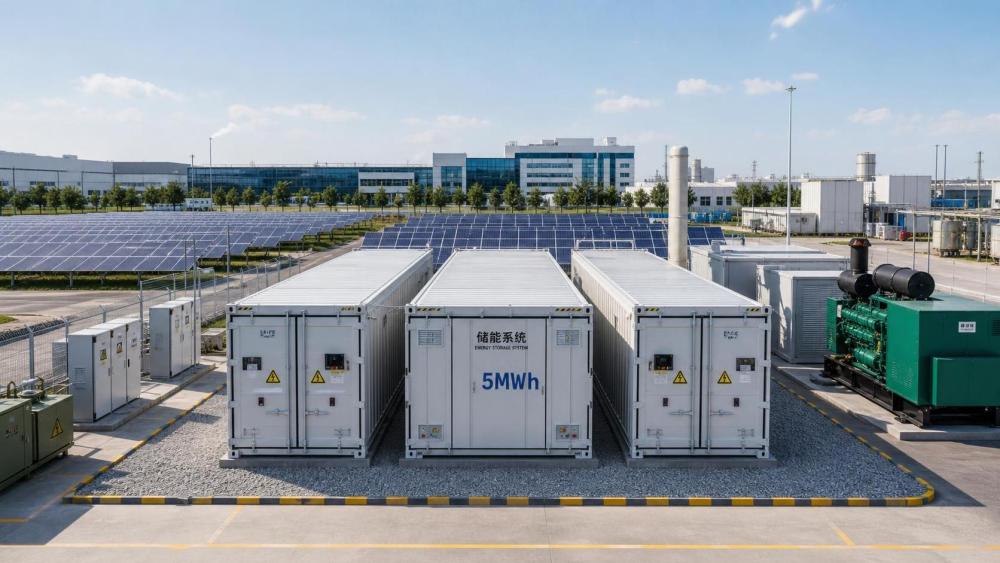
In practice, container sizing affects nearly everything that matters to project delivery: backup duration during outages, renewable energy capture, genset runtime, demand charge reduction, black-start capability, battery degradation, footprint, transport logistics, and future expansion pathways. A container that is too small forces painful compromises. One that is oversized may burden the project with unnecessary cost, idle capacity, and integration complexity. The right answer sits somewhere between technical sufficiency and commercial discipline.
Start with the job the storage system must actually do
Many sizing mistakes begin when teams treat the battery container as a generic balancing asset. In a microgrid, storage may be asked to perform several very different roles at once: short-duration ride-through, frequency support, solar shifting, diesel optimization, critical-load backup, peak shaving, or grid-forming support in island mode. Those functions do not create the same sizing requirement.
If the microgrid serves a hospital campus, mining site, island resort, data-heavy industrial facility, or remote community, reliability expectations are usually not negotiable. The battery may need to sustain essential loads for a defined period, support black start, and absorb sudden renewable swings without forcing the gensets into inefficient cycling. In a commercial or campus microgrid with a stable utility connection, the storage objective may lean more toward tariff optimization and resilience for selected critical circuits. The storage container should be sized for the mission profile, not for a generalized market average.
A useful starting point is to rank system objectives in order of consequence. Ask which failure would hurt the project most: inability to support islanding, lost solar generation due to clipping, poor genset efficiency, inability to ride through a utility fault, or insufficient reserve during evening peaks. Once priorities are clear, sizing becomes a decision framework rather than a guessing exercise.
Energy capacity and power rating are not the same decision
Project teams often focus first on battery energy capacity, but energy storage containers for microgrids must be evaluated through both kWh and kW. Energy capacity determines how long the system can sustain a duty. Power rating determines whether it can respond fast enough and strongly enough when the microgrid needs support.
Consider a site with a modest daily energy shortfall but sharp motor starts, intermittent cloud cover over a solar array, and a requirement to stabilize voltage in island mode. A container with enough stored energy but insufficient discharge power may still fail operationally. The opposite can happen too: a high-power system may handle short transient events beautifully but run out of usable energy before a planned backup window is complete.
For selection, engineering leads should separate at least four sizing questions:
- How much instantaneous power must the storage system deliver or absorb?
- How long must that duty be sustained under normal and emergency conditions?
- How much reserve must remain for contingency events?
- How will usable capacity decline over time due to degradation and operating limits?
This distinction matters because two containers with similar nameplate energy can behave very differently depending on cell chemistry, inverter sizing, thermal design, and allowable depth of discharge.
The load profile tells a more honest story than the peak number
A single peak demand figure is almost never enough to size a microgrid storage container well. What matters is the shape of the load, how often peaks occur, how critical they are, and whether they coincide with renewable generation or outage risk.
Look closely at interval data. Fifteen-minute averages may hide fast transients. Daily averages may hide evening ramps. Seasonal trends may reveal whether storage is being sized for summer cooling peaks, winter heating loads, tourism spikes, irrigation cycles, or production schedules. A microgrid serving mixed-use facilities may also need load segmentation: life-safety systems, process loads, comfort loads, and deferrable loads should not all be treated the same.
For project managers, this is the point where storage sizing becomes tied to broader system design choices. Demand response logic, non-critical load shedding, backup prioritization, and EV charging control can materially reduce the required container size. In other words, the cheapest battery kilowatt-hour is sometimes the one you never need to install because load control solved part of the problem.
Renewable integration changes the storage requirement
Microgrids with solar PV or wind are rarely sizing storage only for outages. They are also sizing for variability, curtailment avoidance, ramp control, and shifting energy into more valuable operating windows. That means renewable production data must sit beside load data in the sizing process.
If solar output is strong at midday but load peaks after sunset, the battery container needs enough usable energy to shift a meaningful portion of that generation. If cloud transients repeatedly destabilize local power quality, the power electronics and control response become just as important as raw capacity. If wind is part of the portfolio, the system may need to absorb irregular overnight generation while preserving reserve for early-morning demand.
Teams sometimes oversimplify this by using a daily renewable surplus number. A better approach is to model coincidence: when generation exceeds load, how often, for how long, and at what ramp rate? This reveals whether the project needs a shorter-duration, higher-cycling storage asset or a larger container with more substantial energy shifting capability.
Backup duration should be based on risk, not habit
Requests for “two hours” or “four hours” of battery duration often come from market convention rather than operational evidence. In microgrids, the correct backup window depends on outage patterns, restart procedures, fuel logistics, weather exposure, and the role of dispatchable generation.
A remote industrial microgrid with delayed fuel deliveries may need storage to cover more than a brief transition. A grid-connected commercial site may only need enough battery support to bridge an outage until standby generation reaches stable operation. A renewable-heavy island microgrid may require a layered strategy: battery for fast response and short-term balancing, plus gensets or other resources for extended autonomy.
For sizing decisions, it helps to define backup in concrete terms. Is the system expected to support all site loads, only essential loads, or a reduced resilience mode? Is the battery meant to carry the site alone, or in coordination with PV and generators? Does the reserve need to remain available after an overnight event for morning restart conditions? Once these questions are answered, duration becomes a site-specific design input rather than a borrowed benchmark.
Do not size around nameplate capacity alone
One of the most common procurement errors is comparing containers by advertised capacity without adjusting for usable energy. In real microgrid applications, the usable portion of the battery is shaped by depth-of-discharge limits, thermal conditions, round-trip efficiency, auxiliary consumption, aging margins, and control-set reserve.
A container installed in a hot climate may depend heavily on HVAC loads to maintain battery health. A system designed for high reliability may intentionally withhold part of its capacity as spinning reserve or emergency headroom. Over the project life, degradation reduces accessible energy unless the system was oversized from the start or expansion is planned.
That is why experienced buyers review not only beginning-of-life performance but also end-of-life capability under the intended dispatch pattern. A storage container that meets the requirement only when new may create reliability concerns later, especially in microgrids where reserve margins are already tight.
Container size is also a site integration decision
On many projects, the battery container is evaluated too late as a civil and electrical integration issue. Yet footprint, access clearances, transport route limitations, crane handling, fire separation distances, and local code requirements can narrow practical options long before final procurement.
Some sites have room for multiple modular containers and phased expansion. Others have constrained land, difficult terrain, or limited heavy-haul access, making fewer and denser units more attractive. Noise restrictions, ambient temperature, salt exposure, altitude, and flood risk can also affect enclosure design, cooling requirements, and long-term maintainability.
For project leaders, this means storage sizing should be coordinated early with EPC planning, interconnection design, and operations teams. A technically elegant storage configuration can become commercially awkward if it drives extra transformer capacity, complex cable runs, oversized foundations, or difficult replacement access.
Think through dispatch strategy before finalizing the hardware
The same physical battery can perform very differently depending on how the microgrid controller uses it. If the dispatch philosophy prioritizes maximum solar self-consumption, the cycling pattern may be deeper and more frequent. If the priority is outage reserve, much of the battery may sit partially charged by design. If diesel optimization is central, the battery may repeatedly smooth generator loading to keep engine operation near efficient ranges.
These operating choices influence required container size, inverter selection, thermal stress, and expected battery life. They also affect economics. A container that appears oversized in one dispatch scenario may be well justified in another. This is why storage selection should not be separated from energy management system logic, generator controls, and renewable forecasting assumptions.
For B2B buyers comparing proposals, it is worth asking vendors and integrators a practical question: what dispatch assumptions are embedded in the sizing recommendation? Two bids may show similar hardware but rely on very different control philosophies, reserve buffers, or degradation expectations.
Build in a margin for uncertainty, but make it intelligent
Conservative sizing is sensible in microgrids, but padding every number can produce an expensive and underutilized asset. A better approach is targeted margining. Add buffer where uncertainty is real: future load growth, renewable expansion, outage variability, ambient conditions, or operational reserve. Avoid blanket oversizing that is not tied to a defined risk.
In many cases, modularity is the better hedge. Containerized systems are well suited to phased deployment, allowing the project to install what current operations justify while preserving expansion pathways as load evolves or additional distributed energy resources come online. This can improve capital efficiency without sacrificing resilience planning.
A practical checklist for evaluating energy storage containers for microgrids
Before approving a sizing decision, project managers should be able to answer the following clearly:
- What are the top two or three operational objectives of the storage system?
- What critical loads must be supported, and for how long?
- What power response is required for transients, motor starts, or grid-forming functions?
- How do load and renewable profiles align across day, season, and outage scenarios?
- What usable energy is available after accounting for reserve, efficiency, thermal loads, and degradation?
- How will dispatch controls influence cycling intensity and state-of-charge management?
- What site constraints affect container configuration, installation, safety, and future expansion?
- Does the system still meet the reliability target at end of life, not just at commissioning?
When those answers are documented, storage sizing discussions become more transparent across developers, EPC contractors, equipment suppliers, lenders, and owners. That alignment matters because microgrid projects are rarely judged on equipment specification alone; they are judged on whether the system performs reliably after handover.
The best-sized container is the one that fits the operating model
Choosing energy storage containers for microgrids is ultimately an exercise in matching hardware to an operating reality that includes uncertainty, site limitations, and long-term asset performance. The strongest projects do not start with a catalog rating and work backward. They start with the microgrid’s duty cycle, resilience goals, control strategy, and commercial constraints, then size storage around those facts.
For engineering teams and project decision-makers, that approach reduces the risk of buying a battery that looks sufficient in a tender document but struggles in live operation. In a market where microgrids are expected to do more—integrate renewables, improve reliability, reduce fuel use, and support flexible power management—the right storage container size is not simply a specification detail. It is one of the decisions that determines whether the project remains dependable, expandable, and financially credible over time.
Questions about market trends? Contact Market Scope Live for deeper business insights.
We respect your privacy. Your information is strictly confidential.
Related News
 Energy Storage Systems / BESSAustralia's NEM Battery Storage Hits Record 20.17 GWh, Up 203% Year on YearAustralia's NEM battery storage reportedly hits 20.17 GWh, up 203% year on year. Explore what the record could mean for grid-scale projects and procurement.MORE+
 Energy Storage Systems / BESSC&I Energy Storage in Germany: What Drives Project ROI?C&I energy storage in Germany: discover what drives project ROI, from peak shaving and solar savings to costs, tariffs and smarter battery sizing.MORE+
 Energy Storage Systems / BESSChoosing Energy Storage Containers: Capacity, Power and Safety CriteriaCompare energy storage containers by usable capacity, power, safety and grid integration. Learn what to ask suppliers before choosing a system.MORE+
 Energy Storage Systems / BESSNeoen, Frontier Energy and Lightyears Secure Funding for Renewable ProjectsNeoen, Frontier Energy and Lightyears secure renewable energy financing. Explore what the funding means for solar, wind and battery storage projects.MORE+
 Energy Storage Systems / BESSChoosing a Battery Energy Storage Container Manufacturer: Key Supplier ChecksChoosing a battery energy storage containers manufacturer? Learn how to assess safety, integration, warranties and total costs before you buy.MORE+
 Energy Storage Systems / BESSCATL Introduces Grid Connection and Financing Commitments in AustraliaCATL introduces energy storage with 25-year grid connection and financing commitments in Australia. Explore what the proposed model means for projects.MORE+
 Energy Storage Systems / BESSPortugal Mandates Grid-Forming Capability for Large Storage and Launches 1 GW TenderPortugal grid-forming rules target large standalone energy storage projects as a 1 GW tender launches. Explore the implications for developers and suppliers.MORE+
 Energy Storage Systems / BESSAdding Battery Storage to Rooftop Solar: When to Use AC vs. DC CouplingExplore rooftop solar storage integration: compare AC vs. DC coupling, inverter compatibility, backup power, and lifecycle costs to choose the right battery setup.MORE+
 Energy Storage Systems / BESSHeron Power and NiSource Announce US Data Center Deals Involving BESSHeron Power and NiSource announce US data center deals involving BESS. Explore how transformer integration and long-term power supply are shaping data center energy plans.MORE+
 Energy Storage Systems / BESSPeak Energy Raises $108 Million as GM Ventures Leads Sodium-Ion Storage RoundPeak Energy raises $108 million in a GM Ventures-led round to scale sodium-ion storage for grids and AI data centers. Explore what buyers should assess before committing.MORE+
 Energy Storage Systems / BESSRondo Energy and Rio Tinto Begin Design of Australia's Largest Thermal Storage ProjectRondo Energy and Rio Tinto begin design of a 30 MW/360 MWh thermal storage project at Yarwun. Explore its potential for industrial decarbonization and future procurement.MORE+
 Energy Storage Systems / BESSCATL Nine-Month Net Profit Rises 31.6% as Energy Storage Emerges as a Growth DriverCATL’s reported nine-month net profit rose 31.6% as energy storage gains momentum. Explore what this shift could mean for battery buyers, overseas orders and procurement planning.MORE+
 Energy Storage Systems / BESSScalable Power Solutions for Commercial Facilities with Uneven Site DemandScalable power solutions for multi-site commercial facilities: optimize uneven demand, resilience, storage, solar, and controls with a repeatable portfolio strategy.MORE+
 Energy Storage Systems / BESSWhen Do Commercial Property Owners Face Peak Demand for On-Site Energy?Commercial property owners peak demand often occurs when HVAC, occupancy, EV charging, and equipment loads coincide. Discover practical strategies to manage costs, capacity, and on-site energy resilience.MORE+
 Energy Storage Systems / BESSWhen Does a Containerized Hybrid Solar-Storage System Make Sense for Remote Sites?containerized hybrid solar storage for remote sites: discover when it cuts diesel costs, improves reliability, and simplifies deployment with smarter sizing and design.MORE+
 Energy Storage Systems / BESSHow to Specify Steel Battery Enclosures for Outdoor BESS Fire and Corrosion RisksSteel battery enclosures: learn how to specify corrosion protection, fire-ready interfaces, drainage, and durable outdoor BESS performance.MORE+
 Energy Storage Systems / BESSBattery Energy Storage Cost: What Drives $/kWh and Project ROI?Battery energy storage cost explained: compare usable $/kWh, system scope, grid connection, warranty, and lifecycle factors to build a stronger storage ROI.MORE+
 Energy Storage Systems / BESSWhat Drives BESS Fire Protection Costs in Utility-Scale Storage Projects?Energy storage fire protection cost drivers explained: compare BESS safety systems, site design, compliance, and integration to budget smarter.MORE+
 Energy Storage Systems / BESSHow to Size Grid-Scale Energy Storage for Peak Shaving and Renewable FirmingGrid scale energy storage sizing guide for peak shaving and renewable firming—learn how to model MW, MWh, dispatch, degradation, and grid limits.MORE+
 Energy Storage Systems / BESSWhat Drives Battery Energy Management System Costs in BESS Projects?Battery energy management systems cost depends on controls, integration, grid compliance, cybersecurity, and lifecycle support. Learn how to evaluate BESS EMS proposals wisely.MORE+
 Energy Storage Systems / BESSHow to Size a Commercial Microgrid Battery System for Peak Shaving and Backup PowerCommercial microgrid battery system sizing guide for peak shaving and backup power—optimize kW, kWh, reserve SOC, controls, and resilience.MORE+
 Energy Storage Systems / BESSHow to Select a Battery Storage EPC Partner for Utility-Scale Projects in EuropeBattery storage EPC Europe: choose the right utility-scale partner with proven grid expertise, safety leadership, supply-chain control, and reliable commissioning.MORE+
 Energy Storage Systems / BESSHow to Evaluate a Stationary Battery Storage Manufacturer for Critical Backup PowerStationary battery storage manufacturer evaluation guide: compare safety, usable capacity, integration, warranties, lifecycle cost, and service support for reliable critical backup power.MORE+
 Energy Storage Systems / BESSDo Utilities Prefer Centralized or Distributed Energy Storage Models?Do utility companies prefer centralized or distributed energy storage models? Explore how grid constraints, costs, resilience, and control shape the best storage strategy.MORE+
 Energy Storage Systems / BESSWhat Fire Safety Requirements Apply to Containerized Battery Storage?What are the fire safety requirements for containerized battery storage systems? Explore codes, detection, suppression, ventilation, shutdown, and site design essentials.MORE+
 Energy Storage Systems / BESSIs EPEM Useful for Benchmarking Energy Storage Project Performance?Is EPEM useful for benchmarking energy storage project performance data? Explore how it helps normalize efficiency, availability, degradation, dispatch, and lifecycle risks.MORE+
 Energy Storage Systems / BESSBehind-the-Meter Energy Systems for Industrial Parks: Sizing Solar, Storage, and LoadsBehind the meter energy systems for industrial parks: learn how to size solar, storage, and loads for lower costs, resilient operations, and scalable growth.MORE+
 Energy Storage Systems / BESSAerosol Fire Protection for Energy Storage: Key Design Factors for BESS SafetyAerosol fire protection for energy storage: explore key BESS design factors for detection, ventilation, thermal runaway risk, and safer system integration.MORE+
 Energy Storage Systems / BESSHow to Size Solar Backup Energy Systems for Critical Commercial LoadsBackup energy systems with solar: learn how to size critical commercial loads, balance battery power and runtime, and build resilient operations.MORE+
 Energy Storage Systems / BESSWhat Criteria Should You Use to Shortlist Battery Storage EPC Contractors?What criteria should be used to shortlist battery storage EPC contractors? Explore essential checks for engineering, safety, grid integration, delivery, and lifecycle value.MORE+
 Energy Storage Systems / BESSCan Battery Storage Be Added to Existing Solar Farms Without Replacing Inverters?Can battery storage be integrated into existing solar farms without replacing inverters? Explore AC-coupled retrofits, grid limits, controls, costs, and value.MORE+
 Energy Storage Systems / BESSAre Containerized Battery Storage Systems Safe for Urban Deployment?Are containerized battery storage systems safe for urban deployment? Explore key safety factors, fire planning, standards, and site design for reliable urban BESS projects.MORE+
 Energy Storage Systems / BESSSodium-Ion vs Lithium-Ion: Which Is Better for Long-Duration Storage?Is sodium-ion battery better than lithium-ion for long duration storage? Explore cost, safety, energy density, warranties, and the best fit for your storage project.MORE+
 Energy Storage Systems / BESSHow to Size Grid-Scale Battery Energy Storage for Peak Shaving and Grid SupportGrid scale battery energy storage sizing made practical: learn how to match MW, MWh, dispatch, degradation, and grid constraints for reliable peak shaving and grid support.MORE+
 Energy Storage Systems / BESSHow to Integrate Solar and Battery Storage for Reliable Commercial Power ProjectsSolar storage project integration for commercial sites: learn to align load analysis, battery sizing, controls, safety, and grid compliance for reliable power.MORE+
 Energy Storage Systems / BESSHow Does Battery Thermal Management Affect Charger Uptime in Hot Climates?How does battery thermal management affect charger uptime in hot climates? Explore cooling strategies that reduce derating, protect assets, and keep EV charging reliable.MORE+
 Energy Storage Systems / BESSAre Sodium-Ion Batteries Ready for Commercial Charging Storage in 2026?Are sodium-ion batteries ready for commercial charging station storage in 2026? Explore costs, safety, footprint trade-offs, and project-fit insights.MORE+
 Energy Storage Systems / BESSHow to Size Energy Storage Containers for Reliable Microgrid PerformanceEnergy storage containers for microgrids: learn how to size capacity, power, backup duration, and reserve margins to improve reliability, cut costs, and support smarter project decisions.MORE+
 Energy Storage Systems / BESSHow to Evaluate a Fast Frequency Response Inverter for Grid-Scale BESS?Fast frequency response inverter evaluation for grid-scale BESS: learn how to assess control speed, thermal stability, grid-code behavior, and procurement-critical performance before you buy.MORE+
 Energy Storage Systems / BESSChina Expands Cross-Border RMB and FX Cash Pooling, Easing BESS and PV Export SettlementsChina expands cross-border RMB and FX cash pooling nationwide, easing BESS and PV export settlements with faster multi-currency payments, lower FX costs, and smoother buyer-supplier coordination.MORE+


