
EU DPP Rule Takes Effect for BESS Exports
On July 9, 2026, a new compliance requirement under the EU Battery Regulation (EU 2023/1542) took effect for battery energy storage systems (BESS) entering the EU market. Before placement on the market, affected products must complete Digital Product Passport (DPP) registration and synchronize lifecycle data in real time. For BESS exporters, manufacturers, compliance teams, and supply-chain partners, this is worth close attention because the requirement is tied directly to market access and customs clearance timing rather than being treated as a secondary documentation task.
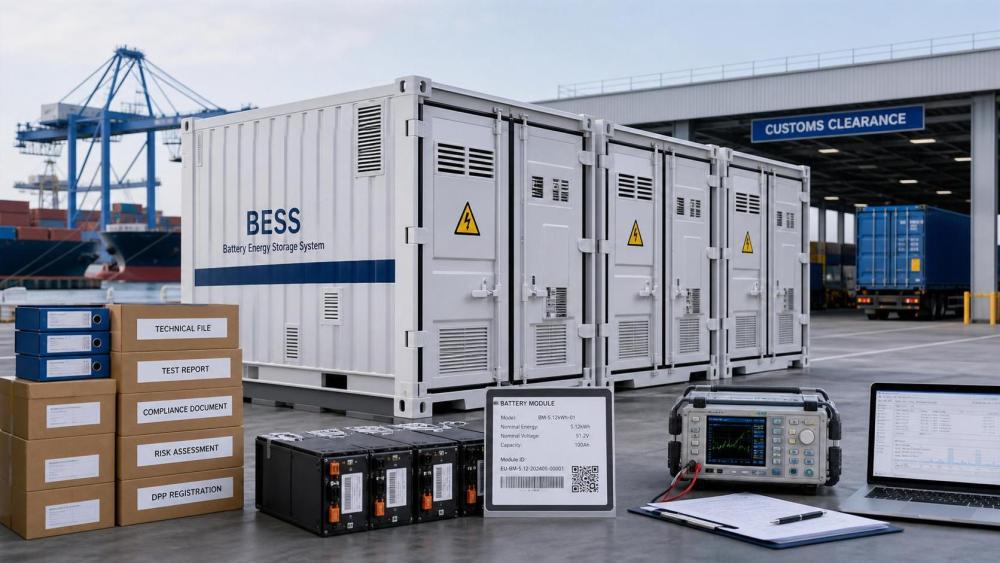
What the rule now requires for BESS entering the EU market
The confirmed change is that, from July 9, 2026, the EU Battery Regulation (EU 2023/1542) makes DPP registration mandatory for all BESS placed on the EU market. The requirement also calls for real-time synchronization of full-lifecycle data before market placement. According to the provided event summary, the required data scope covers 12 categories, including cell traceability, carbon footprint, recycling rate, and safety certification. The same summary states that this requirement directly affects compliance entry and customs clearance efficiency for Chinese BESS manufacturers exporting to the EU.
Where the immediate pressure is likely to appear in the value chain
Export-facing manufacturers will feel the compliance shift first
From an industry perspective, BESS manufacturers serving the EU market are likely to face the most immediate operational pressure because the new requirement sits at the point of market entry. The impact is likely to appear in pre-shipment preparation, technical file readiness, internal data collection, and submission coordination. What deserves closer attention is whether the product data needed for DPP registration is complete, consistent, and ready before shipment schedules begin to tighten.
Supply-chain coordination becomes part of delivery readiness
Observably, suppliers feeding into BESS production may also be affected because several required data fields relate to upstream product information, including traceability and lifecycle-related records. The practical issue is not only whether data exists, but whether it can be passed through in a usable format for downstream compliance filing. Procurement and supply-chain teams should therefore pay attention to documentation handover, supplier qualification checks, and the reliability of supporting records tied to export delivery.
Compliance, testing, and certification support functions may face heavier document review
For certification-related businesses, testing service providers, and internal compliance teams, the rule change may increase the importance of document alignment across safety certification and other required fields. Analysis shows that the pressure point is likely to be less about a single certificate and more about whether multiple supporting materials can be matched to the DPP record without gaps that slow market entry or customs handling.
EU buyers and project procurement teams may tighten pre-delivery checks
Buyers, importers, and procurement teams connected to EU-bound BESS projects may also need to pay closer attention to pre-delivery compliance readiness. The reason is straightforward: if DPP registration and lifecycle data synchronization are now mandatory before placement on the market, related procurement and acceptance steps may increasingly focus on whether export documentation and compliance files are complete before product handover or customs processing.
What companies should review now in day-to-day practice
Check whether technical and compliance files are submission-ready
Analysis shows that companies should review whether the documents linked to traceability, carbon footprint, recycling rate, safety certification, and other required fields are organized in a form that supports DPP registration. This is not yet a conclusion about how every case will be enforced, but it is a practical checkpoint given the rule has already taken effect.
Reassess lead times around export and customs preparation
What deserves closer attention is the timing impact. Because the provided summary links the requirement directly to compliance access and customs clearance efficiency, exporters should watch whether internal submission steps, document validation, or data synchronization create new bottlenecks before shipment. This is best understood as a delivery-planning issue as much as a regulatory one.
Review supplier documentation flow, not only finished-product files
Observably, companies should also examine whether upstream suppliers can provide the information needed for the required DPP fields on time and in a verifiable form. For procurement teams, this may affect supplier onboarding, qualification review, and contract documentation expectations, especially where lifecycle data must be assembled across more than one business party.
Keep watching for execution wording and market-facing document changes
The provided information confirms the rule and its effective date, but it does not provide detailed implementation guidance, official interpretive wording, or transaction-level enforcement examples. For that reason, companies should continue monitoring how compliance language appears in tenders, purchase specifications, customs-facing documentation, and customer pre-acceptance requirements.
How this development is best understood at this stage
Analysis shows that this development is more appropriately understood as a live compliance threshold for EU-bound BESS rather than a distant policy signal. At the same time, it should not yet be overstated as a fully settled execution picture, because the input does not provide detailed enforcement practice, administrative interpretation, or market feedback. The immediate significance lies in the fact that data readiness, document consistency, and export coordination may now affect whether market access proceeds smoothly.
Why this matters beyond a single filing step
From an industry perspective, the importance of this update is that DPP registration is presented here as a pre-market requirement tied to lifecycle data, not as an optional after-sales record. That shifts attention toward how BESS exporters prepare traceability and compliance evidence before shipment and before customs-related milestones. The most balanced reading for now is that the rule has already moved into an execution stage, while the practical burden and market response still require continued observation.
Basis of this article and what still needs verification
This article is based on the user-provided news title, event date, and event summary. For developments of this type, commonly relevant source categories may include official regulatory notices, information released by supervisory authorities, customs or trade administration updates, industry association communications, standards organization documents, and reporting by authoritative trade media. A specific official source link was not provided in the input, so the exact official reference still needs ongoing verification. It remains necessary to monitor any later detail on implementation wording, certification practice, tender document changes, industry feedback, and how companies are executing the requirement in actual export workflows.
Questions about market trends? Contact Market Scope Live for deeper business insights.
We respect your privacy. Your information is strictly confidential.
Related News
 Energy Storage Systems / BESSAustralia's NEM Battery Storage Hits Record 20.17 GWh, Up 203% Year on YearAustralia's NEM battery storage reportedly hits 20.17 GWh, up 203% year on year. Explore what the record could mean for grid-scale projects and procurement.MORE+
 Energy Storage Systems / BESSC&I Energy Storage in Germany: What Drives Project ROI?C&I energy storage in Germany: discover what drives project ROI, from peak shaving and solar savings to costs, tariffs and smarter battery sizing.MORE+
 Energy Storage Systems / BESSChoosing Energy Storage Containers: Capacity, Power and Safety CriteriaCompare energy storage containers by usable capacity, power, safety and grid integration. Learn what to ask suppliers before choosing a system.MORE+
 Energy Storage Systems / BESSNeoen, Frontier Energy and Lightyears Secure Funding for Renewable ProjectsNeoen, Frontier Energy and Lightyears secure renewable energy financing. Explore what the funding means for solar, wind and battery storage projects.MORE+
 Energy Storage Systems / BESSChoosing a Battery Energy Storage Container Manufacturer: Key Supplier ChecksChoosing a battery energy storage containers manufacturer? Learn how to assess safety, integration, warranties and total costs before you buy.MORE+
 Energy Storage Systems / BESSCATL Introduces Grid Connection and Financing Commitments in AustraliaCATL introduces energy storage with 25-year grid connection and financing commitments in Australia. Explore what the proposed model means for projects.MORE+
 Energy Storage Systems / BESSPortugal Mandates Grid-Forming Capability for Large Storage and Launches 1 GW TenderPortugal grid-forming rules target large standalone energy storage projects as a 1 GW tender launches. Explore the implications for developers and suppliers.MORE+
 Energy Storage Systems / BESSAdding Battery Storage to Rooftop Solar: When to Use AC vs. DC CouplingExplore rooftop solar storage integration: compare AC vs. DC coupling, inverter compatibility, backup power, and lifecycle costs to choose the right battery setup.MORE+
 Energy Storage Systems / BESSHeron Power and NiSource Announce US Data Center Deals Involving BESSHeron Power and NiSource announce US data center deals involving BESS. Explore how transformer integration and long-term power supply are shaping data center energy plans.MORE+
 Energy Storage Systems / BESSPeak Energy Raises $108 Million as GM Ventures Leads Sodium-Ion Storage RoundPeak Energy raises $108 million in a GM Ventures-led round to scale sodium-ion storage for grids and AI data centers. Explore what buyers should assess before committing.MORE+
 Energy Storage Systems / BESSRondo Energy and Rio Tinto Begin Design of Australia's Largest Thermal Storage ProjectRondo Energy and Rio Tinto begin design of a 30 MW/360 MWh thermal storage project at Yarwun. Explore its potential for industrial decarbonization and future procurement.MORE+
 Energy Storage Systems / BESSCATL Nine-Month Net Profit Rises 31.6% as Energy Storage Emerges as a Growth DriverCATL’s reported nine-month net profit rose 31.6% as energy storage gains momentum. Explore what this shift could mean for battery buyers, overseas orders and procurement planning.MORE+
 Energy Storage Systems / BESSScalable Power Solutions for Commercial Facilities with Uneven Site DemandScalable power solutions for multi-site commercial facilities: optimize uneven demand, resilience, storage, solar, and controls with a repeatable portfolio strategy.MORE+
 Energy Storage Systems / BESSWhen Do Commercial Property Owners Face Peak Demand for On-Site Energy?Commercial property owners peak demand often occurs when HVAC, occupancy, EV charging, and equipment loads coincide. Discover practical strategies to manage costs, capacity, and on-site energy resilience.MORE+
 Energy Storage Systems / BESSWhen Does a Containerized Hybrid Solar-Storage System Make Sense for Remote Sites?containerized hybrid solar storage for remote sites: discover when it cuts diesel costs, improves reliability, and simplifies deployment with smarter sizing and design.MORE+
 Energy Storage Systems / BESSHow to Specify Steel Battery Enclosures for Outdoor BESS Fire and Corrosion RisksSteel battery enclosures: learn how to specify corrosion protection, fire-ready interfaces, drainage, and durable outdoor BESS performance.MORE+
 Energy Storage Systems / BESSBattery Energy Storage Cost: What Drives $/kWh and Project ROI?Battery energy storage cost explained: compare usable $/kWh, system scope, grid connection, warranty, and lifecycle factors to build a stronger storage ROI.MORE+
 Energy Storage Systems / BESSWhat Drives BESS Fire Protection Costs in Utility-Scale Storage Projects?Energy storage fire protection cost drivers explained: compare BESS safety systems, site design, compliance, and integration to budget smarter.MORE+
 Energy Storage Systems / BESSHow to Size Grid-Scale Energy Storage for Peak Shaving and Renewable FirmingGrid scale energy storage sizing guide for peak shaving and renewable firming—learn how to model MW, MWh, dispatch, degradation, and grid limits.MORE+
 Energy Storage Systems / BESSWhat Drives Battery Energy Management System Costs in BESS Projects?Battery energy management systems cost depends on controls, integration, grid compliance, cybersecurity, and lifecycle support. Learn how to evaluate BESS EMS proposals wisely.MORE+
 Energy Storage Systems / BESSHow to Size a Commercial Microgrid Battery System for Peak Shaving and Backup PowerCommercial microgrid battery system sizing guide for peak shaving and backup power—optimize kW, kWh, reserve SOC, controls, and resilience.MORE+
 Energy Storage Systems / BESSHow to Select a Battery Storage EPC Partner for Utility-Scale Projects in EuropeBattery storage EPC Europe: choose the right utility-scale partner with proven grid expertise, safety leadership, supply-chain control, and reliable commissioning.MORE+
 Energy Storage Systems / BESSHow to Evaluate a Stationary Battery Storage Manufacturer for Critical Backup PowerStationary battery storage manufacturer evaluation guide: compare safety, usable capacity, integration, warranties, lifecycle cost, and service support for reliable critical backup power.MORE+
 Energy Storage Systems / BESSDo Utilities Prefer Centralized or Distributed Energy Storage Models?Do utility companies prefer centralized or distributed energy storage models? Explore how grid constraints, costs, resilience, and control shape the best storage strategy.MORE+
 Energy Storage Systems / BESSWhat Fire Safety Requirements Apply to Containerized Battery Storage?What are the fire safety requirements for containerized battery storage systems? Explore codes, detection, suppression, ventilation, shutdown, and site design essentials.MORE+
 Energy Storage Systems / BESSIs EPEM Useful for Benchmarking Energy Storage Project Performance?Is EPEM useful for benchmarking energy storage project performance data? Explore how it helps normalize efficiency, availability, degradation, dispatch, and lifecycle risks.MORE+
 Energy Storage Systems / BESSBehind-the-Meter Energy Systems for Industrial Parks: Sizing Solar, Storage, and LoadsBehind the meter energy systems for industrial parks: learn how to size solar, storage, and loads for lower costs, resilient operations, and scalable growth.MORE+
 Energy Storage Systems / BESSAerosol Fire Protection for Energy Storage: Key Design Factors for BESS SafetyAerosol fire protection for energy storage: explore key BESS design factors for detection, ventilation, thermal runaway risk, and safer system integration.MORE+
 Energy Storage Systems / BESSHow to Size Solar Backup Energy Systems for Critical Commercial LoadsBackup energy systems with solar: learn how to size critical commercial loads, balance battery power and runtime, and build resilient operations.MORE+
 Energy Storage Systems / BESSWhat Criteria Should You Use to Shortlist Battery Storage EPC Contractors?What criteria should be used to shortlist battery storage EPC contractors? Explore essential checks for engineering, safety, grid integration, delivery, and lifecycle value.MORE+
 Energy Storage Systems / BESSCan Battery Storage Be Added to Existing Solar Farms Without Replacing Inverters?Can battery storage be integrated into existing solar farms without replacing inverters? Explore AC-coupled retrofits, grid limits, controls, costs, and value.MORE+
 Energy Storage Systems / BESSAre Containerized Battery Storage Systems Safe for Urban Deployment?Are containerized battery storage systems safe for urban deployment? Explore key safety factors, fire planning, standards, and site design for reliable urban BESS projects.MORE+
 Energy Storage Systems / BESSSodium-Ion vs Lithium-Ion: Which Is Better for Long-Duration Storage?Is sodium-ion battery better than lithium-ion for long duration storage? Explore cost, safety, energy density, warranties, and the best fit for your storage project.MORE+
 Energy Storage Systems / BESSHow to Size Grid-Scale Battery Energy Storage for Peak Shaving and Grid SupportGrid scale battery energy storage sizing made practical: learn how to match MW, MWh, dispatch, degradation, and grid constraints for reliable peak shaving and grid support.MORE+
 Energy Storage Systems / BESSHow to Integrate Solar and Battery Storage for Reliable Commercial Power ProjectsSolar storage project integration for commercial sites: learn to align load analysis, battery sizing, controls, safety, and grid compliance for reliable power.MORE+
 Energy Storage Systems / BESSHow Does Battery Thermal Management Affect Charger Uptime in Hot Climates?How does battery thermal management affect charger uptime in hot climates? Explore cooling strategies that reduce derating, protect assets, and keep EV charging reliable.MORE+
 Energy Storage Systems / BESSAre Sodium-Ion Batteries Ready for Commercial Charging Storage in 2026?Are sodium-ion batteries ready for commercial charging station storage in 2026? Explore costs, safety, footprint trade-offs, and project-fit insights.MORE+
 Energy Storage Systems / BESSHow to Size Energy Storage Containers for Reliable Microgrid PerformanceEnergy storage containers for microgrids: learn how to size capacity, power, backup duration, and reserve margins to improve reliability, cut costs, and support smarter project decisions.MORE+
 Energy Storage Systems / BESSHow to Evaluate a Fast Frequency Response Inverter for Grid-Scale BESS?Fast frequency response inverter evaluation for grid-scale BESS: learn how to assess control speed, thermal stability, grid-code behavior, and procurement-critical performance before you buy.MORE+
 Energy Storage Systems / BESSChina Expands Cross-Border RMB and FX Cash Pooling, Easing BESS and PV Export SettlementsChina expands cross-border RMB and FX cash pooling nationwide, easing BESS and PV export settlements with faster multi-currency payments, lower FX costs, and smoother buyer-supplier coordination.MORE+


