China Sets 300 GW Energy Storage Goal by 2030
On June 25, 2026, China’s top energy planning authorities issued the 15th Five-Year Plan for building a new energy system, setting a 2030 target of 300 GW for new energy storage and identifying long-duration storage, sodium-ion, and flow batteries as priority technology routes. The plan also strengthens export-related support by encouraging BESS integrators to pursue green power direct-connection certification and mutual recognition of international standards. For overseas buyers, Chinese suppliers, certification-related firms, and procurement teams, this matters less as a headline target alone and more as a policy signal that may affect technology selection, compliance preparation, and order timing.
What the June 25 plan clearly sets out
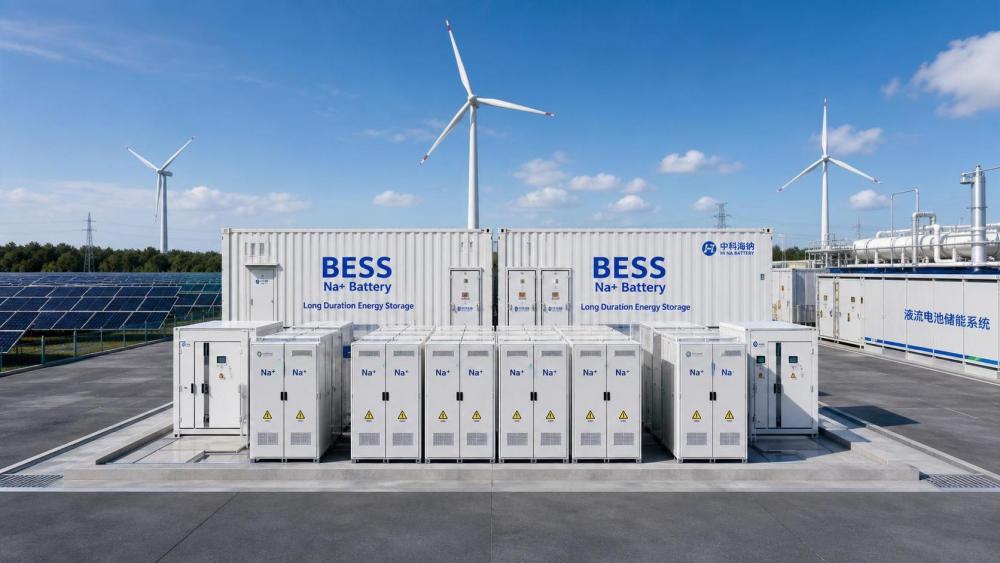
The confirmed facts are limited but commercially meaningful. The plan was formally issued on June 25 by China’s energy and macroeconomic planning authorities as the 15th Five-Year Plan for the construction of a new energy system. It sets a 2030 installation target of 300 GW for new energy storage. It also names long-duration storage, sodium-ion batteries, and flow batteries as重点 technical pathways. In parallel, the plan strengthens supporting measures linked to exports and encourages energy storage system integrators to carry out green power direct-connection certification and mutual recognition of international standards.
The event summary also makes clear that this policy will directly affect how overseas importers assess Chinese BESS suppliers in three practical areas: technology route selection, certification readiness, and order pacing.
Where the policy signal may reach first
Supplier screening may shift from price-first to route-and-certification review
From an industry perspective, overseas importers and project buyers may be affected first because the policy does not only point to volume growth; it also gives clearer direction on preferred technical pathways and export-facing compliance preparation. That means supplier comparison may increasingly involve not just system cost and delivery capacity, but also whether a vendor can align its technical documents, certification roadmap, and standards-matching materials with buyer requirements.
System integrators face a tighter link between export support and compliance work
For Chinese BESS integrators, the impact may appear in pre-shipment and pre-bid stages. Analysis shows that once green power direct-connection certification and international standards mutual recognition are explicitly encouraged, related documentation, test alignment, and qualification planning may become more central in export discussions. This does not yet prove a single mandatory execution path, but it does raise the importance of compliance preparation in overseas business development.
Certification and testing service providers may see earlier engagement
Certification-related companies and testing service institutions may also be affected because buyers and suppliers could move certification review further forward in the transaction cycle. What deserves closer attention is whether technical files, test reports, standards cross-reference materials, and bid documentation begin to require earlier coordination as companies try to position around the policy direction named in the plan.
Delivery planning could become more sensitive to procurement windows
For exporters, procurement teams, and supply-chain service providers, the policy may influence order rhythm rather than only total demand expectations. Observably, if overseas buyers interpret the plan as a clearer execution signal, they may adjust sourcing windows according to technology maturity, certification readiness, and supplier qualification status rather than wait for late-stage contracting.
What companies should watch now
Track how certification language is reflected in actual transaction documents
Companies should closely watch whether future tender files, technical specifications, supplier questionnaires, or buyer audits begin to reference green power direct-connection certification or standards mutual recognition more explicitly. The current input confirms the policy direction, but not a uniform execution method, so document-level changes deserve close attention.
Recheck technical route positioning in export offers
Suppliers involved in long-duration storage, sodium-ion, or flow battery solutions may need to review how those technologies are presented in quotations, technical submissions, and qualification packages. Analysis shows that the plan gives these routes stronger policy visibility, which may affect how overseas customers compare shortlisted options.
Prepare compliance files earlier in the sales cycle
For exporters and integrators, practical preparation may include organizing certification status summaries, testing materials, technical datasheets, and standards-alignment documents earlier than before. It is more appropriate to understand this as a readiness issue rather than a confirmed new filing requirement, because the provided information does not define a detailed enforcement mechanism.
Review order timing against supplier qualification progress
Overseas buyers may need to align procurement schedules with supplier certification progress and documentation completeness, especially where project timelines depend on technical approval or standards acceptance. The key point is not that a new universal deadline has already been imposed, but that policy direction may start influencing purchasing rhythm and qualification sequencing.
Why this looks like an execution signal, but not the final rulebook
Analysis shows that this development is best read as a confirmed policy landing with practical trade and compliance implications, rather than as a fully detailed operating rule. The target, the priority technology routes, and the export-support direction are already clear. However, the exact way these signals translate into certification practice, procurement language, and market-side qualification requirements still needs observation.
Observably, the most important next layer is not broad market speculation but how official wording is echoed in implementation materials, standards-recognition practice, buyer requirements, and supplier response patterns. That is why the event matters to industry participants now, even though not all execution details are yet visible.
How this update is best understood at this stage
At this stage, the June 25 plan is more appropriately understood as a policy signal with direct commercial relevance for energy storage trade, export preparation, and buyer decision-making. It confirms a long-term installation target and highlights specific technology routes, while also bringing certification and standards alignment closer to export strategy. The practical impact should be assessed carefully through subsequent rule interpretation, procurement documents, and market feedback rather than assumed as an immediate uniform requirement across all transactions.
Basis of this article and what still needs verification
This article is generated from the user-provided news title, event date, and event summary. For events of this kind, relevant source categories usually include official government notices, regulator releases, trade or customs authority information, industry association materials, standards organization documents, and reporting by authoritative media. A specific official source link was not provided in the input, so the exact source document link still requires further verification.
Further observation is still needed on later implementation details, certification interpretation, changes in tender documentation, industry feedback, and how companies adjust execution in response to the plan.
Questions about market trends? Contact Market Scope Live for deeper business insights.
We respect your privacy. Your information is strictly confidential.
Related News
 Energy Storage Systems / BESSNYSERDA Opens Second 2026 Bulk Storage Solicitation Targeting 1 GWNYSERDA’s second 2026 bulk energy storage solicitation targets 1 GW. Explore the opportunity for developers, investors and New York’s grid.MORE+
 Energy Storage Systems / BESSCroatia’s First Transmission-Connected Standalone Battery Project Enters OperationCroatia’s first transmission-connected standalone battery project is operational. Discover how the 60 MW Šibenik facility could support grid flexibility.MORE+
 Energy Storage Systems / BESSAustralia's NEM Battery Storage Hits Record 20.17 GWh, Up 203% Year on YearAustralia's NEM battery storage reportedly hits 20.17 GWh, up 203% year on year. Explore what the record could mean for grid-scale projects and procurement.MORE+
 Energy Storage Systems / BESSC&I Energy Storage in Germany: What Drives Project ROI?C&I energy storage in Germany: discover what drives project ROI, from peak shaving and solar savings to costs, tariffs and smarter battery sizing.MORE+
 Energy Storage Systems / BESSChoosing Energy Storage Containers: Capacity, Power and Safety CriteriaCompare energy storage containers by usable capacity, power, safety and grid integration. Learn what to ask suppliers before choosing a system.MORE+
 Energy Storage Systems / BESSNeoen, Frontier Energy and Lightyears Secure Funding for Renewable ProjectsNeoen, Frontier Energy and Lightyears secure renewable energy financing. Explore what the funding means for solar, wind and battery storage projects.MORE+
 Energy Storage Systems / BESSChoosing a Battery Energy Storage Container Manufacturer: Key Supplier ChecksChoosing a battery energy storage containers manufacturer? Learn how to assess safety, integration, warranties and total costs before you buy.MORE+
 Energy Storage Systems / BESSCATL Introduces Grid Connection and Financing Commitments in AustraliaCATL introduces energy storage with 25-year grid connection and financing commitments in Australia. Explore what the proposed model means for projects.MORE+
 Energy Storage Systems / BESSPortugal Mandates Grid-Forming Capability for Large Storage and Launches 1 GW TenderPortugal grid-forming rules target large standalone energy storage projects as a 1 GW tender launches. Explore the implications for developers and suppliers.MORE+
 Energy Storage Systems / BESSAdding Battery Storage to Rooftop Solar: When to Use AC vs. DC CouplingExplore rooftop solar storage integration: compare AC vs. DC coupling, inverter compatibility, backup power, and lifecycle costs to choose the right battery setup.MORE+
 Energy Storage Systems / BESSHeron Power and NiSource Announce US Data Center Deals Involving BESSHeron Power and NiSource announce US data center deals involving BESS. Explore how transformer integration and long-term power supply are shaping data center energy plans.MORE+
 Energy Storage Systems / BESSPeak Energy Raises $108 Million as GM Ventures Leads Sodium-Ion Storage RoundPeak Energy raises $108 million in a GM Ventures-led round to scale sodium-ion storage for grids and AI data centers. Explore what buyers should assess before committing.MORE+
 Energy Storage Systems / BESSRondo Energy and Rio Tinto Begin Design of Australia's Largest Thermal Storage ProjectRondo Energy and Rio Tinto begin design of a 30 MW/360 MWh thermal storage project at Yarwun. Explore its potential for industrial decarbonization and future procurement.MORE+
 Energy Storage Systems / BESSCATL Nine-Month Net Profit Rises 31.6% as Energy Storage Emerges as a Growth DriverCATL’s reported nine-month net profit rose 31.6% as energy storage gains momentum. Explore what this shift could mean for battery buyers, overseas orders and procurement planning.MORE+
 Energy Storage Systems / BESSScalable Power Solutions for Commercial Facilities with Uneven Site DemandScalable power solutions for multi-site commercial facilities: optimize uneven demand, resilience, storage, solar, and controls with a repeatable portfolio strategy.MORE+
 Energy Storage Systems / BESSWhen Do Commercial Property Owners Face Peak Demand for On-Site Energy?Commercial property owners peak demand often occurs when HVAC, occupancy, EV charging, and equipment loads coincide. Discover practical strategies to manage costs, capacity, and on-site energy resilience.MORE+
 Energy Storage Systems / BESSWhen Does a Containerized Hybrid Solar-Storage System Make Sense for Remote Sites?containerized hybrid solar storage for remote sites: discover when it cuts diesel costs, improves reliability, and simplifies deployment with smarter sizing and design.MORE+
 Energy Storage Systems / BESSHow to Specify Steel Battery Enclosures for Outdoor BESS Fire and Corrosion RisksSteel battery enclosures: learn how to specify corrosion protection, fire-ready interfaces, drainage, and durable outdoor BESS performance.MORE+
 Energy Storage Systems / BESSBattery Energy Storage Cost: What Drives $/kWh and Project ROI?Battery energy storage cost explained: compare usable $/kWh, system scope, grid connection, warranty, and lifecycle factors to build a stronger storage ROI.MORE+
 Energy Storage Systems / BESSWhat Drives BESS Fire Protection Costs in Utility-Scale Storage Projects?Energy storage fire protection cost drivers explained: compare BESS safety systems, site design, compliance, and integration to budget smarter.MORE+
 Energy Storage Systems / BESSHow to Size Grid-Scale Energy Storage for Peak Shaving and Renewable FirmingGrid scale energy storage sizing guide for peak shaving and renewable firming—learn how to model MW, MWh, dispatch, degradation, and grid limits.MORE+
 Energy Storage Systems / BESSWhat Drives Battery Energy Management System Costs in BESS Projects?Battery energy management systems cost depends on controls, integration, grid compliance, cybersecurity, and lifecycle support. Learn how to evaluate BESS EMS proposals wisely.MORE+
 Energy Storage Systems / BESSHow to Size a Commercial Microgrid Battery System for Peak Shaving and Backup PowerCommercial microgrid battery system sizing guide for peak shaving and backup power—optimize kW, kWh, reserve SOC, controls, and resilience.MORE+
 Energy Storage Systems / BESSHow to Select a Battery Storage EPC Partner for Utility-Scale Projects in EuropeBattery storage EPC Europe: choose the right utility-scale partner with proven grid expertise, safety leadership, supply-chain control, and reliable commissioning.MORE+
 Energy Storage Systems / BESSHow to Evaluate a Stationary Battery Storage Manufacturer for Critical Backup PowerStationary battery storage manufacturer evaluation guide: compare safety, usable capacity, integration, warranties, lifecycle cost, and service support for reliable critical backup power.MORE+
 Energy Storage Systems / BESSDo Utilities Prefer Centralized or Distributed Energy Storage Models?Do utility companies prefer centralized or distributed energy storage models? Explore how grid constraints, costs, resilience, and control shape the best storage strategy.MORE+
 Energy Storage Systems / BESSWhat Fire Safety Requirements Apply to Containerized Battery Storage?What are the fire safety requirements for containerized battery storage systems? Explore codes, detection, suppression, ventilation, shutdown, and site design essentials.MORE+
 Energy Storage Systems / BESSIs EPEM Useful for Benchmarking Energy Storage Project Performance?Is EPEM useful for benchmarking energy storage project performance data? Explore how it helps normalize efficiency, availability, degradation, dispatch, and lifecycle risks.MORE+
 Energy Storage Systems / BESSBehind-the-Meter Energy Systems for Industrial Parks: Sizing Solar, Storage, and LoadsBehind the meter energy systems for industrial parks: learn how to size solar, storage, and loads for lower costs, resilient operations, and scalable growth.MORE+
 Energy Storage Systems / BESSAerosol Fire Protection for Energy Storage: Key Design Factors for BESS SafetyAerosol fire protection for energy storage: explore key BESS design factors for detection, ventilation, thermal runaway risk, and safer system integration.MORE+
 Energy Storage Systems / BESSHow to Size Solar Backup Energy Systems for Critical Commercial LoadsBackup energy systems with solar: learn how to size critical commercial loads, balance battery power and runtime, and build resilient operations.MORE+
 Energy Storage Systems / BESSWhat Criteria Should You Use to Shortlist Battery Storage EPC Contractors?What criteria should be used to shortlist battery storage EPC contractors? Explore essential checks for engineering, safety, grid integration, delivery, and lifecycle value.MORE+
 Energy Storage Systems / BESSCan Battery Storage Be Added to Existing Solar Farms Without Replacing Inverters?Can battery storage be integrated into existing solar farms without replacing inverters? Explore AC-coupled retrofits, grid limits, controls, costs, and value.MORE+
 Energy Storage Systems / BESSAre Containerized Battery Storage Systems Safe for Urban Deployment?Are containerized battery storage systems safe for urban deployment? Explore key safety factors, fire planning, standards, and site design for reliable urban BESS projects.MORE+
 Energy Storage Systems / BESSSodium-Ion vs Lithium-Ion: Which Is Better for Long-Duration Storage?Is sodium-ion battery better than lithium-ion for long duration storage? Explore cost, safety, energy density, warranties, and the best fit for your storage project.MORE+
 Energy Storage Systems / BESSHow to Size Grid-Scale Battery Energy Storage for Peak Shaving and Grid SupportGrid scale battery energy storage sizing made practical: learn how to match MW, MWh, dispatch, degradation, and grid constraints for reliable peak shaving and grid support.MORE+
 Energy Storage Systems / BESSHow to Integrate Solar and Battery Storage for Reliable Commercial Power ProjectsSolar storage project integration for commercial sites: learn to align load analysis, battery sizing, controls, safety, and grid compliance for reliable power.MORE+
 Energy Storage Systems / BESSHow Does Battery Thermal Management Affect Charger Uptime in Hot Climates?How does battery thermal management affect charger uptime in hot climates? Explore cooling strategies that reduce derating, protect assets, and keep EV charging reliable.MORE+
 Energy Storage Systems / BESSAre Sodium-Ion Batteries Ready for Commercial Charging Storage in 2026?Are sodium-ion batteries ready for commercial charging station storage in 2026? Explore costs, safety, footprint trade-offs, and project-fit insights.MORE+
 Energy Storage Systems / BESSHow to Size Energy Storage Containers for Reliable Microgrid PerformanceEnergy storage containers for microgrids: learn how to size capacity, power, backup duration, and reserve margins to improve reliability, cut costs, and support smarter project decisions.MORE+