Black Start Grid Forming Inverter Explained: How It Restarts and Stabilizes Microgrids
Black Start Grid Forming Inverter Explained: How It Restarts and Stabilizes Microgrids
A black start grid forming inverter plays a critical role in restoring power when the main grid goes down, especially in microgrids with high renewable penetration.
It does more than convert DC to AC.
It creates a stable voltage source, sets frequency, and gives disconnected assets a reference to follow.
That is why this device matters in modern microgrids, battery systems, and renewable-heavy backup designs.
Why a Black Start Grid Forming Inverter Matters
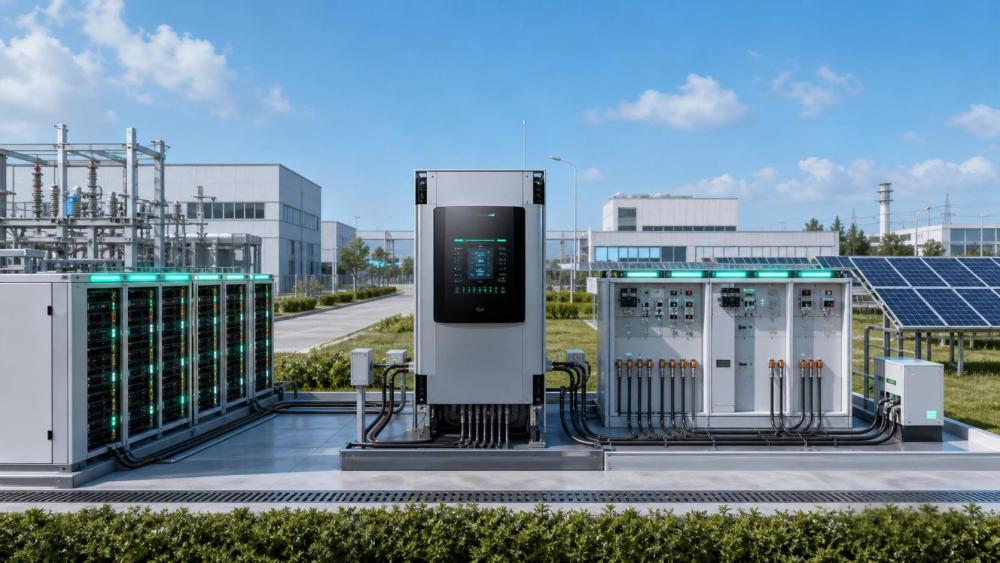
A conventional inverter often needs an existing grid waveform before it can operate.
A black start grid forming inverter works differently.
It can energize a dead bus, form the local grid, and support a controlled restart sequence.
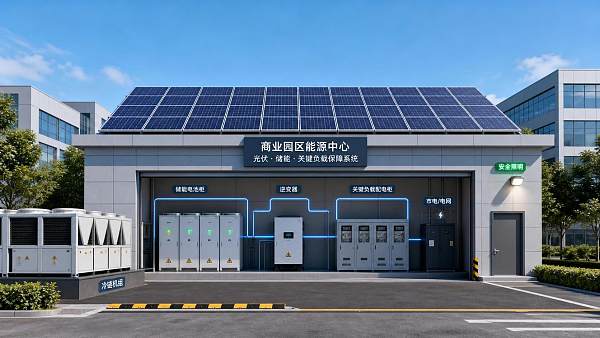
This becomes essential when microgrids include solar PV, battery energy storage, diesel backup, and critical loads.
Without black start capability, the system may wait for an external source.
With it, the site can restore operations faster and with better control over restart risk.
Typical use cases
- Islanded industrial microgrids serving critical production lines
- Remote communities with solar, storage, and limited spinning generation
- Commercial campuses needing resilient backup and seamless restoration
- Utility pilot projects testing advanced grid support functions
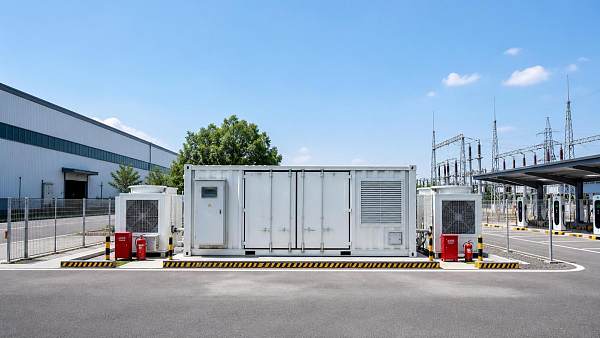
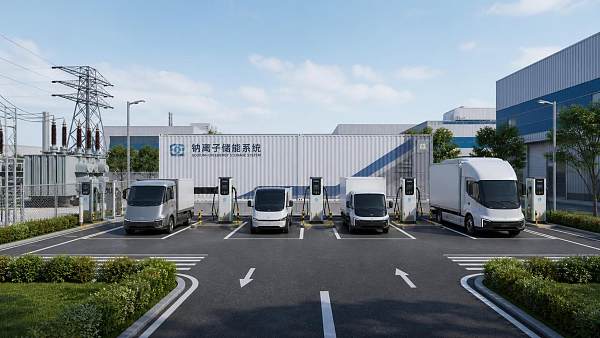
- EV charging hubs paired with storage for outage recovery
How the Black Start Process Actually Works
In practice, a black start grid forming inverter follows a controlled sequence rather than a single switch-on event.
The exact logic depends on system architecture, storage size, load type, and protection settings.
Still, the restart path usually follows five core stages.
- The battery or other DC source powers the inverter controls and auxiliaries.
- The inverter establishes AC voltage and nominal frequency on a dead bus.
- Essential loads are picked up first, often in staged blocks.
- Additional generation sources synchronize to the formed grid.
- The controller stabilizes the microgrid before reconnecting larger loads or the utility.
This is where the difference between grid-following and grid-forming behavior becomes very clear.
The black start grid forming inverter is not waiting for the grid. It becomes the grid reference.
What happens during dead-bus energization
Dead-bus energization sounds simple, but it is one of the most sensitive moments.
The inverter must manage transformer inrush, capacitive charging currents, and sudden load steps.
Poor tuning can trigger overcurrent trips, voltage collapse, or unstable oscillation.
That is why restart studies should always include transient behavior, not just steady-state ratings.
Core Functions That Keep the Microgrid Stable
A black start grid forming inverter must do two jobs at once.
First, it restarts the system.
Second, it keeps the new island stable while conditions change quickly.
Several control functions make that possible.
Voltage and frequency formation
The inverter sets the local AC waveform.
That means it controls voltage magnitude, waveform quality, and nominal frequency from the first second.
Fast dynamic response
Loads do not return smoothly after an outage.
Motors, pumps, HVAC, and chargers can create abrupt current demand.
A strong control loop helps the inverter absorb these disturbances without losing stability.
Droop control and power sharing
When multiple inverters or generators operate together, they need coordinated sharing rules.
Droop control allows active and reactive power to be balanced without unstable control fights.
Fault ride-through and protection coordination
Microgrids with inverter-based resources do not behave like conventional rotating systems during faults.
Protection settings must account for limited fault current and controlled current injection.
This is a common evaluation point when selecting a black start grid forming inverter.
Battery Storage, DER Coordination, and Restart Reliability
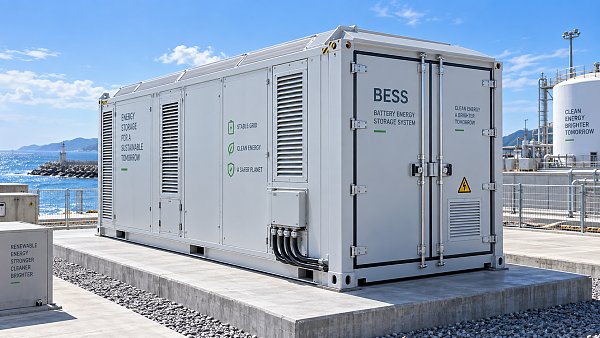
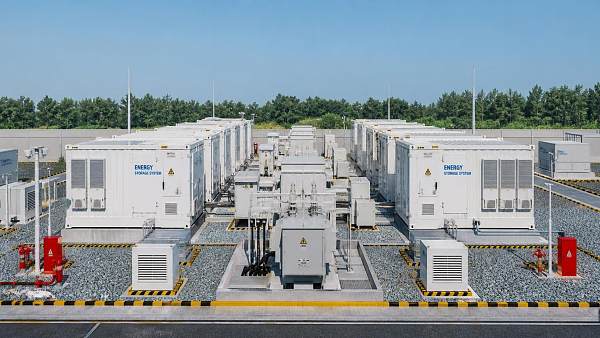
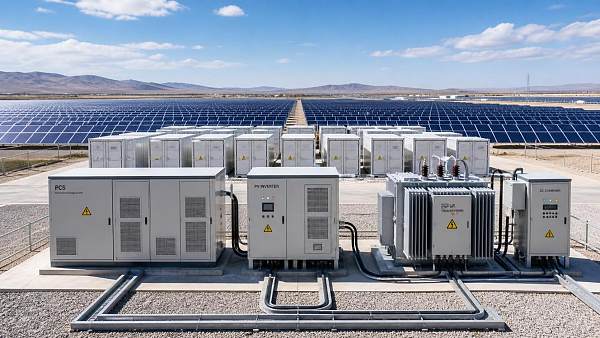
In most projects, the black start grid forming inverter works closely with battery energy storage.
That pairing is practical because batteries respond instantly and support stable DC supply during startup.
But storage alone does not guarantee a successful restart.
Coordination with distributed energy resources is just as important.
Key coordination checks
- State of charge reserve for black start events
- Auxiliary power needs for controls, cooling, and communications
- PV inverter behavior during island formation and low short-circuit conditions
- Generator synchronization logic and minimum loading constraints
- Load prioritization rules for critical and noncritical feeders
From a system view, restart reliability depends on energy, controls, and sequence design.
If any one of those is weak, even a capable black start grid forming inverter may underperform.
Technical Evaluation Criteria That Matter Most
When comparing solutions, nameplate power is only the starting point.
The more useful question is how the black start grid forming inverter behaves under real disturbance conditions.
It also helps to ask for tested scenarios, not just datasheets.
Factory validation, hardware-in-the-loop studies, and site commissioning records reveal much more than brochure language.
Common Risks and Practical Review Questions
A black start grid forming inverter can deliver excellent resilience, but only if the surrounding design supports it.
Several project risks appear again and again.
- Battery reserve is too small for multiple restart attempts.
- Critical loads are not separated from heavy nonessential startup loads.
- PV inverters trip during unstable early island conditions.
- Protection philosophy still assumes synchronous generator fault behavior.
- Control priorities between EMS, PCS, and generator controllers are unclear.
Useful review questions include:
- Can the system energize the transformer and pickup the first load block without tripping?
- What is the minimum state of charge required for a full restart sequence?
- How does the inverter share load with diesel or gas generators after startup?
- What happens if the first synchronization attempt fails?
- Which standards, test reports, or commissioning results support the performance claim?
Why This Technology Is Becoming More Important
The growing use of solar, storage, EV charging, and distributed energy changes how power restoration must be designed.
In older systems, black start often depended on rotating machines.
Now, inverter-based resources are becoming active stability tools rather than passive connected devices.
That shift is especially visible in remote grids, industrial campuses, and resilience-focused commercial projects.
A capable black start grid forming inverter supports faster recovery, tighter control, and better use of renewable and storage assets.
Final Takeaway
A black start grid forming inverter is not just a component specification.
It is a system-level resilience function.
Its value depends on control quality, storage support, load sequencing, protection design, and real restart testing.
For stronger project decisions, review not only rated power and efficiency, but also dead-bus performance, stability behavior, and coordination logic.
That is usually where the difference appears between a system that restarts on paper and one that restarts reliably in the field.
As microgrids become more distributed and more renewable, that distinction matters even more.
Questions about market trends? Contact Market Scope Live for deeper business insights.
We respect your privacy. Your information is strictly confidential.
Related News
 Energy Storage Systems / BESSNYSERDA Opens Second 2026 Bulk Storage Solicitation Targeting 1 GWNYSERDA’s second 2026 bulk energy storage solicitation targets 1 GW. Explore the opportunity for developers, investors and New York’s grid.MORE+
 Energy Storage Systems / BESSCroatia’s First Transmission-Connected Standalone Battery Project Enters OperationCroatia’s first transmission-connected standalone battery project is operational. Discover how the 60 MW Šibenik facility could support grid flexibility.MORE+
 Energy Storage Systems / BESSAustralia's NEM Battery Storage Hits Record 20.17 GWh, Up 203% Year on YearAustralia's NEM battery storage reportedly hits 20.17 GWh, up 203% year on year. Explore what the record could mean for grid-scale projects and procurement.MORE+
 Energy Storage Systems / BESSC&I Energy Storage in Germany: What Drives Project ROI?C&I energy storage in Germany: discover what drives project ROI, from peak shaving and solar savings to costs, tariffs and smarter battery sizing.MORE+
 Energy Storage Systems / BESSChoosing Energy Storage Containers: Capacity, Power and Safety CriteriaCompare energy storage containers by usable capacity, power, safety and grid integration. Learn what to ask suppliers before choosing a system.MORE+
 Energy Storage Systems / BESSNeoen, Frontier Energy and Lightyears Secure Funding for Renewable ProjectsNeoen, Frontier Energy and Lightyears secure renewable energy financing. Explore what the funding means for solar, wind and battery storage projects.MORE+
 Energy Storage Systems / BESSChoosing a Battery Energy Storage Container Manufacturer: Key Supplier ChecksChoosing a battery energy storage containers manufacturer? Learn how to assess safety, integration, warranties and total costs before you buy.MORE+
 Energy Storage Systems / BESSCATL Introduces Grid Connection and Financing Commitments in AustraliaCATL introduces energy storage with 25-year grid connection and financing commitments in Australia. Explore what the proposed model means for projects.MORE+
 Energy Storage Systems / BESSPortugal Mandates Grid-Forming Capability for Large Storage and Launches 1 GW TenderPortugal grid-forming rules target large standalone energy storage projects as a 1 GW tender launches. Explore the implications for developers and suppliers.MORE+
 Energy Storage Systems / BESSAdding Battery Storage to Rooftop Solar: When to Use AC vs. DC CouplingExplore rooftop solar storage integration: compare AC vs. DC coupling, inverter compatibility, backup power, and lifecycle costs to choose the right battery setup.MORE+
 Energy Storage Systems / BESSHeron Power and NiSource Announce US Data Center Deals Involving BESSHeron Power and NiSource announce US data center deals involving BESS. Explore how transformer integration and long-term power supply are shaping data center energy plans.MORE+
 Energy Storage Systems / BESSPeak Energy Raises $108 Million as GM Ventures Leads Sodium-Ion Storage RoundPeak Energy raises $108 million in a GM Ventures-led round to scale sodium-ion storage for grids and AI data centers. Explore what buyers should assess before committing.MORE+
 Energy Storage Systems / BESSRondo Energy and Rio Tinto Begin Design of Australia's Largest Thermal Storage ProjectRondo Energy and Rio Tinto begin design of a 30 MW/360 MWh thermal storage project at Yarwun. Explore its potential for industrial decarbonization and future procurement.MORE+
 Energy Storage Systems / BESSCATL Nine-Month Net Profit Rises 31.6% as Energy Storage Emerges as a Growth DriverCATL’s reported nine-month net profit rose 31.6% as energy storage gains momentum. Explore what this shift could mean for battery buyers, overseas orders and procurement planning.MORE+
 Energy Storage Systems / BESSScalable Power Solutions for Commercial Facilities with Uneven Site DemandScalable power solutions for multi-site commercial facilities: optimize uneven demand, resilience, storage, solar, and controls with a repeatable portfolio strategy.MORE+
 Energy Storage Systems / BESSWhen Do Commercial Property Owners Face Peak Demand for On-Site Energy?Commercial property owners peak demand often occurs when HVAC, occupancy, EV charging, and equipment loads coincide. Discover practical strategies to manage costs, capacity, and on-site energy resilience.MORE+
 Energy Storage Systems / BESSWhen Does a Containerized Hybrid Solar-Storage System Make Sense for Remote Sites?containerized hybrid solar storage for remote sites: discover when it cuts diesel costs, improves reliability, and simplifies deployment with smarter sizing and design.MORE+
 Energy Storage Systems / BESSHow to Specify Steel Battery Enclosures for Outdoor BESS Fire and Corrosion RisksSteel battery enclosures: learn how to specify corrosion protection, fire-ready interfaces, drainage, and durable outdoor BESS performance.MORE+
 Energy Storage Systems / BESSBattery Energy Storage Cost: What Drives $/kWh and Project ROI?Battery energy storage cost explained: compare usable $/kWh, system scope, grid connection, warranty, and lifecycle factors to build a stronger storage ROI.MORE+
 Energy Storage Systems / BESSWhat Drives BESS Fire Protection Costs in Utility-Scale Storage Projects?Energy storage fire protection cost drivers explained: compare BESS safety systems, site design, compliance, and integration to budget smarter.MORE+
 Energy Storage Systems / BESSHow to Size Grid-Scale Energy Storage for Peak Shaving and Renewable FirmingGrid scale energy storage sizing guide for peak shaving and renewable firming—learn how to model MW, MWh, dispatch, degradation, and grid limits.MORE+
 Energy Storage Systems / BESSWhat Drives Battery Energy Management System Costs in BESS Projects?Battery energy management systems cost depends on controls, integration, grid compliance, cybersecurity, and lifecycle support. Learn how to evaluate BESS EMS proposals wisely.MORE+
 Energy Storage Systems / BESSHow to Size a Commercial Microgrid Battery System for Peak Shaving and Backup PowerCommercial microgrid battery system sizing guide for peak shaving and backup power—optimize kW, kWh, reserve SOC, controls, and resilience.MORE+
 Energy Storage Systems / BESSHow to Select a Battery Storage EPC Partner for Utility-Scale Projects in EuropeBattery storage EPC Europe: choose the right utility-scale partner with proven grid expertise, safety leadership, supply-chain control, and reliable commissioning.MORE+
 Energy Storage Systems / BESSHow to Evaluate a Stationary Battery Storage Manufacturer for Critical Backup PowerStationary battery storage manufacturer evaluation guide: compare safety, usable capacity, integration, warranties, lifecycle cost, and service support for reliable critical backup power.MORE+
 Energy Storage Systems / BESSDo Utilities Prefer Centralized or Distributed Energy Storage Models?Do utility companies prefer centralized or distributed energy storage models? Explore how grid constraints, costs, resilience, and control shape the best storage strategy.MORE+
 Energy Storage Systems / BESSWhat Fire Safety Requirements Apply to Containerized Battery Storage?What are the fire safety requirements for containerized battery storage systems? Explore codes, detection, suppression, ventilation, shutdown, and site design essentials.MORE+
 Energy Storage Systems / BESSIs EPEM Useful for Benchmarking Energy Storage Project Performance?Is EPEM useful for benchmarking energy storage project performance data? Explore how it helps normalize efficiency, availability, degradation, dispatch, and lifecycle risks.MORE+
 Energy Storage Systems / BESSBehind-the-Meter Energy Systems for Industrial Parks: Sizing Solar, Storage, and LoadsBehind the meter energy systems for industrial parks: learn how to size solar, storage, and loads for lower costs, resilient operations, and scalable growth.MORE+
 Energy Storage Systems / BESSAerosol Fire Protection for Energy Storage: Key Design Factors for BESS SafetyAerosol fire protection for energy storage: explore key BESS design factors for detection, ventilation, thermal runaway risk, and safer system integration.MORE+
 Energy Storage Systems / BESSHow to Size Solar Backup Energy Systems for Critical Commercial LoadsBackup energy systems with solar: learn how to size critical commercial loads, balance battery power and runtime, and build resilient operations.MORE+
 Energy Storage Systems / BESSWhat Criteria Should You Use to Shortlist Battery Storage EPC Contractors?What criteria should be used to shortlist battery storage EPC contractors? Explore essential checks for engineering, safety, grid integration, delivery, and lifecycle value.MORE+
 Energy Storage Systems / BESSCan Battery Storage Be Added to Existing Solar Farms Without Replacing Inverters?Can battery storage be integrated into existing solar farms without replacing inverters? Explore AC-coupled retrofits, grid limits, controls, costs, and value.MORE+
 Energy Storage Systems / BESSAre Containerized Battery Storage Systems Safe for Urban Deployment?Are containerized battery storage systems safe for urban deployment? Explore key safety factors, fire planning, standards, and site design for reliable urban BESS projects.MORE+
 Energy Storage Systems / BESSSodium-Ion vs Lithium-Ion: Which Is Better for Long-Duration Storage?Is sodium-ion battery better than lithium-ion for long duration storage? Explore cost, safety, energy density, warranties, and the best fit for your storage project.MORE+
 Energy Storage Systems / BESSHow to Size Grid-Scale Battery Energy Storage for Peak Shaving and Grid SupportGrid scale battery energy storage sizing made practical: learn how to match MW, MWh, dispatch, degradation, and grid constraints for reliable peak shaving and grid support.MORE+
 Energy Storage Systems / BESSHow to Integrate Solar and Battery Storage for Reliable Commercial Power ProjectsSolar storage project integration for commercial sites: learn to align load analysis, battery sizing, controls, safety, and grid compliance for reliable power.MORE+
 Energy Storage Systems / BESSHow Does Battery Thermal Management Affect Charger Uptime in Hot Climates?How does battery thermal management affect charger uptime in hot climates? Explore cooling strategies that reduce derating, protect assets, and keep EV charging reliable.MORE+
 Energy Storage Systems / BESSAre Sodium-Ion Batteries Ready for Commercial Charging Storage in 2026?Are sodium-ion batteries ready for commercial charging station storage in 2026? Explore costs, safety, footprint trade-offs, and project-fit insights.MORE+
 Energy Storage Systems / BESSHow to Size Energy Storage Containers for Reliable Microgrid PerformanceEnergy storage containers for microgrids: learn how to size capacity, power, backup duration, and reserve margins to improve reliability, cut costs, and support smarter project decisions.MORE+