Behind-the-Meter Energy Systems for Industrial Parks: Sizing Solar, Storage, and Loads
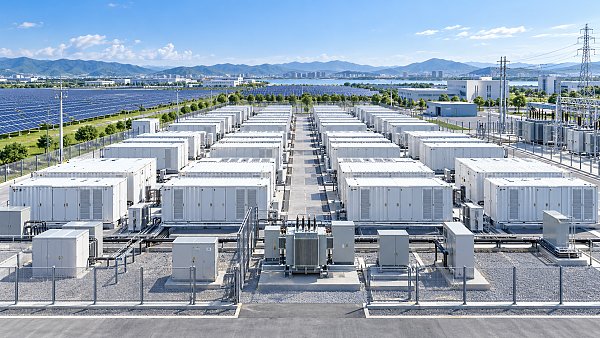
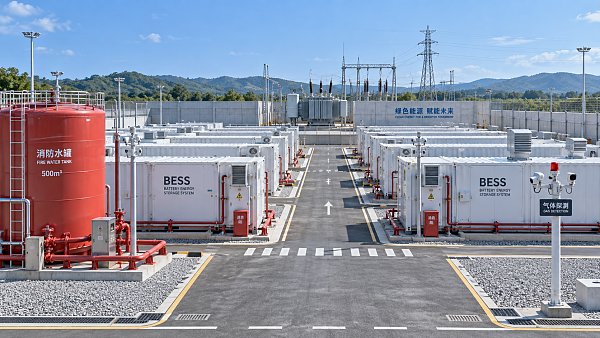
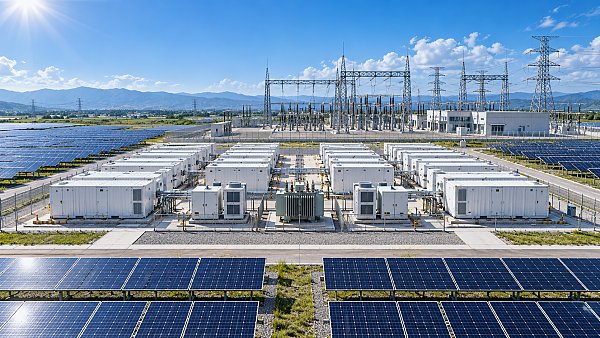
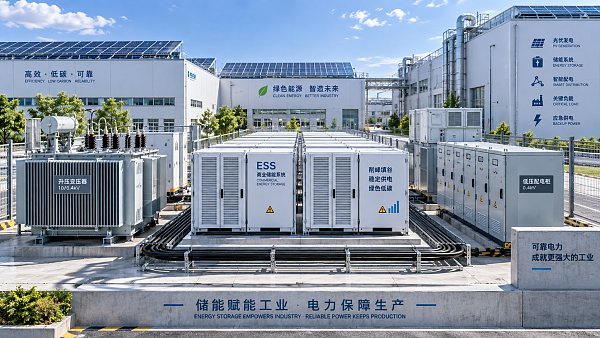
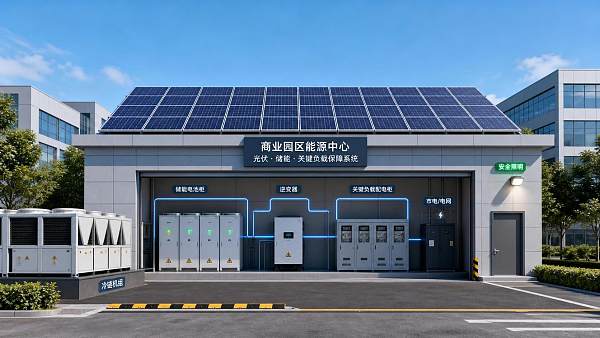
A behind-the-meter energy system should be sized from the facility’s operating profile, not from the available roof area or the largest battery that fits the budget. In an industrial park, solar, battery storage, controllable loads, and the utility connection operate as one system. A design that looks attractive on an annual energy chart can still fail to reduce demand charges, protect critical processes during an outage, or accommodate new production lines and EV charging.
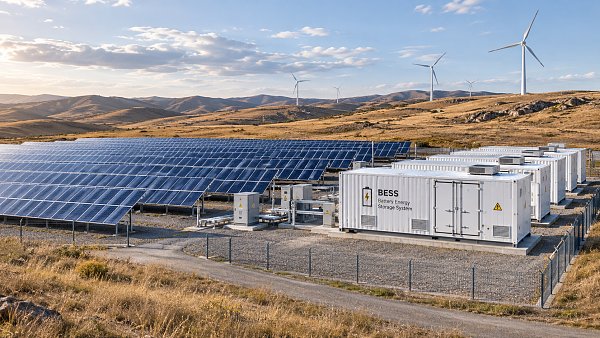
The practical objective is to match each asset to a defined job. Solar should serve daytime consumption where possible. Storage should address a specific combination of peak shaving, time-of-use shifting, backup power, export control, or power-quality support. The grid remains a supply source and often a reliability constraint. Getting these roles clear before selecting equipment prevents a common outcome: a solar-plus-storage project with good installed capacity but weak operational value.
Start with the load, not the generation target
For behind-the-meter energy systems for industrial parks, monthly utility bills are necessary but insufficient. They show total consumption and sometimes the monthly maximum demand, but they do not reveal how loads behave within a day, how often peaks occur, or which equipment creates them.
Use interval meter data at the shortest practical resolution and review at least a full operating cycle. Where production is seasonal, a short data window can seriously misrepresent both solar self-consumption and battery value. The analysis should separate energy use in kilowatt-hours from instantaneous or interval demand in kilowatts. Solar capacity is mainly affected by usable daytime energy. Battery power is driven by peak demand and backup loads. Battery energy capacity is driven by how long that power must be sustained.
Classify loads before building a system model:
- Critical loads: safety systems, essential controls, communications, security, selected refrigeration, process equipment that cannot lose power abruptly, and other loads needed for a controlled shutdown or continued operation.
- Flexible loads: pumps, compressed-air systems, water treatment, cold storage pre-cooling, selected charging equipment, and processes that can shift within a defined operating window.
- Non-critical loads: equipment that can be curtailed during an outage or a demand event without creating safety or production damage.
- Future loads: additional tenant demand, electrified thermal processes, fleet charging, warehouse automation, or planned production expansion.
This distinction changes the design. A battery intended only to reduce short demand spikes may be modest in energy capacity but require high discharge power. A battery intended to maintain a process through a long outage needs considerably more usable energy, and it may require a separate critical-load switchboard. Treating both applications as “backup storage” produces misleading sizing and cost comparisons.
Build a load profile that exposes the real constraints
A useful design model identifies the base load, the normal operating load, the recurring peak, and the exceptional peak. The exceptional peak matters because it may determine transformer loading, interconnection limits, or battery inverter rating, yet it may occur too rarely to justify sizing the whole system around it.
Look for the cause of each high-demand period. Simultaneous motor starts, electric furnaces, chillers, compressors, batch processes, and fast chargers can create very different peak shapes. A sharp peak lasting a few minutes is a good candidate for storage or controls. A long plateau caused by sustained production may require load scheduling, process changes, a larger utility service, or a battery that becomes uneconomic if it is used as the only solution.
Also check power factor, harmonics, voltage events, and existing standby generation. A site with sensitive variable-speed drives or large nonlinear loads may need power-quality assessment before adding inverter-based assets. The battery power conversion system and solar inverters must work with the site’s protection settings, transformer characteristics, and fault-level conditions. These details are less visible than panel counts, but they often determine whether commissioning proceeds smoothly.
Size solar for self-consumption before export
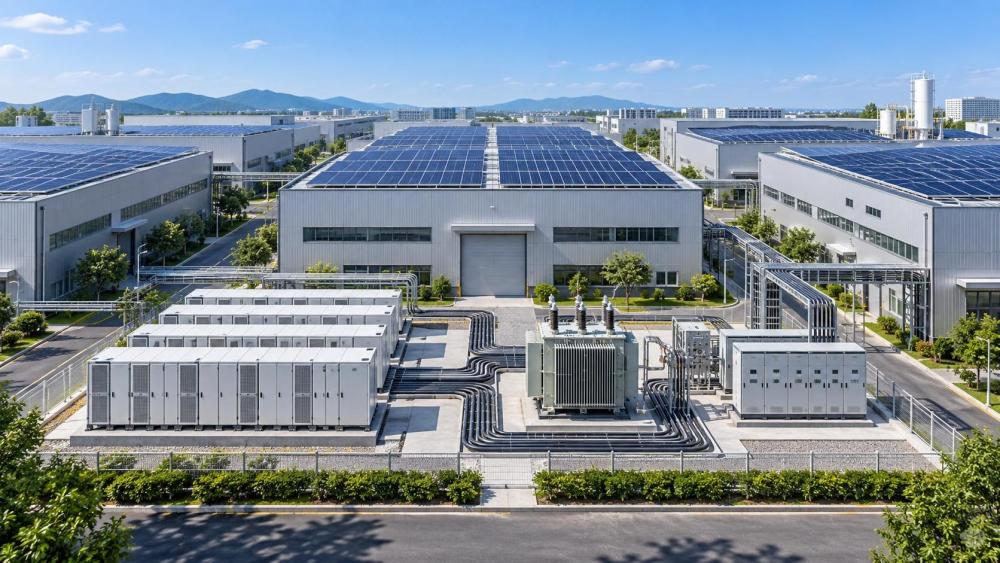
Rooftop or carport solar is usually most valuable when generation coincides with consumption behind the meter. The first sizing question is therefore not “How much area is available?” but “How much solar output can the park absorb during the hours it generates?”
Start by comparing expected solar generation with interval load data. If daytime load remains consistently high, a larger solar array can have strong self-consumption potential. If load drops sharply at midday, the project may depend on export, battery charging, curtailment, or new flexible loads. Each path has different technical and commercial consequences.
Oversizing solar relative to on-site demand is not automatically wrong. It can make sense where export is permitted and valuable, where future electrical load is credible, or where storage can absorb energy for a defined purpose. It becomes risky when the design assumes unrestricted export without confirming feeder capacity, reverse-power protection requirements, voltage behavior, and the commercial treatment of exported energy.
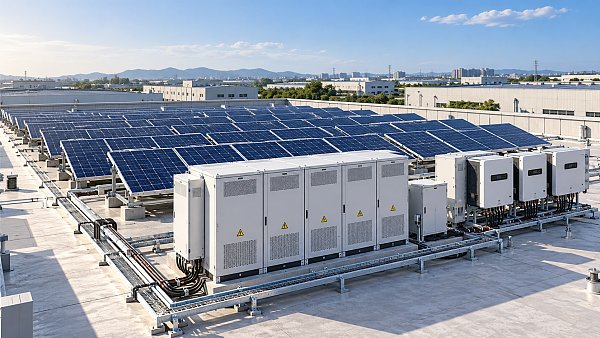
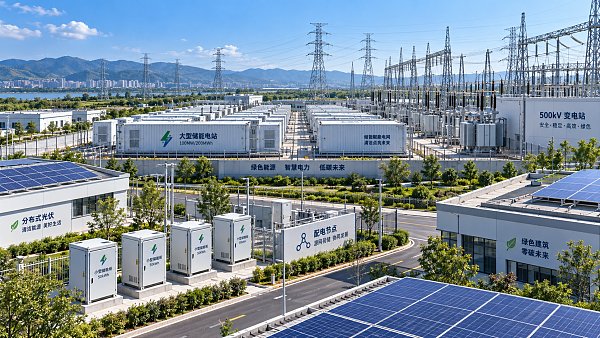
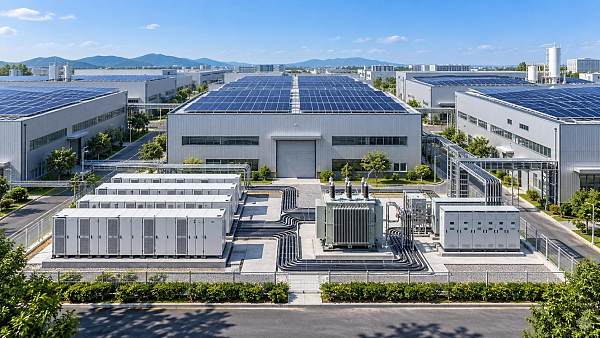
Solar sizing also needs a physical survey beyond roof area. Structural capacity, roof condition, drainage, fire access routes, shading from adjacent buildings, cable routes, inverter locations, and shutdown access can reduce usable capacity or raise installation complexity. In industrial parks with multiple buildings, distributed arrays may also create different interconnection points and metering boundaries. A single combined annual yield estimate should not hide these electrical and ownership constraints.
When solar and storage should be sized separately
Solar and batteries are related, but they should not be forced into a one-to-one capacity relationship. A battery may be justified mainly by demand reduction even if little solar surplus exists. Conversely, a solar array may achieve good self-consumption with no battery when daytime industrial demand is stable.
Storage is most useful when it has a defined dispatch window: charging during lower-cost periods or solar surplus, discharging during identified peaks, maintaining a reserve for critical loads, or limiting export at a constrained grid connection. If dispatch rules are vague, capacity selection becomes arbitrary. The energy management system then has no clear priority when solar output, tariff periods, production demand, and outage reserve compete for the same battery.
Battery sizing requires two numbers: power and duration
Battery proposals are often compared using energy capacity alone. That is incomplete. The system needs sufficient power to reduce the targeted demand or carry designated loads, and sufficient usable energy to hold that power for the required duration.
For peak shaving, calculate the gap between the desired demand ceiling and the expected load. Then test the battery against the actual peak sequence, not a single maximum point. A battery that can suppress one spike may be depleted before the next production event. Recharging capability matters as much as discharge capability when peaks recur during the day.
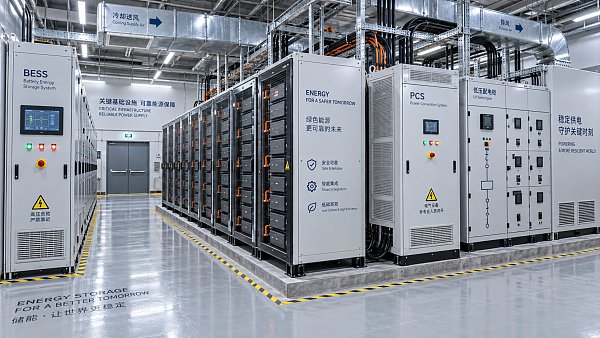
For resilience, define backup at the circuit level. “Keep the facility running” is not a design criterion. Some industrial processes cannot simply restart after an interruption, while others can be paused. The backup design may need staged load shedding, motor-start management, black-start capability, islanding controls, and coordination with generators. A grid-tied battery without the required switching and control architecture cannot automatically provide outage support.
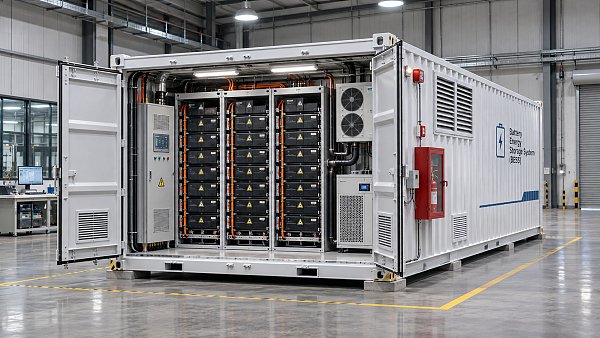
Usable battery capacity should account for operating reserve, degradation over time, temperature management, and the dispatch priorities assigned to the system. Designing around nameplate capacity alone can leave insufficient energy for the function that matters most on a difficult operating day.
Choose an operating hierarchy before selecting the energy management system
The energy management system is not just a monitoring dashboard. It decides when the battery charges or discharges, whether flexible loads are curtailed, how solar output is managed, and how the site responds to a grid event. Its control logic should be written into the project requirements early.
A practical hierarchy might place safety and critical continuity first, followed by contractual grid limits, then demand management, solar self-consumption, tariff optimization, and optional EV charging. The exact order depends on the site. A park with frequent voltage disturbances may reserve more battery capacity than a site focused mainly on energy-cost management. A depot with scheduled fleet charging may prioritize charger load management before increasing battery size.
Control design should include metering locations, data ownership, communications resilience, manual override procedures, alarm responsibilities, and a clear response when data quality is lost. It should also define how tenants are treated. In a multi-tenant park, one central battery can create disputes if its benefits and costs are not allocated through an agreed metering and settlement method.
Do not leave the utility connection until the end
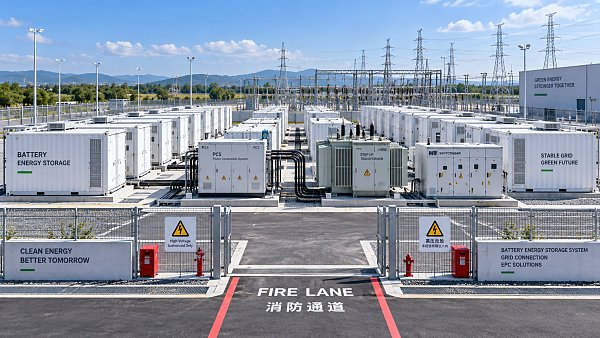
Behind-the-meter does not mean independent of the grid. The utility connection shapes inverter settings, export permissions, protection coordination, transformer loading, and the ability to island during faults. A system that reduces net annual imports can still create midday reverse flow or brief high-power changes that affect the local network.
Review the point of common coupling, existing transformer capacity, feeder configuration, protection devices, and metering arrangement while the concept is still flexible. Clarify whether the project needs zero export, limited export, or managed export. These are materially different control cases. A zero-export system requires reliable measurement and fast response to load changes; it should not be treated as a simple software checkbox.
Where an industrial park has several meters, separate legal entities, or a private distribution network, the commercial boundary matters as much as the electrical boundary. Energy sharing may be technically feasible but operationally complex without a defined ownership, billing, and responsibility structure.
A phased design is often more durable than a fully built first phase
Future expansion should be planned through reserved space, cable routes, switchgear capacity, communications architecture, and control interfaces. It does not always require installing all solar panels or battery containers at once. This approach is useful when load growth is expected but timing is uncertain, or when EV charging and process electrification are still being evaluated.
Phasing only works if the first-stage equipment can accommodate it. Check spare breaker positions, transformer headroom, inverter paralleling capability, protection settings, fire-safety layout, and software licensing or controller capacity. Retrofitting these foundations later can cost more than preparing them at the outset.
For teams comparing solar, storage, charging, grid-control, and balance-of-system options, EPEM provides a useful industry context for connecting technical choices with procurement, interconnection, and lifecycle considerations. That perspective matters because the value of an integrated system depends on the complete operating design, not on any single component.
Use this sequence before issuing an EPC scope
- Collect interval load data, production schedules, utility tariff structure, outage history, and planned load additions.
- Identify critical circuits, flexible loads, and equipment that creates recurring demand peaks.
- Assess roof, land, electrical rooms, transformer capacity, meter boundaries, and the grid connection point.
- Model solar self-consumption and export behavior against actual load intervals.
- Define the battery’s primary job and test power and energy requirements against representative operating days.
- Write dispatch priorities, load-shedding rules, backup boundaries, and performance reporting requirements into the controls scope.
- Compare proposals on delivered operating function, interconnection design, safety integration, maintainability, and expansion readiness, rather than on installed capacity alone.
The strongest projects begin with a disciplined load model and a clear operating objective. Solar reduces purchased daytime energy when the site can use it. Storage earns its place when it solves an identified power, timing, reliability, or grid-constraint problem. When those functions are sized separately and coordinated through the same control strategy, the industrial park gains an energy asset that can adapt as operations change.
Questions about market trends? Contact Market Scope Live for deeper business insights.
We respect your privacy. Your information is strictly confidential.
Related News
 Energy Storage Systems / BESSCroatia’s First Transmission-Connected Standalone Battery Project Enters OperationCroatia’s first transmission-connected standalone battery project is operational. Discover how the 60 MW Šibenik facility could support grid flexibility.MORE+
 Energy Storage Systems / BESSAustralia's NEM Battery Storage Hits Record 20.17 GWh, Up 203% Year on YearAustralia's NEM battery storage reportedly hits 20.17 GWh, up 203% year on year. Explore what the record could mean for grid-scale projects and procurement.MORE+
 Energy Storage Systems / BESSC&I Energy Storage in Germany: What Drives Project ROI?C&I energy storage in Germany: discover what drives project ROI, from peak shaving and solar savings to costs, tariffs and smarter battery sizing.MORE+
 Energy Storage Systems / BESSChoosing Energy Storage Containers: Capacity, Power and Safety CriteriaCompare energy storage containers by usable capacity, power, safety and grid integration. Learn what to ask suppliers before choosing a system.MORE+
 Energy Storage Systems / BESSNeoen, Frontier Energy and Lightyears Secure Funding for Renewable ProjectsNeoen, Frontier Energy and Lightyears secure renewable energy financing. Explore what the funding means for solar, wind and battery storage projects.MORE+
 Energy Storage Systems / BESSChoosing a Battery Energy Storage Container Manufacturer: Key Supplier ChecksChoosing a battery energy storage containers manufacturer? Learn how to assess safety, integration, warranties and total costs before you buy.MORE+
 Energy Storage Systems / BESSCATL Introduces Grid Connection and Financing Commitments in AustraliaCATL introduces energy storage with 25-year grid connection and financing commitments in Australia. Explore what the proposed model means for projects.MORE+
 Energy Storage Systems / BESSPortugal Mandates Grid-Forming Capability for Large Storage and Launches 1 GW TenderPortugal grid-forming rules target large standalone energy storage projects as a 1 GW tender launches. Explore the implications for developers and suppliers.MORE+
 Energy Storage Systems / BESSAdding Battery Storage to Rooftop Solar: When to Use AC vs. DC CouplingExplore rooftop solar storage integration: compare AC vs. DC coupling, inverter compatibility, backup power, and lifecycle costs to choose the right battery setup.MORE+
 Energy Storage Systems / BESSHeron Power and NiSource Announce US Data Center Deals Involving BESSHeron Power and NiSource announce US data center deals involving BESS. Explore how transformer integration and long-term power supply are shaping data center energy plans.MORE+
 Energy Storage Systems / BESSPeak Energy Raises $108 Million as GM Ventures Leads Sodium-Ion Storage RoundPeak Energy raises $108 million in a GM Ventures-led round to scale sodium-ion storage for grids and AI data centers. Explore what buyers should assess before committing.MORE+
 Energy Storage Systems / BESSRondo Energy and Rio Tinto Begin Design of Australia's Largest Thermal Storage ProjectRondo Energy and Rio Tinto begin design of a 30 MW/360 MWh thermal storage project at Yarwun. Explore its potential for industrial decarbonization and future procurement.MORE+
 Energy Storage Systems / BESSCATL Nine-Month Net Profit Rises 31.6% as Energy Storage Emerges as a Growth DriverCATL’s reported nine-month net profit rose 31.6% as energy storage gains momentum. Explore what this shift could mean for battery buyers, overseas orders and procurement planning.MORE+
 Energy Storage Systems / BESSScalable Power Solutions for Commercial Facilities with Uneven Site DemandScalable power solutions for multi-site commercial facilities: optimize uneven demand, resilience, storage, solar, and controls with a repeatable portfolio strategy.MORE+
 Energy Storage Systems / BESSWhen Do Commercial Property Owners Face Peak Demand for On-Site Energy?Commercial property owners peak demand often occurs when HVAC, occupancy, EV charging, and equipment loads coincide. Discover practical strategies to manage costs, capacity, and on-site energy resilience.MORE+
 Energy Storage Systems / BESSWhen Does a Containerized Hybrid Solar-Storage System Make Sense for Remote Sites?containerized hybrid solar storage for remote sites: discover when it cuts diesel costs, improves reliability, and simplifies deployment with smarter sizing and design.MORE+
 Energy Storage Systems / BESSHow to Specify Steel Battery Enclosures for Outdoor BESS Fire and Corrosion RisksSteel battery enclosures: learn how to specify corrosion protection, fire-ready interfaces, drainage, and durable outdoor BESS performance.MORE+
 Energy Storage Systems / BESSBattery Energy Storage Cost: What Drives $/kWh and Project ROI?Battery energy storage cost explained: compare usable $/kWh, system scope, grid connection, warranty, and lifecycle factors to build a stronger storage ROI.MORE+
 Energy Storage Systems / BESSWhat Drives BESS Fire Protection Costs in Utility-Scale Storage Projects?Energy storage fire protection cost drivers explained: compare BESS safety systems, site design, compliance, and integration to budget smarter.MORE+
 Energy Storage Systems / BESSHow to Size Grid-Scale Energy Storage for Peak Shaving and Renewable FirmingGrid scale energy storage sizing guide for peak shaving and renewable firming—learn how to model MW, MWh, dispatch, degradation, and grid limits.MORE+
 Energy Storage Systems / BESSWhat Drives Battery Energy Management System Costs in BESS Projects?Battery energy management systems cost depends on controls, integration, grid compliance, cybersecurity, and lifecycle support. Learn how to evaluate BESS EMS proposals wisely.MORE+
 Energy Storage Systems / BESSHow to Size a Commercial Microgrid Battery System for Peak Shaving and Backup PowerCommercial microgrid battery system sizing guide for peak shaving and backup power—optimize kW, kWh, reserve SOC, controls, and resilience.MORE+
 Energy Storage Systems / BESSHow to Select a Battery Storage EPC Partner for Utility-Scale Projects in EuropeBattery storage EPC Europe: choose the right utility-scale partner with proven grid expertise, safety leadership, supply-chain control, and reliable commissioning.MORE+
 Energy Storage Systems / BESSHow to Evaluate a Stationary Battery Storage Manufacturer for Critical Backup PowerStationary battery storage manufacturer evaluation guide: compare safety, usable capacity, integration, warranties, lifecycle cost, and service support for reliable critical backup power.MORE+
 Energy Storage Systems / BESSDo Utilities Prefer Centralized or Distributed Energy Storage Models?Do utility companies prefer centralized or distributed energy storage models? Explore how grid constraints, costs, resilience, and control shape the best storage strategy.MORE+
 Energy Storage Systems / BESSWhat Fire Safety Requirements Apply to Containerized Battery Storage?What are the fire safety requirements for containerized battery storage systems? Explore codes, detection, suppression, ventilation, shutdown, and site design essentials.MORE+
 Energy Storage Systems / BESSIs EPEM Useful for Benchmarking Energy Storage Project Performance?Is EPEM useful for benchmarking energy storage project performance data? Explore how it helps normalize efficiency, availability, degradation, dispatch, and lifecycle risks.MORE+
 Energy Storage Systems / BESSBehind-the-Meter Energy Systems for Industrial Parks: Sizing Solar, Storage, and LoadsBehind the meter energy systems for industrial parks: learn how to size solar, storage, and loads for lower costs, resilient operations, and scalable growth.MORE+
 Energy Storage Systems / BESSAerosol Fire Protection for Energy Storage: Key Design Factors for BESS SafetyAerosol fire protection for energy storage: explore key BESS design factors for detection, ventilation, thermal runaway risk, and safer system integration.MORE+
 Energy Storage Systems / BESSHow to Size Solar Backup Energy Systems for Critical Commercial LoadsBackup energy systems with solar: learn how to size critical commercial loads, balance battery power and runtime, and build resilient operations.MORE+
 Energy Storage Systems / BESSWhat Criteria Should You Use to Shortlist Battery Storage EPC Contractors?What criteria should be used to shortlist battery storage EPC contractors? Explore essential checks for engineering, safety, grid integration, delivery, and lifecycle value.MORE+
 Energy Storage Systems / BESSCan Battery Storage Be Added to Existing Solar Farms Without Replacing Inverters?Can battery storage be integrated into existing solar farms without replacing inverters? Explore AC-coupled retrofits, grid limits, controls, costs, and value.MORE+
 Energy Storage Systems / BESSAre Containerized Battery Storage Systems Safe for Urban Deployment?Are containerized battery storage systems safe for urban deployment? Explore key safety factors, fire planning, standards, and site design for reliable urban BESS projects.MORE+
 Energy Storage Systems / BESSSodium-Ion vs Lithium-Ion: Which Is Better for Long-Duration Storage?Is sodium-ion battery better than lithium-ion for long duration storage? Explore cost, safety, energy density, warranties, and the best fit for your storage project.MORE+
 Energy Storage Systems / BESSHow to Size Grid-Scale Battery Energy Storage for Peak Shaving and Grid SupportGrid scale battery energy storage sizing made practical: learn how to match MW, MWh, dispatch, degradation, and grid constraints for reliable peak shaving and grid support.MORE+
 Energy Storage Systems / BESSHow to Integrate Solar and Battery Storage for Reliable Commercial Power ProjectsSolar storage project integration for commercial sites: learn to align load analysis, battery sizing, controls, safety, and grid compliance for reliable power.MORE+
 Energy Storage Systems / BESSHow Does Battery Thermal Management Affect Charger Uptime in Hot Climates?How does battery thermal management affect charger uptime in hot climates? Explore cooling strategies that reduce derating, protect assets, and keep EV charging reliable.MORE+
 Energy Storage Systems / BESSAre Sodium-Ion Batteries Ready for Commercial Charging Storage in 2026?Are sodium-ion batteries ready for commercial charging station storage in 2026? Explore costs, safety, footprint trade-offs, and project-fit insights.MORE+
 Energy Storage Systems / BESSHow to Size Energy Storage Containers for Reliable Microgrid PerformanceEnergy storage containers for microgrids: learn how to size capacity, power, backup duration, and reserve margins to improve reliability, cut costs, and support smarter project decisions.MORE+
 Energy Storage Systems / BESSHow to Evaluate a Fast Frequency Response Inverter for Grid-Scale BESS?Fast frequency response inverter evaluation for grid-scale BESS: learn how to assess control speed, thermal stability, grid-code behavior, and procurement-critical performance before you buy.MORE+