Adding battery storage to rooftop solar starts with a critical design choice: AC or DC coupling. The right answer depends primarily on existing equipment and operating priorities.
For technical evaluators, rooftop solar storage integration requires balancing inverter compatibility, conversion losses, backup requirements, and lifecycle costs, alongside battery capacity and power ratings.
AC coupling often suits retrofits retaining an existing PV inverter. DC coupling can benefit new installations or inverter replacements through shared conversion equipment and potential clipping recovery.
Start by defining the required operating modes, then verify electrical limits and control compatibility. Architecture should follow those requirements, rather than determine them afterward.
How AC and DC Coupling Change the Power Path
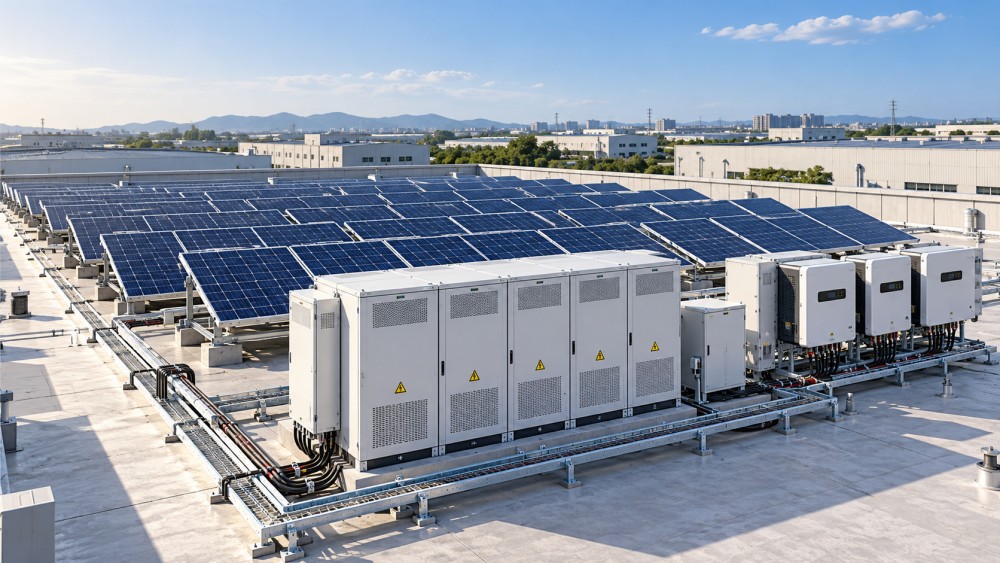
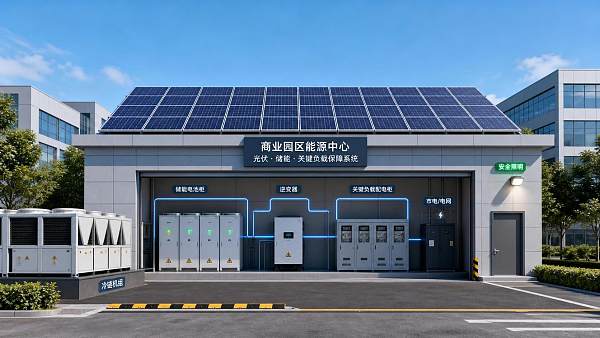
In an AC-coupled system, rooftop panels feed a PV inverter, while the battery connects through its own bidirectional inverter. Both interface with an AC bus.
When solar charges the battery, electricity passes through the PV inverter and battery inverter. Discharging to AC loads introduces another conversion stage through the battery inverter.
In a DC-coupled system, PV and battery circuits connect through a coordinated DC architecture, commonly using a hybrid inverter and a dedicated battery conversion stage.
Solar energy can reach the battery without first becoming AC. However, DC conversion, battery losses, and eventual inversion still apply; DC coupling does not eliminate conversion losses.
The simplified paths below describe common arrangements. Actual designs vary, especially where manufacturers use separate charge controllers, multiple converters, or integrated battery electronics within equipment.
When Keeping the Existing PV Inverter Favors AC Coupling
AC coupling is often the practical starting point when the rooftop PV system performs well, retains useful warranty coverage, and has substantial remaining service life.
Retaining that inverter can reduce equipment replacement, rooftop rewiring, commissioning disruption, and downtime. These avoided costs may outweigh modest differences in annual conversion efficiency.
This approach also suits sites with microinverters or multiple string inverters, where rebuilding the solar DC architecture would introduce additional design complexity and labor.
However, a functioning PV inverter is not automatically compatible with battery backup. Confirm supported operating combinations, firmware requirements, and control behavior before selecting equipment.
If the existing inverter is approaching replacement, compare AC coupling against a hybrid inverter upgrade. Evaluate both options over the same project horizon and service assumptions.
When DC Coupling Offers a Stronger Technical Case
DC coupling deserves closer consideration for new rooftop systems, major inverter replacements, or projects where substantial solar generation will regularly charge the battery before serving later loads.
Its strongest efficiency argument concerns solar energy stored for later use. Direct solar consumption follows a different path, so compare energy flows separately during modeling.
A suitably designed DC system can divert available PV power into storage when solar production exceeds the inverter’s AC conversion capability, reducing otherwise clipped generation.
That benefit requires available battery capacity, sufficient charging power, compatible controls, and adequate DC input ratings. A full battery cannot absorb additional clipped solar energy.
Distinguish inverter clipping from export curtailment. AC-coupled batteries can sometimes absorb energy otherwise curtailed by an export limit, provided metering and controls respond appropriately.
Shared conversion equipment also creates constraints. Verify simultaneous load supply, battery charging, and export capability instead of assuming the advertised PV and battery ratings simply add together.
Will the Rooftop Solar Operate During a Grid Outage?
Neither coupling method guarantees backup power. Standard grid-following PV inverters shut down when the utility supply disappears, unless operating within an approved intentional island arrangement.
A backup system needs grid isolation, a grid-forming source, suitable protection, and a defined load boundary. Product-specific equipment determines whether these functions are available.
For AC coupling, verify that the battery inverter can establish the local grid and control PV production when generation exceeds load demand and available charging capacity.
Coordination may use communications or frequency-based power reduction. Incompatible settings can cause repeated PV trips, unstable operation, or loss of solar production during an outage.
For DC coupling, verify whether the hybrid inverter supports islanded operation, solar charging during outages, and restart after the battery reaches its minimum operating state.
Specify black-start capability explicitly. Some systems require a minimum battery charge or external supply before restarting, even when sunlight is available at the array.
For commercial rooftops, assess phase configuration, motor starting, load imbalance, and transfer behavior. Available battery energy alone does not establish whether critical equipment will operate.
Compare Efficiency Using the Site’s Actual Dispatch Pattern
Do not rank architectures using a single peak efficiency figure. Request conversion curves and loss assumptions at the operating points expected throughout the year.
Separate direct solar consumption, solar-to-battery charging, grid charging, battery discharge, and standby consumption. Each pathway contributes differently to total delivered energy and operating cost.
For illustration, assume three conversion stages each operate at 96% efficiency. Their combined efficiency is approximately 88.5%, before battery losses and other auxiliary consumption.
Two equivalent stages would yield approximately 92.2%. This arithmetic illustrates conversion effects; it does not establish actual AC-coupled or DC-coupled system performance for procurement.
Real results depend on converter loading, battery voltage, temperature, auxiliary demand, and control strategy. Efficiency boundaries must match before comparing manufacturers’ published round-trip figures.
Use interval load and PV data to model dispatch. Fifteen-minute data may support initial screening, while shorter intervals can reveal demand spikes and control limitations.
Check Electrical Limits Before Finalizing the Architecture
For DC coupling, verify cold-weather string open-circuit voltage, maximum input current, MPPT operating range, and available charging power across the proposed array configuration and battery range.
Check battery voltage compatibility, permitted models, communications, and warranty conditions. Matching nominal voltages does not prove that a battery and hybrid inverter can operate together.
For AC coupling, review switchboard capacity, conductor ratings, protective devices, and the proposed connection point. Existing infrastructure may constrain simultaneous solar generation and battery discharge.
Distinguish export capacity from internal power flow. A zero-export setting does not automatically resolve busbar, feeder, protection, or utility interconnection requirements at the site.
For either architecture, confirm the utility’s treatment of storage additions. Changes to aggregate inverter capacity, operating modes, or export controls can trigger further interconnection review.
Apply local electrical, fire, building, and grid requirements. In the United States, relevant provisions may include NEC requirements and applicable UL 9540 and IEEE 1547 requirements.
UL 9540A provides a thermal runaway fire propagation test method; it is not a substitute for system certification or approval of the proposed installation.
Size Power and Energy Around the Required Service
Battery capacity in kilowatt-hours establishes an energy budget. Battery and inverter power in kilowatts determine how quickly that energy can charge or support loads.
For peak shaving, prioritize discharge power, sustained peak duration, tariff demand intervals, and control response. A large battery can still fail if its inverter is undersized.
For backup, begin with critical-load demand and required autonomy. Include conversion losses, usable state-of-charge limits, temperature effects, degradation, and a realistic reserve policy in calculations.
A 20 kW critical load operating for four hours requires 80 kWh delivered to loads. Required nominal battery capacity will exceed that figure after allowances.
For solar self-consumption, compare midday surplus with evening demand. Oversizing storage against annual PV generation alone can leave expensive capacity underused for much of the year.
Where backup and tariff optimization share one battery, model competing priorities. Holding energy in reserve improves outage readiness but reduces capacity available for daily savings.
Compare Lifecycle Cost and Require Evidence Before Selection
Compare installed system cost, including inverter replacement, switchgear, isolation equipment, engineering, approvals, commissioning, and downtime. Battery price per kilowatt-hour captures only part of the investment.
Include expected replacement timing, service access, warranty throughput limits, software charges, and efficiency losses. Evaluate savings against realistic tariffs, export compensation, and dispatch constraints.
DC coupling may reduce conversion equipment but concentrate functions in one inverter. Assess how a failure affects both solar generation and storage availability during repairs.
AC coupling provides separate conversion assets, but shared controls or switchgear can still create common failure points. Review the complete system rather than individual equipment redundancy.
Require an equipment compatibility statement, single-line diagram, operating-mode description, protection concept, and interval-based energy model. Proposals should identify assumptions that materially affect performance or cost.
Commissioning should demonstrate export limiting, critical-load transfer, overload response, low-charge behavior, and solar operation during outages where specified. Record settings and acceptance criteria for handover.
Choose the Architecture That Meets the Site’s Operating Requirements
Choose AC coupling when preserving a healthy PV installation delivers clear value and the proposed battery system satisfies electrical, control, and backup requirements at acceptable cost.
Choose DC coupling when new construction or inverter replacement creates an integration opportunity, especially where modeled solar charging and recoverable clipping justify the design.
The strongest rooftop solar storage integration decision combines a verified power-path design, realistic dispatch modeling, and demonstrated operating compatibility. Select the architecture that delivers the required service reliably.